


White kitchen cabinets remain a popular choice because they work across many kitchen styles and layouts. However, their performance depends on lighting conditions, available space, and surface finish. This article explains how different white cabinet options behave in real kitchens, compares off white, matte, and glossy finishes, and outlines clear criteria to help you choose white cabinetry that stays practical and visually consistent over time.
1. Why White Kitchen Cabinets Work Across Different Kitchen Styles
In kitchen design, white often functions as a neutral visual base. When white kitchen cabinets are used, they help balance surrounding materials such as stone, wood, or metal, preventing the space from feeling visually heavy. This allows the overall composition of the kitchen to feel more cohesive and structured rather than dominated by color.
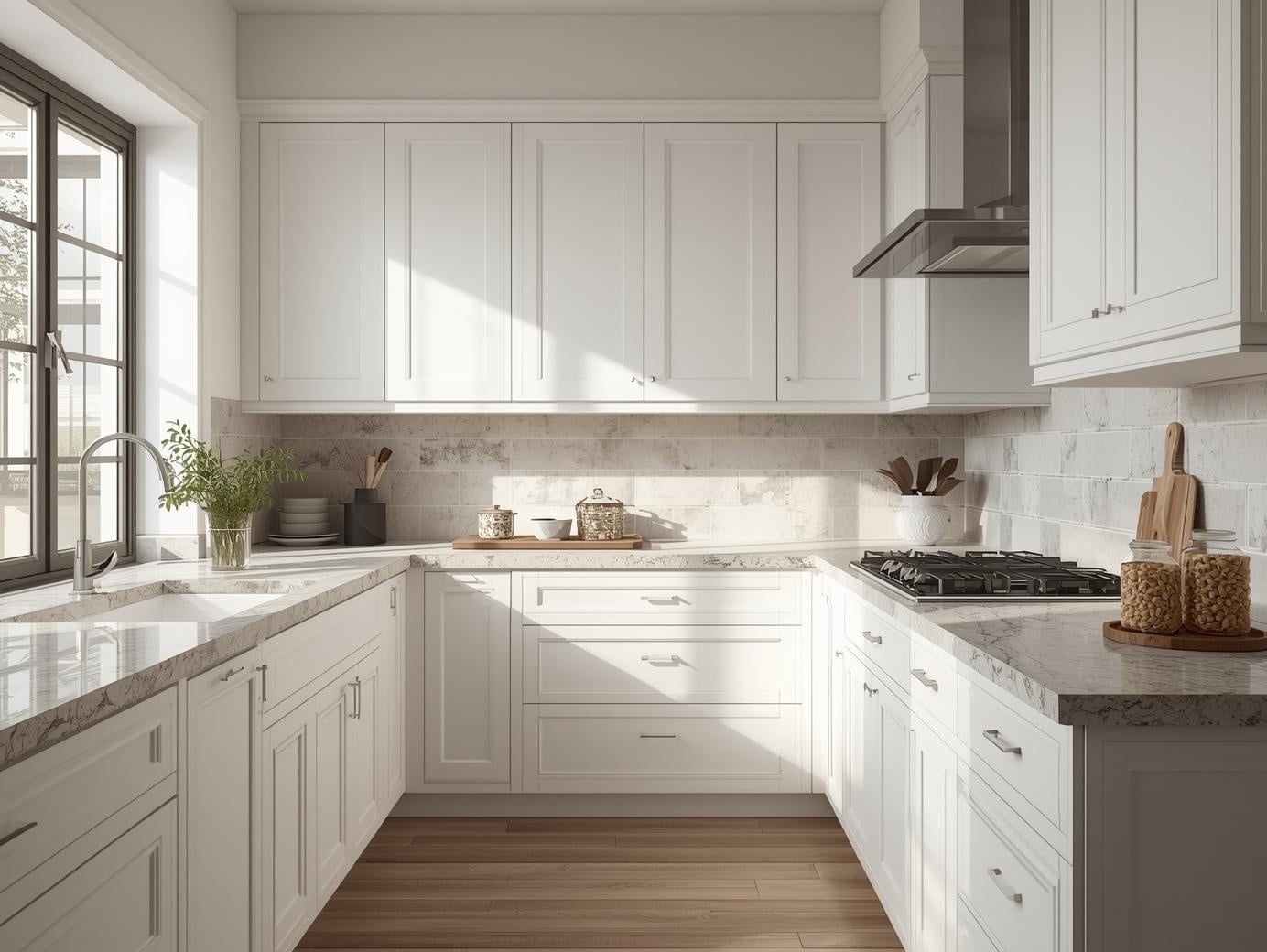
Another key advantage is adaptability. White kitchen cabinets work effectively across modern, transitional, and traditional kitchen styles. In modern kitchens, they reinforce clean lines and simplicity. In more decorative or classic layouts, they soften details and help different elements blend together without visual conflict.
From a long-term perspective, white kitchen cabinets typically have a longer design lifespan than trend-driven color choices. Because white is not tied to short-lived design movements, it remains visually relevant as preferences evolve. This makes it a practical option for customers who value stability and long-term design consistency.
Explore a broader guide to cabinet selection in modern projects: Choosing the Right Kitchen Cabinets for Modern Developments
2. How Lighting and Space Affect White Kitchen Cabinets
The way a kitchen is lit can significantly influence how white kitchen cabinets look in reality. In bright, naturally lit spaces, white cabinetry reflects daylight and can make the room feel more open and cheerful. Conversely, in kitchens with limited natural light, the same cabinets may appear duller or take on subtle color shifts depending on artificial lighting choices.
Space planning further reinforces this effect. Design studies in residential interiors show that lighter cabinetry can make small kitchens feel up to 15–20% more open compared to darker finishes, due to reduced visual contrast between surfaces. In compact layouts, using white kitchen cabinets minimizes visual segmentation, allowing walls and cabinetry to read as a continuous surface rather than separate blocks.
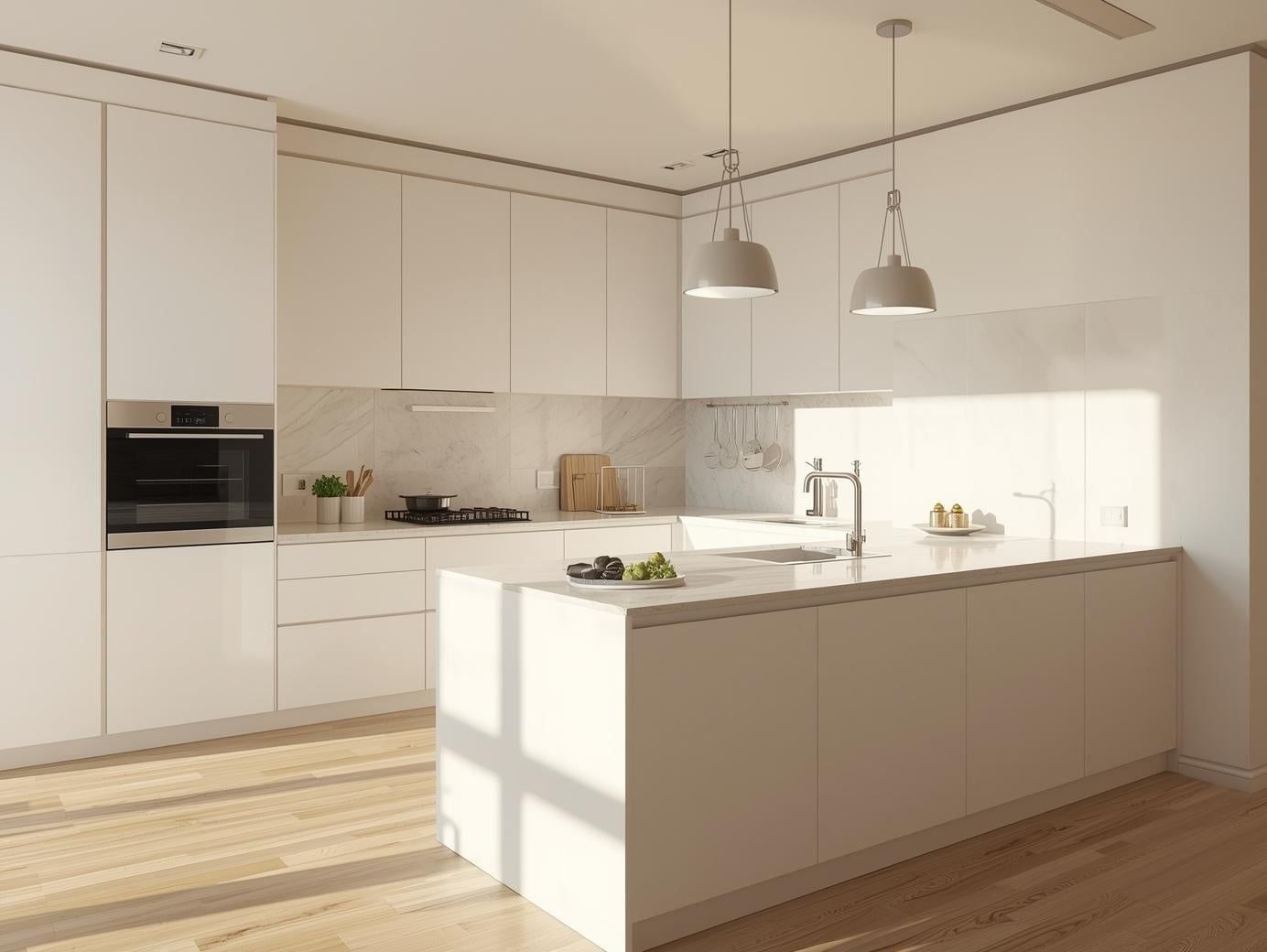
The combination of lighting and space can affect how durable finishes appear over time. In poorly lit or very large kitchens, even white cabinetry may look worn or uneven if shadows dominate certain areas. Understanding this interaction between light, space, and cabinetry helps you plan lighting and layout to maximize the benefits of white cabinets.
3. Off White vs Matte White vs Glossy White Kitchen Cabinets
Not all white kitchen cabinets perform the same in real kitchens. Differences in surface finish affect light reflection, maintenance, and long-term appearance. Understanding how off white, matte white, and glossy white finishes behave helps you choose the option that fits your space and usage needs.
