


Choosing the right kitchen cabinet hardware comes down to three key factors: style, size, and functionality. Knobs, pulls, hinges, and drawer slides should complement the cabinet design while making doors and drawers comfortable to use. This guide covers popular hardware types, design ideas, selection tips, and proper placement to help you find the right options for your kitchen cabinets.
1. What Is Kitchen Cabinet Hardware?
Kitchen cabinet hardware includes the decorative and functional components used to open, close, and operate cabinet doors and drawers. Common kitchen hardware includes knobs, pulls, handles, hinges, and drawer slides. Decorative pieces affect the appearance of cabinets and provide a comfortable grip, while functional hardware controls how doors and drawers move. Together, these components influence both the look and everyday performance of a kitchen.
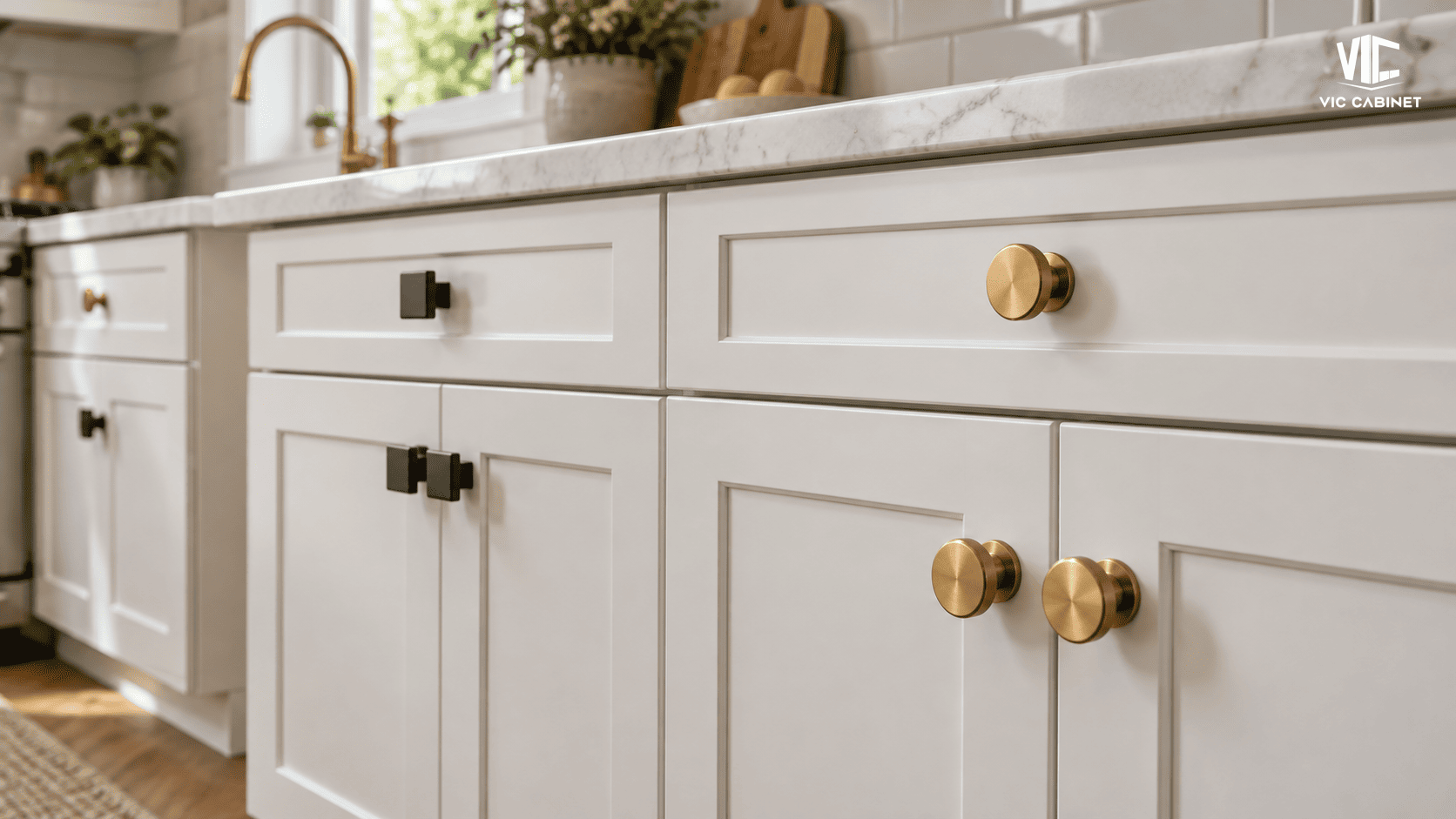
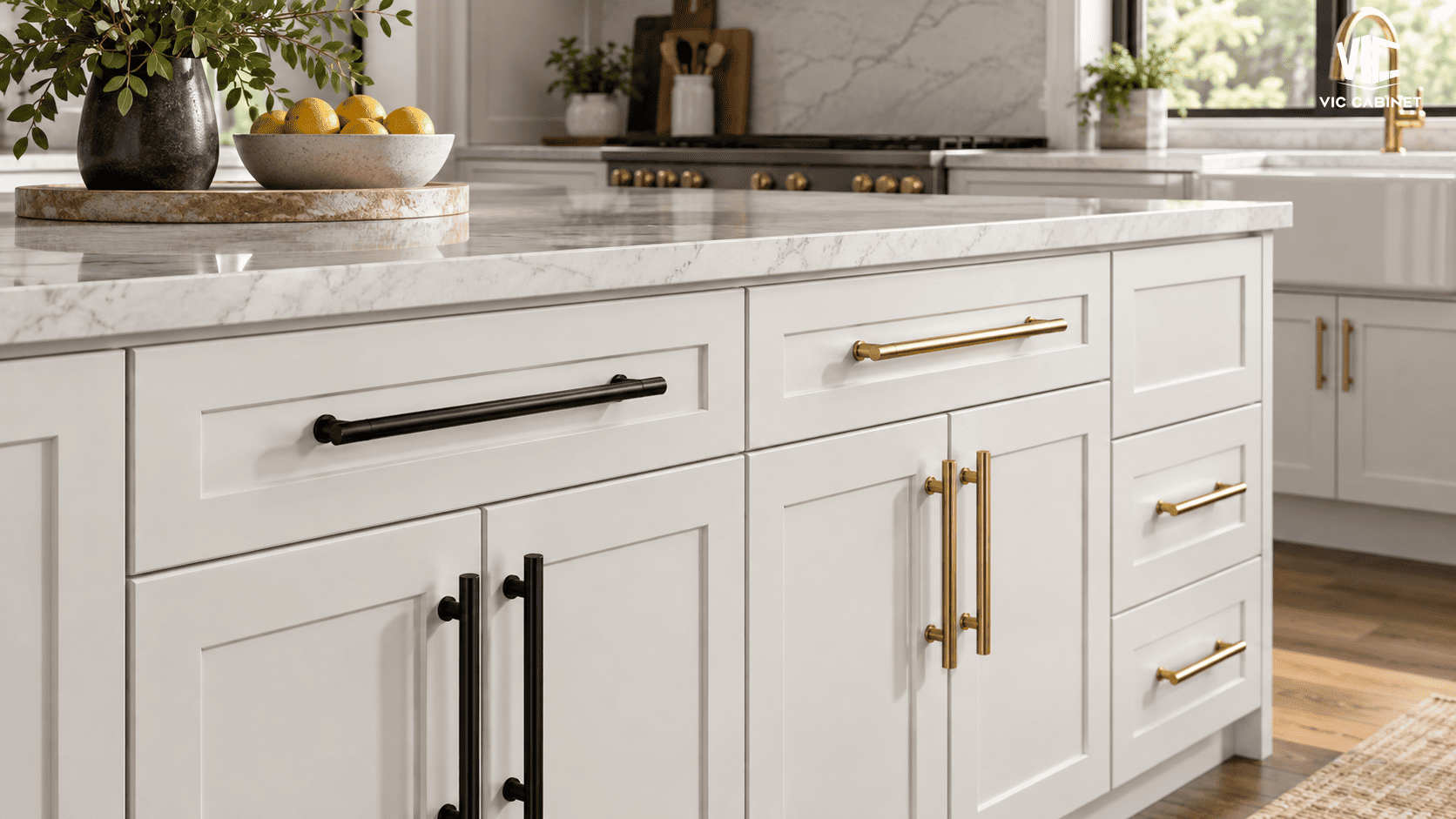
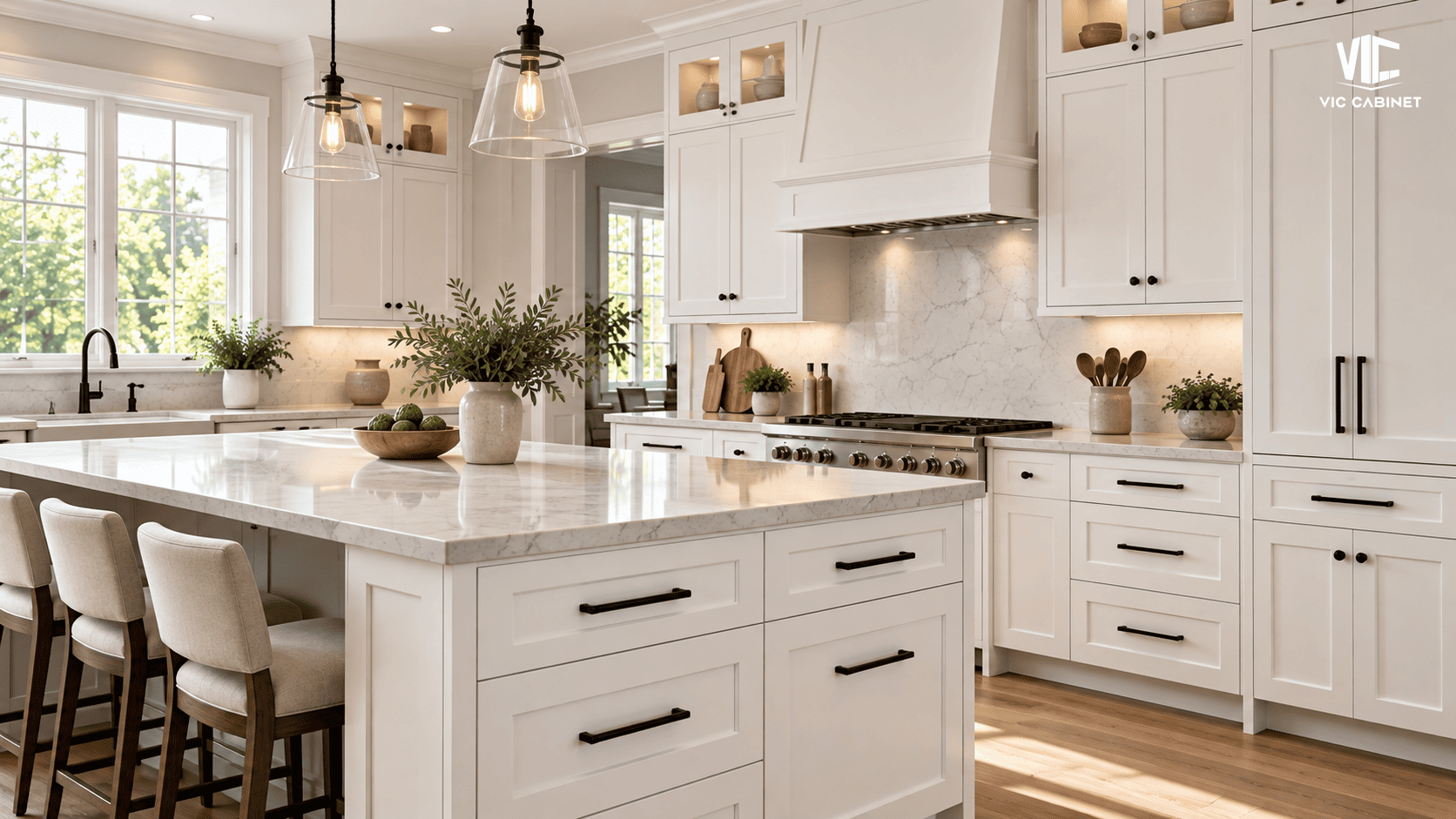
The right hardware can also change the character of the same cabinet design. For example, white Shaker cabinets with matte black bar pulls create a clean, high-contrast appearance, while brushed brass hardware introduces a warmer decorative accent. Hardware should therefore be considered alongside the cabinet door style, finish, construction, and intended use. Choosing it during the cabinet planning stage can also help create a more consistent overall design.
2. Popular Types of Hardware for Kitchen Cabinets
The most common hardware for kitchen cabinets includes knobs, bar pulls, cup pulls, arch pulls, edge pulls, finger pulls, hinges, and drawer slides. Each type provides a different combination of appearance, grip, installation method, and functionality. Some options mainly affect the visual style of the cabinets, while others directly influence everyday operation. Understanding these differences makes it easier to choose hardware that fits both the cabinet design and its intended use.
2.1. Cabinet Knobs
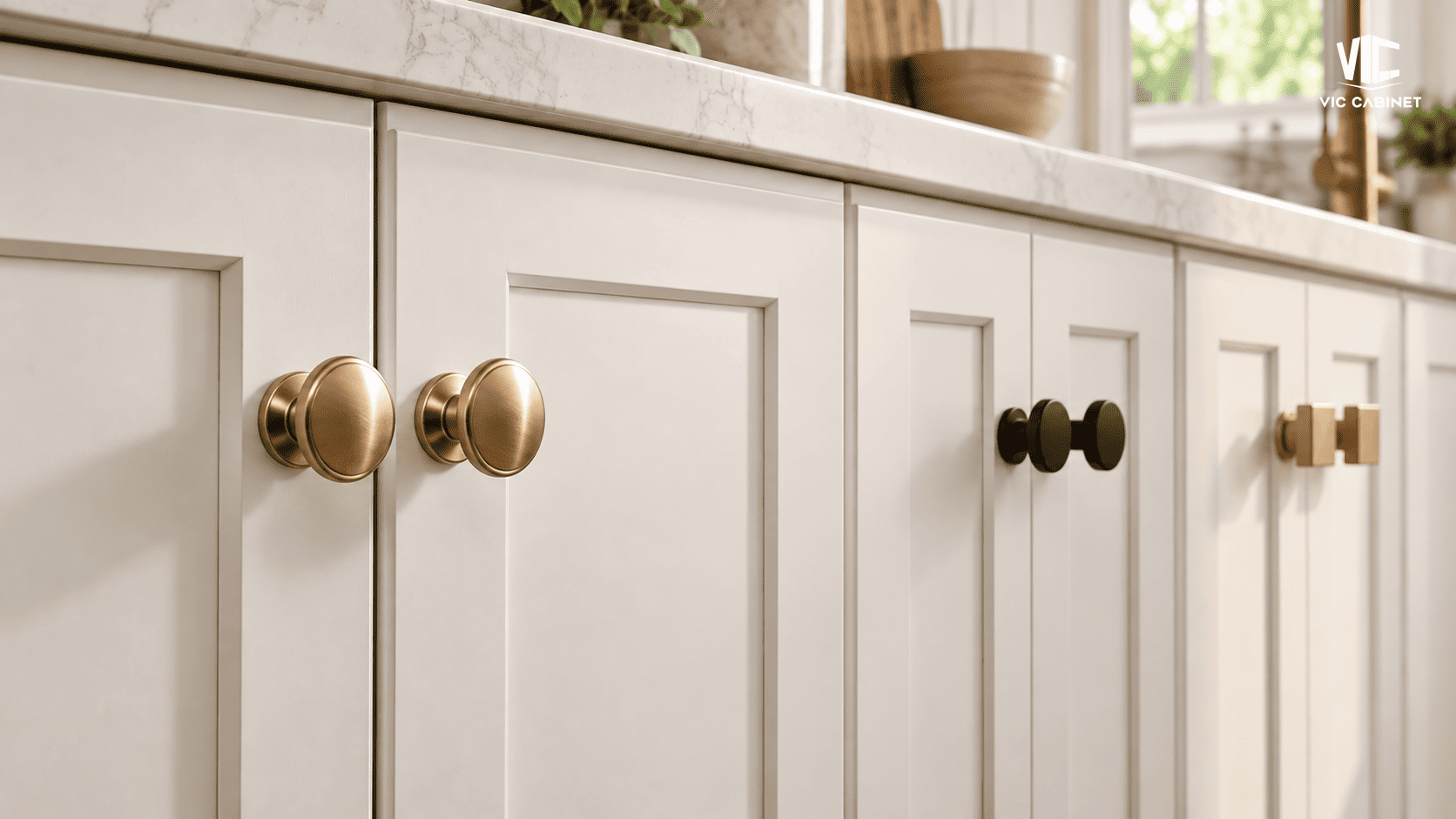
Cabinet knobs are compact, single-point hardware commonly installed on kitchen cabinet doors and smaller drawers. Because they require only one mounting screw, they are relatively simple to install and replace. Round, square, oval, and decorative designs are available for Shaker, traditional, transitional, and farmhouse cabinets. Their compact size also allows the cabinet door profile to remain visually prominent instead of being dominated by larger hardware.
2.2. Bar Pulls
Bar pulls are straight handles attached to the cabinet with two mounting points. They are one of the most versatile kitchen cabinet hardware options because they can be used on both doors and drawers. Their simple shape pairs well with Shaker, Slim Shaker, modern, and slab cabinetry, with popular finishes including matte black, brushed nickel, chrome, and brushed brass. Bar pulls are also available in multiple lengths, making it easier to maintain appropriate proportions across different cabinet and drawer sizes.
2.3. Cup Pulls
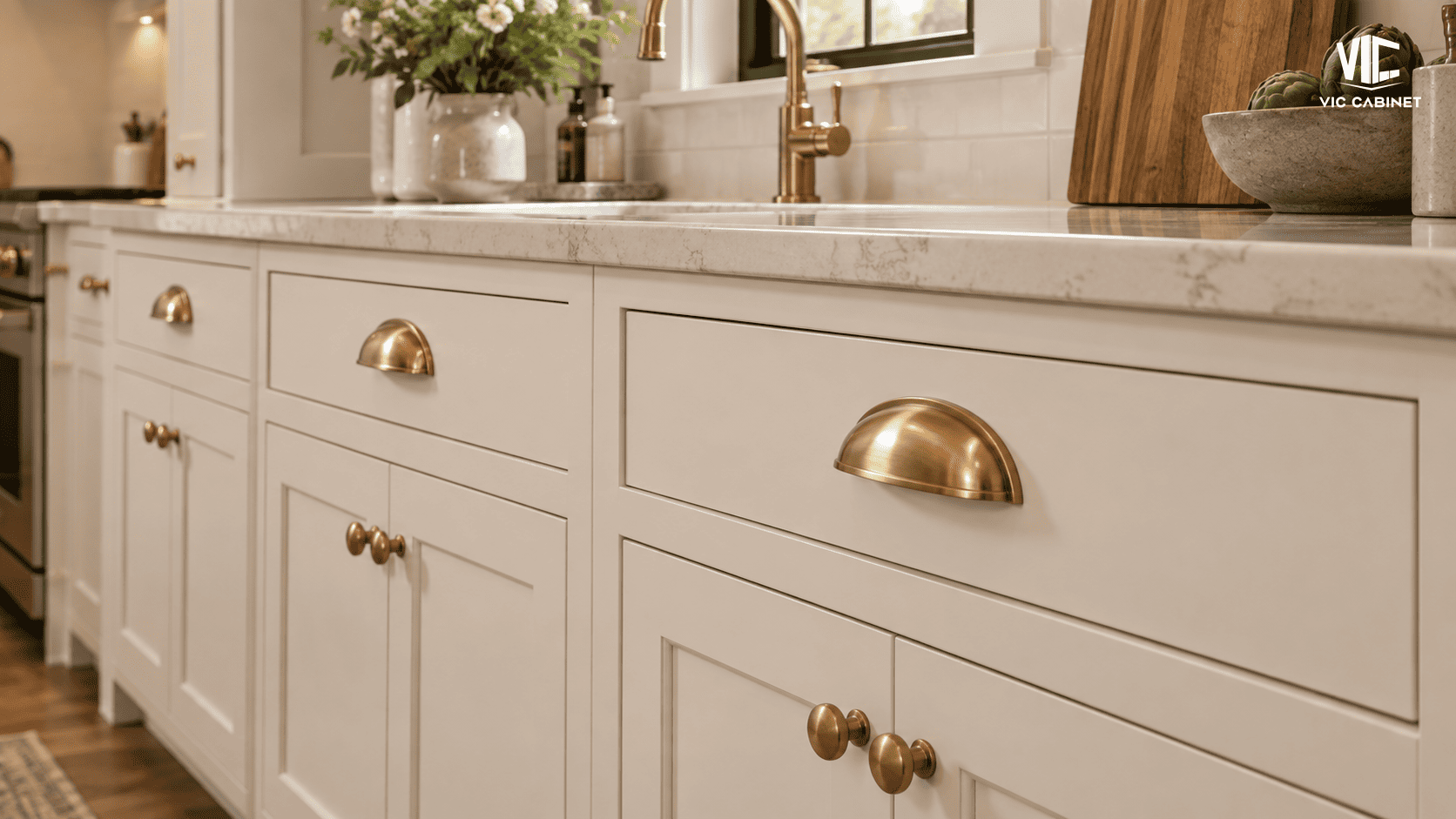
Cup pulls are curved handles designed to be gripped from underneath and are most commonly installed on drawers. Their classic shape works particularly well with Shaker, farmhouse, and traditional kitchen cabinets. Brushed brass, matte black, antique bronze, and nickel are among the common finish options. Pairing cup pulls on drawers with knobs on cabinet doors can also create visual variety while maintaining a coordinated overall design.
2.4. Arch Pulls
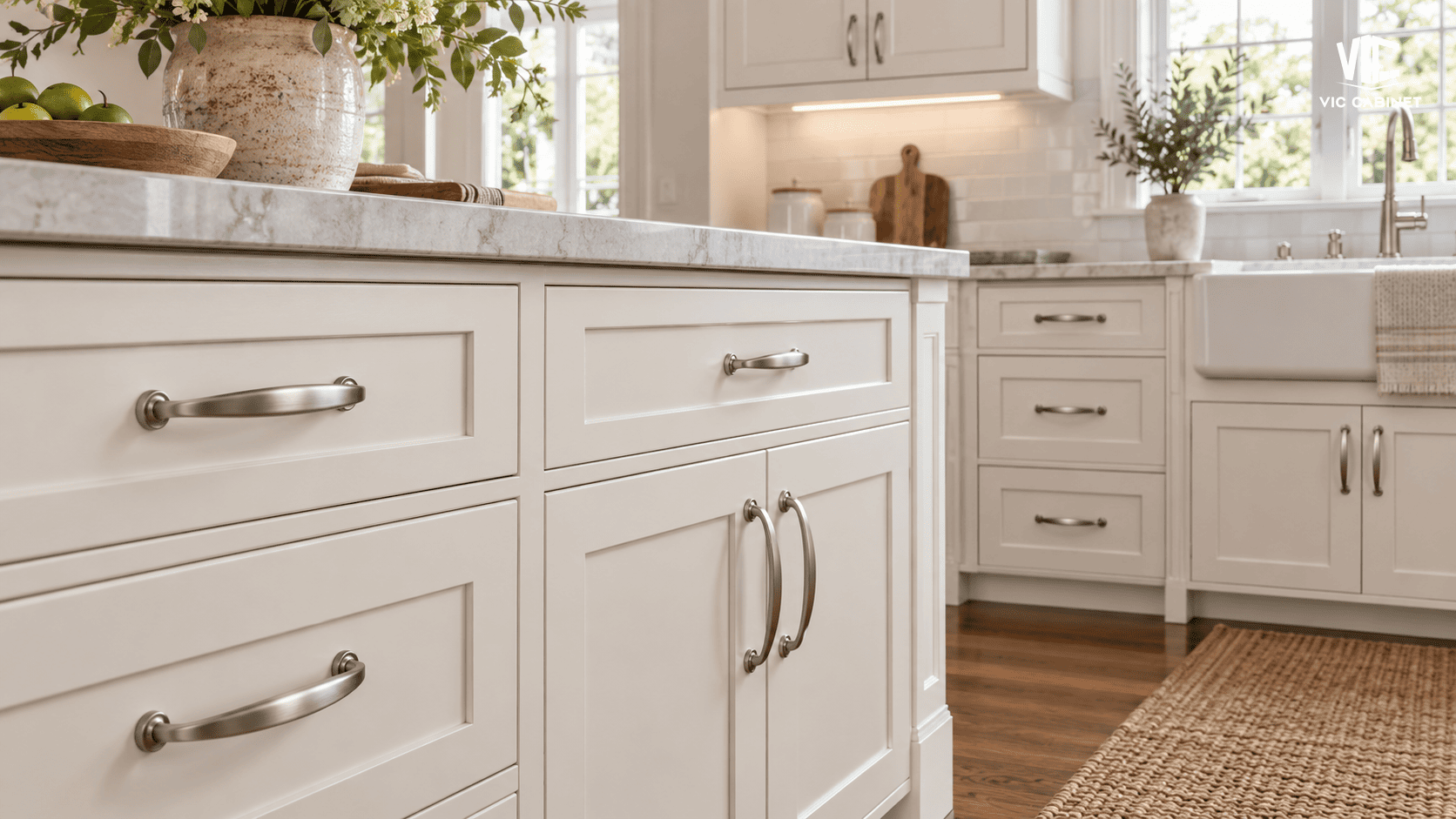
Arch pulls feature a curved handle supported by two mounting points, giving them a softer profile than straight bar pulls. They work particularly well in traditional and transitional kitchens where minimalist hardware may appear too contemporary. Their curved design can add subtle decorative detail without becoming the main visual feature of the cabinet. Simple arch pulls in brushed nickel, black, or brass can also help connect classic cabinet styles with more contemporary finishes.
2.5. Edge Pulls
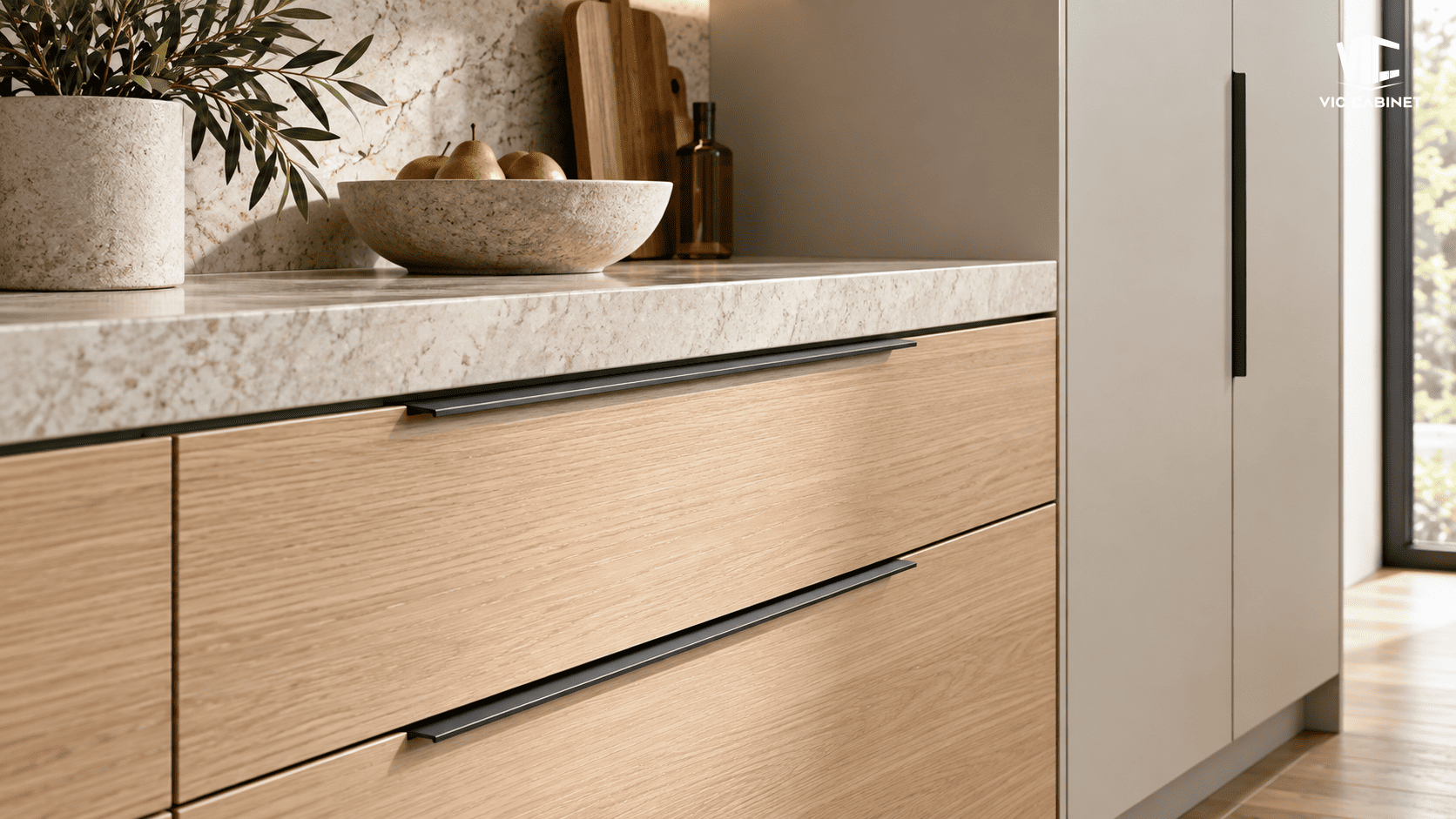
Edge pulls are slim handles installed along the edge of a cabinet door or drawer front, leaving only a small portion of the hardware visible. Their low-profile design makes them particularly suitable for modern, slab, and frameless European cabinets. They provide a functional grip while preserving the clean lines and broad surfaces of flat-panel cabinetry. Matte black, brushed aluminum, and other simple metallic finishes are commonly used to reinforce this streamlined appearance.
2.6. Finger Pulls
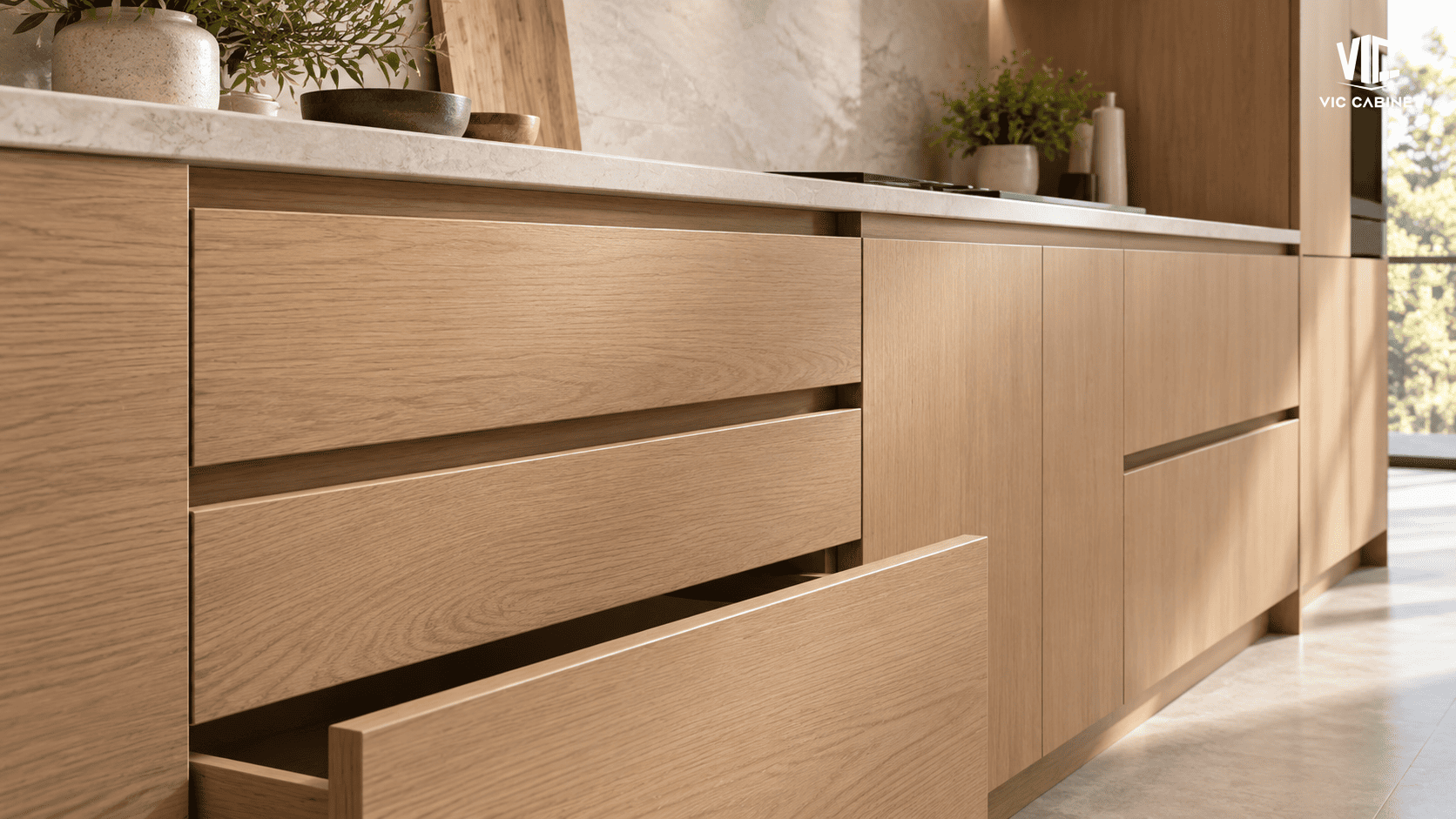
Finger pulls provide a discreet gripping area for opening cabinet doors and drawers while minimizing visible hardware. Depending on the cabinet design, the pull can be integrated into the door profile or installed as a separate component. This makes finger pulls particularly suitable for slab doors and contemporary European-style cabinetry. They are a practical choice when the design priority is to maintain clean surfaces and a minimal, handle-light appearance.
2.7. Cabinet Hinges
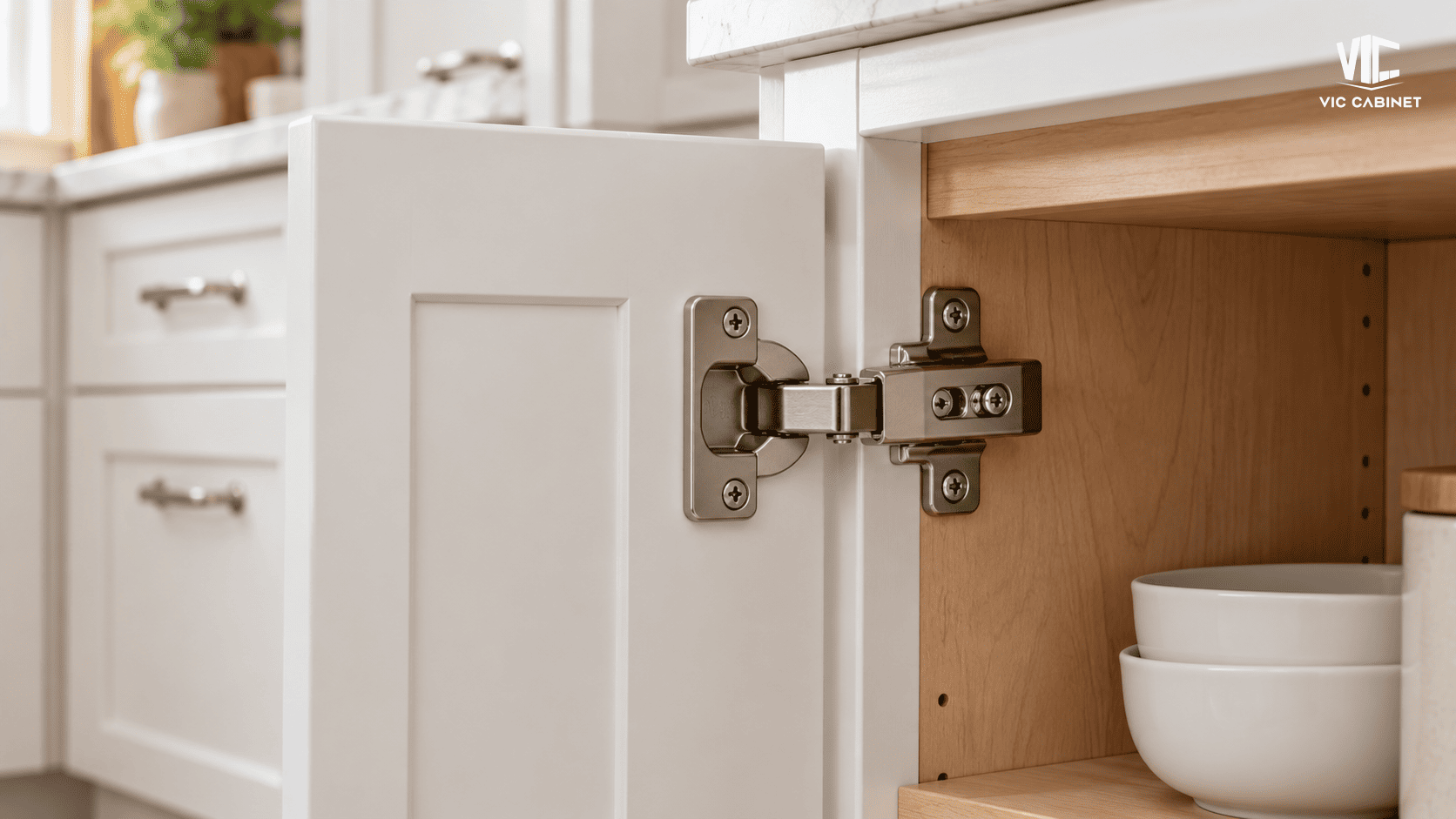
Cabinet hinges connect doors to the cabinet box and control how they open, close, and align. Modern kitchen cabinets frequently use concealed hinges because the hardware remains hidden when the door is closed, creating a cleaner finished appearance. Soft-close hinges can slow the door during the final stage of closing, helping reduce slamming and impact. When selecting hinges, buyers should also consider cabinet construction, door overlay, opening angle, adjustability, and expected frequency of use.
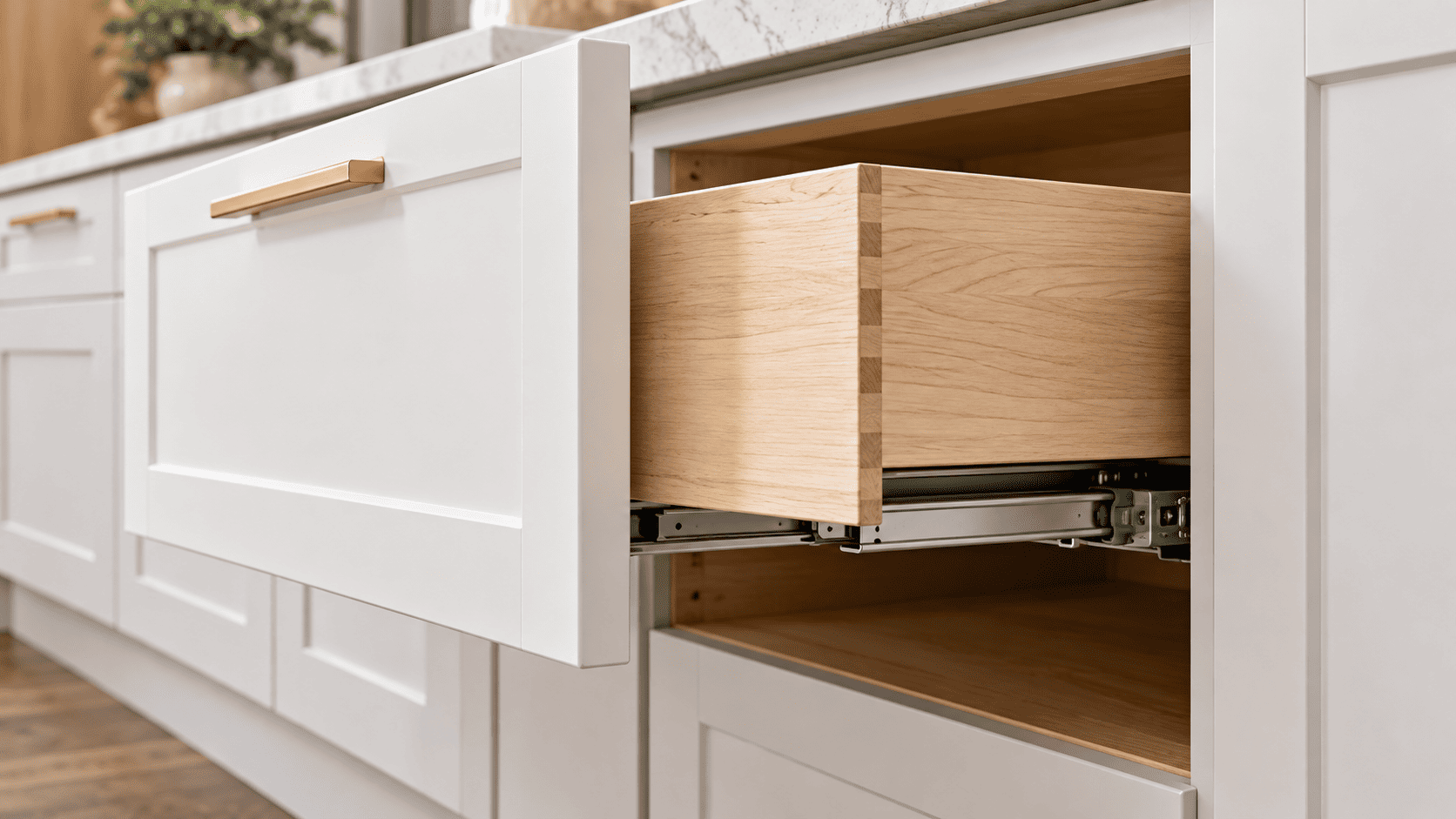
2.8. Drawer Slides
Drawer slides support drawers and determine how smoothly and how far they can open. Common options include side-mount and undermount slides, with undermount systems remaining largely hidden beneath the drawer for a cleaner appearance. Full-extension slides provide easier access to items at the back, while soft-close mechanisms control the final closing movement. Load capacity, extension, mounting method, drawer construction, and expected usage should all be considered when selecting drawer slides.
3. Kitchen Cabinet Hardware Ideas for Different Styles
The best kitchen cabinet hardware ideas begin with the cabinet door style rather than the hardware itself. Door profile, color, material, and overall kitchen design all influence which hardware will look appropriate. A decorative pull that works well with a traditional raised-panel door may look out of place on a minimalist slab cabinet. Hardware should therefore complement the cabinetry rather than compete with its existing design features.
3.1. Hardware for Shaker Cabinets
Shaker cabinets work with a wide range of hardware because of their simple recessed-panel design. Bar pulls, knobs, and cup pulls are among the most suitable options, allowing the same door style to work across traditional, transitional, and contemporary kitchens. Matte black creates strong contrast against white or light-colored Shaker cabinets, while brushed brass adds warmth and brushed nickel provides a more neutral appearance. Another common approach is to use knobs on doors and pulls on drawers while maintaining the same finish throughout the kitchen.
3.2. Hardware for Modern and Slab Cabinets
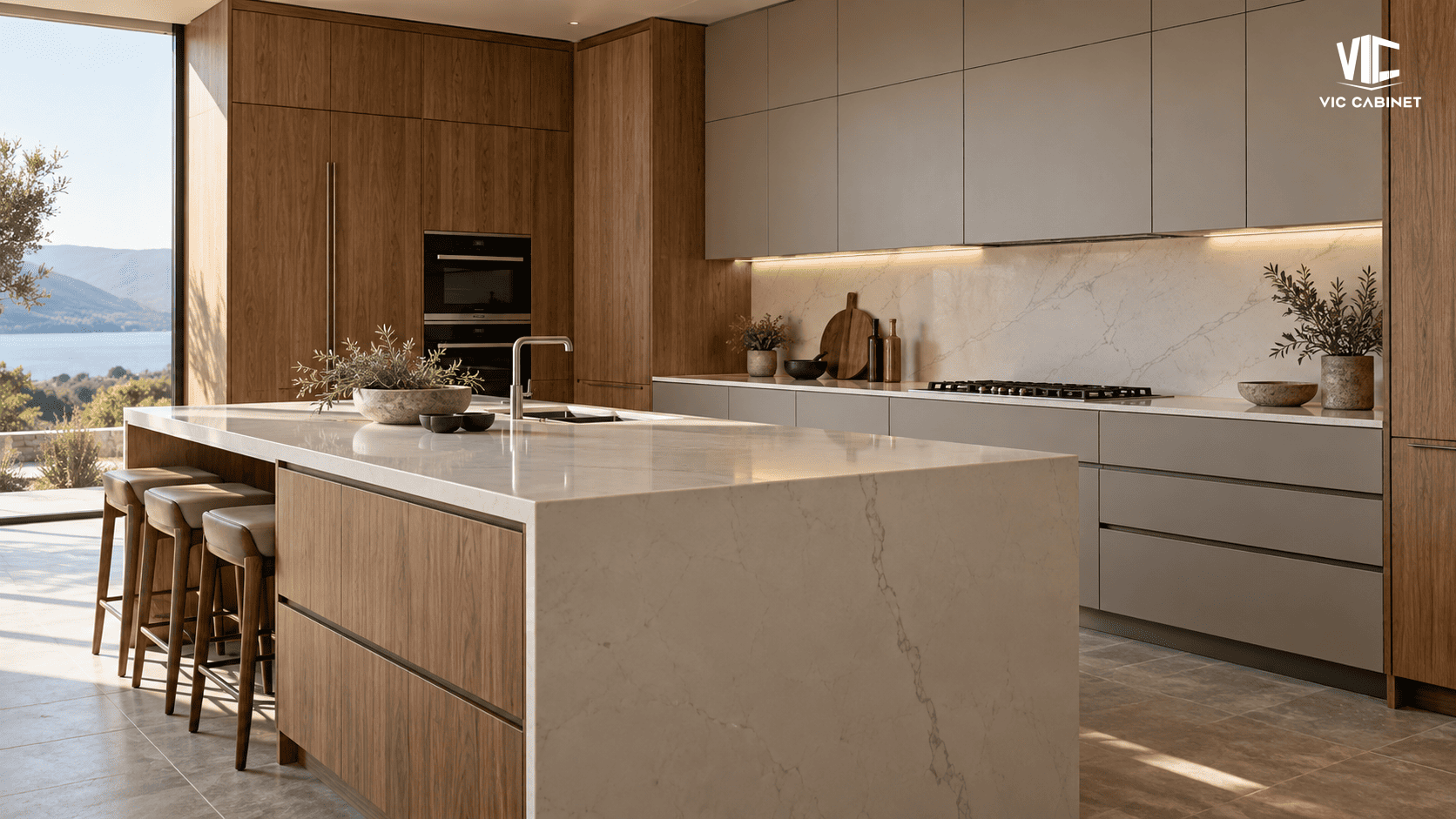
Modern slab cabinets generally look best with hardware that preserves their clean and uninterrupted lines. Edge pulls, finger pulls, and slim bar pulls are particularly suitable because they add functionality without introducing excessive decorative detail. Longer pulls can emphasize the horizontal or vertical proportions of large cabinet fronts, while edge and finger pulls create a more minimal appearance. Simple black, aluminum, or brushed metal finishes can further reinforce the streamlined character of modern cabinetry.
3.3. Hardware for Traditional Cabinets
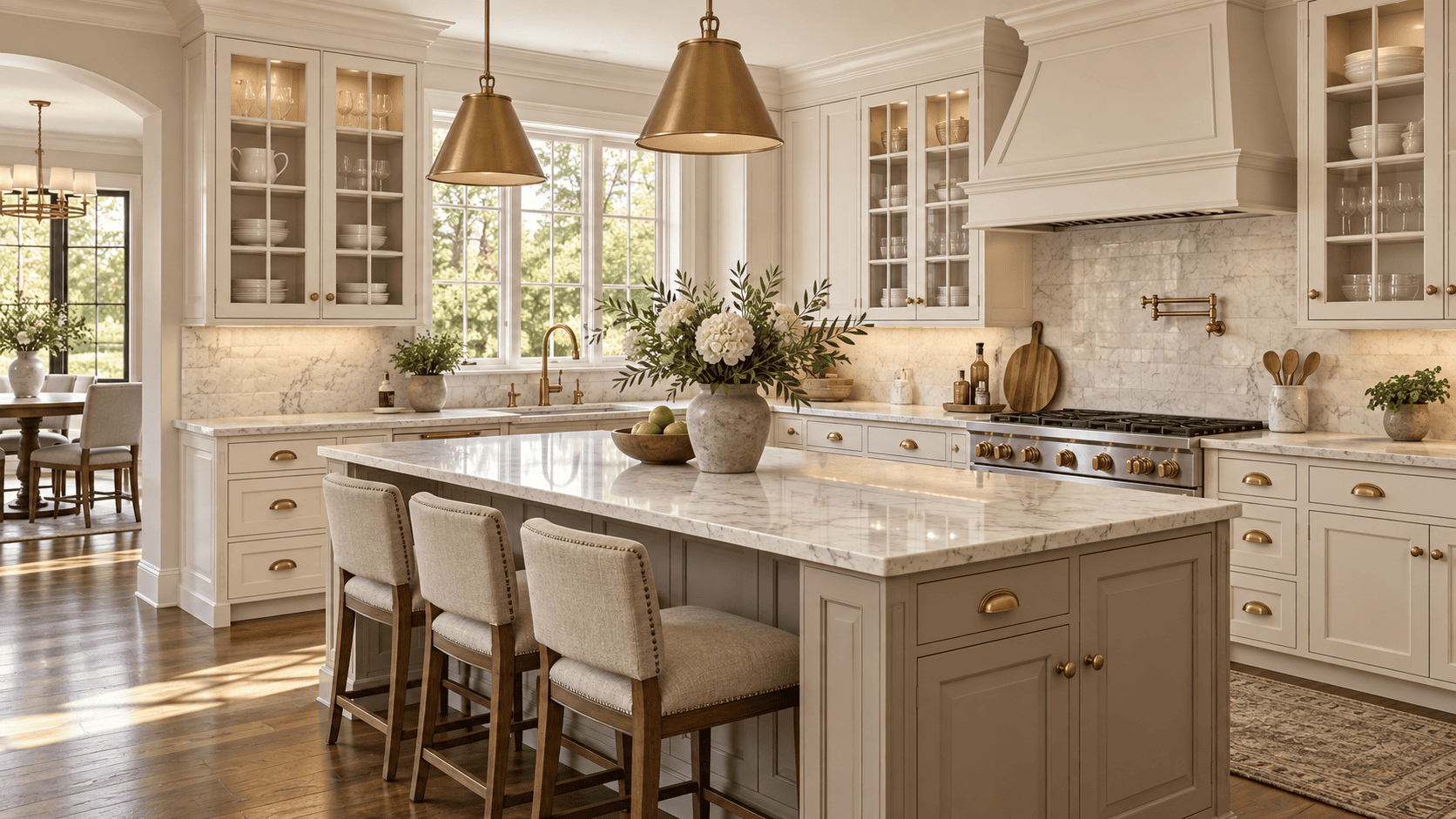
Traditional cabinetry can accommodate more decorative hardware because the doors often contain additional detailing. Knobs, cup pulls, and arch pulls are common options, while antique brass, bronze, and brushed nickel can reinforce a classic aesthetic. However, detailed cabinet doors do not always require highly decorative handles. Keeping the hardware relatively restrained can create better visual balance and prevent the overall kitchen design from appearing too crowded.
3.4. Hardware for Frameless European Cabinets
Frameless European cabinets typically feature clean lines and broad door or drawer surfaces. Slim bar pulls, edge pulls, and finger pulls work particularly well because they provide a functional grip without disrupting the minimalist appearance of the cabinetry. Hardware size should remain proportional to the cabinet front, especially when working with wide drawers or tall doors. Longer pulls can complement larger surfaces, while smaller edge pulls may be sufficient for narrow cabinet doors.
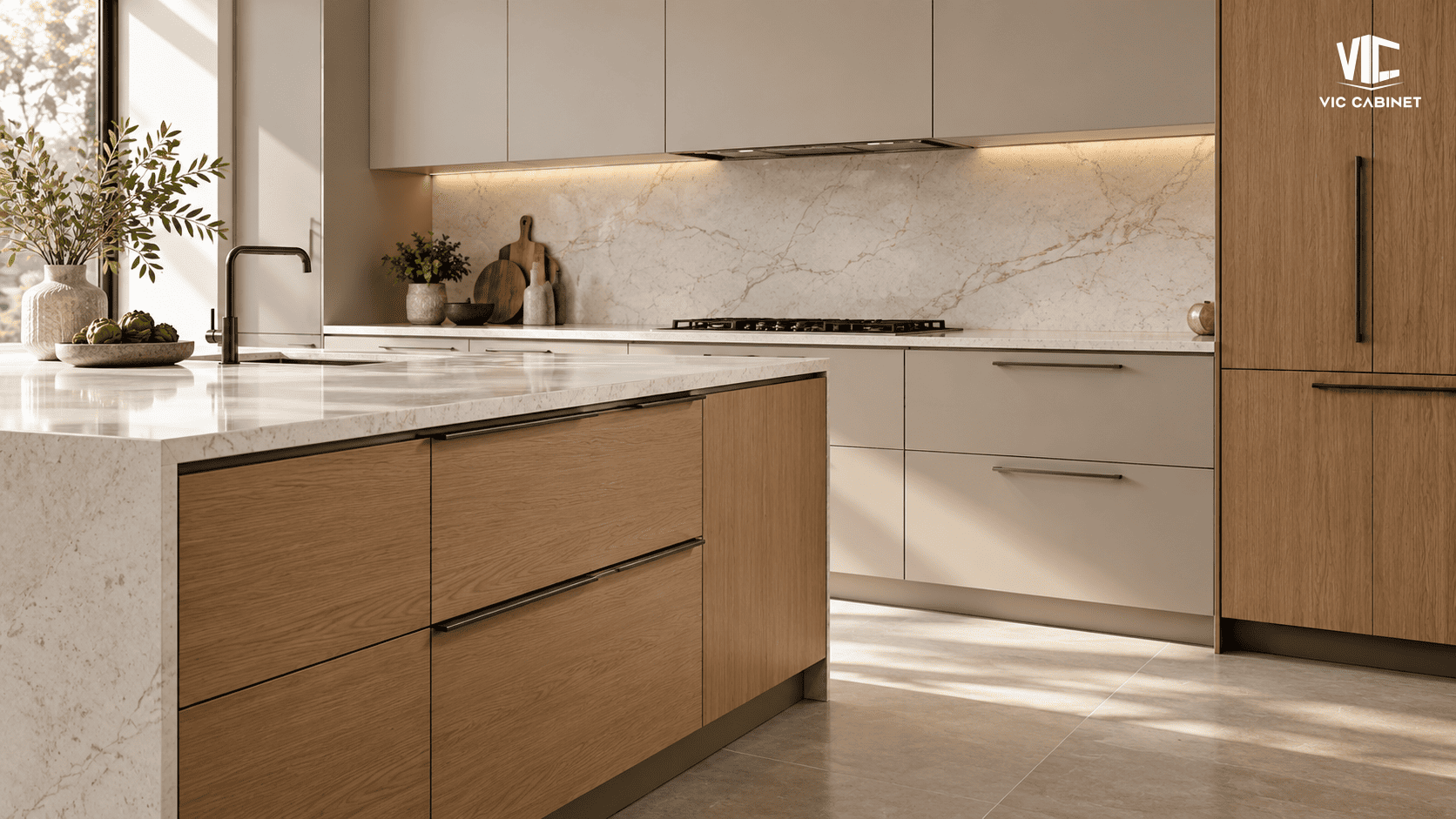
3.5. Hardware for Natural Wood Cabinets
Natural wood cabinets already contain visual detail through grain patterns, color variation, and texture. Hardware should therefore complement the material rather than compete with these natural characteristics. Matte black provides clear contrast against lighter woods, while brass and bronze can reinforce warmer wood tones. Simple bar pulls and edge pulls are particularly effective because their clean shapes allow the natural wood grain to remain the main visual feature.
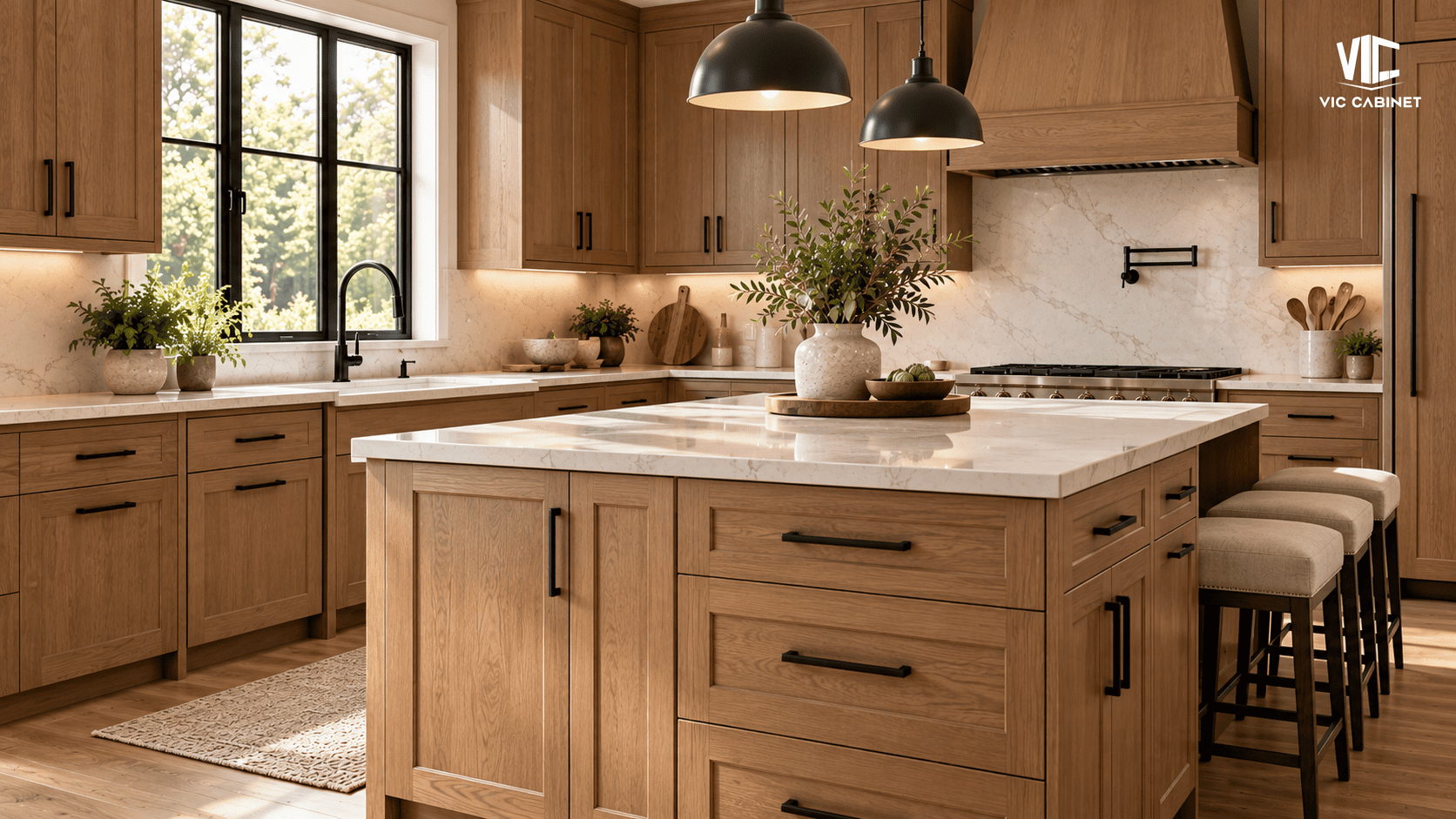
4. How to Choose the Right Kitchen Cabinet Hardware
The right kitchen cabinet hardware should match the cabinet style, remain proportional to the door or drawer, provide a comfortable grip, and withstand expected daily use. Start with the cabinet design, as traditional doors can accommodate knobs, cup pulls, and decorative handles, while Slim Shaker, slab, and frameless cabinets often pair better with simple bar, edge, or finger pulls. Hardware should support the visual language already established by the cabinet rather than introducing an unrelated style. This approach creates a more cohesive kitchen and makes it easier to narrow down the available options.
Size and proportion are equally important. A small knob may work well on a narrow cabinet door but appear undersized on a wide drawer, while an oversized pull can dominate a smaller cabinet front. For two-screw pulls, buyers should check the center-to-center (C-C) measurement, which is the distance from the center of one mounting hole to the center of the other. Using several compatible pull lengths can also help maintain good proportions across different cabinet and drawer sizes.
Finish should be considered in relation to the entire kitchen rather than the cabinets alone. Hardware does not always need to match faucets, appliances, or lighting fixtures exactly, but the combination should appear intentional. Matte black, brushed nickel, brass, bronze, and chrome each create a different relationship with cabinet colors and surrounding materials. Testing finishes alongside actual cabinet samples can help determine whether the contrast and undertones work together.
Durability becomes especially important for multifamily, hospitality, commercial, and other repeat projects. Hinges, slides, handles, and pulls may be used many times each day, so appearance should not be the only purchasing consideration. Consistent specifications can also make replacement and maintenance easier across multiple units. For larger programs, hardware should therefore be evaluated for long-term performance as well as initial design.
5. Putting Hardware on Kitchen Cabinets: Size & Placement
Putting hardware on kitchen cabinets starts with selecting a proportional size, establishing a consistent position, and measuring every mounting point before drilling. On cabinet doors, knobs and pulls should be positioned where they are comfortable to reach while remaining visually aligned with the door profile. On Shaker doors, placement should also relate consistently to the rails and stiles so the hardware does not appear uneven from one cabinet to another. Establishing a standard placement before installation is especially useful when working with multiple cabinets in the same kitchen.
Drawer hardware is commonly centered on the drawer front, but the appropriate size depends on the width and proportions of the drawer. Smaller drawers may use a knob or short pull, while wider drawers can use longer pulls to provide better visual balance and a more comfortable grip. Using the same hardware design does not mean every pull must have exactly the same length. A coordinated family of different sizes can maintain consistency while fitting different cabinet dimensions more naturally.
Before drilling, check the center-to-center measurement of two-hole pulls and use a hardware template or cabinet jig to repeat the same position across multiple doors and drawers. Every drilling point should be marked and verified before permanent holes are made. Even small differences in placement can become noticeable when several cabinet fronts are installed next to each other. Accurate measurement is therefore one of the most important steps when installing kitchen cabinet hardware.
6. Where to Buy Kitchen Cabinet Hardware
Kitchen cabinet hardware is available through local hardware stores, home improvement retailers, kitchen showrooms, specialized cabinet suppliers, and cabinet manufacturers. For homeowners searching for kitchen cabinet hardware near me, local stores and showrooms can be useful when individual knobs or pulls need to be viewed, tested, or purchased in small quantities. These channels also allow buyers to compare finishes and grip comfort before making a decision. The best purchasing option ultimately depends on the quantity, level of customization, and type of cabinet project.
The sourcing process is different for distributors, builders, importers, and project buyers. Larger programs may require consistent hardware specifications across hundreds of cabinets or multiple unit types, making standardization an important consideration. Coordinating hardware directly with the cabinet program can simplify specifications and reduce differences between repeated orders. It can also allow hinges, drawer slides, decorative hardware, and cabinet construction to be considered together before production.

VIC Cabinet manufactures RTA cabinetry in Vietnam for distributors, with product options including Shaker, Slim Shaker, Frameless European, Inset, Veneer, and Flat/Slab cabinets. The product range also includes bathroom vanities and closet systems for different residential and project requirements. Cabinet programs can incorporate hardware specifications such as soft-close concealed hinges and undermount drawer slides. OEM and private-label programs can further help distributors and project buyers coordinate cabinet styles, construction, finishes, and hardware requirements for their markets.
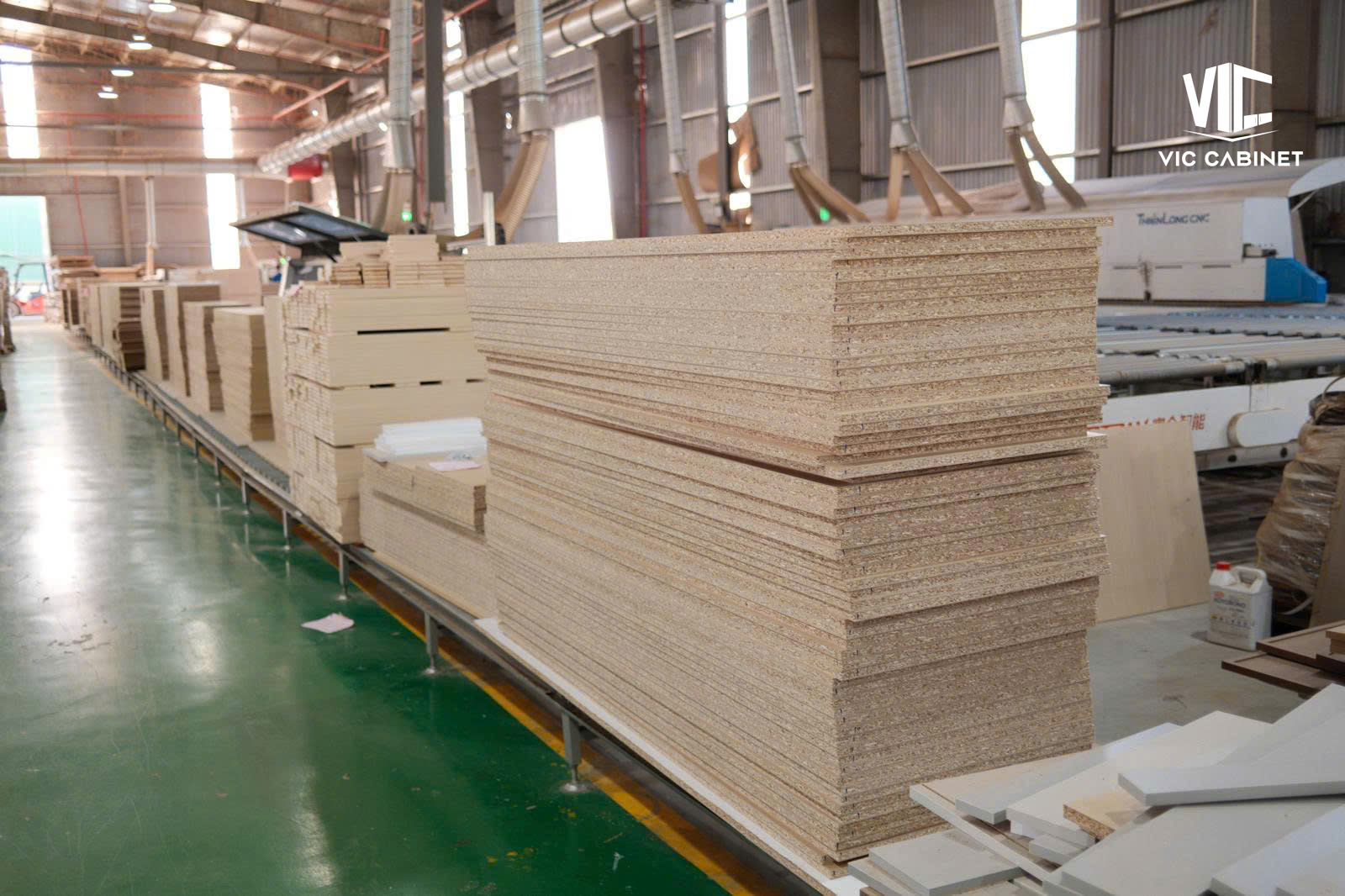
For distributors and project buyers, sourcing cabinets and compatible hardware within the same program can help maintain more consistent specifications across repeat orders and larger developments. It also allows hardware requirements to be considered earlier instead of being treated as a separate purchasing decision after the cabinets are produced. Ultimately, choosing the right kitchen cabinet hardware requires balancing style, proportion, functionality, and durability. Planning these elements together can create cabinets that look cohesive, operate comfortably, and remain practical for everyday use.
VIC CABINET – Vietnam cabinet manufacturer
Head Office: Tran Thu Do Street, Hoang Liet, Hoang Mai District, Hanoi, Vietnam
HCM Office: N8 Street, Phu Thuan, District 7, Ho Chi Minh City, Vietnam
Phone: +84 96 781 7316
Website: https://viccabinet.com
Email: info@viccorp.com.vn
