


RTA wood cabinets are a practical choice for kitchen cabinet distributors, builders, and contractors seeking durable construction, flexible designs, and cost-effective shipping. However, not all wood cabinets use the same materials or manufacturing standards. Understanding the differences between solid wood, hardwood, plywood, and engineered wood helps buyers evaluate cabinet quality, compare suppliers, and select reliable products for residential and commercial projects.
1. What Are RTA Wood Cabinets?
RTA wood cabinets (Ready-to-Assemble wood cabinets) are kitchen cabinets manufactured as individual components and delivered in flat-pack packaging for assembly at the destination. Unlike pre-assembled cabinets, RTA cabinets are shipped with separate cabinet panels, doors, drawers, and hardware.
Wood RTA cabinets may use solid wood, plywood, MDF, particleboard, or a combination of these materials, depending on the cabinet construction and product specifications.
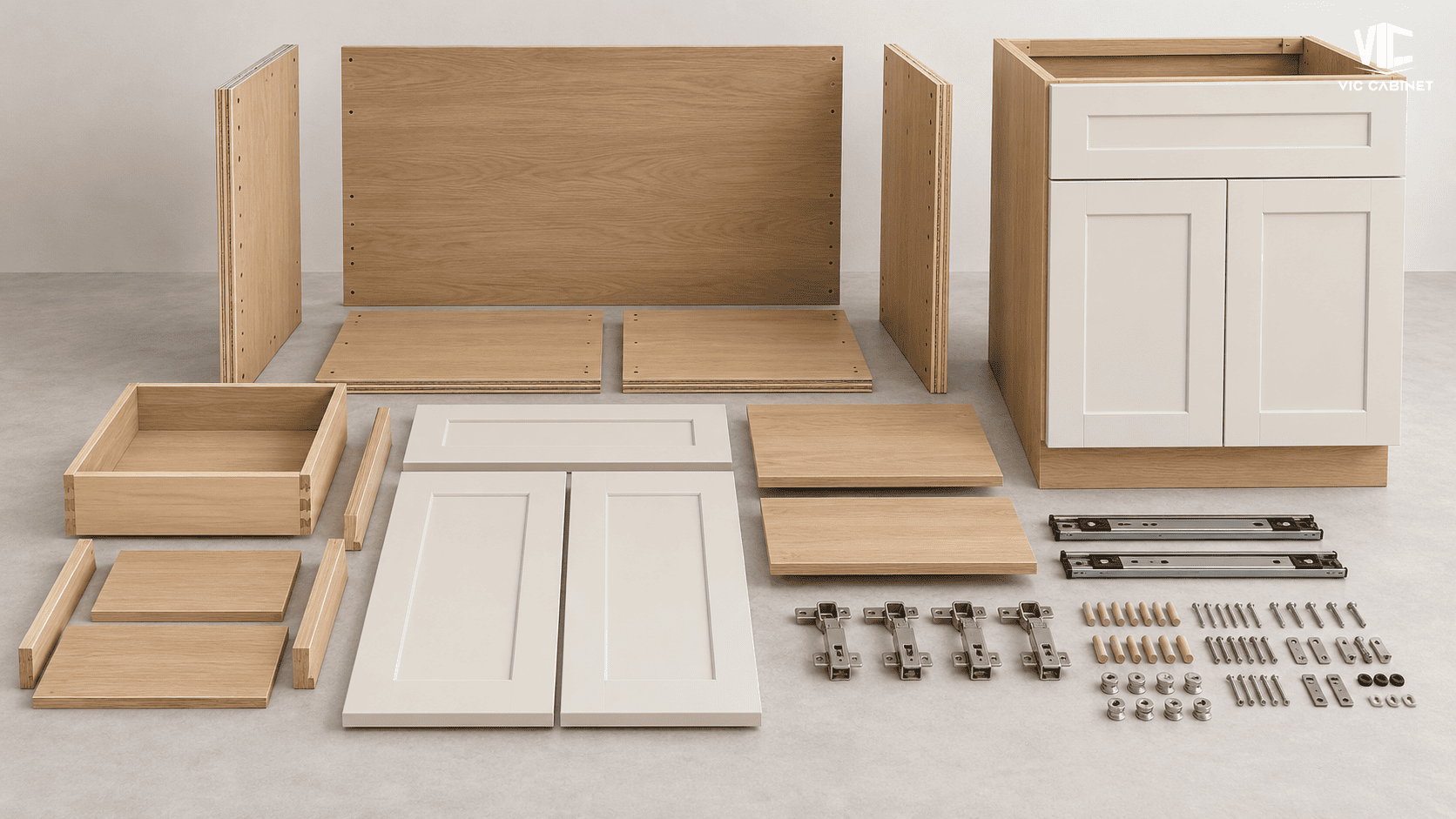
A typical RTA kitchen cabinet includes:
- Cabinet box: The structural body, including side panels, bottom panels, and back panels.
- Cabinet doors: Available in solid wood, engineered wood, or combinations of materials.
- Drawer boxes: Manufactured from solid wood, plywood, or other specified materials.
- Hardware: Hinges, drawer slides, screws, and assembly connectors.
- Shelves and accessories: Components designed for storage and functionality.
One major advantage of RTA construction is transportation efficiency. Flat-packed cabinets can occupy less shipping and warehouse space than comparable fully assembled cabinets, making them attractive for wholesale distribution and large-scale projects.
For distributors and builders, the key consideration is not simply whether a cabinet is made from wood, but which materials are used in each component and how well the entire cabinet is constructed.
2. Types of Wood Used in RTA Kitchen Cabinets
The materials used in RTA wood cabinets directly affect their durability, appearance, and cost. Most manufacturers combine solid wood, hardwood, plywood, and engineered wood to balance quality and affordability. Understanding these materials helps distributors and builders choose the right cabinet construction for their markets.
2.1. Solid Wood RTA Cabinets
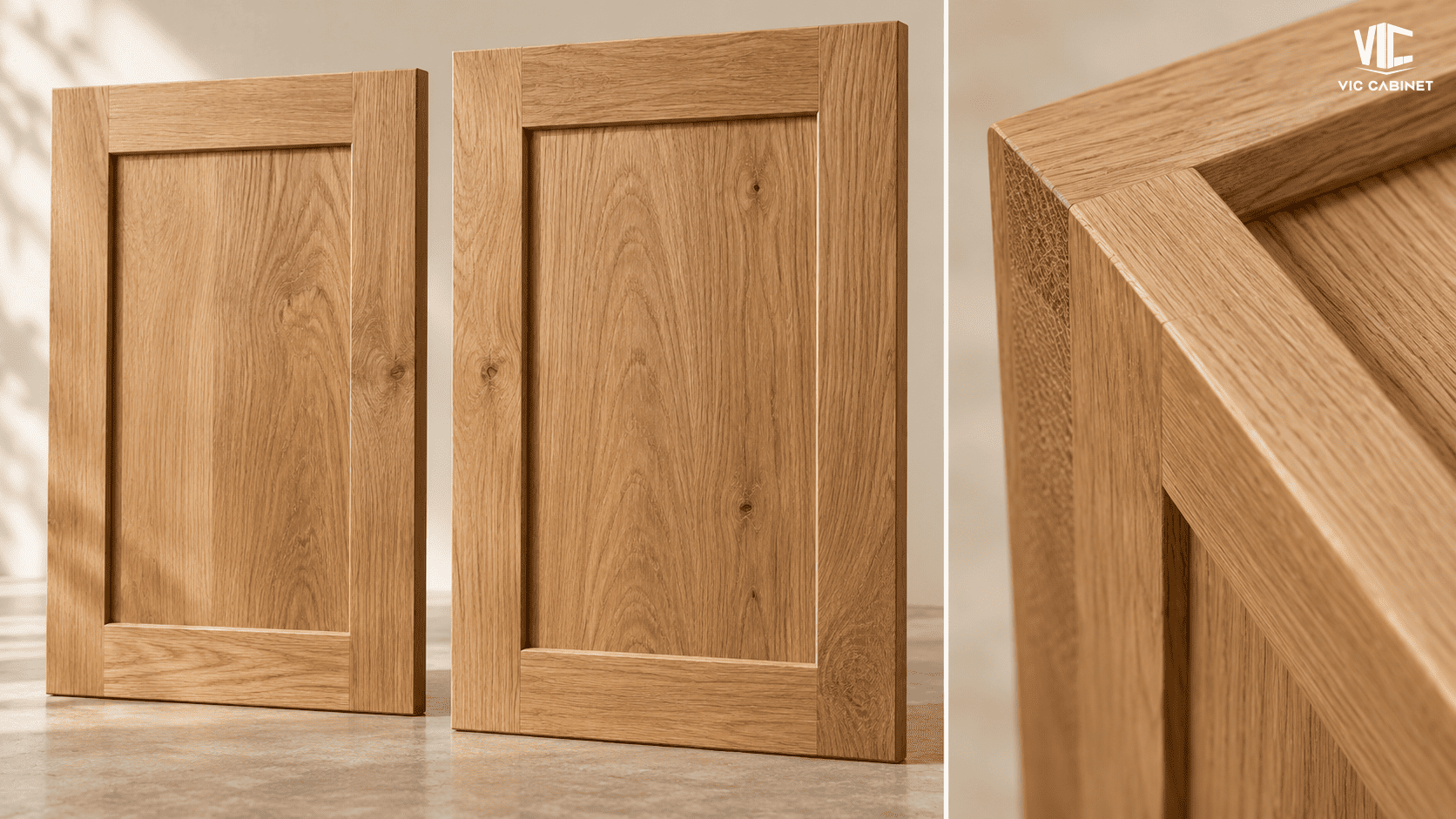
Solid wood RTA cabinets feature natural wood components, commonly used for cabinet doors, face frames, and decorative details. Popular species include oak, maple, birch, and cherry, offering distinctive grain patterns and finishing options.
Solid wood is valued for its natural appearance, durability, and premium appeal. However, it can expand or contract with humidity changes, making proper drying and finishing essential. Many manufacturers therefore combine solid wood doors with plywood cabinet boxes for greater structural stability.
2.2. Hardwood RTA Cabinets
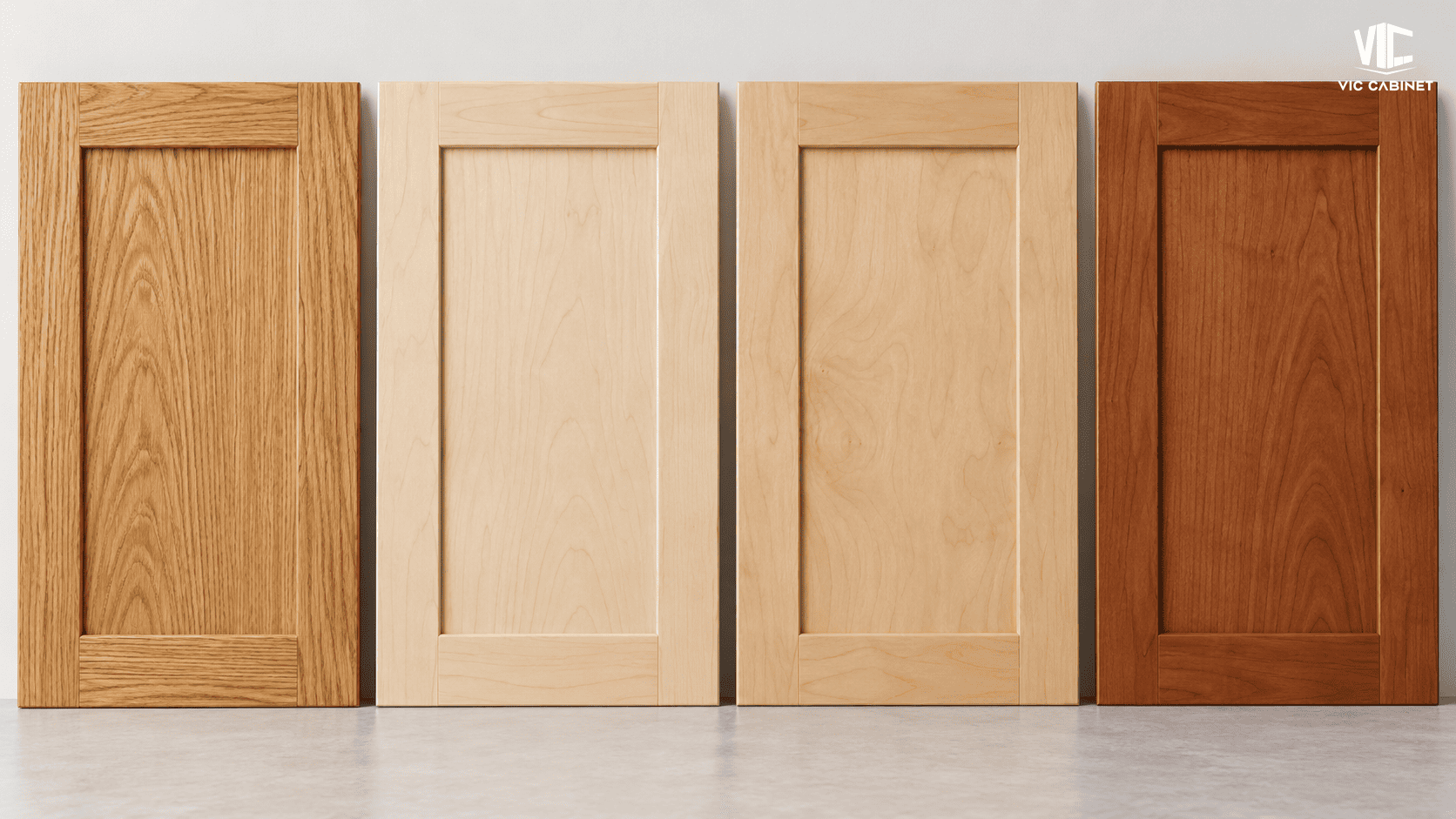
Hardwood RTA cabinets use wood from broadleaf trees, valued for their appearance, strength, and finishing versatility. Different species offer distinct characteristics:
- Oak: Prominent grain and good wear resistance, ideal for traditional cabinet styles.
- Maple: Fine grain and a hard surface, suitable for painted or stained finishes.
- Birch: Smooth texture and versatile finishing options.
- Cherry: Rich natural tones, often used in premium stained cabinets.
For cabinet distributors, wholesalers, and importers, hardwood selection should consider grain consistency, moisture content, and finish quality, particularly when sourcing large quantities for wholesale distribution or multifamily projects.
2.3. Plywood RTA Cabinets
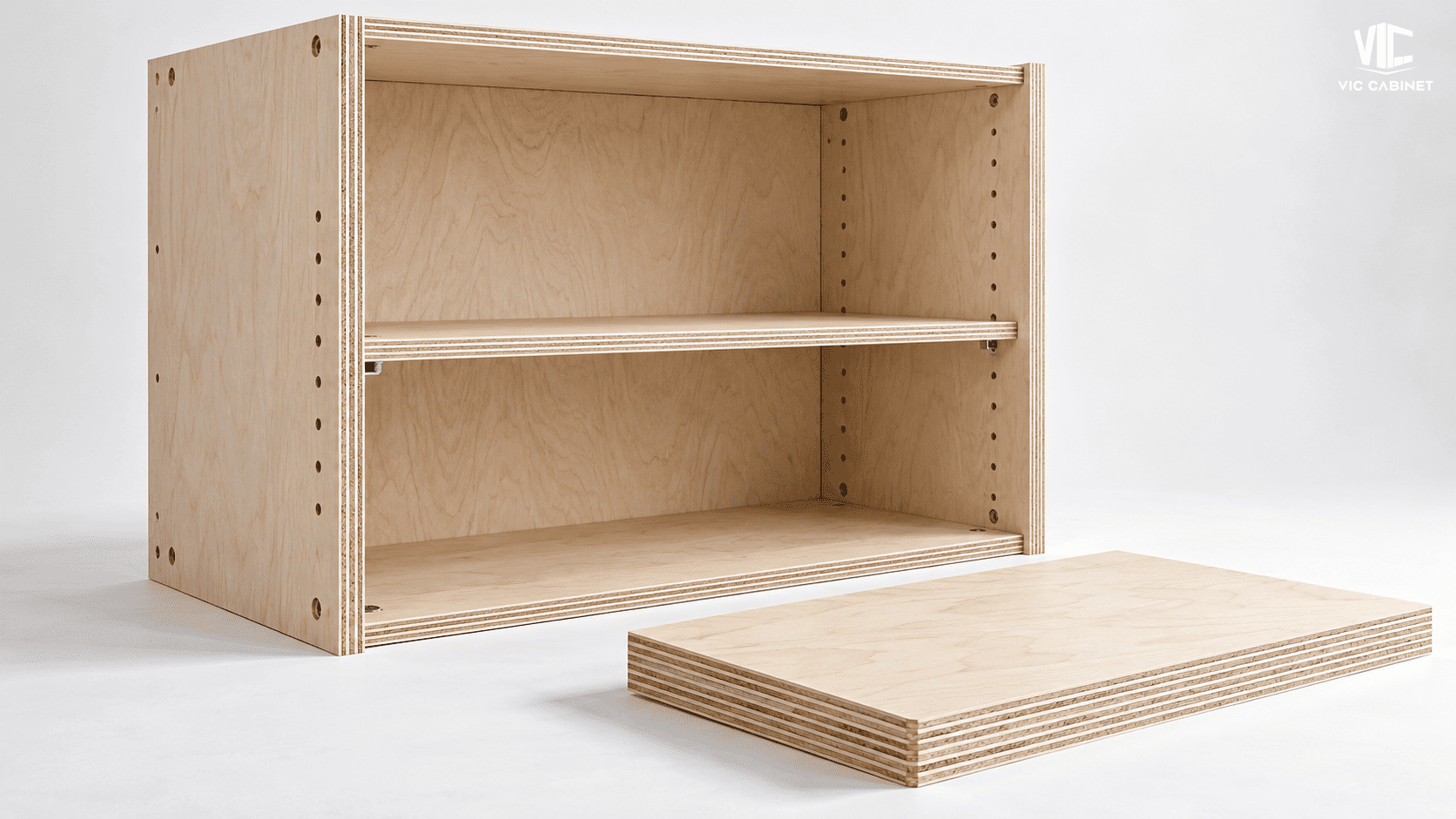
Plywood consists of multiple wood veneer layers bonded together, typically with alternating grain directions. This construction provides good strength and dimensional stability, making it a common choice for RTA cabinet boxes.
Key advantages include:
- Structural strength: Suitable for cabinet boxes and shelves.
- Dimensional stability: Helps minimize warping caused by humidity changes.
- Reliable fastening: Provides good screw-holding performance with appropriate fasteners.
Common cabinet box thicknesses include 1/2 inch and 3/4 inch. At VIC Cabinet, framed cabinets use 1/2-inch plywood carcasses, while frameless cabinets use 3/4-inch plywood carcasses. However, plywood quality, joints, and manufacturing accuracy are equally important considerations.
2.4. MDF and Particleboard Cabinets
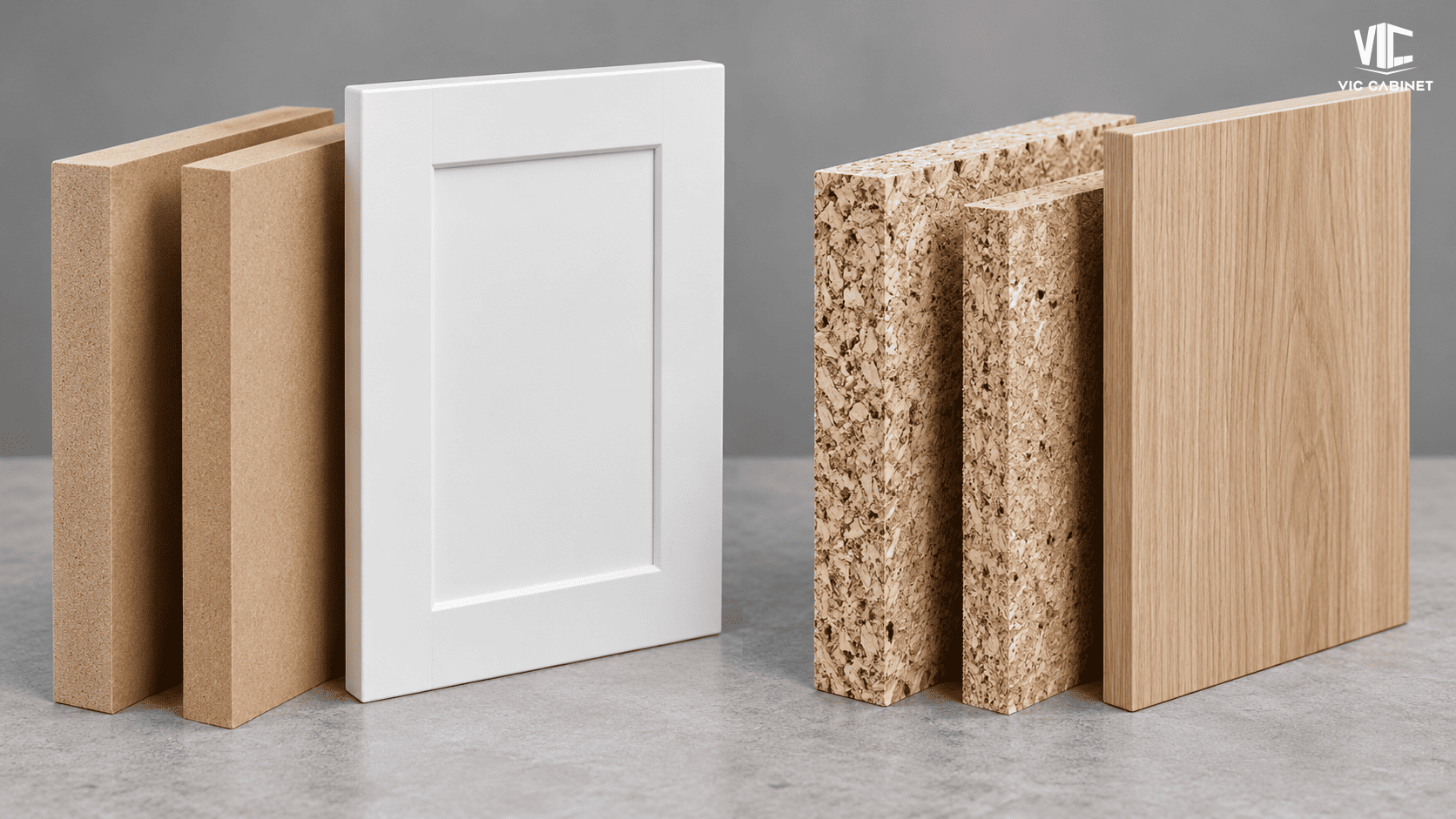
MDF and particleboard are engineered wood materials commonly used in cost-effective RTA wood cabinets. While both are manufactured from wood-based materials and resin, they differ in structure, surface characteristics, and applications.
MDF (Medium-Density Fiberboard) has a smooth, uniform surface that makes it ideal for painted cabinet doors and decorative panels. In contrast, particleboard consists of compressed wood particles and is frequently used for laminated cabinet boxes, shelves, and panels.
These materials offer several practical advantages:
- Smooth surfaces: MDF provides a consistent base for painted finishes.
- Cost efficiency: Both materials offer economical alternatives for selected cabinet components.
- Manufacturing consistency: Uniform panel structures support precise machining and standardized production.
- Design flexibility: Suitable for modern flat-panel cabinets and various surface finishes.
However, standard MDF and particleboard are more vulnerable to moisture damage than quality plywood, especially around unprotected edges. Proper sealing, finishing, and installation are essential to maintaining their performance in kitchen environments.
For distributors and builders, choosing the right engineered wood depends on project requirements, product positioning, and budget. Combining suitable materials with reliable manufacturing processes helps ensure consistent cabinet quality and long-term performance.
3. Solid Wood vs. All-Wood RTA Cabinets: What’s the Difference?
Basically, Solid wood and all-wood RTA cabinets differ in their material composition. Solid wood refers to components made from natural lumber, while all-wood construction typically combines solid wood parts with plywood panels. Since all-wood is not a universally standardized term, specifications may vary between manufacturers.
In many solid wood RTA cabinets, natural lumber is used for doors, face frames, and decorative details. Meanwhile, all-wood cabinet construction often incorporates plywood boxes to improve dimensional stability while maintaining the appearance of natural wood.
The following table highlights the key differences:
| Feature | Solid Wood | All-Wood Construction |
| Materials | Natural solid lumber | Solid wood and plywood |
| Common applications | Doors, face frames | Doors, frames, cabinet boxes |
| Durability | Strong but sensitive to humidity | Good structural stability |
| Cost | Generally higher | Varies by material combination |
| Main advantage | Natural appearance | Balance of strength and stability |
Which construction is better for RTA kitchen cabinets? A combination of solid wood doors and plywood cabinet boxes often provides an effective balance of durability, appearance, and cost. For distributors, wholesalers, and importers, reviewing detailed material specifications is more reliable than choosing cabinets based solely on product labels.
4. Benefits of RTA Wood Cabinets for Distributors and Builders
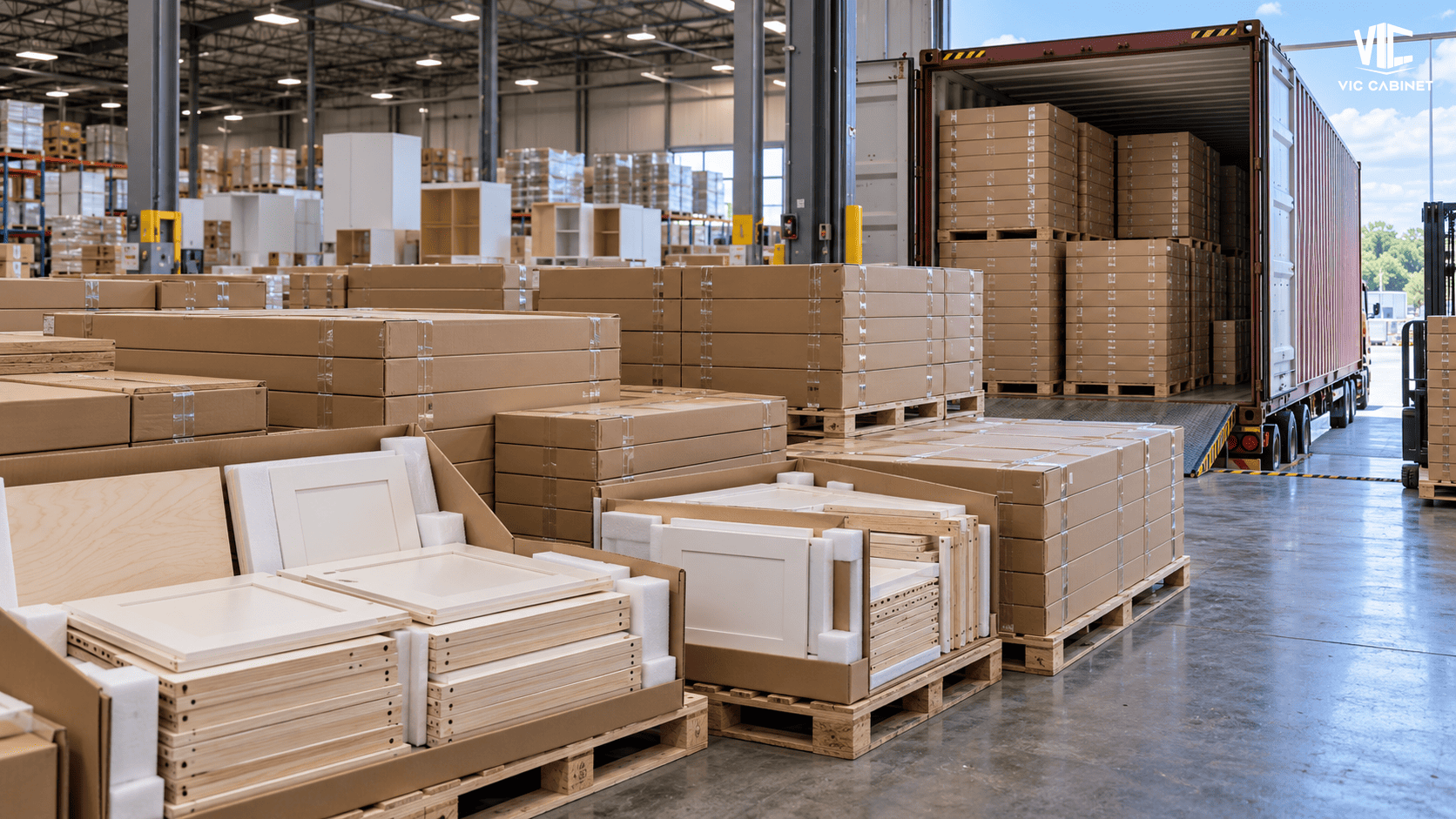
RTA wood cabinets offer several advantages for cabinet distributors, wholesalers, and builders, particularly when managing inventory, transportation costs, and large-scale kitchen projects. Their flat-pack construction and flexible material options make them suitable for a wide range of residential applications.
4.1. Durability and Long-Term Performance
High-quality RTA wood cabinets can provide reliable long-term performance when manufactured with suitable materials and properly assembled. Solid wood doors, plywood cabinet boxes, and quality hardware contribute to structural strength and everyday functionality.
However, durability also depends on manufacturing precision, protective finishes, and assembly quality. For distributors supplying multiple projects, consistent cabinet dimensions and finishes are essential to reducing installation issues, replacements, and unexpected costs.
4.2. Lower Shipping and Storage Costs
One of the main advantages of RTA wood cabinets is their flat-pack design, which allows cabinet components to be packed efficiently for transportation and storage. Compared with fully assembled cabinets, RTA packaging can improve container space utilization and reduce shipping costs per unit.
Key benefits include:
- Efficient container loading: More cabinets can often fit into a single shipment.
- Reduced storage requirements: Flat-packed components occupy less warehouse space.
- Flexible inventory management: Standardized cabinet packages simplify handling and distribution.
For importers and wholesalers purchasing cabinets in bulk, these advantages can help reduce overall logistics expenses, although assembly costs should also be considered.
4.3. Flexible Designs and Customization Options
RTA wood cabinets are available in various styles, materials, and finishes, allowing distributors to serve different market segments. Popular options include Shaker, Slim Shaker, and modern flat-panel cabinets, with painted or stained wood finishes.
Manufacturers offering OEM services can also support custom dimensions, hardware selections, private labeling, and standardized cabinet SKUs. This flexibility helps wholesalers develop product collections that match customer preferences while maintaining consistent specifications across repeat orders.
5. How to Choose Quality RTA Wood Cabinets
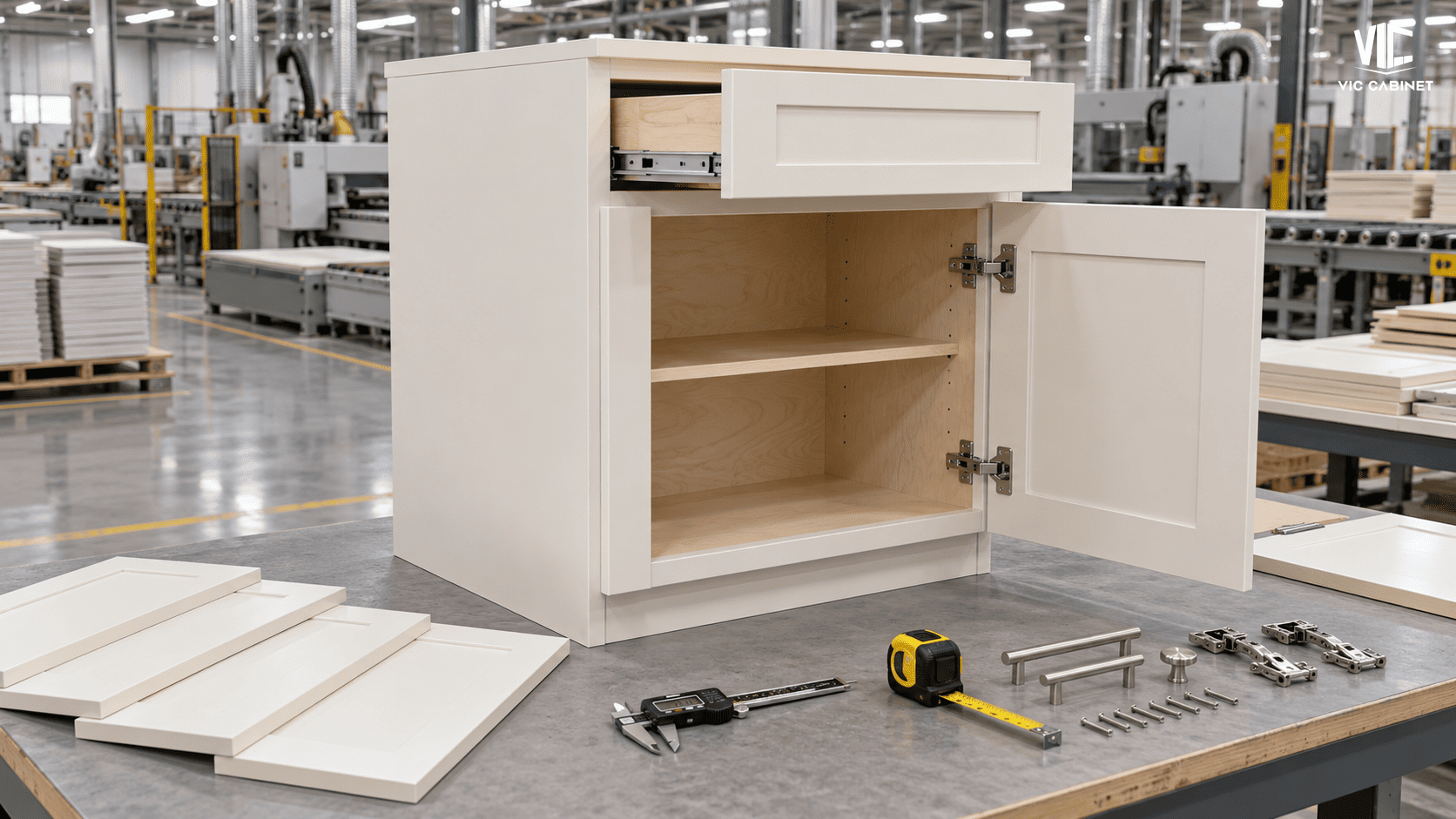
Choosing high-quality RTA wood cabinets requires more than comparing prices and designs. Distributors, wholesalers, and importers should evaluate cabinet materials, construction quality, and manufacturing capabilities to ensure consistent products and reliable supply for their markets.
5.1. Evaluate Wood Materials and Cabinet Construction
The materials and construction methods used in RTA cabinets directly affect their strength, durability, and long-term performance. Whether selecting solid wood RTA cabinets or plywood-based construction, buyers should review the specifications of each component rather than relying on general product descriptions.
Key factors to evaluate include:
- Cabinet box: Material type, panel thickness, and joint construction.
- Doors and frames: Wood species, panel structure, and dimensional stability.
- Drawer boxes: Material quality, construction, and load capacity.
- Assembly system: Connection strength, pre-drilled hole accuracy, and ease of installation.
A well-designed cabinet should combine suitable materials with precise manufacturing to maintain structural stability and consistent quality across bulk orders.
5.2. Check Finishes, Hardware, and Quality Control
Cabinet quality depends not only on wood materials but also on finishing processes, hardware, and manufacturing consistency. Poorly applied finishes, inaccurate dimensions, or low-quality hardware can lead to installation problems, product returns, and additional costs.
Before confirming mass production, distributors should examine approved finish samples, hardware specifications, and quality control procedures. Important considerations include consistent paint or stain colors, smooth surface finishes, accurate cabinet dimensions, and reliable soft-close hinges and drawer slides.
For large orders, finish consistency is particularly important. Even slight color differences between an approved sample and delivered cabinets may affect project installation schedules and require costly replacements. Manufacturers with documented quality control procedures can help minimize these risks.
5.3. Compare Manufacturer Capabilities, MOQ, and Lead Times
A reliable RTA cabinet manufacturer should provide consistent quality, sufficient production capacity, and clear delivery schedules. For wholesalers and importers, these factors are essential when planning inventory and fulfilling multiple customer orders.
Before selecting a supplier, consider:
- Production capacity: Ability to handle bulk orders and repeat shipments.
- MOQ: Minimum order quantities that match purchasing requirements.
- Lead times: Clear production schedules and shipping arrangements.
- OEM capabilities: Custom cabinet designs, finishes, packaging, and private labeling.
- Compliance: Relevant documentation for applicable U.S. requirements, including TSCA Title VI and CARB Phase 2.
Beyond initial pricing, distributors should evaluate the manufacturer’s ability to maintain consistent specifications across future orders. A dependable supplier can help reduce quality-related risks, improve inventory planning, and support long-term business growth.
6. Why Choose VIC Cabinet as Your RTA Wood Cabinet Manufacturer?
VIC Cabinet is a Vietnam-based manufacturer specializing in factory-direct RTA kitchen cabinets for U.S. distributors, wholesalers, importers, and builders. With a 700,000-square-foot manufacturing facility and approximately 1,400 workers, we provide reliable production capabilities for large-volume orders and long-term supply partnerships.
Our cabinet manufacturing solutions offer several advantages:
- Flexible cabinet construction: Framed cabinets with 1/2-inch plywood carcasses and frameless cabinets with 3/4-inch plywood carcasses.
- Diverse styles and finishes: Shaker, Slim Shaker, European frameless, and flat-panel designs with painted and stained finish options.
- OEM and private-label services: Customized specifications, hardware, packaging, and branding to support wholesale cabinet programs.
- Quality control: Inspection of materials, dimensions, finishes, and hardware to maintain consistent production quality.
- U.S. market compliance: Cabinet programs manufactured with applicable TSCA Title VI and CARB Phase 2 requirements in mind.
As a factory-direct supplier with 100% Vietnam-origin manufacturing, VIC Cabinet supports wholesale orders starting from one 40’HQ container. We also provide technical drawing assistance and export coordination to help distributors streamline sourcing and manage project requirements.
Looking for a reliable RTA wood cabinet manufacturer in Vietnam? Contact VIC Cabinet today to explore our cabinet collections, discuss your specifications, and request a factory-direct quotation for your next order.
VIC CABINET – Vietnam cabinet manufacturer
Head Office: Tran Thu Do Street, Hoang Liet, Hoang Mai District, Hanoi, Vietnam
HCM Office: N8 Street, Phu Thuan, District 7, Ho Chi Minh City, Vietnam
Phone: +84 96 781 7316
Website: https://viccabinet.com
Email: info@viccorp.com.vn
