


Flat pack cabinets have become a popular solution for modern kitchen projects because they combine cost efficiency, flexible installation, and easier transportation. From flat pack kitchen cabinets to shaker styles and cabinet kits, these systems help homeowners, contractors, and developers simplify both logistics and project planning. This guide explains how flat pack cabinets work, what is included in cabinet kits, and the key differences between flat pack and RTA cabinets.
1. What Are Flat Pack Cabinets?
Flat pack cabinets come in separate pieces instead of complete cabinet boxes. Manufacturers pack the panels, doors, drawers, and hardware into flat cartons, then installers assemble the cabinets directly at the project site. This system helps suppliers reduce shipping volume and improve transportation efficiency.
Most cabinet kits include side panels, bottom panels, back panels, doors, drawer fronts, and installation hardware. Factories pre-cut and pre-drill these components before packing them. Installers connect the panels with cam locks, dowels, or screws to build the cabinet structure quickly.
Many contractors and distributors choose flat pack cabinets because flat packaging lowers logistics costs. Suppliers can load more cabinets into one shipping container and organize warehouse storage more efficiently.
Fully assembled cabinets work differently. Manufacturers ship them as complete cabinet boxes ready for installation. Although this reduces assembly time, the cabinets require more shipping space and create more handling challenges during transportation and delivery.
2. Why Flat Pack Kitchen Cabinets Are Popular for Modern Projects

Flat pack kitchen cabinets have become a practical option for many residential and renovation projects. They allow homeowners, contractors, and developers to install kitchen cabinets efficiently while keeping overall project costs under control.
One reason flat pack kitchen cabinets are widely used is cost efficiency. Because the cabinets are shipped flat, transportation and storage costs are lower than with assembled cabinets. This makes them suitable for projects that require large quantities of cabinets.
Another advantage is installation flexibility. Flat pack kitchen cabinets can be transported easily through elevators, staircases, or narrow hallways before assembly. This is particularly useful in apartment buildings and renovation projects where space is limited.
Flat pack systems also support flexible kitchen layouts. Since the cabinets are assembled on site, installers can organize base cabinets, wall cabinets, and tall units according to the kitchen design. For many modern projects, flat pack kitchen cabinets provide a balance between efficiency, flexibility, and cost control.
3. Flat Pack Shaker Cabinets: The Most In-Demand Style
Flat pack shaker cabinets are one of the most widely used cabinet styles in modern kitchens. The shaker design uses a simple frame with a recessed center panel, creating a clean and balanced appearance. Because the style is neutral and timeless, it works well in both traditional and contemporary kitchen designs.
Within this category, two variations are common. Traditional shaker cabinets have a wider frame that gives a classic appearance. Slim shaker cabinets use a narrower frame, creating a more modern and minimal look. Both styles are widely available in flat pack formats.
Color also plays an important role in the popularity of flat pack shaker cabinets. White, grey, navy, and natural wood tones are among the most common finishes. These colors match many kitchen materials such as quartz countertops, stone surfaces, and wood flooring.
Because of their simple structure and broad design compatibility, flat pack shaker cabinets are suitable for many project types. They are widely used in residential homes, apartment developments, and multi unit housing projects where consistent design and efficient installation are important.
4. What’s Included in Flat Pack Cabinet Kits?
Main Components of Flat Pack Cabinet Kits
Most flat pack cabinet kits include all components needed to assemble a cabinet. The main parts typically include:
- Panels – side panels, bottom panels, and back panels that form the cabinet box structure
- Doors and drawer fronts – the visible parts that define the cabinet style and finish
- Hardware and cam lock system – screws, dowels, hinges, and cam locks used to connect the cabinet panels securely
These components are pre-cut and pre-drilled at the factory, allowing installers to assemble the cabinet quickly.
Average Assembly Time
The installation time for flat pack cabinet kits is generally short. A standard base cabinet usually takes about 10 to 20 minutes to assemble, depending on cabinet size and installer experience. Cabinets with drawers or internal accessories may require slightly more time.
Factors That Affect Durability After Assembly
The long-term durability of cabinets depends on several factors. Panel material quality, the strength of the hardware system, and proper installation all influence cabinet stability.
When panels are aligned correctly and hardware is tightened properly, flat pack cabinet kits can provide a stable cabinet structure suitable for everyday kitchen use.
5. Flat Pack vs RTA Cabinets: Key Differences Explained
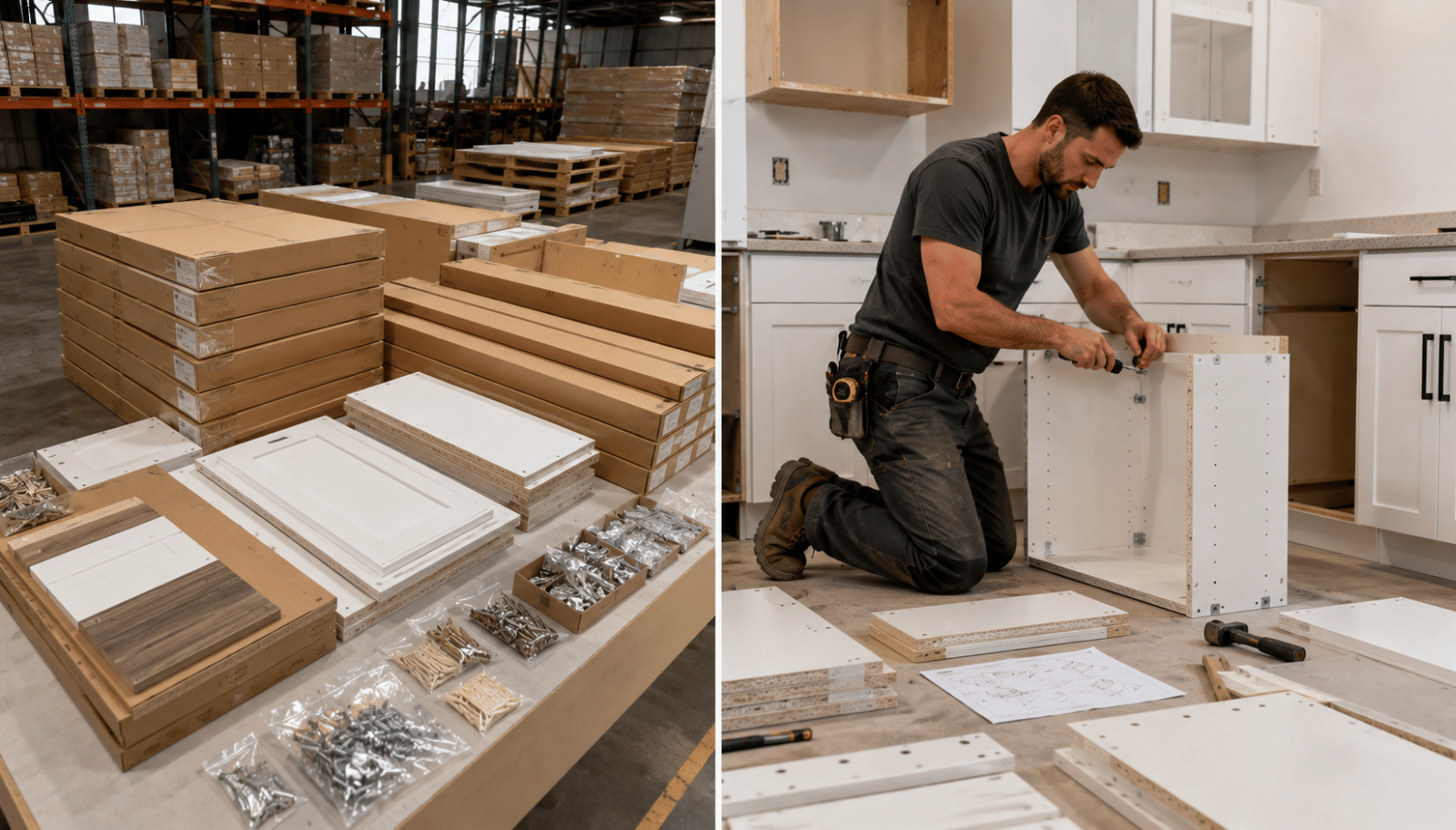
The terms flat pack cabinets and RTA cabinets are often used interchangeably, but they emphasize different aspects of the cabinet system. Understanding the distinction helps buyers communicate more clearly with suppliers and distributors.
Flat pack cabinets usually describe the packaging and shipping format. The cabinet components are packed flat in cartons, including panels, doors, and hardware. This method focuses on transportation efficiency and allows more cabinets to fit into containers or warehouse storage.
RTA cabinets means “ready to assemble.” The term emphasizes the installation process. RTA cabinets are designed so installers or homeowners can assemble the cabinet on site using simple tools and pre-drilled components.
The difference is mainly in terminology. In many cases, flat pack cabinets and RTA cabinets refer to the same type of cabinet product. The table below shows the practical distinction.
| Aspect | Flat Pack Cabinets | RTA Cabinets |
| Main meaning | Packaging and shipping format | Installation method |
| Focus | Logistics and transportation efficiency | Ease of assembly |
| Packaging | Components packed flat in cartons | Usually packed flat as well |
| Market usage | Common in manufacturing and logistics | Common in retail and cabinet sales |
In practice, most flat pack cabinets sold internationally are also RTA cabinets. The difference mainly reflects how suppliers describe the product rather than a major structural difference.
6. How to Choose the Right Flat Pack Cabinets
1. Set your budget first
Flat pack cabinets range from around $80–$400+ per unit depending on size, material, and brand. Budget for the full scope: not just the cabinets, but also hardware, benchtops, splashbacks, and installation if you’re not DIY-ing.
2. Measure twice (then measure again)
Flat pack cabinets come in standard incremental widths. Your layout needs to be designed around these dimensions unlike custom cabinetry, you can’t order a 437mm-wide base cabinet. Most manufacturers offer a free layout planning service if you send them your measurements.
3. Prioritize box material over door finish
New renovators often spend all their attention on door styles and colors but the cabinet box is what determines longevity. Look for solid plywood (preferred) or moisture-resistant MDF over standard particleboard, especially for kitchen and bathroom environments.
4. Check the hardware
Soft-close hinges, full-extension drawer runners, and adjustable shelf pins are the difference between cabinets that feel premium and ones that feel flat pack. European hardware brands (Blum, Hettich, Grass) are the gold standard.
At Vic Cabinet, we manufacture flat pack cabinets with precise cutting, pre-drilled panels, and standardized hardware systems. Our production process helps distributors, contractors, and developers install cabinets more efficiently while maintaining consistent cabinet quality across projects.
𝐕𝐈𝐂 𝐂𝐚𝐛𝐢𝐧𝐞𝐭 𝐅𝐚𝐜𝐭𝐨𝐫𝐲 – 𝐕𝐢𝐞𝐭𝐧𝐚𝐦 𝐜𝐚𝐛𝐢𝐧𝐞𝐭 𝐦𝐚𝐧𝐮𝐟𝐚𝐜𝐭𝐮𝐫𝐞𝐫
Head Office: Tran Thu Do Street, Yen So Ward, Hanoi, Vietnam
HCM Office: N8 Street, Phu Thuan, District 7, Ho Chi Minh City, Vietnam
Phone: +(84) 986 119 249
Website: https://viccabinet.com
Email: info@viccorp.com.vn
