


The global cabinetry supply chain is undergoing a structural realignment. Driven by escalating trade tensions, anti-dumping duties, and the need for geographical diversification, international buyers – particularly in North America – are looking beyond traditional manufacturing hubs. Among the emerging destinations, Vietnam has positioned itself as a major contender for export-grade kitchen and bath cabinetry.
But does the reality match the market expectations? To answer this, we take an objective, data-driven look at the Vietnamese cabinet manufacturing landscape, focusing on one of its notable players: VIC Cabinet Factory.
1. The Context: Why the Shift to Vietnam Cabinet Manufacturers?
To understand the positioning of VIC Cabinet, one must first understand the macroeconomic factors driving the cabinetry industry.
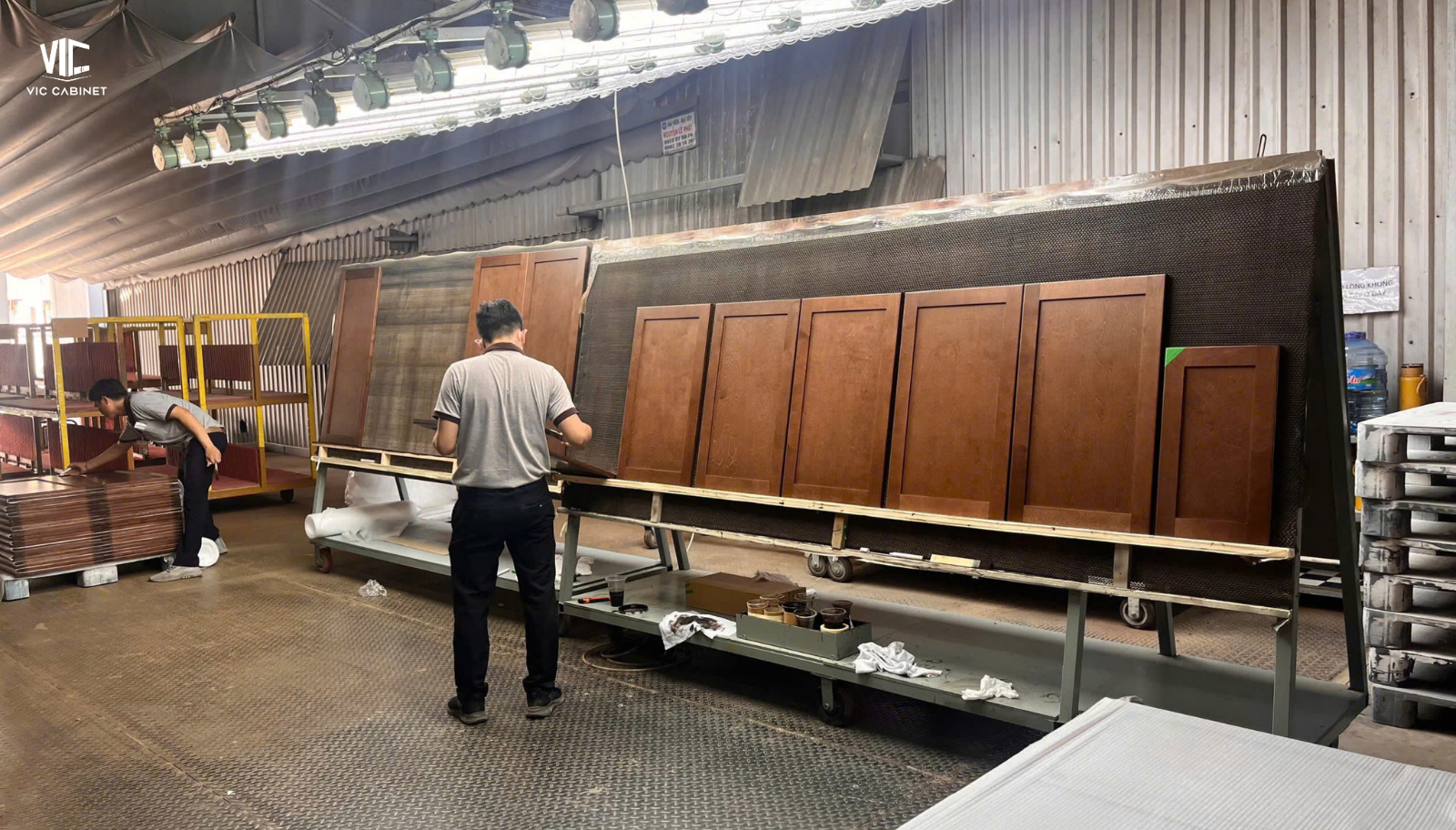
For years, procurement managers relied heavily on a single country of origin. However, the introduction of high Anti-Dumping and Countervailing Duties (AD/CVD) on wooden cabinets and vanities completely disrupted this model. Importers faced a sudden need to find alternative sources that could:
- Provide stable tariff environments: Vietnam offers a reliable framework with verified Certificates of Origin (C/O), protecting buyers from costly trade penalties.
- Replicate production standards: The ability to handle American Face Frame (framed) standards as well as European Frameless structures is crucial.
- Ensure material compliance: Products must meet strict environmental and health regulations, such as the EPA Title VI and CARB Phase 2 emission standards.
2. Technical Profile: What VIC Cabinet Factory Offers
Located in Northern Vietnam near Hanoi, VIC Cabinet Factory operates primarily as an OEM (Original Equipment Manufacturer) and ODM (Original Design Manufacturer) exporter. Unlike trading companies, their direct-factory setup is engineered to cater to mid-to-high volume orders, specifically targeting distributors, multi-family project developers, and cabinet wholesalers.

Based on technical specifications and factory data, their production capabilities are divided into key categories:
2.1. Construction Method & Styles
- American Face Frame: Standard pocket-screw joinery with solid wood frames (Birch, Maple, Oak) and plywood box construction.
- Frameless (European Modern): Using precise dowel and cam-lock construction, typically paired with high-density engineered wood cores, melamine, or wood veneer finishes.
- Specialty Cabinetry: Inset cabinet designs and modern slim shaker profiles, which require high-precision CNC machining to ensure perfect alignments.
2.2. Material & Compliance Standards
One of the primary concerns for importers sourcing from Southeast Asia is material toxicity. From an objective standpoint, VIC Cabinet addresses this by sourcing raw materials that comply with global certification protocols:
| Material Component | Technical Standard Applied | Regulatory Certification |
| Plywood & Core Boards | Low-formaldehyde emission adhesive resins | CARB Phase 2 / EPA Title VI |
| Solid Timber | Kiln-dried to 8-12% moisture content | Prevents warping, cracking, and splitting |
| Finishing & Paints | Multi-layer PU/UV coatings | Lead-free, chemical resistant, scratch-proof |
3. An Objective Assessment of Sourcing Challenges vs. Benefits
While sourcing from a manufacturer like VIC Cabinet offers clear cost and tariff advantages, buyers must weigh both sides of the equation.
The Benefits
- Cost Efficiency: Direct factory pricing combined with lower labor costs in Vietnam results in a competitive FOB (Free on Board) price point.
- Tariff Mitigation: Avoids the heavy AD/CVD duties associated with other regions, ensuring a smoother customs clearance process into North America.
- Adaptability: VIC Cabinet’s engineering team is capable of interpreting complex architectural blueprints, making them a viable option for customized commercial and multi-family developments.
The Challenges (And How to Mitigate Them)
- Lead Times: Shipping from Haiphong Port (Vietnam) to the US East Coast can take 35 to 45 days, plus production lead times of 45 to 60 days. Importers must plan inventory cycles at least 4 to 5 months in advance.
- Communication Barriers: While export-oriented factories like VIC Cabinet employ English-speaking account managers, technical specifications must be thoroughly documented in detailed shop drawings to prevent any manufacturing errors.
- Minimum Order Quantities (MOQ): As an export manufacturer, VIC Cabinet typically operates on a container-load basis (FCL). It may not be suitable for small-scale residential contractors looking for single-kitchen orders.
4. Verdict: Is VIC Cabinet the Right Partner for Your Supply Chain?
VIC Cabinet Factory represents the modern era of Vietnamese manufacturing: transition-ready, structurally compliant, and focused on B2B export efficiency.
- Ideal for: Wholesalers, regional cabinet distributors, and developers managing multi-family projects who require container-load volumes of RTA (Ready-to-Assemble) or pre-assembled cabinets.
- Not ideal for: Individual homeowners or local remodelers looking for bespoke, single-project customizations with immediate delivery.
As supply chains continue to demand diversification, factories that can bridge the gap between competitive Asian pricing and strict Western quality benchmarks will remain at the top of procurement lists. VIC Cabinet fits squarely into this category.
