


Investing in walnut shaker kitchen cabinets brings natural warmth and high-end modern simplicity to residential spaces. If you want a kitchen that balances rich organic wood patterns with clean architectural lines, premium hardwood cabinetry delivers the best long-term value. This definitive guide details construction standards, material variations, and layout strategies to help you select the right cabinetry setup.
1. Why Walnut Shaker Kitchen Cabinets Are a Premium Choice
Premium cabinetry serves as both a functional necessity and a primary design anchor for high-end residential interiors. Among luxury hardwood options, shaker walnut kitchen cabinets stand out due to their unique material characteristics and versatile aesthetic appeal.
1.1. The Timeless Appeal of Shaker Cabinet Design
The five-piece Shaker door profile relies on a recessed center panel with clean, square edges. When executed in walnut, this minimalist geometry balances the wood’s intense, swirling grain. The lack of ornate molding ensures that the natural beauty of the timber remains the focal point. This combination allows walnut Shaker cabinetry to transition easily between traditional farmhouse layouts and sleek, contemporary spaces.
Beyond walnut, homeowners and cabinet buyers can also explore other popular Shaker cabinet colors in the U.S. market to find the right option for different design styles and project requirements.
1.2. Natural Color, Grain, and Character of Walnut
American Black Walnut (Juglans nigra) is highly prized for its deep chocolate brown tones, complex grain patterns, and structural stability. Unlike softer woods, walnut offers excellent shock resistance and dimensional stability, meaning it is less prone to warping in humid kitchen environments. The wood naturally contains a mix of dark heartwood and lighter, creamy sapwood, giving each panel an organic, distinct fingerprint.
1.3. Pros and Cons of Walnut Shaker Cabinets
| Pro | Con |
| Exceptional resistance to warping and shrinking in high-humidity kitchen zones | Higher upfront material cost compared to standard maple, oak, or painted MDF options. |
| High resale value and enduring market appeal for luxury residential properties. | Walnut behaves uniquely under light exposure; it naturally mellows and lightens slightly over time, developing a warmer, rich golden-brown patina under UV light. |
2. Types of Walnut Shaker Kitchen Cabinets
Understanding how walnut cabinetry is engineered helps buyers evaluate structural integrity and match performance expectations with realistic renovation budgets.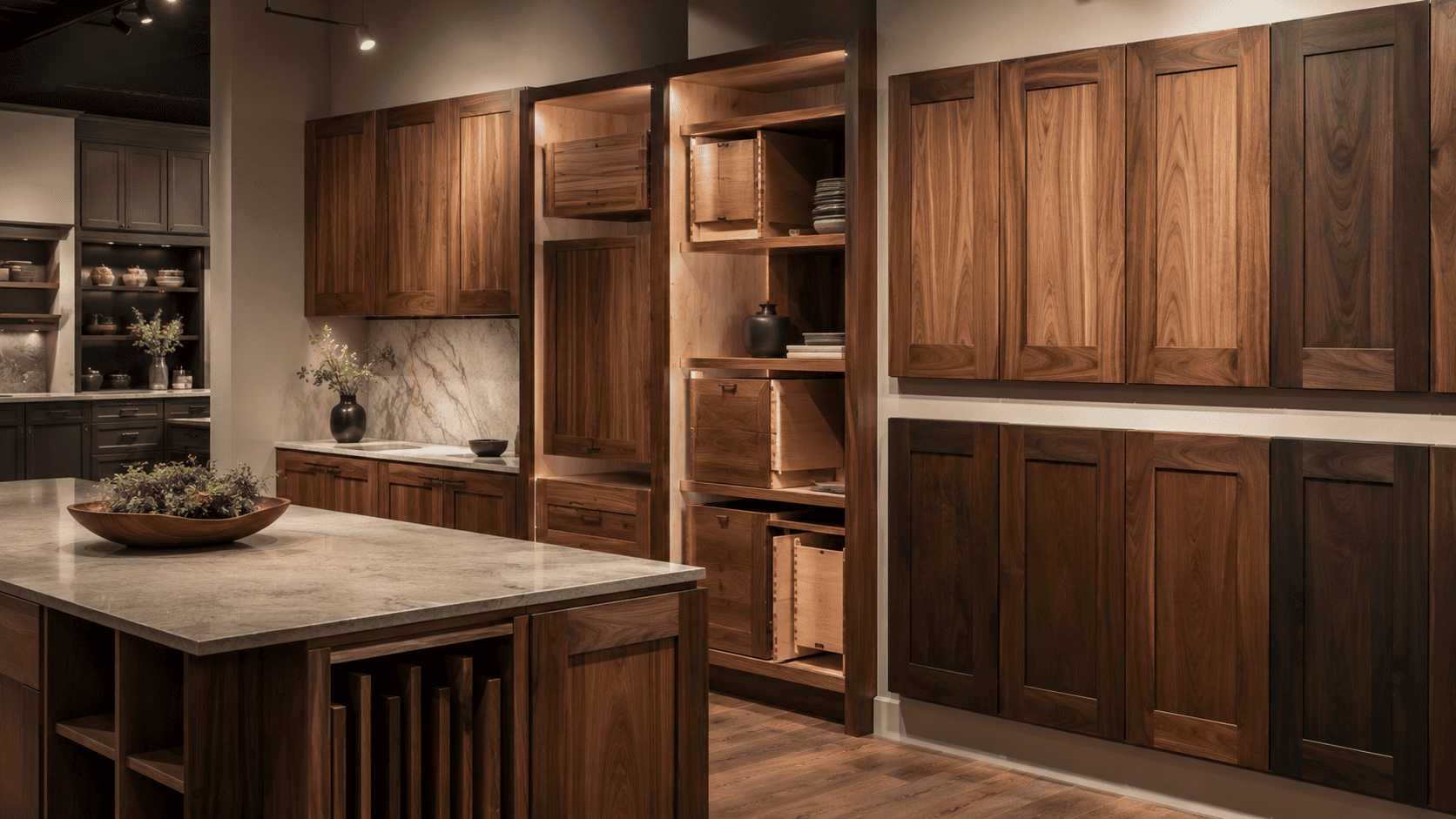
2.1. Solid Walnut vs. Walnut Veneer Cabinets
For the recessed center panels of Shaker doors, using a premium plywood or high-density core wrapped in a thick, sequence-matched walnut veneer is the industry standard. Solid wood center panels expand and contract across the grain, risking structural joint separation over time. A stable engineered core remains perfectly flat, while solid walnut is strictly reserved for the outer door frames (stiles and rails) and structural face frames to ensure maximum joint stability.
2.2. Natural Walnut vs. Walnut-Stained Cabinet Finishes
Natural walnut utilizes clear topcoats to showcase the true, raw coloration and contrasting sapwood highlights. Conversely, walnut-stained cabinets apply deep brown pigments over less expensive wood species like maple or birch. While stained alternatives reduce initial material expenses, they lack the authentic grain depth, chatoyancy, and unique aging characteristics found only in true American walnut timber.
2.3. Framed vs. Frameless Walnut Shaker Cabinets
Framed cabinet construction attaches a solid 3/4-inch wood frame to the front of the cabinet box, providing excellent structural rigidity and matching traditional American design expectations. Frameless construction (European style) eliminates the face frame entirely, relying on thicker cabinet walls to secure hinges. This style provides unhindered access to the interior, maximizing drawer storage space by up to 15% and allowing a continuous, flush walnut grain match across the entire wall layout.
3. Walnut vs. Cherry vs. Mahogany Shaker Cabinets
Selecting the right hardwood species impacts the kitchen’s ambient light, overall color palette, and long-term property resale value.
| Feature | Walnut Shaker | Cherry Shaker | Mahogany Shaker |
| Primary Tone | Chocolate / Gray-Brown | Warm Red / Amber | Deep Reddish-Brown |
| Grain Pattern | Swirling, variegated | Fine, uniform, satiny | Interlocking, ribbon-like |
| Durability | High (1,010 Janka) | Moderate (950 Janka) | High (800–1,500 Janka) |
| Price Tier | Ultra-Premium | Premium | High-End Exotic |
| Maintenance | Protect from heavy UV exposure | Expect rapid darkening | Requires stable humidity |
| Best Design Style | Modern / Mid-Century | Classic Traditional | Formal Estate Luxury |
3.1. Shaker Walnut Kitchen Cabinets vs. Cherry Shaker Kitchen Cabinets
While both materials sit at a premium price point, shaker walnut kitchen cabinets lean toward cool, earthy undertones, whereas cherry shaker kitchen cabinets favor amber and red hues. Cherry wood features a much tighter, more uniform grain that darkens rapidly when exposed to sunlight. Walnut offers a more dramatic, variegated pattern with distinct dark lines, making it the preferred choice for architects designing modern or mid-century spaces.
3.2. Walnut vs. Mahogany Shaker Kitchen Cabinets
Mahogany shaker kitchen cabinets offer a highly uniform, interlocking grain pattern with an exotic, reddish-brown luster. Mahogany provides a very formal, traditional appearance that excels in grand, classic estates. Walnut, conversely, feels more organic and less rigid, making it easier to integrate into open-concept kitchens that connect to modern living rooms.
4. Popular Walnut Shaker Kitchen Cabinet Design Ideas
Because walnut is visually dominant, designers frequently use specific layout strategies to keep spaces balanced and bright.
4.1. Natural Walnut Cabinets with White Quartz Countertops
Bright white or cream quartz countertops provide a striking, high-contrast look that prevents dark wood cabinets from overwhelming the space. Calacatta quartz with subtle gold or gray veining beautifully complements the natural brown warmth of walnut.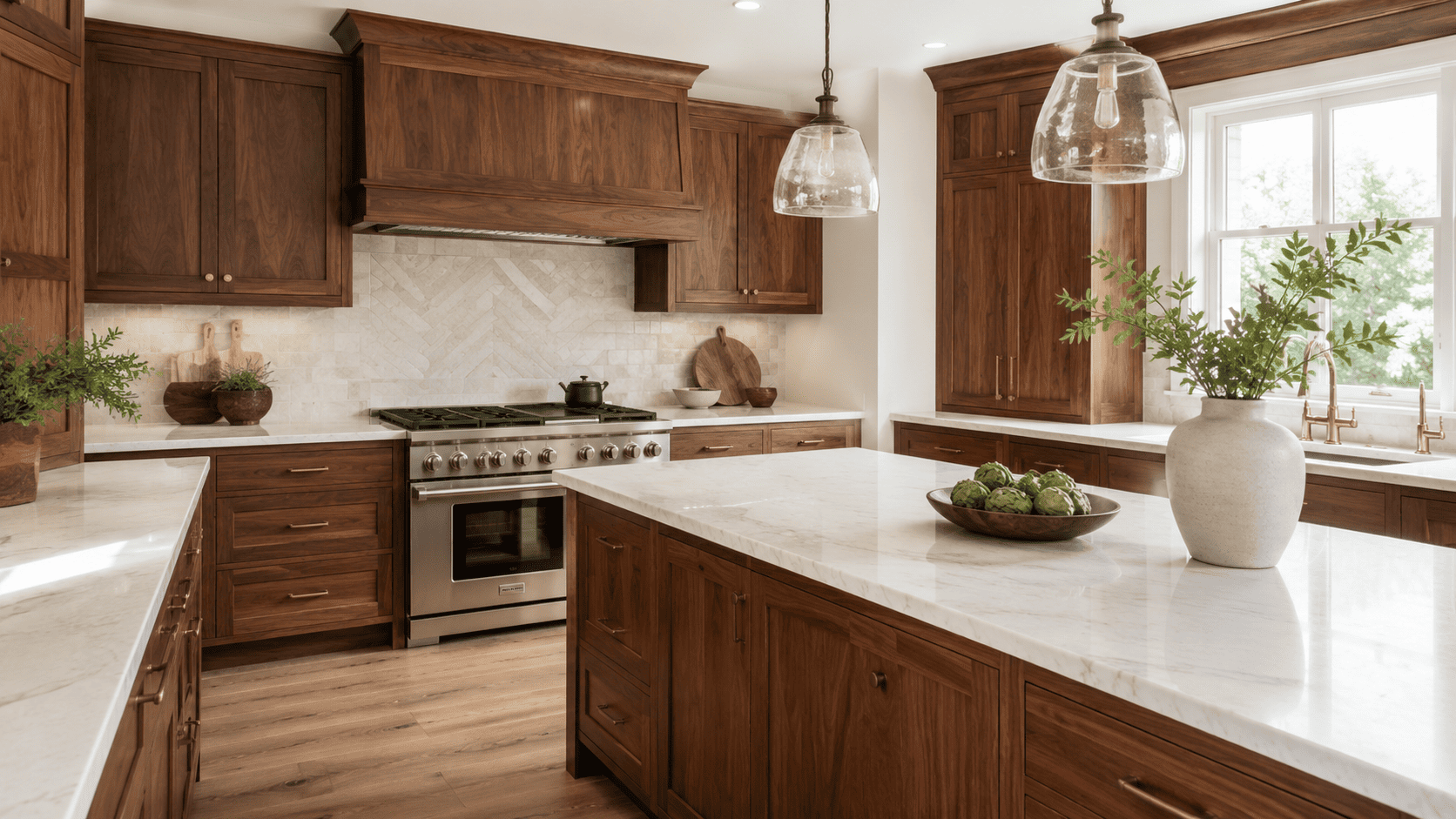
4.2. Two-Tone Kitchens with Walnut Lower Cabinets
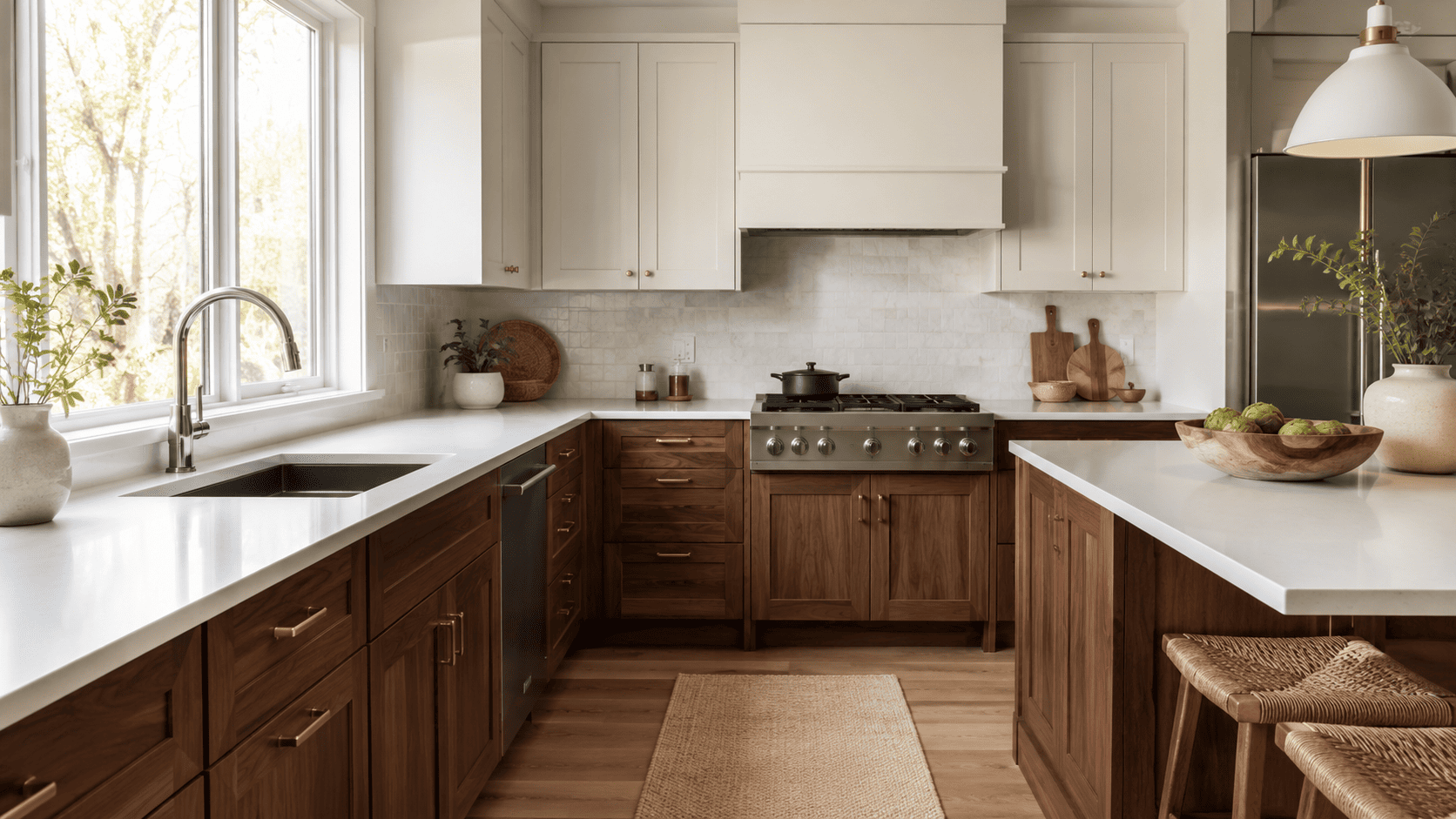
A highly popular trend is installing walnut lower cabinets paired with matte white or soft sage upper cabinets. This approach is part of a broader two-tone cabinet design strategy that helps balance visual contrast, material costs, and layout flexibility.
4.3. Walnut Shaker Kitchen Islands
Utilizing walnut for a central kitchen island creates a high-end focal point that grounds the room, while perimeter cabinets are painted a neutral color. This technique allows homeowners to enjoy luxury hardwood without the budget strain of a fully walnut-clad room.
For example, pairing a walnut island with gray perimeter cabinetry creates a balanced combination of natural warmth and modern neutrality. Explore these gray Shaker kitchen cabinet ideas for more ways to incorporate gray cabinetry into a remodel.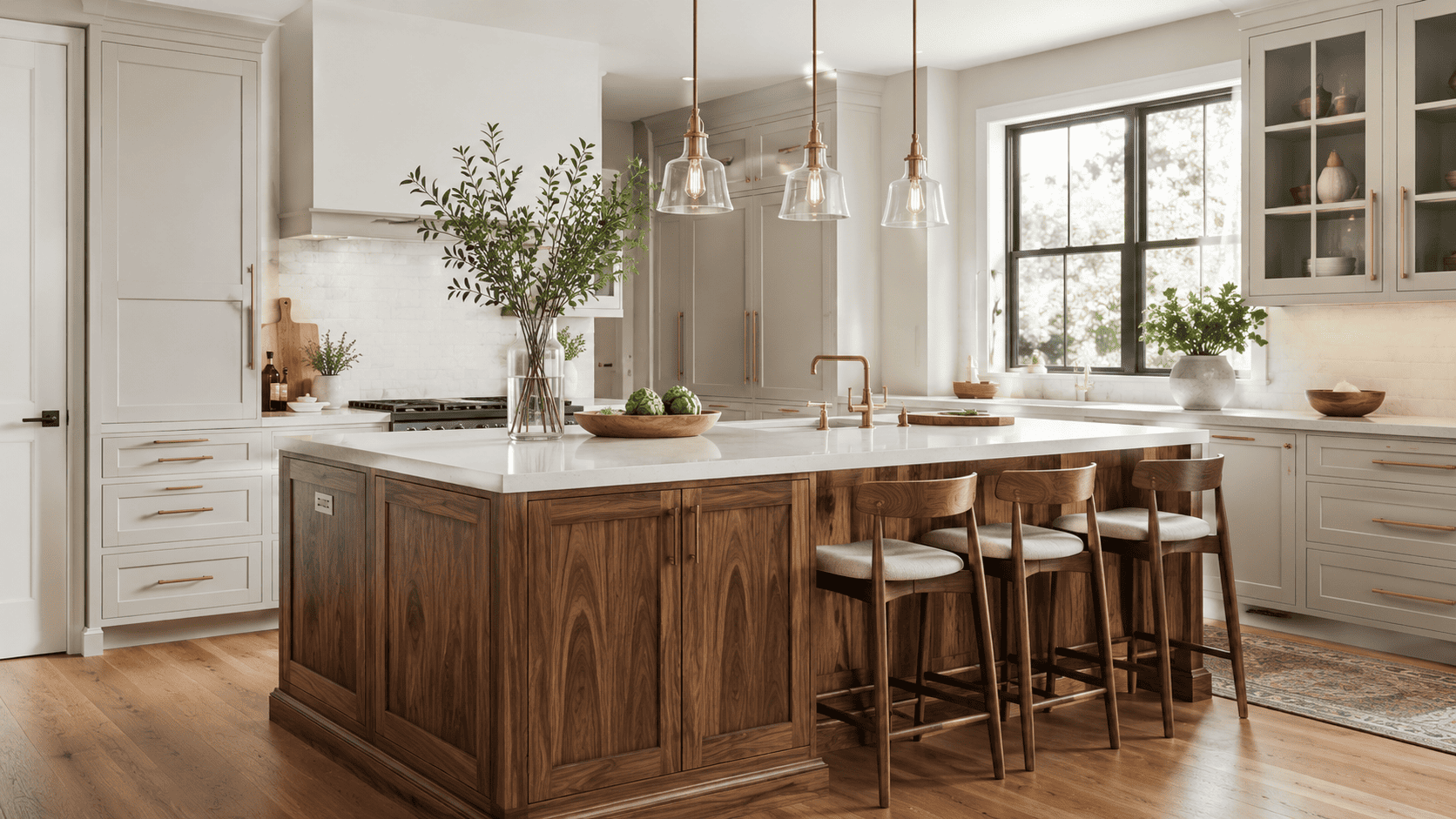
4.4. Dark Walnut Cabinets for Modern Kitchens
Enhanced with deep brown or near-black charcoal stains, dark walnut cabinetry masks lighter sapwood to create a highly uniform, ultra-luxurious look. This finish style looks exceptional when paired with integrated handleless hardware profiles and minimalist linear lighting fixtures. 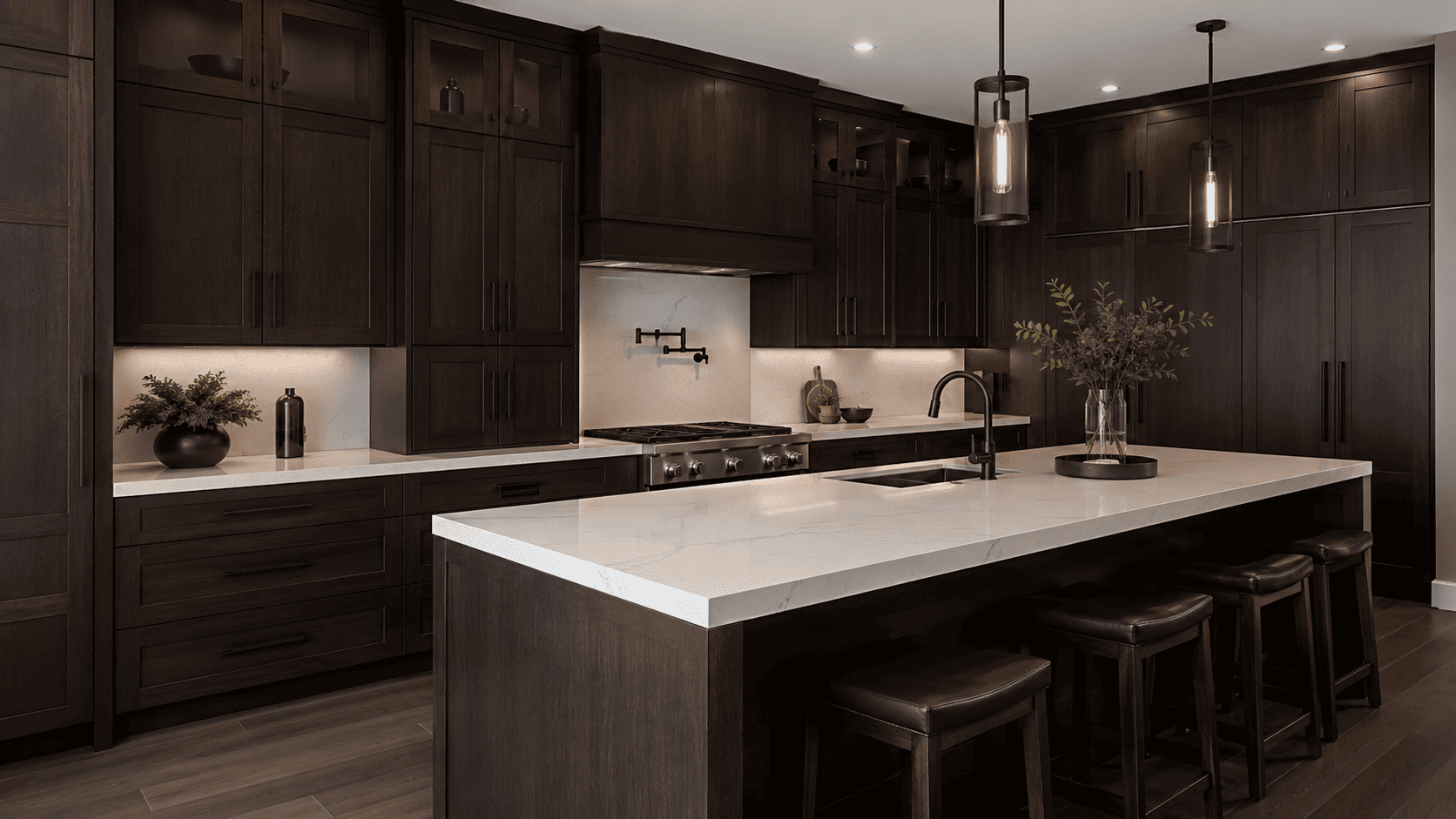
4.5. Light Walnut Cabinets for Small Kitchens
Achieved through subtle bleaching techniques or selective sorting of sapwood, light walnut offers a soft, airy Scandinavian aesthetic. This finish option brings natural wood textures into compact layouts without making the kitchen feel small or restricted. 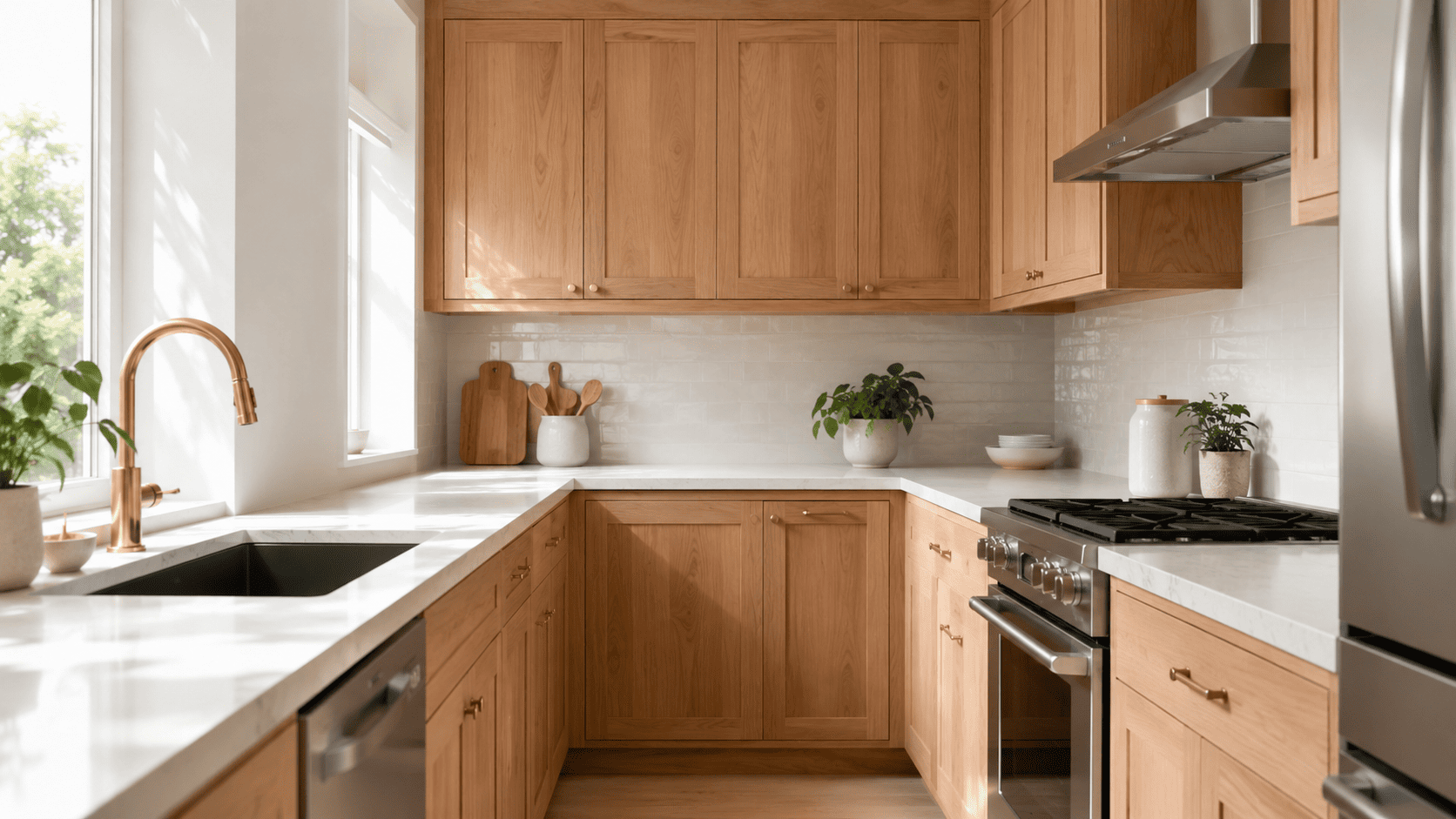
5. How to Pair Walnut Cabinets with Other Materials
Cohesive interior design requires coordinating surrounding architectural finishes with the undertones of the raw wood.
5.1. Best Countertops for Walnut Shaker Cabinets
Solid white quartz, polished quartzite, and light gray concrete materials perform best. Avoid busy, multi-colored granite options that compete visually with the distinct, swirling patterns of the walnut grain. 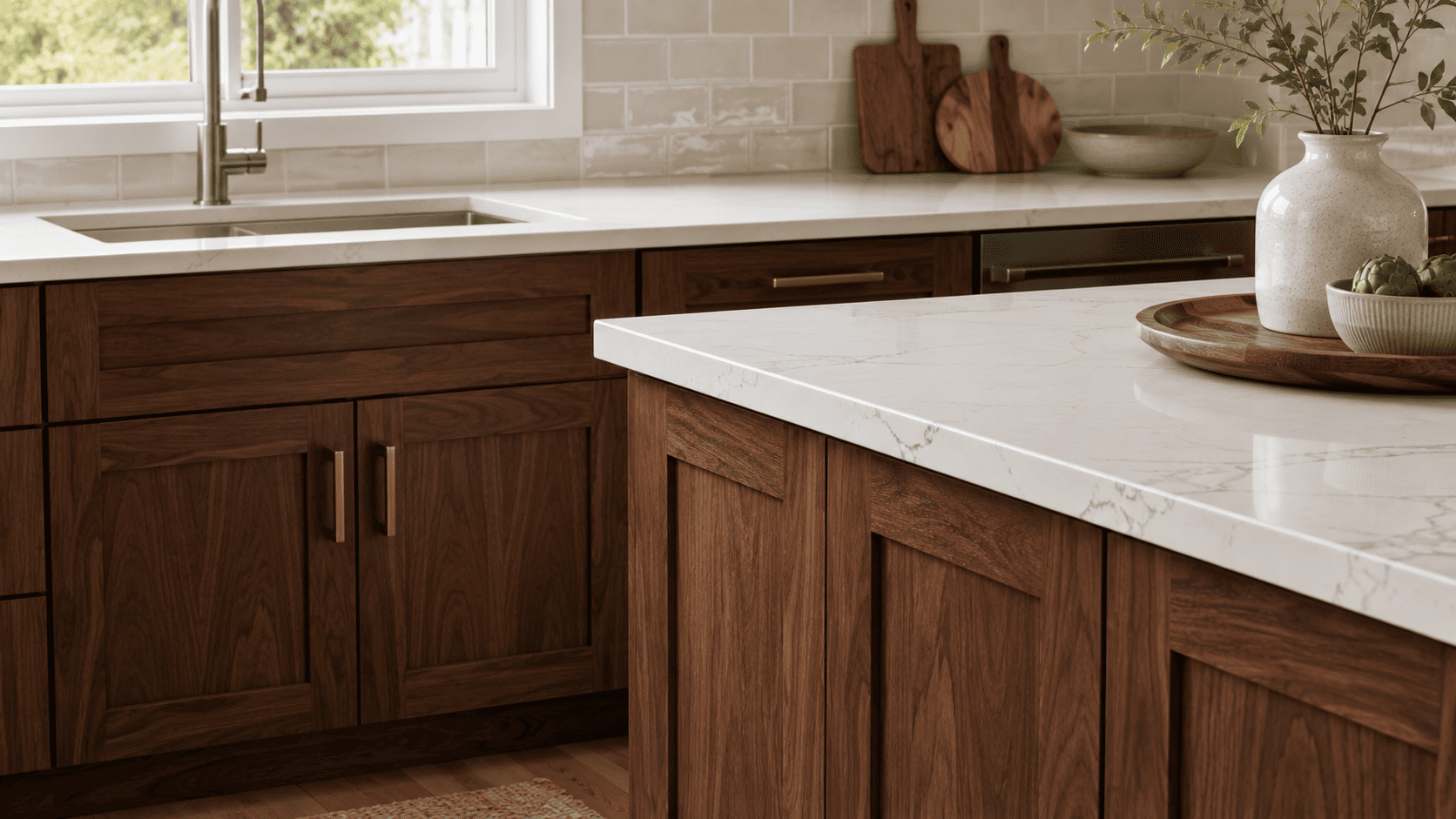
5.2. Backsplash Colors and Materials
Simple white subway tiles, matching quartz slab backsplashes, or soft gray glass mosaics keep the focus on the wood. If a moodier aesthetic is desired, dark charcoal or matte black vertical stacked tiles create a sophisticated transition zone. 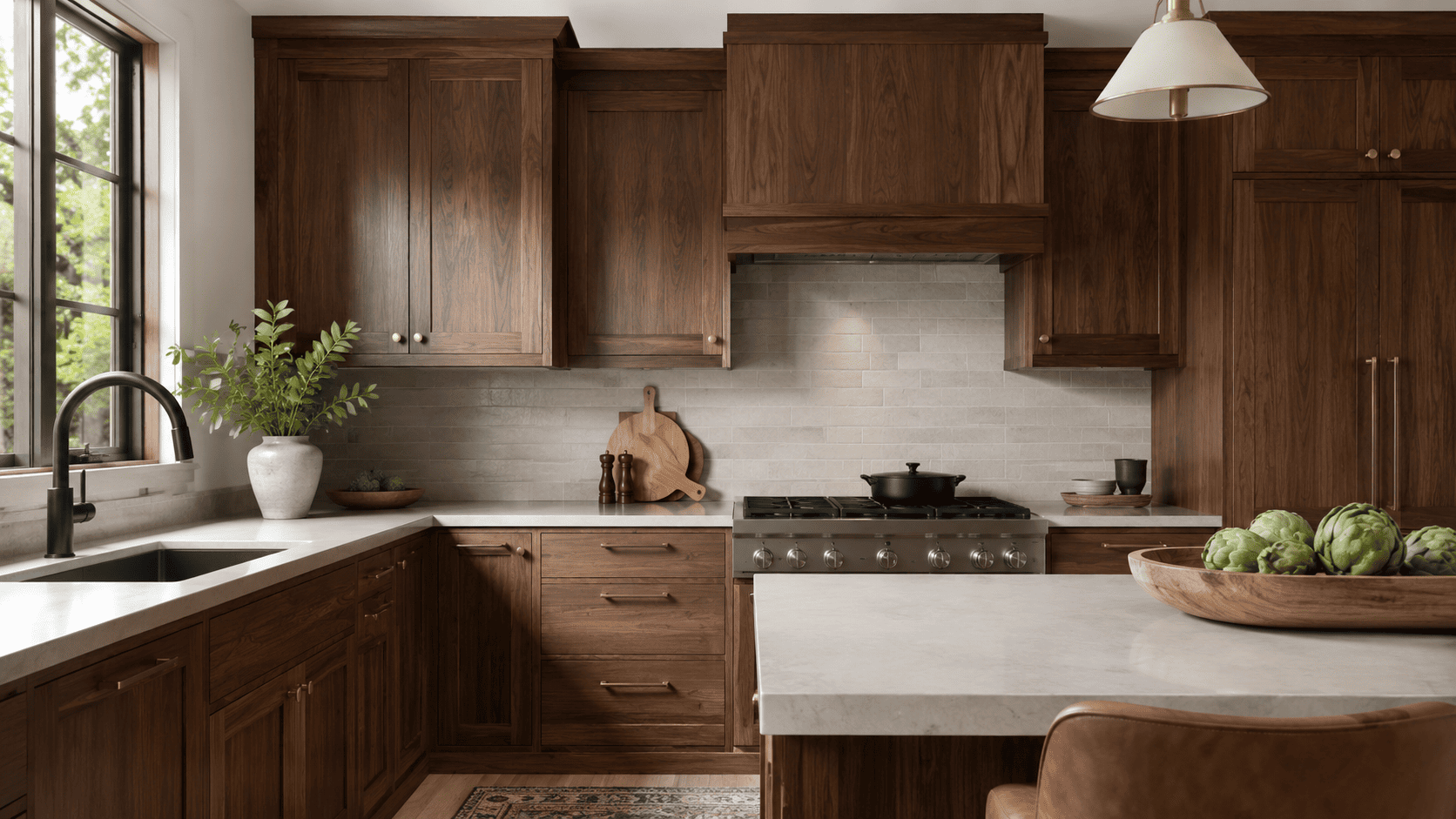
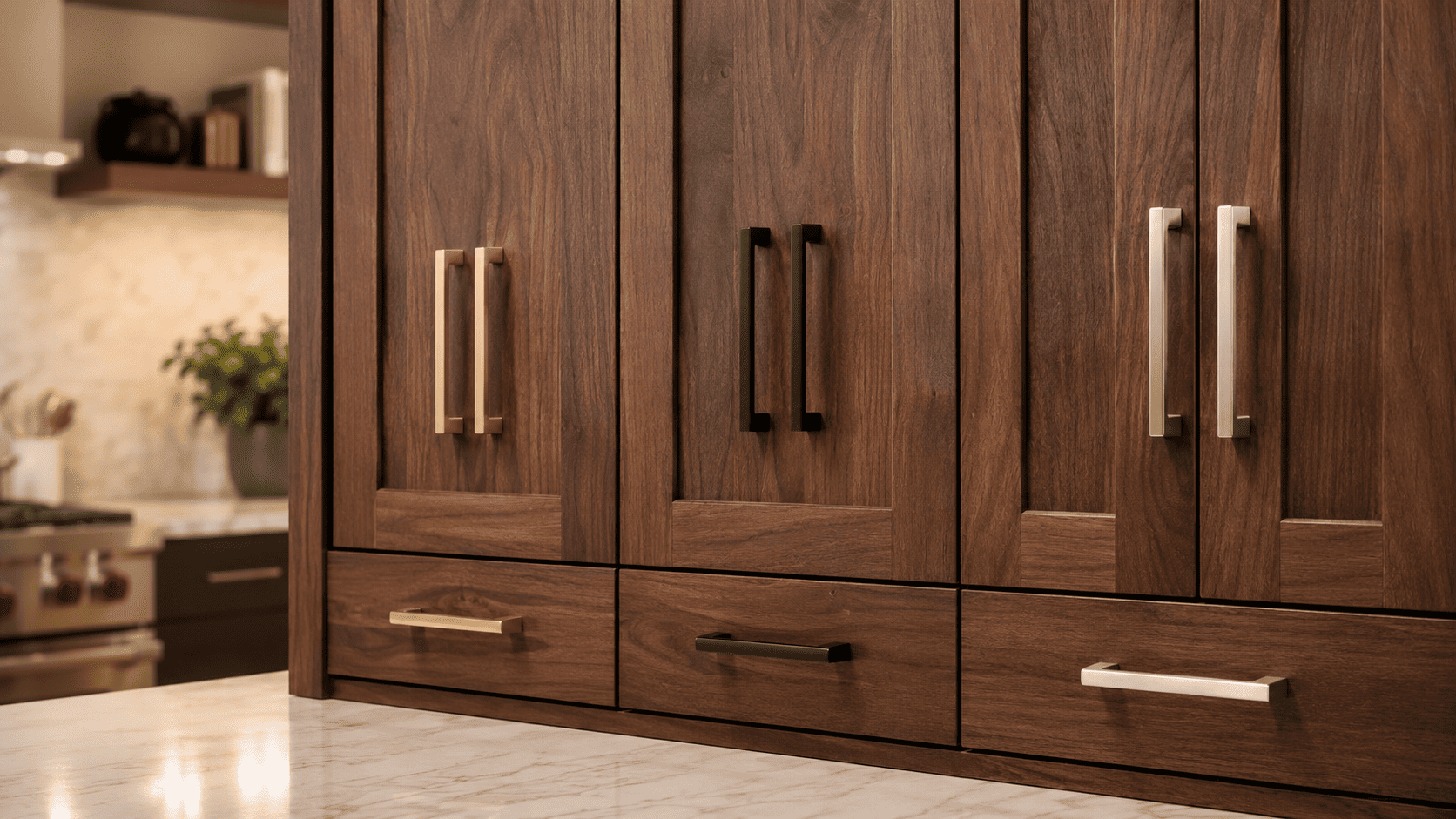
5.3. Hardware Finishes for Warm and Dark Wood Tones
- Satin Brass & Champagne Gold: Accents the warm, golden undertones of natural or warm walnut finishes.
- Matte Black: Complements dark or black walnut setups, providing a sharp, modern industrial edge.
- Satin Nickel: Offers a clean, understated contrast that works perfectly across traditional or transitional spaces.
5.4. Flooring and Wall Colors
For flooring, choose materials that are either significantly lighter or darker than the cabinets, such as light oak hardwoods, pale large-format porcelain tiles, or polished concrete. Walls should remain neutral, using soft whites, creams, or warm grays, to let the premium cabinetry stand out as the primary architectural element. 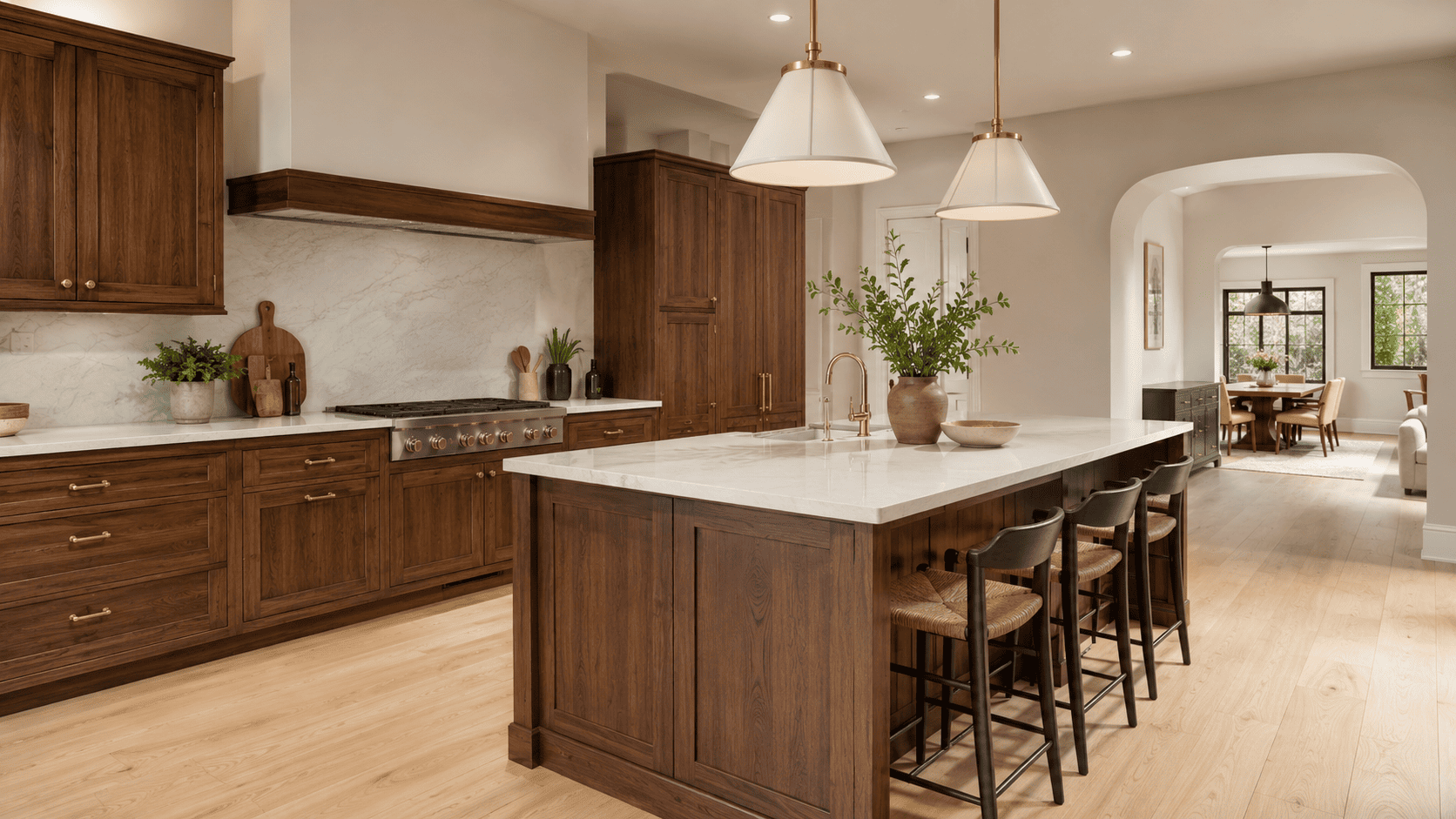
6. How Much Do Walnut Shaker Kitchen Cabinets Cost?
Walnut is a luxury commodity timber, meaning pricing is heavily tied to manufacturing methods, wood grading, and hardware specifications.
6.1. Factors That Affect Cabinet Pricing
Total project investment varies based on wood grade selections and structural components. FAS (First and Seconds) grade walnut ensures minimal knots and sapwood, commanding a premium price. Additionally, choice of internal hardware, door sizes, and total linear footage dictate overall project expenses.
6.2. Solid Walnut vs. Walnut Veneer Cost
Constructing doors completely out of solid walnut requires more raw lumber and intensive labor, which increases structural costs. Utilizing stable plywood-core center panels wrapped in premium walnut veneers lowers raw material consumption, providing a cost-effective solution without compromising the exterior visual quality.
6.3. Stock, Semi-Custom, and Custom Cabinet Options
Stock options offer the fastest lead times and lowest entry price, but with highly limited sizes and potential sapwood variations. Semi-custom modifications allow for specialized pull-outs and precise finish options. Full custom layouts are tailored to exact fractional dimensions with sequence-matched grain patterns, where the unique walnut wood grain flows continuously across multiple door and drawer fronts.
7. What to Look for When Buying Walnut Shaker Cabinets
Evaluating technical specifications ensures your cabinetry investment functions flawlessly for decades.
7.1. Door and Cabinet Box Construction
Inspect the joinery of the Shaker doors. Premium doors use deep mortise and tenon or doweled joints reinforced with industrial adhesives. For the cabinet box, demand 5/8-inch or 3/4-inch thick cabinet-grade plywood rather than particleboard. Plywood offers superior screw-holding capacity and moisture resistance, which is vital for under-sink zones.
7.2. Finish Quality and Color Consistency
Walnut features natural color shifts between heartwood and sapwood. Premium manufacturers utilize multi-step conversion varnishes or specialized UV-cured topcoats to protect the raw timber from chemical exposure and UV degradation. Ensure the supplier practices meticulous hand-sorting of raw lumber to control the percentage of creamy sapwood across matching door sequences.
7.3. Drawer Boxes, Hinges and Soft-Close Hardware
High-quality drawer boxes feature solid wood sides with five-piece English dovetail joinery and a thick plywood bottom panel. Hardware should consist of heavy-duty, under-mount concealed drawer glides and six-way adjustable door hinges. Look for trusted hardware brands that offer integrated soft-close mechanisms certified for at least 100,000 open-and-close cycles.
7.4. Packaging, Warranty and Replacement Policy
Because natural wood is vulnerable to structural impacts during transport, verify the supplier uses multi-layered corner protectors, heavy-duty corrugated boxing, and dense foam padding. A reputable brand should back their craftsmanship with a structural warranty covering material defects, finish delamination, or joint failure under standard residential use conditions.
7.5. Questions to Ask a Cabinet Supplier
Before finalizing a contract, protect your investment by asking these direct technical questions:
- Is the cabinet box constructed entirely from TSCA Title VI certified plywood?
- Are the Shaker door frames made from solid kiln-dried walnut, and what is the moisture content?
- Do you offer sequence-matching for the walnut wood veneers across adjacent drawer fronts?
- What specific topcoat or finishing system is applied to safeguard the wood from water damage?
When sourcing cabinetry for large-scale multi-family developments or residential projects, supply stability is critical. Working directly with an experienced international manufacturer helps builders and commercial distributors avoid domestic timber bottlenecks and multi-layered retail markups. Managing production through an enterprise-grade facility ensures stable batch-to-batch color matching and highly precise CNC milling tolerances.
At VIC Cabinet, we manufacture high-performance plywood-core cabinetry and solid wood components tailored specifically for the North American market. By controlling large-scale production within our export-focused facility in Vietnam, we provide developers and commercial distributors with factory-direct pricing, consistent batch finishes, and container-level shipping logistics.
FAQ SECTION
Q1: Do walnut shaker kitchen cabinets scratch easily compared to oak?
Walnut is a durable hardwood with a Janka hardness rating of around 1,010 lbf. While it is slightly softer than White Oak or hard maple, it handles everyday kitchen use exceptionally well. The complex, organic grain pattern of walnut is excellent at hiding minor surface scuffs, and a high-quality matte topcoat provides vital defense against daily wear and tear.
Q2: Will shaker walnut kitchen cabinets change color over time?
Yes, walnut behaves uniquely compared to other woods like cherry. While cherry darkens in sunlight, walnut naturally mellows and lightens slightly over time, developing a warmer, rich golden-brown patina. To ensure even aging across the kitchen, it is best to avoid placing permanent decorative items on countertops that completely block natural UV light exposure during the first year.
Q3: What countertop colors pair best with dark walnut cabinetry?
Bright white, cream, or light gray quartz countertops provide a striking, high-contrast look that prevents dark wood cabinets from overwhelming the space. Calacatta quartz with subtle gold or gray veining beautifully complements the natural brown warmth of walnut. For a moodier, industrial aesthetic, matte black granite or soapstone countertops work exceptionally well.
Q4: Is walnut cabinet veneer inferior to solid wood doors?
Not at all. In professional kitchen cabinet manufacturing, utilizing a high-density plywood core wrapped in premium walnut veneer is the industry standard for Shaker center panels. The veneer approach prevents wood expansion, contraction, and warping caused by kitchen humidity, while solid walnut is reserved for the stiles, rails, and structural face frames to ensure maximum stability.
VIC CABINET – Vietnam cabinet manufacturer
Head Office: Tran Thu Do Street, Hoang Liet, Hoang Mai District, Hanoi, Vietnam
HCM Office: N8 Street, Phu Thuan, District 7, Ho Chi Minh City, Vietnam
Phone: +84 96 781 7316
Website: https://viccabinet.com
Email: info@viccorp.com.vn
