


Cabinet refacing is a practical way to upgrade outdated cabinets without replacing the entire cabinet structure. Instead of removing the cabinet boxes, this method focuses on updating doors, drawer fronts, and exterior surfaces. In this guide, we explain what cabinet refacing is, how the cabinet refacing process works, and why kitchen cabinet refacing has become a popular solution for modern kitchen renovations.
1. What Is Cabinet Refacing and How It Works
Cabinet refacing is a renovation method that improves the appearance of existing cabinets without replacing the entire cabinet structure. Instead of removing the cabinet boxes, the process focuses on updating visible components such as cabinet doors, drawer fronts, and exterior surfaces. This approach allows homeowners to refresh the look of their kitchen while keeping the original cabinet framework intact.
In most cases, kitchen cabinet refacing is chosen when the cabinet boxes are still structurally sound but the style looks outdated. By replacing the doors and applying a new surface finish to the cabinet frames, the kitchen can achieve a completely updated appearance without the cost and disruption of a full cabinet replacement.
What Parts Are Replaced During Cabinet Refacing
During the cabinet refacing process, several visible elements of the cabinet system are updated:
- Cabinet doors are replaced with new styles or finishes
- Drawer fronts are changed to match the new cabinet doors
- Cabinet box exteriors are covered with veneer or laminate
- Hardware components such as hinges and handles are upgraded
Because the cabinet structure remains in place, refacing kitchen cabinets is often faster and less invasive than installing completely new cabinetry while still delivering a noticeable visual transformation.
2. Why Kitchen Cabinet Refacing Is a Popular Renovation Option
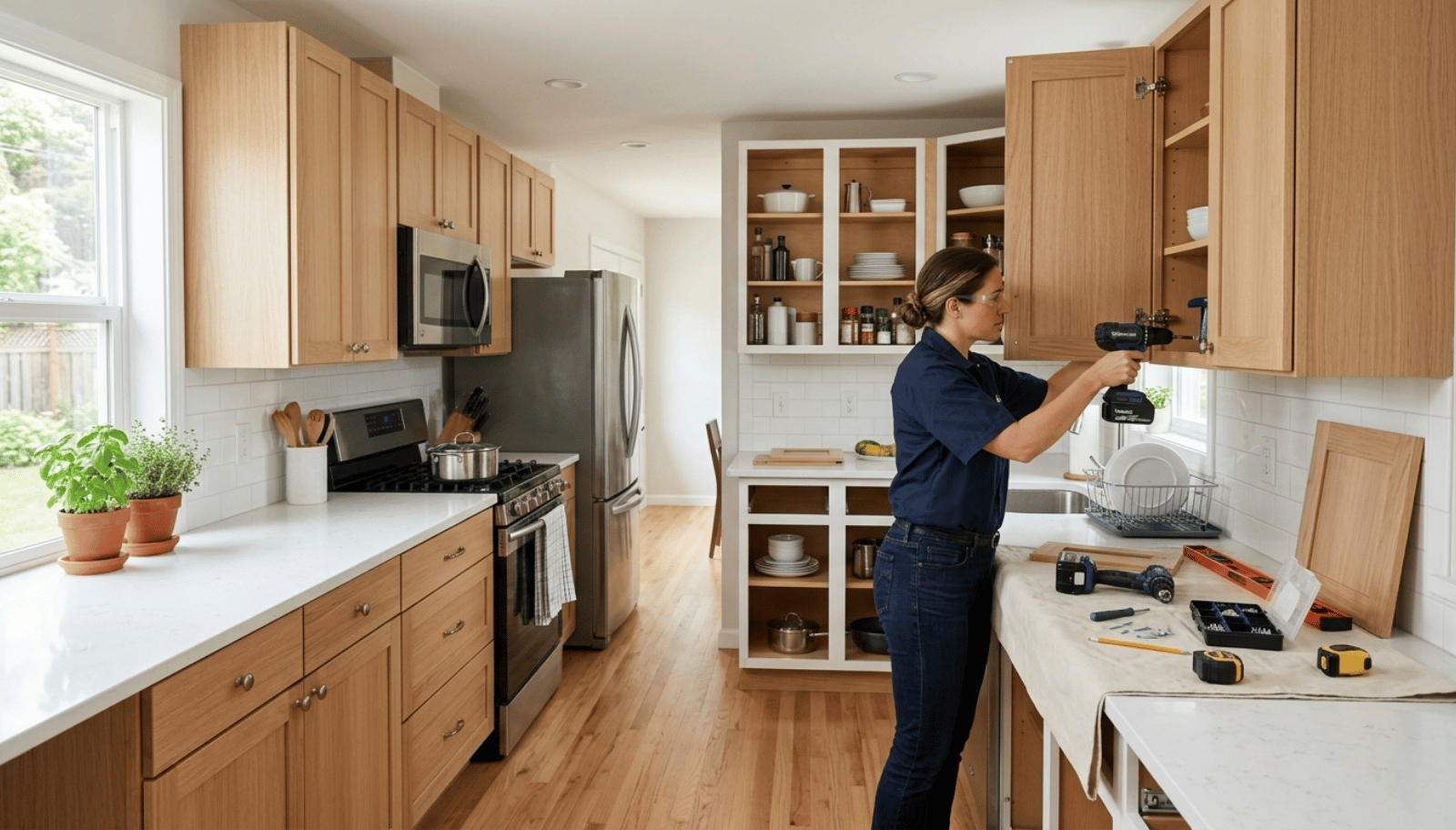
One of the main reasons homeowners choose kitchen cabinet refacing is that it provides a noticeable kitchen upgrade without the complexity of a full cabinet replacement. Instead of removing the entire cabinet system, the renovation focuses on updating visible components while keeping the original cabinet structure.
– Lower Cost Than Replacing Cabinets
A major advantage of refacing kitchen cabinets is the lower renovation cost. Because the cabinet boxes remain in place, homeowners only need to replace doors, drawer fronts, and exterior finishes. This reduces both material and labor expenses compared to installing completely new cabinets.
– Faster Kitchen Renovation
Another benefit of cabinet refacing is the shorter renovation timeline. Since the existing cabinet framework does not need to be removed, the installation process is usually much faster than a full cabinet replacement. This allows kitchens to be updated with less construction work and minimal disruption to daily use.
– Keeping the Original Cabinet Structure
With cabinet refacing, the original cabinet boxes remain intact. As long as the cabinet structure is still strong and in good condition, refacing can improve the appearance of the kitchen while preserving the existing layout and storage system.
3. When Refacing Kitchen Cabinets Is the Right Choice
Although cabinet refacing is a practical renovation option, it is not suitable for every kitchen project. This method works best when the cabinet structure is still strong and the renovation goal is mainly to improve appearance rather than change the entire kitchen layout.
Homeowners often consider refacing kitchen cabinets when they want a fresh kitchen style but do not need to replace the cabinet system completely. If the cabinet boxes are in good condition, refacing can update the overall look while keeping the existing structure.
Cabinet refacing is typically a good option in the following situations:
- Cabinet boxes are structurally sound
If the cabinet frames are still stable and durable, refacing can improve the appearance without replacing the entire cabinet system. - The kitchen layout will remain the same
Since refacing keeps the existing cabinet boxes, it works best when homeowners do not plan to change the kitchen layout. - The goal is mainly a visual upgrade
Replacing doors, drawer fronts, and finishes can significantly refresh the kitchen style while preserving the existing cabinetry.
4. Cabinet Refacing Process Step by Step
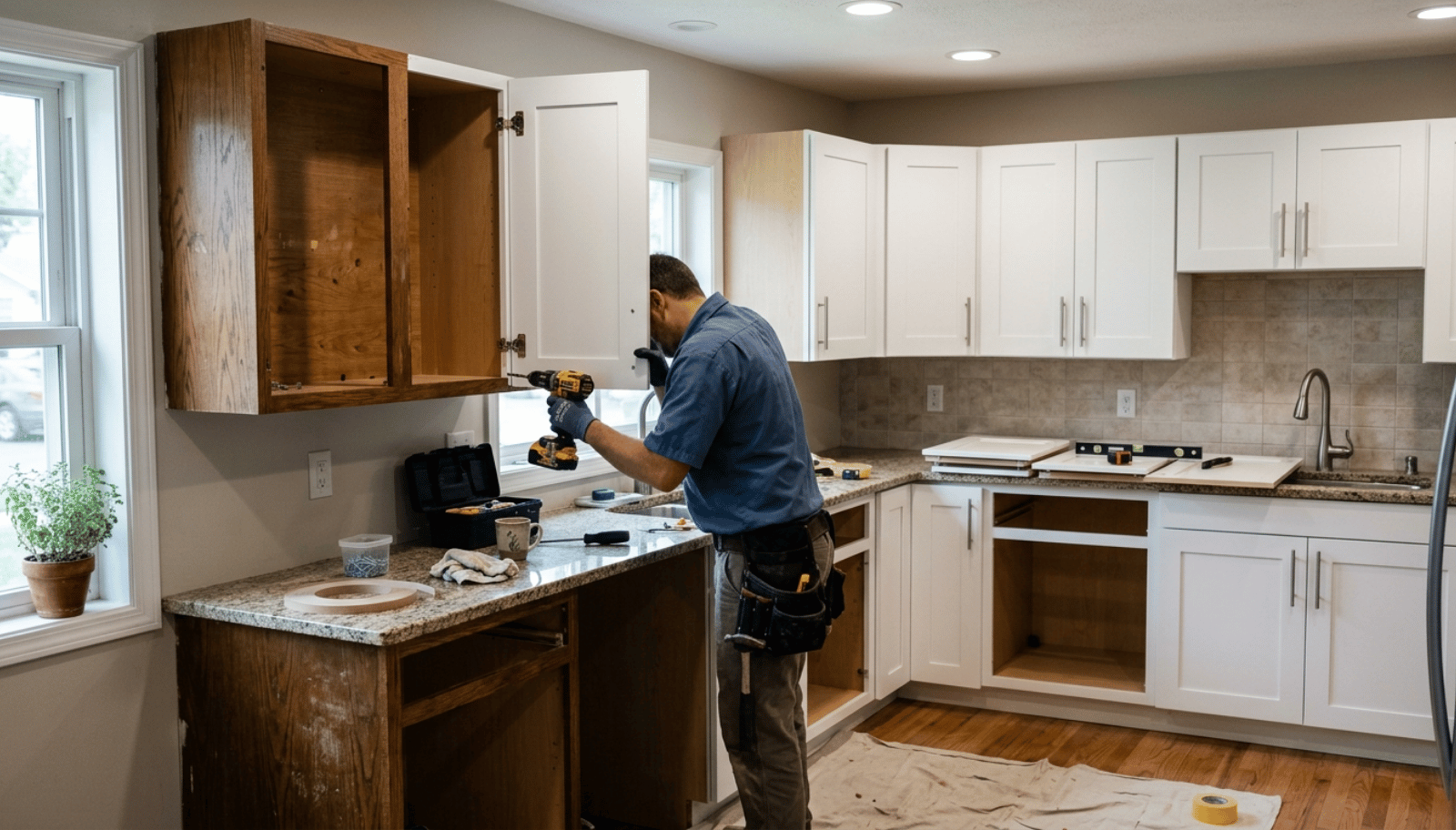
Understanding the cabinet refacing process helps homeowners see how kitchens can be upgraded without removing the entire cabinet system. Instead of replacing cabinet boxes, the process focuses on renewing visible surfaces and installing new cabinet fronts. The steps below outline how refacing kitchen cabinets is typically completed.
- Removing Cabinet Doors and Drawer Fronts
The first step in cabinet refacing is removing all existing cabinet doors, drawer fronts, and hardware. This allows installers to access the cabinet box surfaces and prepare them for the new finish.
- Preparing the Cabinet Box Surfaces
Next, the cabinet frames and exterior panels are cleaned and prepared. Proper surface preparation is important to ensure the new veneer or laminate adheres smoothly to the cabinet boxes.
- Applying Veneer or Laminate to Cabinet Frames
A new veneer or laminate layer is applied to the visible parts of the cabinet boxes. This step updates the cabinet color and finish so it matches the new doors and drawer fronts.
- Installing New Cabinet Doors and Drawer Fronts
After the cabinet frames are covered, new cabinet doors and drawer fronts are installed. These components usually define the overall kitchen style, such as shaker, slab, or raised panel designs.
- Installing Hardware and Final Adjustments
The final step of the cabinet refacing process is installing hinges, handles, and other hardware. Doors and drawers are adjusted to ensure proper alignment and smooth operation, completing the kitchen upgrade.
5. Cabinet Refacing vs Replacing Kitchen Cabinets
Kitchen cabinet refacing focuses on updating the visible parts of the cabinetry while keeping the existing cabinet boxes. In contrast, replacing cabinets means removing the entire cabinet system and installing new cabinet structures.
Key Differences Between Cabinet Refacing and Cabinet Replacement
| Factor | Cabinet Refacing | Cabinet Replacement |
| Scope of work | Updates doors, drawer fronts, and cabinet exterior surfaces | Removes and installs entirely new cabinets |
| Cabinet boxes | Existing cabinet boxes are kept | Cabinet boxes are completely replaced |
| Cost | Lower renovation cost | Higher cost due to new cabinets and labor |
| Renovation time | Faster installation process | Longer renovation timeline |
| Layout changes | Kitchen layout usually stays the same | Layout can be redesigned |
| Structural changes | Minimal structural changes | Full structural cabinet upgrade |
For kitchens where the cabinet boxes are still strong and the layout works well, refacing kitchen cabinets can be a practical way to improve the kitchen’s appearance without the cost and disruption of a full cabinet replacement.
6. Common Materials Used in Cabinet Refacing

Different materials can be used in cabinet refacing to update the appearance of cabinets while keeping the original cabinet boxes. Each material offers different benefits in terms of style, durability, and cost.
6.1 Wood Veneer
Wood veneer is one of the most popular options for cabinet refacing because it offers the natural look of real wood while using a thin layer applied to the cabinet box surface. This material allows cabinets to maintain a warm and authentic wood appearance without replacing the entire cabinet structure.
Common veneer options include:
- oak veneer
- maple veneer
- cherry veneer
- walnut veneer
Wood veneer works well in traditional and transitional kitchen designs and can be stained or finished in different colors.
6.2 Laminate Surfaces
Laminate is another widely used material in kitchen cabinet refacing, especially for homeowners looking for a durable and cost-effective option. Laminate finishes are manufactured materials applied to cabinet surfaces to create a consistent color or pattern.
Benefits of laminate include:
- high resistance to scratches and stains
- easy cleaning and maintenance
- wide range of colors and textures
Laminate surfaces are commonly used in modern kitchens where smooth and uniform cabinet finishes are preferred.
6.3 Thermofoil Finishes
Thermofoil is a vinyl material that is heat-pressed onto cabinet door surfaces. It is often used for refacing kitchen cabinets because it creates a seamless and smooth finish.
Thermofoil cabinets are typically available in:
- matte finishes
- glossy finishes
- solid colors such as white, gray, or beige
This material is often chosen for contemporary kitchen styles due to its clean appearance.
6.4 Solid Wood Doors
For homeowners who want a premium result, solid wood cabinet doors are often selected during cabinet refacing projects. While the cabinet boxes remain the same, installing solid wood doors can significantly upgrade the kitchen’s overall look.
Solid wood options offer:
- long-term durability
- natural grain patterns
- compatibility with many cabinet styles such as shaker or raised panel
Choosing the right material is an important step in cabinet refacing, as it influences the final cabinet appearance, durability, and maintenance requirements in the kitchen.
7. Popular Cabinet Door Styles for Refacing
One of the biggest visual changes in cabinet refacing comes from replacing cabinet doors. Even when the cabinet boxes remain the same, the door style can completely transform the overall look of the kitchen. Choosing the right design is important because it determines whether the final kitchen style feels modern, traditional, or transitional.
Below are some of the most common cabinet door styles used in kitchen cabinet refacing projects, along with the types of kitchens they work best in.
Shaker Cabinet Doors
- Best for: transitional, modern farmhouse, and contemporary kitchens
- Key features: simple five-piece construction with a recessed center panel
- Why it’s popular: clean design that balances modern simplicity and classic structure, making it the most versatile option for cabinet refacing
Flat Panel (Slab) Doors
- Best for: modern, minimalist, and contemporary kitchens
- Key features: completely flat surface without frames or decorative details
- Why it’s popular: creates a sleek, streamlined look that works well with glossy finishes, laminate, or handle-less cabinets
Raised Panel Doors
- Best for: traditional, classic, or luxury kitchen designs
- Key features: raised center panel with a detailed surrounding frame
- Why it’s popular: adds depth and decorative character, giving cabinets a more formal and elegant appearance
8. Factors That Affect Cabinet Refacing Cost
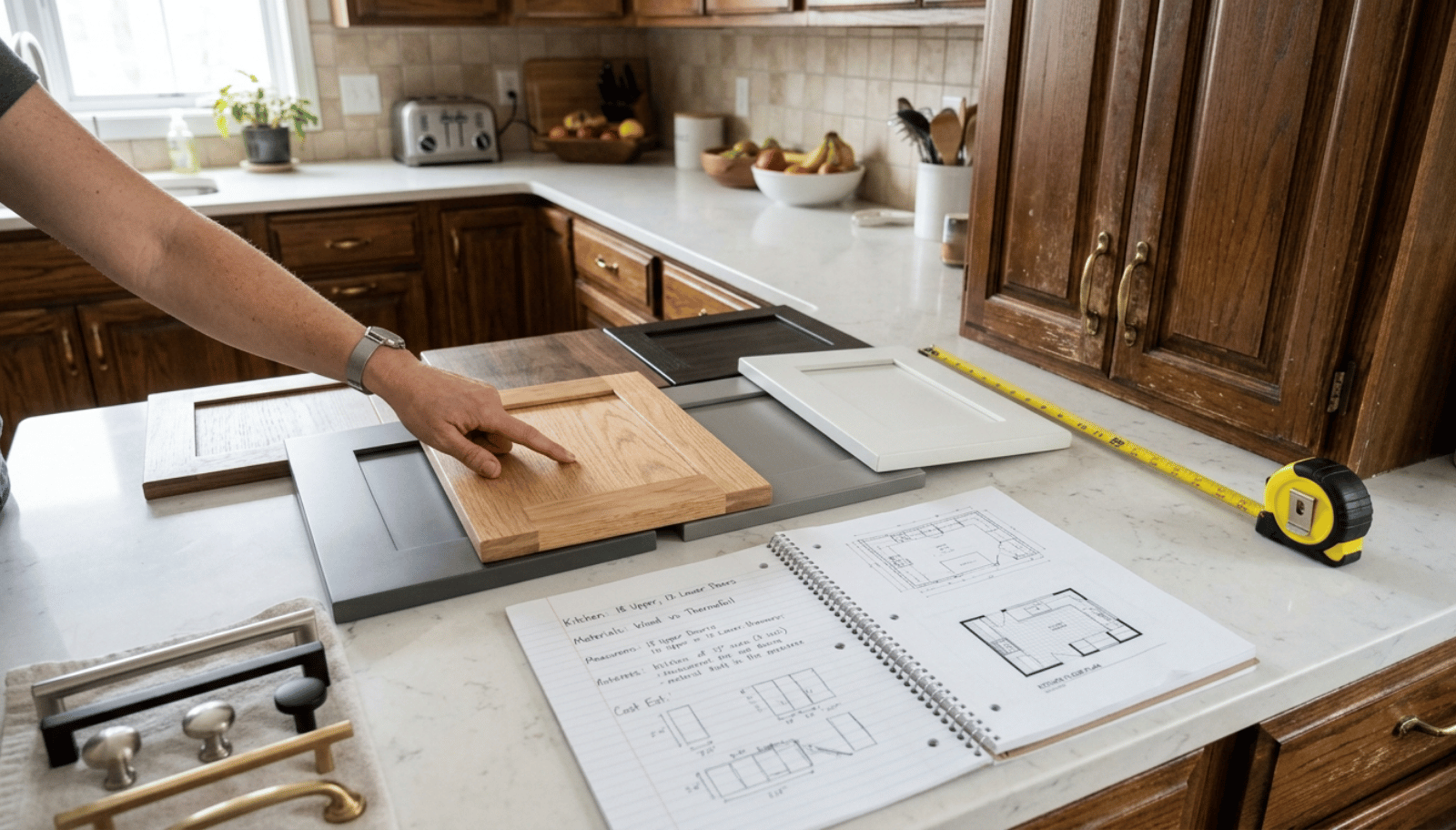
The cost of cabinet refacing can vary depending on several factors, including materials, cabinet size, and installation complexity. Understanding these factors helps homeowners estimate the budget when planning kitchen cabinet refacing.
– Number of Cabinets: The total number of cabinets in the kitchen directly affects the cost. More cabinets mean more doors, drawer fronts, and surface materials need to be replaced.
– Door Style and Material: The type of cabinet door selected can influence the price.
For example:
- laminate or thermofoil doors are usually more affordable
- solid wood doors tend to cost more due to higher material quality
– Surface Materials for Cabinet Boxes: During cabinet refacing, cabinet box exteriors are typically covered with veneer or laminate. Higher-quality materials or specialty finishes can increase the total cost.
– Hardware Upgrades: Replacing cabinet hardware such as handles, knobs, and hinges can also impact the overall budget. Premium hardware or soft-close hinges usually add additional cost.
– Labor and Installation: Professional installation is another major factor. The complexity of the kitchen layout and the condition of the existing cabinets may influence labor costs for the refacing project.
9. Design Options When Refacing Kitchen Cabinets
While cabinet refacing mainly focuses on replacing doors and covering cabinet surfaces, design choices play an important role in how the final kitchen looks. Small decisions such as color, finish, and hardware can significantly change the overall style of the space.
9.1 Choosing Cabinet Colors and Finishes
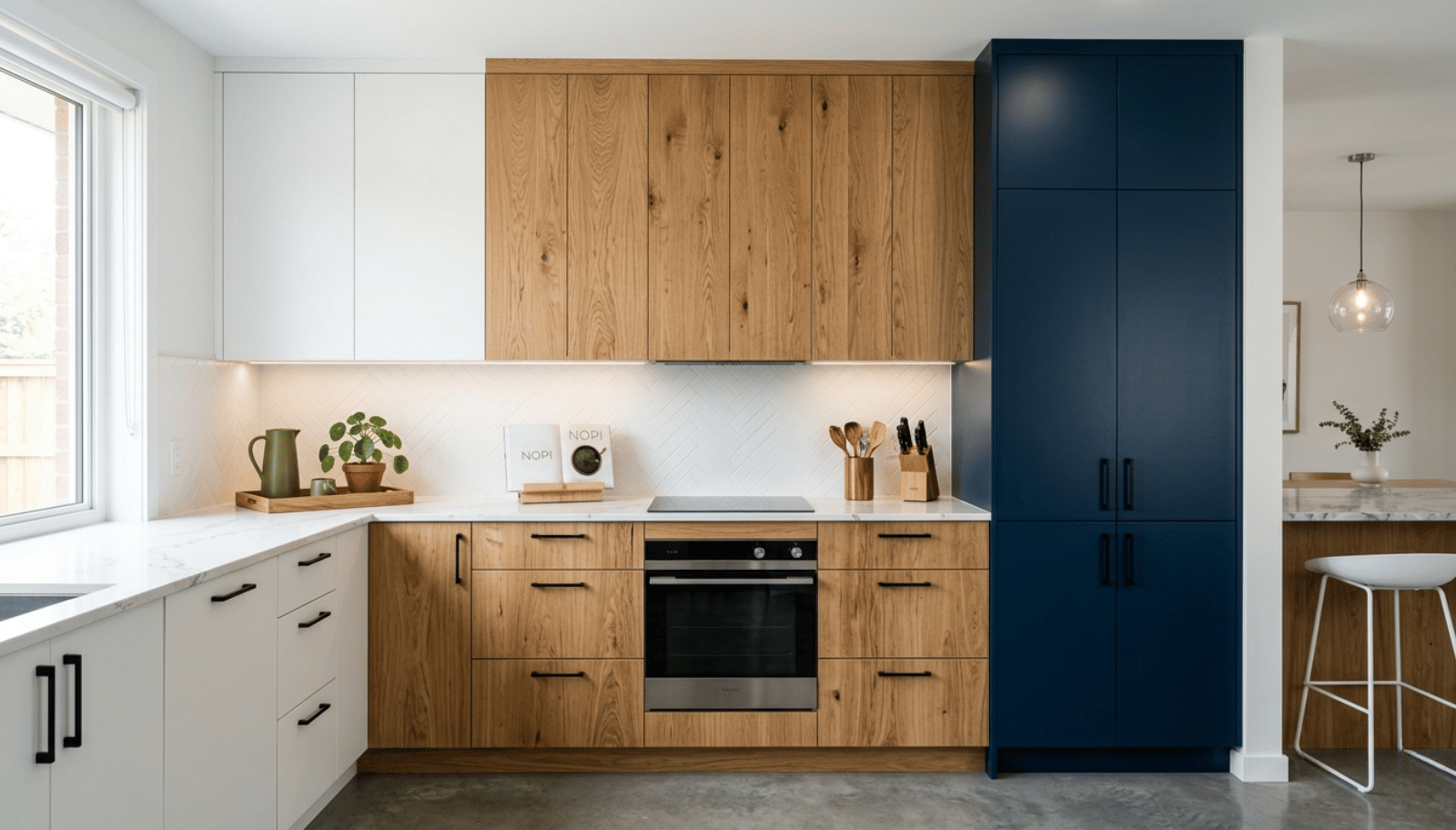
Cabinet color is often the first thing people notice in a kitchen. When refacing kitchen cabinets, homeowners typically choose finishes that match the overall interior style.
Common choices include:
- white or light colors to create a brighter and more open kitchen
- natural wood finishes for a warm and timeless appearance
- matte or satin finishes for a softer and more modern look
Selecting the right finish can help cabinets blend naturally with countertops, backsplashes, and flooring.
9.2 Matching Cabinets With the Kitchen Style

The cabinet style should complement the overall kitchen design. Even with the same cabinet layout, the door style and finish can completely change the visual feel of the space.
For example:
- flat panel cabinets are commonly used in modern or minimalist kitchens
- shaker cabinets work well in transitional and contemporary designs
- raised panel cabinets are often chosen for traditional kitchen interiors
Choosing a consistent style helps create a balanced kitchen design after refacing.
9.3 Updating Hardware for a Fresh Look
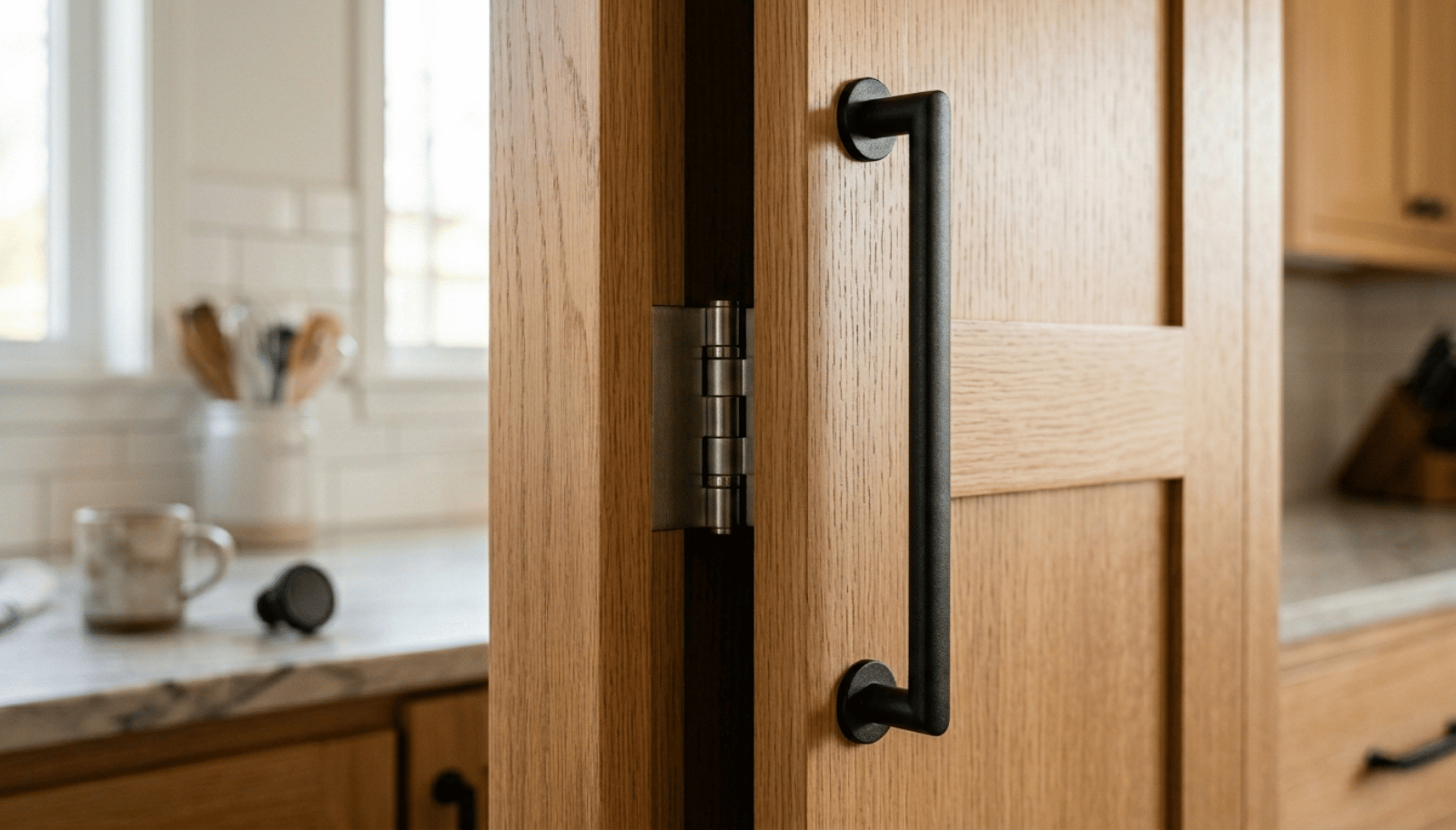
Hardware is a small detail but can make a noticeable difference in a cabinet refacing project. Replacing handles, knobs, and hinges can quickly refresh the appearance of cabinets.
Common upgrades include:
- modern bar handles for contemporary kitchens
- classic knobs for traditional cabinet styles
- soft-close hinges for smoother cabinet operation
These small updates help ensure that refacing kitchen cabinets results in a cohesive and updated kitchen design.
10. How Long Does Cabinet Refacing Last?
Many homeowners wonder whether cabinet refacing can last as long as installing new cabinets. In most cases, refaced cabinets can last 10 to 15 years, and sometimes up to 20 years when high-quality materials and professional installation are used.
However, the lifespan of kitchen cabinet refacing depends largely on the condition of the existing cabinet boxes and the materials selected for the new doors and surfaces.
Factors That Affect the Lifespan of Refaced Cabinets
Several factors influence how long refacing kitchen cabinets will remain durable and visually appealing:
- Condition of the cabinet boxes – Refacing works best when the original cabinet structure is still solid and stable.
- Quality of materials – Solid wood doors and high-quality veneers usually last longer than lower-cost materials.
- Installation quality – Proper surface preparation and professional installation help ensure the veneer and doors stay secure over time.
- Kitchen environment – Heat, moisture, and heavy daily use can gradually affect cabinet finishes.
Typical Lifespan in Real Projects
In real kitchen renovation projects, the lifespan of cabinet refacing typically falls into these ranges:
- 10–15 years – the most common lifespan for refaced cabinets
- 15–20 years – possible with durable materials and proper installation
- less than 10 years – if cabinet boxes are weak or low-quality materials are used
Tips to Extend the Life of Refaced Cabinets
Homeowners can help maintain refaced kitchen cabinets by:
- cleaning cabinet surfaces regularly with mild cleaners
- avoiding excessive moisture around cabinet doors
- tightening hinges or hardware when needed
With proper care and good materials, cabinet refacing can provide a long-lasting kitchen upgrade without the cost of completely replacing cabinets.
𝐕𝐈𝐂 𝐂𝐚𝐛𝐢𝐧𝐞𝐭 𝐅𝐚𝐜𝐭𝐨𝐫𝐲
Head Office: Tran Thu Do Street, Hoang Liet, Hoang Mai District, Hanoi, Vietnam
HCM Office: N8 Street, Phu Thuan, District 7, Ho Chi Minh City, Vietnam
Phone: +84 971 52 53 54
Website: https://viccabinet.com
Email: info@viccorp.com.vn
