


Red kitchen cabinets are suitable when you want a bold focal point while maintaining durability and design flexibility. The best options include red oak kitchen cabinets for natural texture or repainting solutions through redo kitchen cabinets. This article explains design styles, material performance, and how to apply red cabinetry effectively in real projects.
1. What Are Red Kitchen Cabinets
Red kitchen cabinets are kitchen storage units finished in red tones such as burgundy, cherry, or deep red, used to create a strong visual focal point in the kitchen. Unlike neutral colors, red has a high visual impact and is often chosen to draw immediate attention when entering the space.
In terms of structure, red kitchen cabinets are not a specific cabinet type but a color application across different styles such as shaker, flat panel, or inset. The red finish can be achieved through various methods, including painted coatings, wood veneer, or stain on natural materials like red oak, depending on design goals and budget.
Beyond aesthetics, red kitchen cabinets also influence how a space is perceived. Red tones tend to create a warmer and more dynamic atmosphere compared to cooler colors. Because of this, they are often used as an accent rather than covering the entire kitchen, helping maintain visual balance while still delivering a distinctive design statement.
2. Red Kitchen Cabinets Design Styles
Red kitchen cabinets can be applied across different cabinet styles, and each style controls how the color is distributed and perceived. The structure of the door, the depth of detailing, and how surfaces are segmented all affect whether the red tone feels bold, balanced, or refined.
2.1 Modern design (Flat panel / Slab)

Modern red kitchen cabinet styles use flat panel or slab doors with smooth, uninterrupted surfaces. This creates a continuous red area, making the color appear strong and highly visible.
Because there are no design details to break the surface, the red tone becomes the main visual element. This style works best when the goal is to create a clean and bold look with minimal distraction.
When to use:
- Kitchens with simple layouts and clean geometry
- Spaces with good natural lighting to balance strong color
- Projects that prioritize a modern or minimalist aesthetic
2.2 Shaker
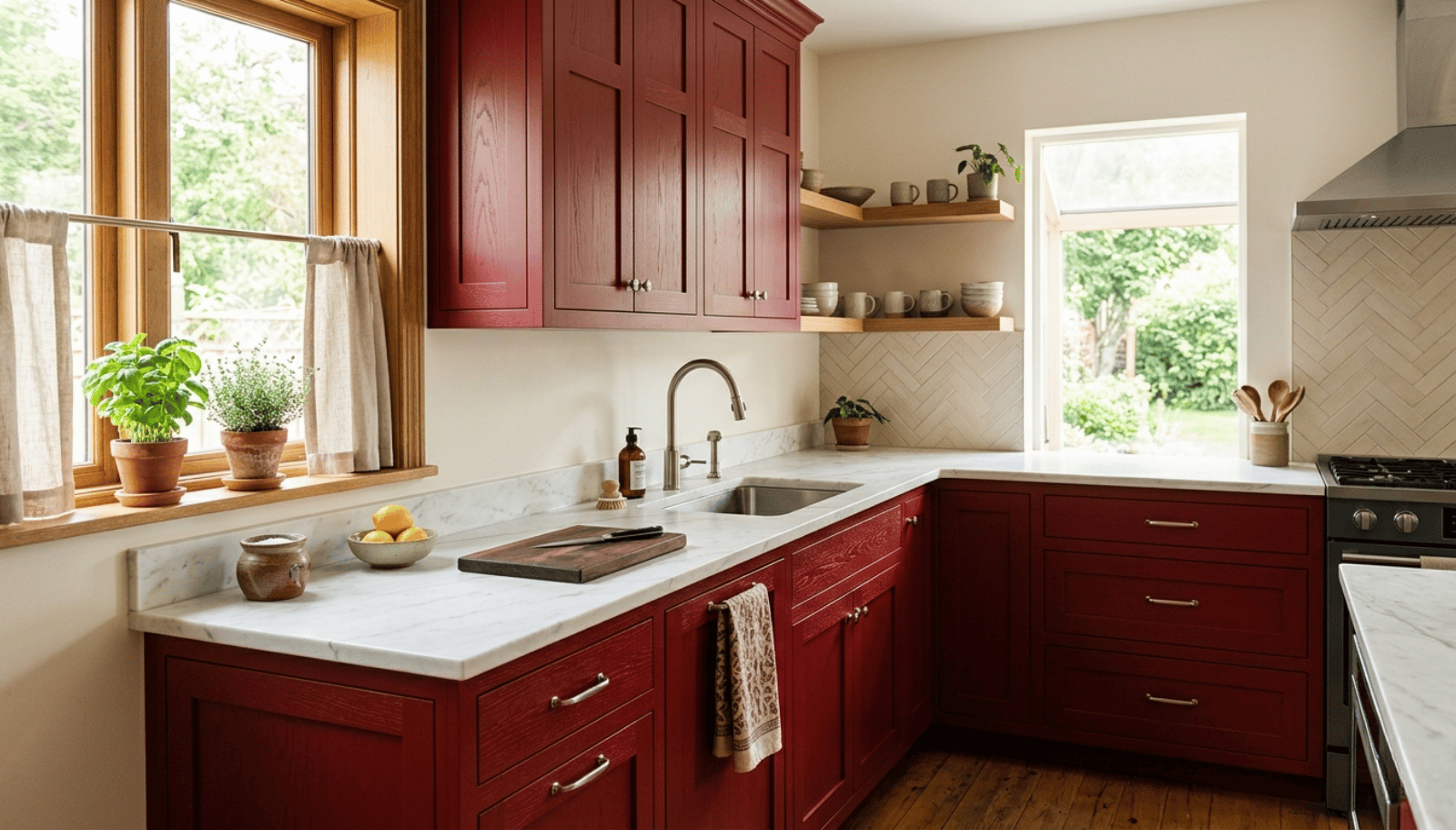
Shaker-style red kitchen cabinets use a five-piece door with a recessed center panel. The frame creates natural divisions on the surface, which helps reduce the intensity of the red color.
This structure makes shaker a more flexible option compared to flat panel designs. The red appears softer and more controlled, especially in kitchens where too much solid color can feel heavy.
When to use:
- Medium-sized kitchens needing balance between color and detail
- Transitional designs between modern and traditional
- Projects where red needs to feel less aggressive
You can also explore how shaker styles are evolving in the U.S. market, especially in terms of color trends and finish selection in 4 Top Shaker Cabinet Colors in the U.S. Market, where neutral and bold tones are being used more strategically.
2.3 Inset

Inset red kitchen cabinets are built with doors fitted inside the cabinet frame instead of sitting on top. This creates a precise layout where each cabinet unit is clearly defined.
Because the frame separates each section, the red color is visually broken into smaller areas. This reduces the feeling of a large continuous red surface and creates a more structured appearance.
When to use:
- High-end projects requiring precise alignment and clean lines
- Kitchens where visual control is more important than bold impact
- Designs aiming for a refined and tailored look
2.4 Raised panel

Raised panel red kitchen cabinets feature a center panel that is slightly elevated, with more detailed edges compared to shaker style. This creates stronger shadows and highlights across the surface.
With red finishes, these details help diffuse the color intensity and add depth. Instead of a flat red surface, the cabinetry shows variation depending on lighting angles.
When to use:
- Traditional or classic kitchen designs
- Larger kitchens where more visual detail is needed
- Projects that want a richer, more decorative appearance
2.5 Frameless (European style)
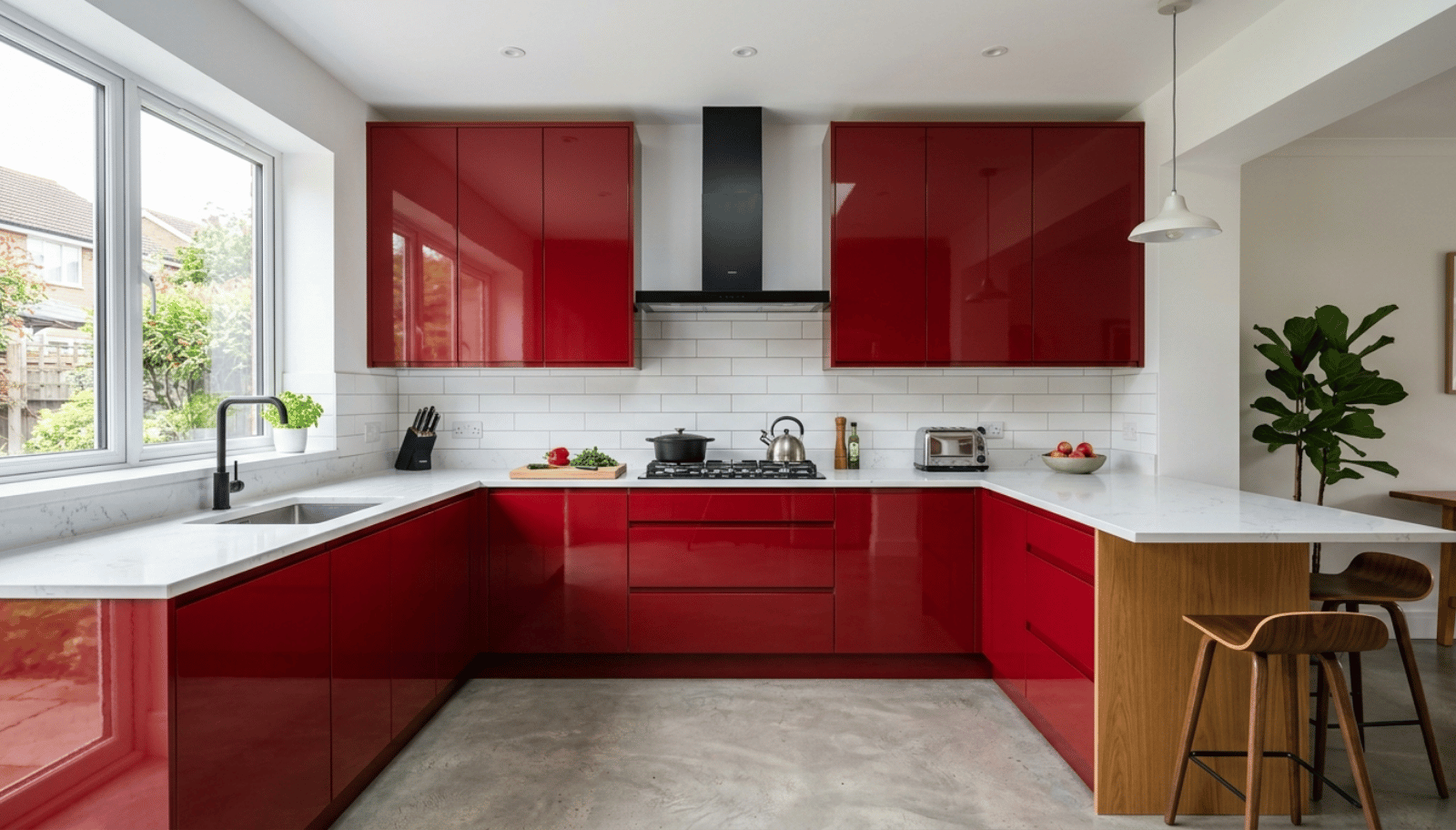
Frameless red kitchen cabinets remove the face frame and use full-overlay doors to create a tighter and more continuous surface. The result is a cleaner look with minimal gaps.
In red finishes, this style offers a balance between modern simplicity and structured layout. It avoids the heaviness of slab designs while keeping the overall look streamlined.
When to use:
- Contemporary kitchens with efficient storage layouts
- Projects that require maximum usable cabinet space
- Designs that need a clean look without being too minimal
3. How Red Kitchen Cabinets Are Finished: Painted vs Natural Wood
After choosing a design style, the next step is understanding how the red finish is created. Red kitchen cabinets are not always painted. In practice, the color can come from either a painted coating or from natural wood like red oak that has been stained.
Painted red kitchen cabinets create a smooth and uniform surface where the color sits on top. This gives better control over the exact shade and ensures all cabinet doors look consistent. It is also easier to maintain because the surface is sealed. However, the finish can feel flat, especially in large areas where there is no texture to break the color.
In contrast, red oak kitchen cabinets achieve the red tone through stain that penetrates into the wood grain. Because red oak has an open grain structure, the color appears deeper and more layered. The surface shows natural variation, meaning no two cabinet doors look exactly the same. This creates a more natural and material-driven appearance, but it also requires careful finishing to avoid uneven color.
One practical point many people overlook is that solid wood is not always the most stable option. In many cases, plywood combined with a red oak veneer performs better. The layered structure of plywood reduces movement caused by humidity, while the veneer still provides the look of real wood. This is why many modern cabinet systems prefer this combination, especially when long-term stability is important.
4. Updating Red Kitchen Cabinets: When Redo Kitchen Cabinets Makes Sense
After understanding how red kitchen cabinets are finished, the next step is deciding whether you need a full replacement or simply redo kitchen cabinets. In many situations, applying a new red finish on existing cabinets can achieve a similar visual result without changing the entire structure.
Redo kitchen cabinets refers to updating the surface layer while keeping the original cabinet system. This usually involves repainting or refinishing to convert existing cabinets into red kitchen cabinets. When the cabinet frame is still strong and the layout works well, this approach can significantly improve the appearance with less cost and shorter downtime.
However, redo kitchen cabinets only works when the base condition is suitable. If the surface is damaged, uneven, or affected by moisture, a new red finish will make these problems more visible. This is especially important with red kitchen cabinets, as darker tones tend to highlight imperfections instead of hiding them.
Surface preparation is also more critical when you redo kitchen cabinets with red finishes. The surface must be sanded evenly, sealed properly, and primed before applying color. Without proper preparation, the final result can look inconsistent, with visible patchiness across cabinet doors.
For a detailed step-by-step process, you can refer to the full guide on how to redo kitchen cabinets.
5. Design Tips to Use Red Kitchen Cabinets Without Overpowering the Space
Red kitchen cabinets can easily dominate the space if not controlled properly. Instead of focusing on making them stand out, the goal is to balance their visual impact with surrounding elements.
Key design tips:
- Use contrast to reduce visual weight
Pair red kitchen cabinets with light countertops such as white quartz or marble-look surfaces to create separation - Keep surrounding colors neutral
Use white, beige, or light grey for walls and backsplash to prevent the space from feeling heavy - Control the proportion of red
Limit red kitchen cabinets to lower cabinets, island units, or feature areas instead of applying to the entire kitchen - Pay attention to lighting conditions
Test the red tone under real lighting because it can appear darker in low light and more intense under strong lighting - Choose the right hardware finish
Use brushed nickel, matte black, or soft gold to balance the overall look and avoid visual conflict - Avoid using red on every surface
Too much red can cause visual fatigue and reduce the impact of the design
The key is to treat red kitchen cabinets as a focal point, not the entire design. When balanced correctly, they can create a strong identity without overwhelming the space.
For a more balanced approach, many kitchens today use red as part of a two-tone layout instead of applying it to all cabinets. You can see how this works in practice in Two Tone Cabinets: A Smart, Scalable Cabinet Choice, where color is distributed more efficiently across the space.
EXPERT FAQ
- Do red kitchen cabinets go out of style quickly?
Red kitchen cabinets only feel outdated when the color is used too aggressively. Bright red applied to the entire kitchen can become tiring over time, while deeper or muted tones used in a controlled way tend to stay relevant longer. In most cases, it is not the color that goes out of style, but how it is used. - Do red oak kitchen cabinets warp in humid environments?
Red oak kitchen cabinets can respond to humidity because the wood has an open grain and absorbs moisture more easily than some other hardwoods. If the surface is not sealed properly, the material may expand slightly over time. However, with proper finishing and normal indoor conditions, this movement is small and does not affect daily use. - How much can redo kitchen cabinets save compared to replacement?
Redo kitchen cabinets can reduce costs by about 40% to 60% compared to replacing the entire system. The saving comes from keeping the existing cabinet structure and only updating the finish. This works well when the cabinets are still in good condition, but if the base is damaged, the benefit becomes limited. - Does red paint fade over time?
Red finishes can lose intensity over time, especially if exposed to strong sunlight or if low-quality paint is used. Higher-quality coatings with proper sealing slow down this process significantly. In most kitchens, fading happens gradually and is not noticeable in the short term.
