


CARB certification is a key requirement for wood products and cabinets entering the U.S. market, especially in California. However, many importers and builders still confuse CARB P2, CARB certificates, and compliance documents. This guide breaks down what CARB certification means, how it works, and what you need to prepare for real-world projects and distribution.
1. What is CARB Certification?
The California Air Resources Board (CARB) created CARB certification to control formaldehyde emissions from engineered wood products. This regulation focuses on improving indoor air quality by limiting the amount of harmful chemicals released from commonly used materials.
CARB certification applies to several types of wood-based panels that manufacturers widely use in furniture and cabinet production, including:
- Medium Density Fiberboard (MDF)
- Plywood
- Particleboard
Manufacturers use adhesives that contain formaldehyde during the production of these materials. Over time, these materials release formaldehyde into the air. CARB sets strict emission limits to reduce this release and protect indoor environments.
Although CARB started as a California regulation, many organizations across the United States recognize and follow this standard. By meeting CARB requirements, wood products comply with defined emission limits and contribute to safer indoor air conditions.
2. What is a CARB Certificate and what types are there?

A CARB certificate is a document that confirms a product complies with formaldehyde emission limits set by the California Air Resources Board. However, in practice, the term “CARB certificate” can refer to different types of documents, which often leads to confusion.
2.1. CARB Certificate (Third-Party Certification)
This is the official certification issued by an approved third-party certifier (TPC). It verifies that a specific material or product has been tested and meets CARB emission standards.
Key characteristics:
- Issued by an independent, authorized organization
- Based on laboratory testing and ongoing verification
- Applies to specific product types or material categories
This certificate demonstrates that the product has been evaluated under controlled conditions and meets the required limits.
2.2. CARB Certificate of Compliance
The Certificate of Compliance is a separate document provided by the manufacturer. It declares that the products being supplied meet CARB requirements.
Key characteristics:
- Issued by the manufacturer or supplier
- Typically included with each shipment
- References the certified materials used in production
Unlike third-party certification, this document is a formal statement of compliance rather than a test result.
Key Difference to Understand
One common misunderstanding is treating these two documents as the same. In reality:
- A CARB certificate proves that materials have been tested and certified
- A Certificate of Compliance confirms that shipped products follow those certified standards
Understanding this distinction helps ensure that both testing and documentation requirements are properly addressed.
3. What Is CARB P2?
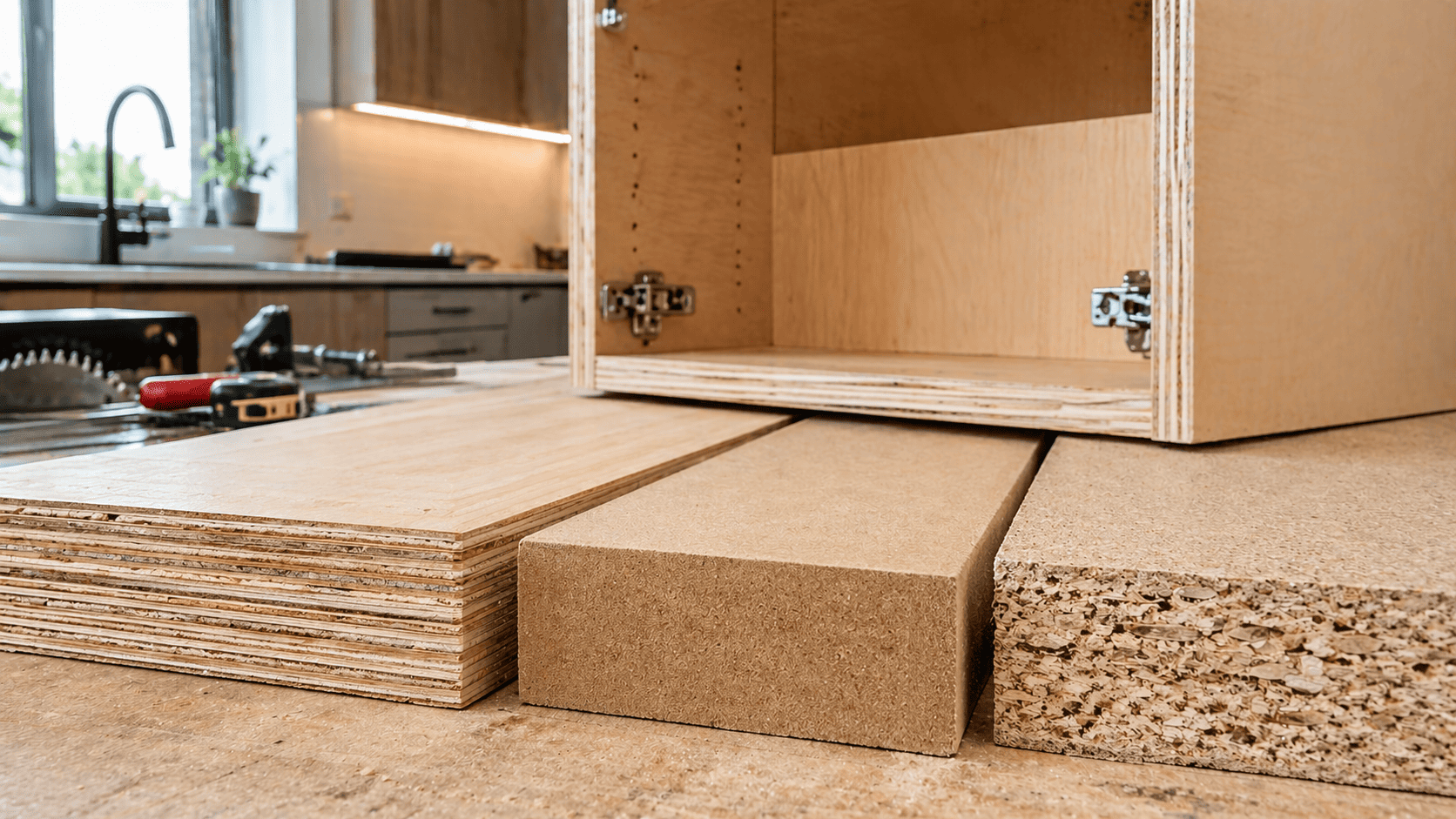
CARB defines Phase 2 (CARB P2) as the stricter stage of its formaldehyde emission standards. It replaces Phase 1 (P1) by setting lower emission limits, and manufacturers now use it as the primary benchmark for engineered wood materials.
CARB sets specific emission limits for each material type, measured in parts per million (ppm). The transition from P1 to P2 significantly reduces allowable emissions:
- Plywood (HWPW): from 0.08 ppm to 0.05 ppm
- Particleboard: from 0.18 ppm to 0.09 ppm
- MDF: from 0.21 ppm to 0.11 ppm
- Thin MDF (≤ 8mm): from 0.21 ppm to 0.13 ppm
These reductions lower formaldehyde emissions by approximately 30% to 50%. For example, CARB cuts particleboard emissions in half, from 0.18 ppm to 0.09 ppm. This change directly improves indoor air quality.
Manufacturers use CARB P2 standards for products installed in enclosed spaces, such as:
- Kitchen and bathroom cabinets
- Residential and commercial furniture
- Interior panels and built-in fixtures
By enforcing stricter limits, CARB P2 helps control long-term exposure to formaldehyde and supports safer indoor environments. Today, most manufacturers follow CARB P2 requirements when producing cabinets and furniture for modern applications.
4. CARB Certification in California vs other standards
CARB certification was developed by the California Air Resources Board to regulate formaldehyde emissions from wood products within the state. Over time, similar regulations have been introduced at the national level in the United States to ensure consistent safety standards.
The closest equivalent is EPA TSCA Title VI, a federal regulation that applies to the same categories of engineered wood products such as MDF, plywood, and particleboard. In terms of technical requirements, CARB Phase 2 (P2) and TSCA Title VI are largely aligned, with nearly identical emission limits and testing methods.
The main difference lies in scope: CARB is a California-specific regulation, while TSCA Title VI applies across the entire U.S. Despite this, CARB certification remains widely referenced due to its earlier adoption and strong recognition in the industry, even when both standards aim to achieve the same goal of safer indoor air quality.
5. Common misunderstandings about CARB Certificates
Many people misunderstand CARB certification because they treat it as a single, general concept instead of a system with different documents and requirements. This confusion often comes from using the term “CARB certificate” without clearly distinguishing between certification, compliance, and material standards.
Some common mistakes include:
- Assuming one CARB certificate covers all products, while certification actually applies to specific materials and production processes
- Treating CARB Phase 1 (P1) and Phase 2 (P2) as interchangeable, even though P2 sets stricter emission limits and serves as the current standard
- Confusing a third-party CARB certificate with a Certificate of Compliance, despite their different roles in testing and shipment documentation
Understanding these distinctions helps you interpret CARB requirements correctly and apply them consistently across materials and documentation.
6. How VIC Cabinet Factory Meets CARB P2 Standards
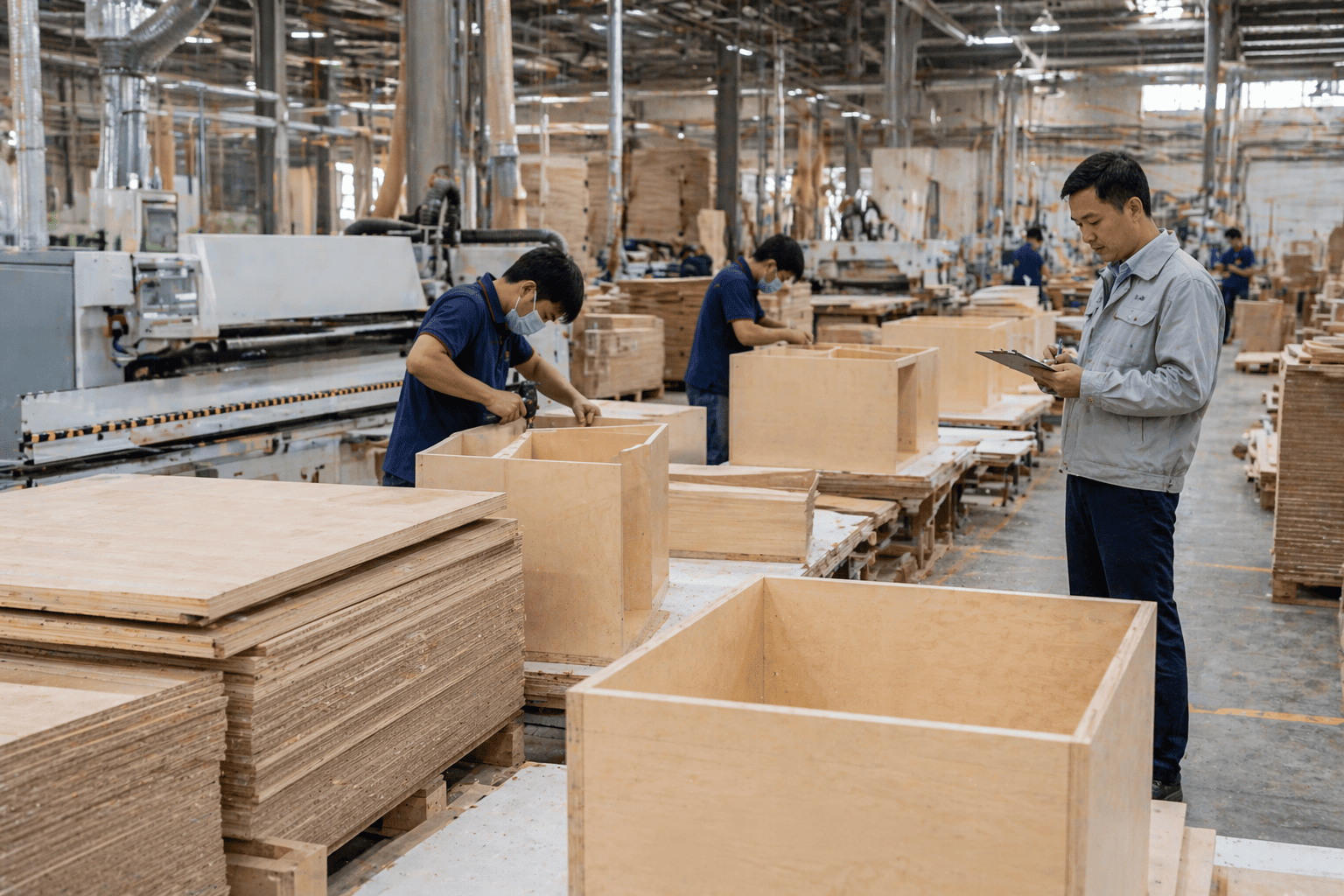
VIC Cabinet factory ensures CARB P2 compliance by actively controlling both material selection and production processes. Instead of relying only on documentation, the factory applies strict standards from the beginning of the supply chain to maintain consistent emission levels in finished products.
The factory uses plywood and MDF that meet CARB P2 and TSCA Title VI requirements. It monitors raw materials by batch and verifies that each input matches certified specifications. This approach helps maintain consistency between tested materials and actual production output.
In addition to material control, VIC prepares and provides the required documentation for each order. This includes:
- Third-party CARB certificates for certified materials
- Certificate of Compliance issued with each shipment
By combining controlled material sourcing, active monitoring, and complete documentation, VIC keeps its production aligned with CARB P2 requirements and ensures that finished cabinets meet current emission standards for indoor use.
𝐕𝐈𝐂 𝐂𝐚𝐛𝐢𝐧𝐞𝐭 𝐅𝐚𝐜𝐭𝐨𝐫𝐲
Head Office: Tran Thu Do Street, Hoang Liet, Hoang Mai District, Hanoi, Vietnam
HCM Office: N8 Street, Phu Thuan, District 7, Ho Chi Minh City, Vietnam
Phone: +84 971 52 53 54
Website: https://viccabinet.com
Email: info@viccorp.com.vn
