


The defining kitchen cabinet color trends of 2024 combined familiar neutrals with natural wood and selective color accents. White remained the leading cabinet color in the 2024 U.S. Houzz Kitchen Trends Study, while wood tones gained ground. Blue and green offered alternatives for homeowners seeking contrast, particularly on kitchen islands. For cabinet buyers, these findings provided a useful starting point for selecting finishes.
This guide reviews the 2024 color landscape and explains how distributors, builders, and project teams can translate design preferences into practical cabinet selections.
What Were the Leading Kitchen Cabinet Colors in 2024?
White and wood tones led the cabinet color choices reported in the 2024 U.S. Houzz Kitchen Trends Study. Blue and green also appeared in primary cabinetry and contrasting island selections.
| Cabinet color or finish | Finding from the 2024 Houzz study |
|---|---|
| White | Selected by 46% for primary cabinetry |
| Wood tones | Selected by 25% for primary cabinetry |
| Blue | Selected by 4% for primary cabinetry |
| Green | Selected by 4% for primary cabinetry |
| Blue contrasting island | Selected by 25% among those choosing an island color different from the main cabinetry |
| Green contrasting island | Selected by 10% among those choosing an island color different from the main cabinetry |
Source and scope: Houzz published the study in January 2024, based on a July 2023 survey of 3,437 U.S. Houzz users planning, undertaking, or recently completing a kitchen renovation. These findings describe the surveyed renovation audience; they are not national cabinet sales shares or distributor inventory recommendations. houzz.com
1. White Cabinets: A Versatile Foundation
White cabinets provide a light visual foundation that works with a wide range of countertops, flooring, and hardware. However, selecting the right white requires more attention than choosing a color name.
A warm white may complement beige stone and oak flooring, while a cooler white may suit a palette with blue-gray surfaces. The final result depends on the undertones of all surrounding materials.
For distributors and project buyers, useful white cabinet options can include:
- A neutral white for flexible material coordination.
- A warm white for interiors with cream, beige, or wood finishes.
- An off-white for a softer contrast against walls and countertops.
Before approving a finish, compare a physical door sample with the actual countertop and flooring. Review the combination under both daylight and the planned artificial lighting.
Buyer takeaway: Treat each white finish as a specific specification. Two suppliers’ “white” cabinets may differ in undertone, sheen, and surface appearance.
2. Natural Wood Tones: Visible Grain and Material Character
Natural wood finishes offer a different visual effect from painted cabinetry because the grain remains part of the design. The finished appearance depends on the wood species, cut, stain, and clear coating.
Light wood tones can support an airy interior, while medium and dark finishes can introduce stronger contrast. These are design options within the wood category; a general preference for wood does not establish demand for every species or stain.
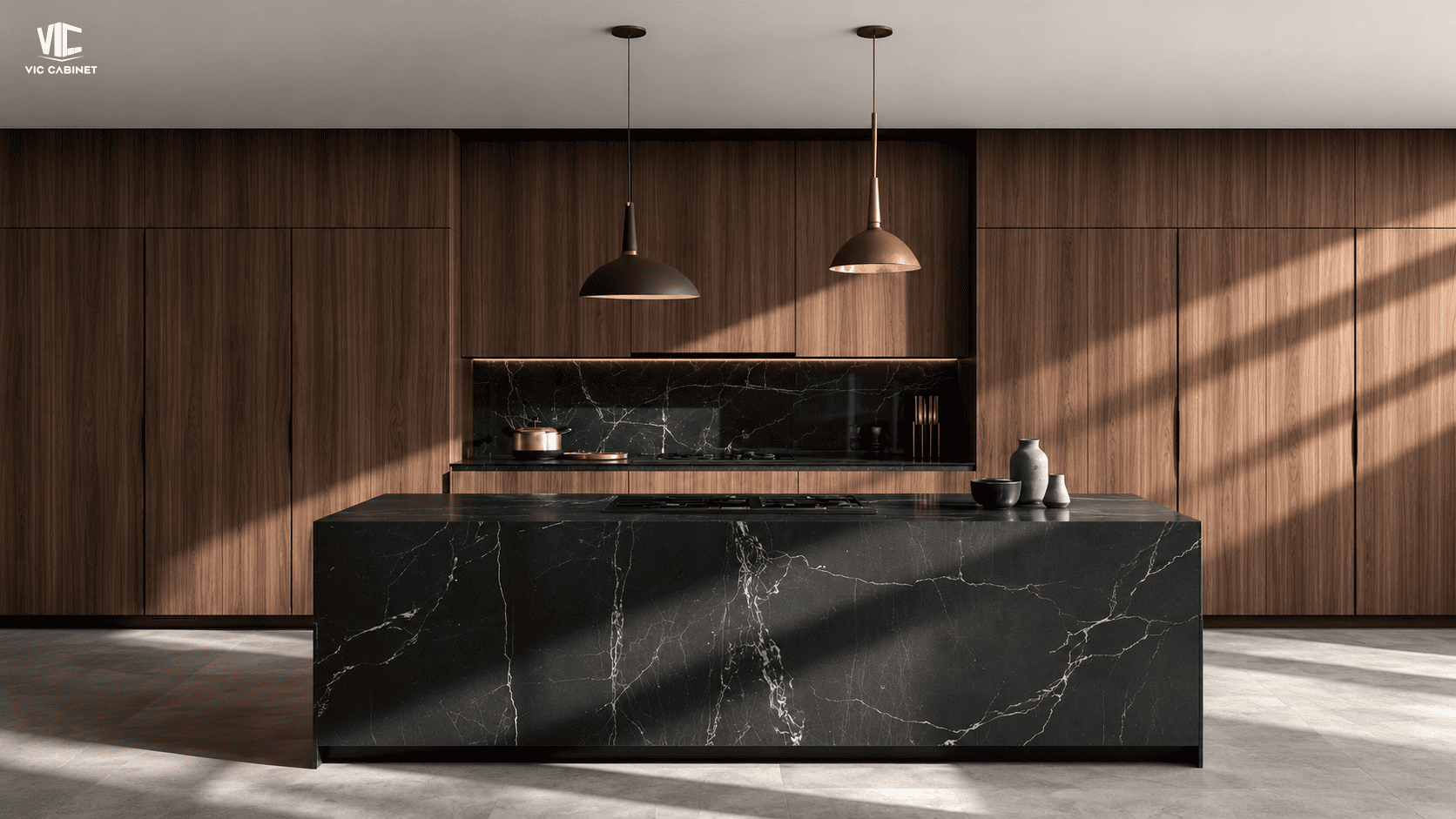
For wood cabinet selections, buyers should review:
- Species: Oak, maple, birch, and walnut have different grain characteristics.
- Construction: Solid wood and veneer components may accept finishes differently.
- Grain direction: Vertical and horizontal grain create different visual effects.
- Acceptable variation: Natural differences should be defined through approved samples.
- Finish consistency: Review several components together rather than one small swatch.
A single sample cannot represent every natural grain pattern. For larger projects, approve a representative sample range that communicates the intended overall appearance.
Buyer takeaway: Specify the material and finish together. “Natural wood” alone is not a complete cabinet specification.
3. Blue Cabinets: Contrast for Islands and Selected Runs
Blue cabinetry can introduce color while allowing the surrounding finishes to remain neutral. Navy, muted blue, and gray-blue each create a different effect, so they should not be treated as interchangeable.
A practical application is a blue island paired with white perimeter cabinets. This keeps the main cabinetry visually consistent while creating a focal point.
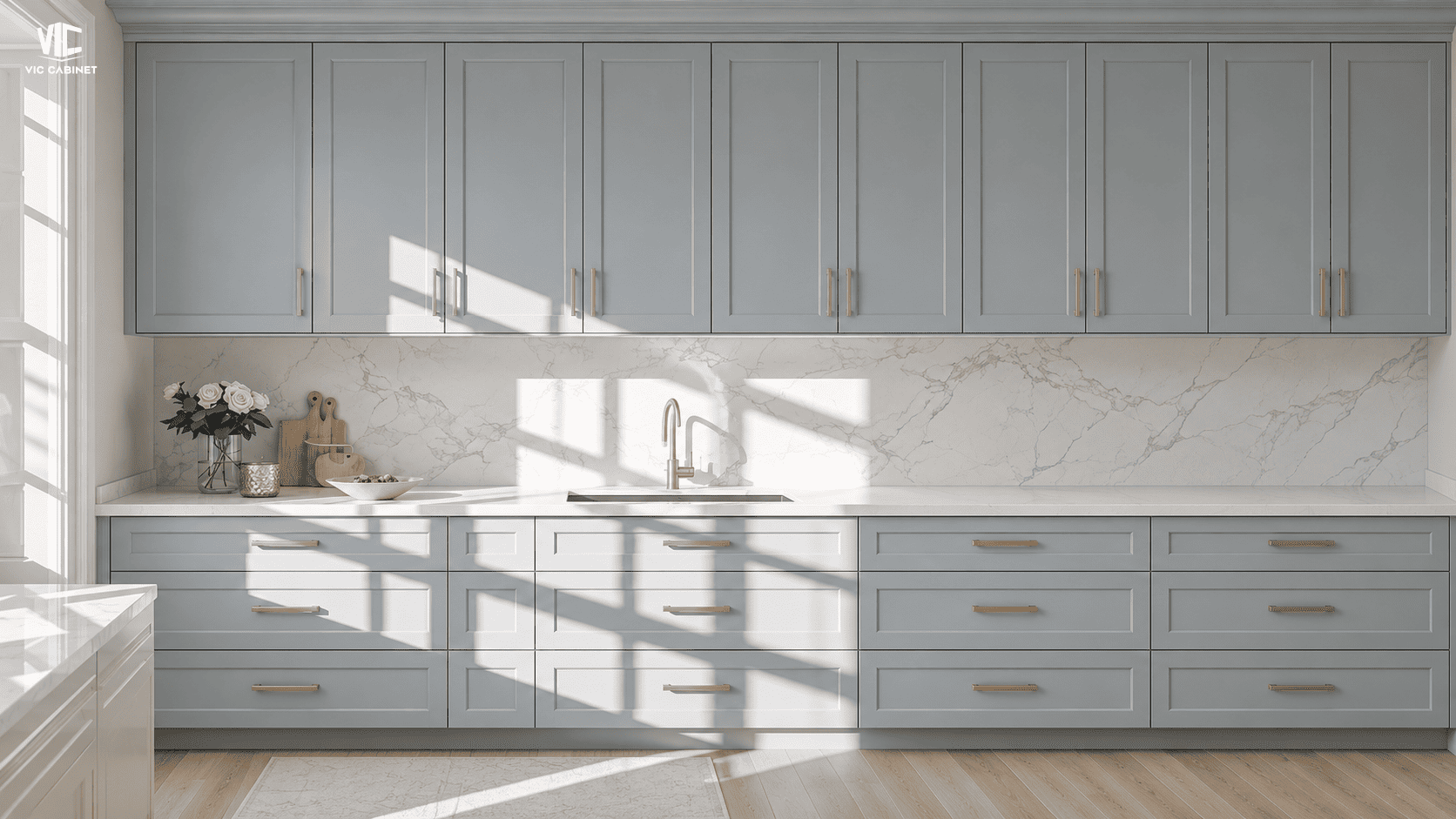
Possible combinations include:
- Navy cabinets with white countertops and brushed metal hardware.
- Muted blue cabinetry with light wood flooring.
- Gray-blue cabinets with neutral walls and restrained backsplash patterns.
The depth of the shade matters. A dark navy can look nearly black under limited lighting, while a lighter blue may appear more saturated beside a bright white countertop.
Buyer takeaway: Approve blue finishes in the intended material palette and lighting conditions, especially when using them as an island accent.
4. Green Cabinets: Muted Color with Flexible Pairings
Green offers several distinct directions, including sage, olive, and deeper forest shades. Each has a different undertone and should be evaluated separately.
Sage can create a softer contrast with white surfaces. Olive introduces a more yellow or earthy character, while forest green produces a deeper, more defined appearance.
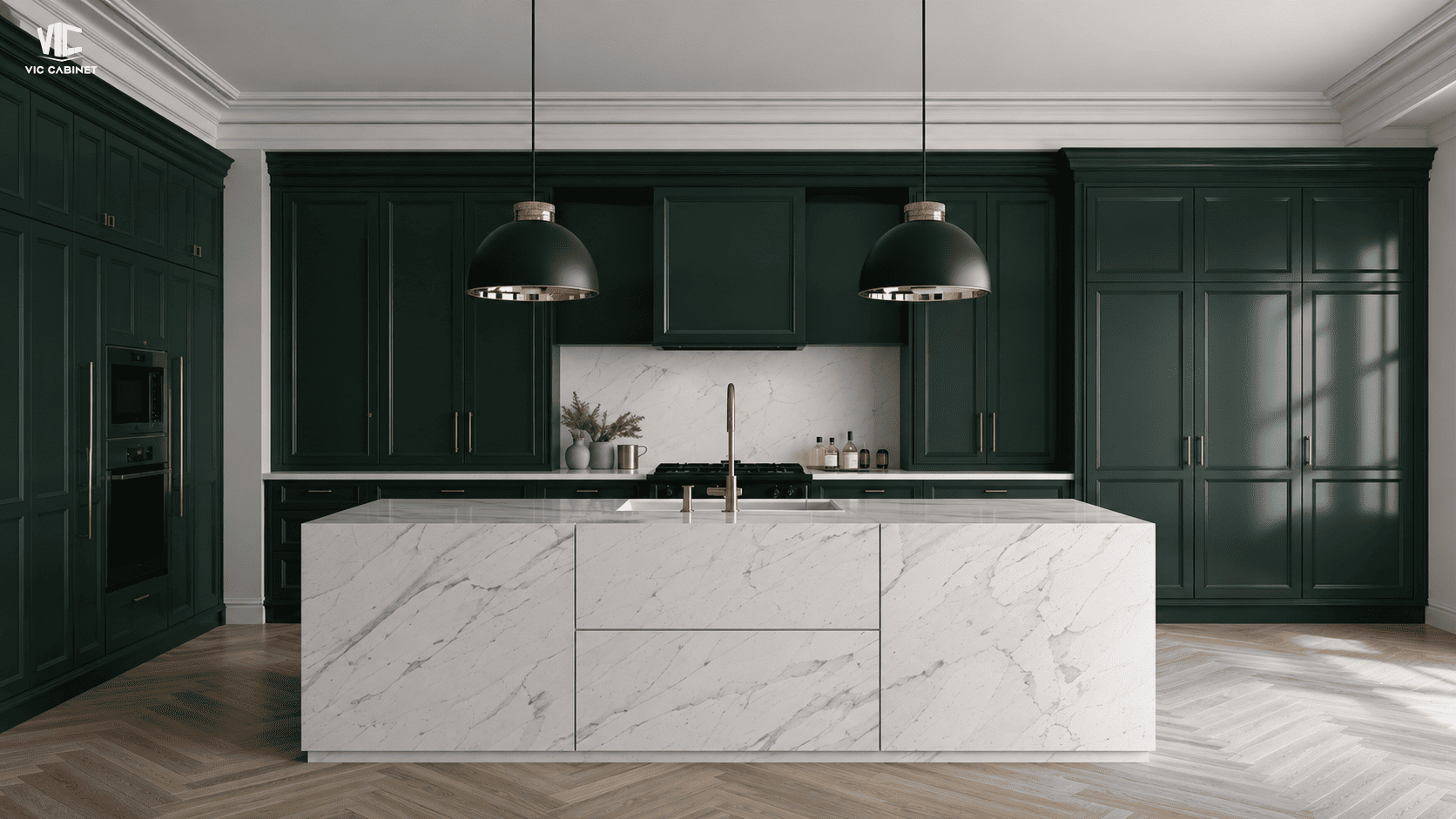
Suggested combinations include:
| Green finish | Suggested material pairing |
|---|---|
| Sage green | Warm white countertops and light wood |
| Olive green | Cream surfaces and medium wood tones |
| Forest green | Pale countertops and restrained metal accents |
These combinations are design starting points rather than fixed rules. Flooring, wall paint, natural light, and countertop veining can change how a green finish appears.
Buyer takeaway: Keep adjacent materials in the sample review. A green door approved on its own may look different once installed beside warm flooring or cool stone.
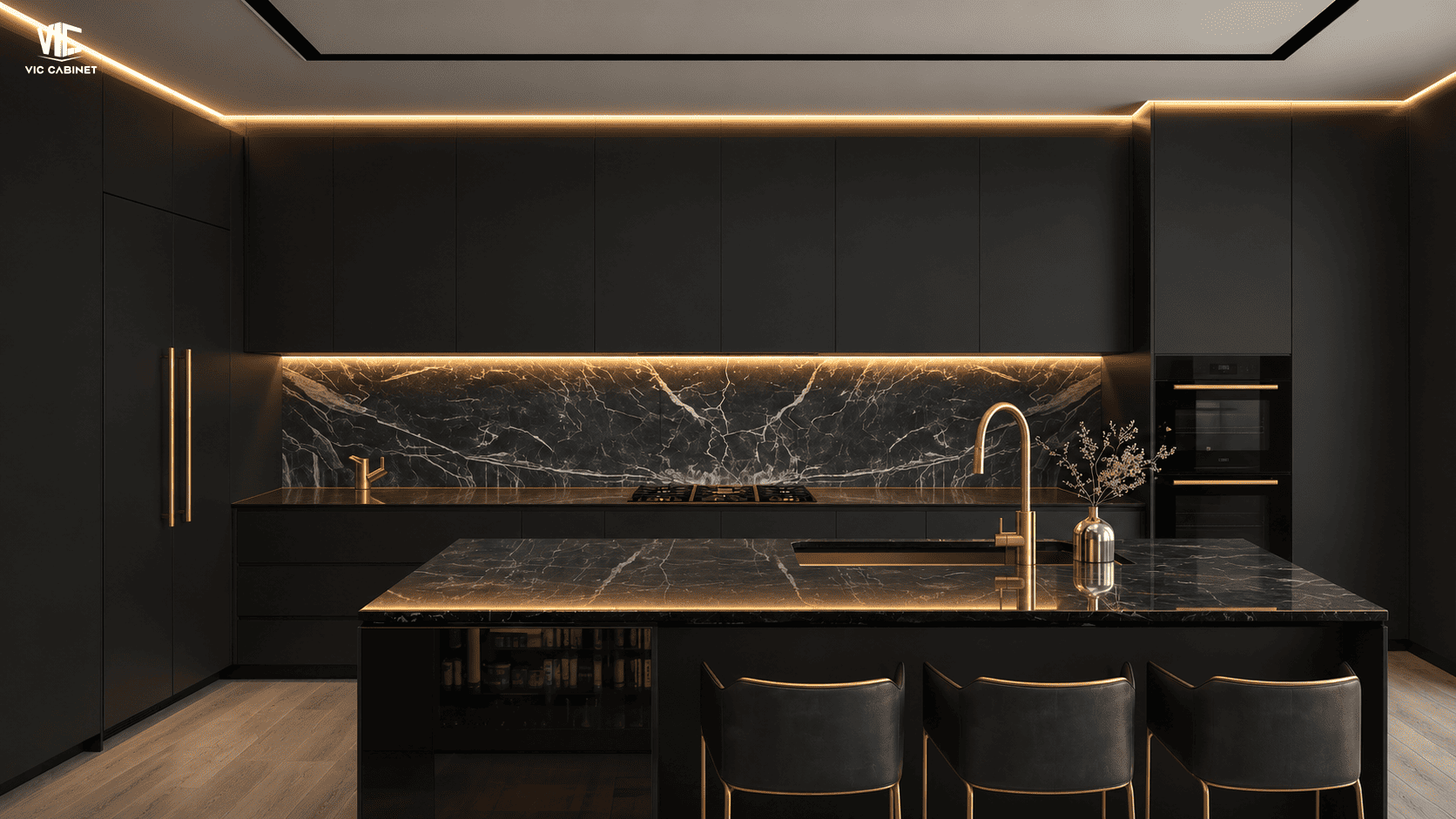
5. Gray, Black, and Pastels: Evaluate by Project Brief
Gray can create a neutral palette with more contrast than white. Check whether the finish has blue, green, or beige undertones before coordinating it with countertops and flooring. Black and charcoal can define an island, tall cabinet wall, or full kitchen. Evaluate lighting, surface sheen, and cleaning requirements before selecting the finish. Color alone does not determine scratch resistance or fingerprint performance. Those characteristics depend on the coating system, surface texture, and product specifications.
Powder blue, mint, and blush can serve a specific design brief. For a distributor considering these colors, customer requests and local sales history are more useful than assuming broad demand.
Buyer takeaway: Distinguish widely applicable finishes from colors selected for a particular project or customer segment.
6. Two-Tone Cabinets: Combining Neutral and Accent Finishes
Two-tone kitchen cabinets use different colors or finishes within the same kitchen. Common arrangements include contrasting islands, different upper and lower cabinets, or a wood cabinet section within a painted kitchen.
| Arrangement | Design purpose | Specification check |
|---|---|---|
| White perimeter + blue island | Introduce a focal point | Confirm countertop coordination |
| Painted perimeter + wood island | Add visible grain and warmth | Review wood sample variation |
| Light uppers + darker base cabinets | Concentrate contrast below eye level | Check both colors together |
| Neutral cabinets + green accent section | Define a selected zone | Confirm undertones across materials |
Two-tone designs also require clear documentation. Drawings and order schedules should identify the finish for each cabinet, panel, filler, molding, and exposed end.
Buyer takeaway: Approve the complete finish combination and document where each finish belongs before production.
7. How Should Distributors and Project Buyers Select Cabinet Colors?
A trend report can guide product research, but final selections should reflect the buyer’s customer base, project requirements, and ability to manage the assortment.
Start with the application: Define whether the cabinets are intended for rental apartments, residential remodeling, hospitality, or custom homes. Different applications may require different levels of finish variety and customization.
Build a controlled finish range: Establish a manageable selection of neutral and wood finishes, then consider accent colors where customer demand supports them. Avoid converting survey percentages directly into purchasing ratios.
Approve physical samples: Use an approved door sample to confirm color, sheen, texture, and visible construction details. For wood finishes, agree on an acceptable range of grain and color variation.
Confirm production compatibility: Check which door styles, materials, and accessories are available in each finish. A color offered on one cabinet collection may not be available across every configuration.
Plan for later orders: Record the finish code, approved sample reference, and relevant order details. If replacement components or future phases are required, these records provide a clearer basis for comparison.
Cabinet Finish Planning with VIC Cabinet
At VIC Cabinet, we work with distributors and project buyers to review cabinet styles, finish requirements, and project specifications. When contacting our team, share your preferred colors, reference images, door style, and project drawings or cabinet schedule. We can then review available options and discuss the samples needed for approval.
Planning a cabinet program or project? Contact VIC Cabinet to request available finish options and door samples for review.
Frequently Asked Questions
1. What was the most popular kitchen cabinet color in 2024?
White was the leading primary cabinet color in the 2024 U.S. Houzz Kitchen Trends Study. The finding applies to the surveyed renovating homeowners rather than all U.S. cabinet purchases.
2. Were natural wood cabinets relevant to 2024 kitchen design?
Yes. Wood tones were a prominent category in the 2024 Houzz findings. Buyers should still evaluate the specific species, grain, and stain rather than treating all wood finishes as one look.
3. How can blue or green cabinets be used without dominating the kitchen?
Use the color on an island or selected cabinet section and coordinate the remaining cabinetry with a neutral finish. Review the full combination using physical samples.
4. Does a dark cabinet color guarantee better durability?
No. Durability depends on the substrate, preparation, coating system, and use conditions. Request product specifications or relevant test information instead of judging performance by color.
5. What should buyers approve before ordering two-tone cabinets?
Approve both finishes together, then identify the finish of every cabinet and exposed accessory on the drawings and order schedule.
Head Office: Tran Thu Do Street, Yen So Ward, Hanoi, Vietnam
HCM Office: N8 Street, Phu Thuan, District 7, Ho Chi Minh City, Vietnam
Phone: +(84) 986 119 249
Website: https://viccabinet.com
Email: info@viccorp.com.vn
