


Light wood kitchen cabinets bring warmth, natural texture, and an airy feel into the kitchen without making the space look heavy. From light oak and soft brown tones to natural wood finishes, these cabinets work well with many modern interiors. The key is choosing the right wood tone, door style, and surrounding materials to create a kitchen that feels balanced rather than overly coordinated.
1. Why Light Wood Kitchen Cabinets Are So Popular
Light wood kitchen cabinets have become a popular alternative to traditional white or dark cabinetry because they offer both warmth and visual softness. Their lighter tones reflect more natural light and can make a kitchen feel brighter and more open. At the same time, visible wood grain introduces texture that plain painted cabinets may not provide.

Another advantage is versatility. Light wood can feel minimal in a Scandinavian kitchen, clean and refined in a contemporary space, or warmer and more traditional when paired with Shaker doors. Because the color is relatively neutral, homeowners and designers can update countertops, hardware, flooring, or wall colors without completely changing the cabinetry.
2. Popular Light Wood Kitchen Cabinet Colors
Not every light wood finish looks the same. Some have yellow or honey undertones, while others lean beige, brown, or almost neutral. Understanding these differences helps prevent the cabinet color from conflicting with countertops, flooring, and other finishes in the room.
2.1 Light Brown Kitchen Cabinets
Light brown kitchen cabinets sit between very pale wood and traditional medium-brown cabinetry. They provide enough warmth to make a kitchen feel inviting while remaining light enough for modern spaces. Depending on the wood species and finish, the color can range from soft beige-brown to slightly warmer honey tones.

This color works especially well with white, cream, taupe, and warm grey surfaces. For a softer kitchen, pair light brown cabinets with creamy quartz and beige backsplash tile. For stronger contrast, use white countertops with black or dark bronze hardware. The combination keeps the wood visually prominent without making the room feel too rustic.
2.2 Light Oak Kitchen Cabinets
Light oak kitchen cabinets are one of the most recognizable choices within the light wood category. Oak typically has a visible, distinctive grain that adds movement and texture to otherwise simple cabinetry. Lighter oak finishes can range from pale beige to warmer golden tones depending on the stain and finishing process.
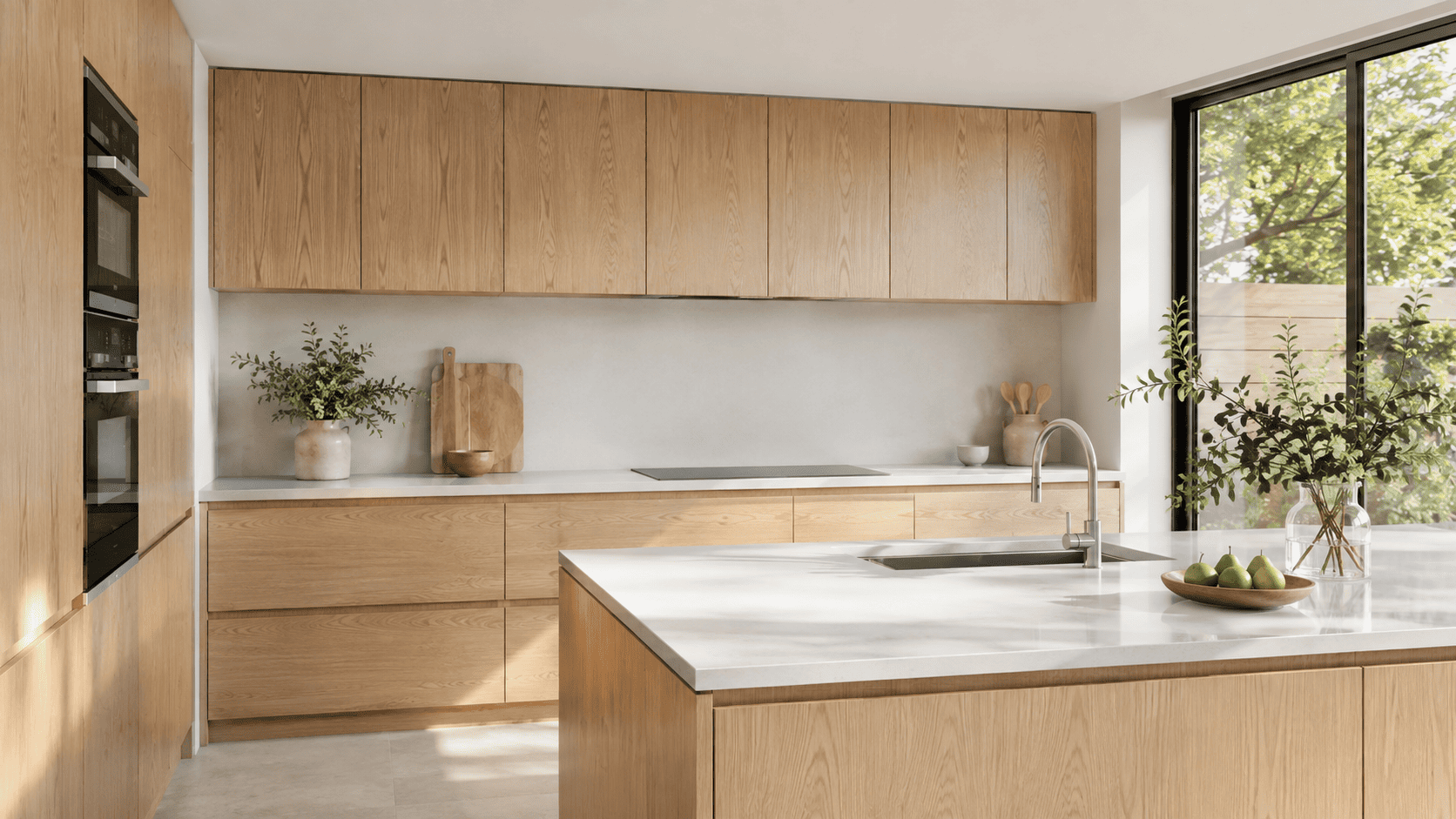
Light oak works particularly well with flat-panel and frameless cabinetry because the simple door construction allows the grain to become part of the design. It is also a strong option for Scandinavian and contemporary kitchens, where natural materials are often combined with white stone, neutral walls, and understated hardware.
2.3 Light Natural Wood Kitchen Cabinets
Light natural wood kitchen cabinets focus more on preserving the original character of the material than creating a heavily stained appearance. The finish usually allows variations in grain and tone to remain visible, giving each door a more organic look.
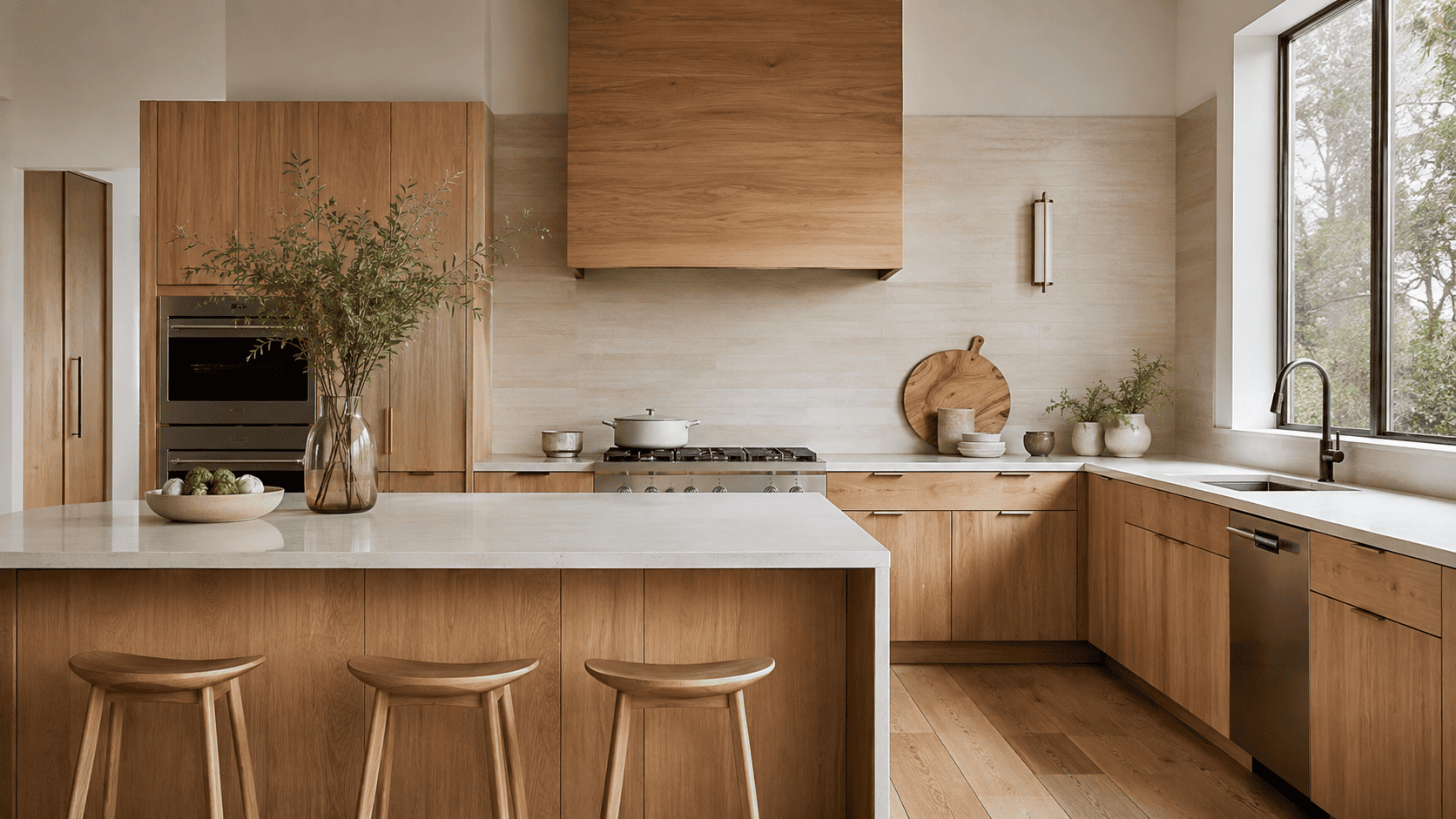
Natural finishes work well in kitchens designed around wood, stone, and other tactile materials. However, variation is part of their appearance. When selecting natural wood cabinetry, it is important to review physical samples and understand how grain, color, and texture may vary between doors rather than expecting the completely uniform appearance of painted cabinetry.
2.4 Blonde and Beige-Toned Wood Cabinets
Blonde wood cabinets are among the lightest options available. Their pale beige and soft golden tones can brighten a kitchen while maintaining more warmth than pure white cabinetry. They are particularly effective in spaces with large windows, light flooring, and minimal decoration.
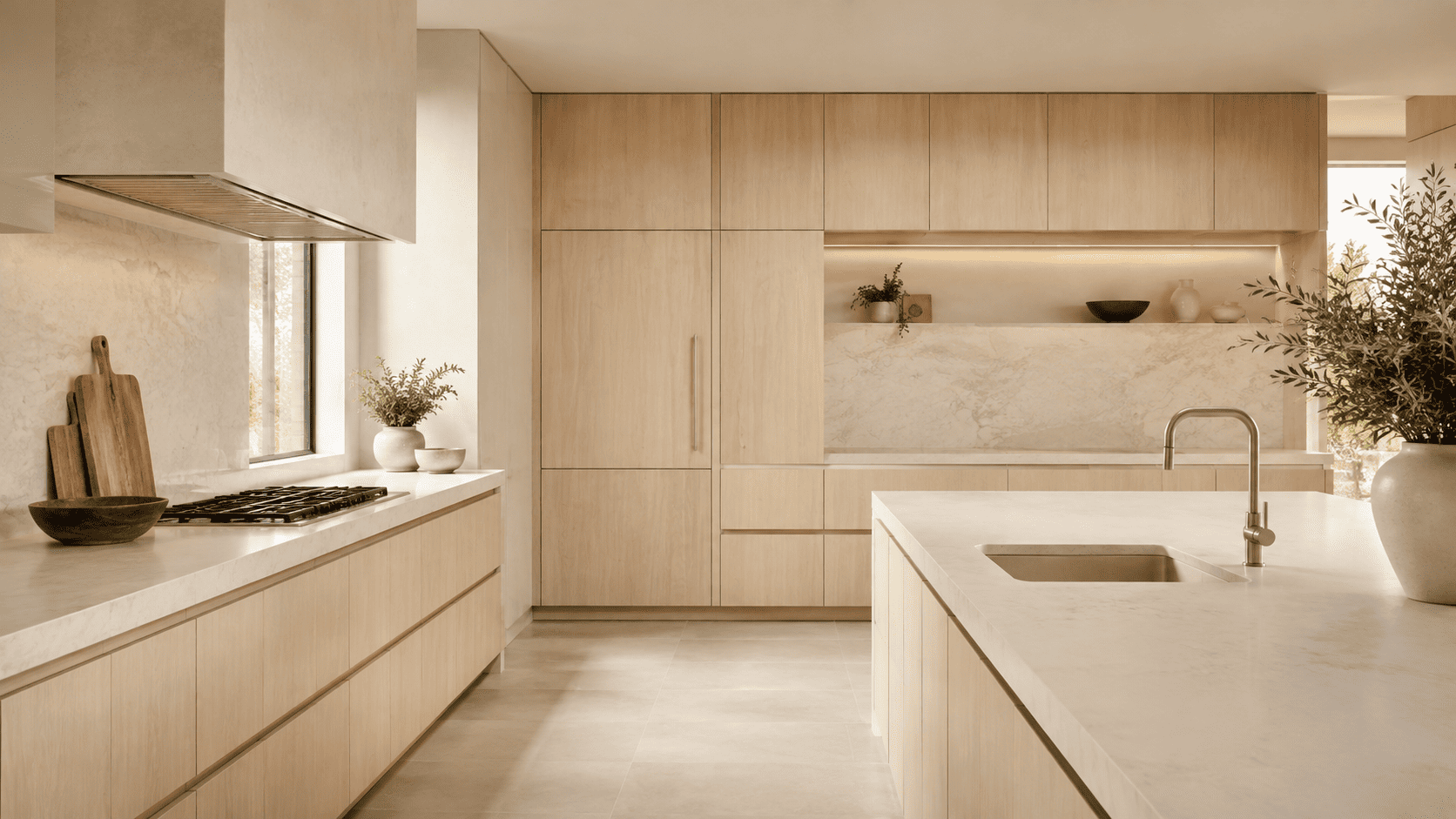
Beige-toned woods provide a more neutral alternative when yellow or orange undertones are undesirable. Combined with off-white quartz, limestone-inspired surfaces, or warm grey materials, they create a calm palette that works especially well in minimalist and modern organic kitchens.
3. Best Styles for Light Wood Kitchen Cabinets
Light wood works with many cabinet styles, but the door profile changes the overall feel of the kitchen. Clean profiles make the wood look more modern, while framed doors add more character and detail.
- Flat-panel: Best for modern and minimalist kitchens. The simple surface highlights the natural wood grain.
- Slim Shaker: A good balance between modern and traditional, especially with light oak or beige wood.
- Shaker: Adds more detail and works well in transitional or warm classic kitchens.
- Frameless: Creates clean, continuous cabinetry lines and suits Scandinavian or European-inspired spaces.
If the wood grain is already visually strong, a simpler door style usually creates a more balanced result.
4. How to Pair Light Wood Cabinets With Countertops, Floors and Backsplashes
The key to pairing light wood cabinets is contrast rather than exact matching. Using too many similar beige or wood tones can make the kitchen look flat, while a few well-chosen contrasts help the cabinetry stand out.
For countertops, consider:
- White quartz: Bright and clean; easy to pair with most light woods.
- Cream or beige quartz: Best for a softer, warmer kitchen.
- Grey-veined quartz: Adds subtle movement without competing with the grain.
- Black countertops: Create a stronger, more contemporary contrast.
For flooring, avoid choosing a wood floor that looks almost identical to the cabinets. A slightly darker, warmer, or more neutral floor usually looks more intentional. Alternatively, light wood floors with dark kitchen cabinets create the opposite effect and work well when stronger contrast is preferred.
Backsplashes should remain relatively simple. White, cream, beige, or lightly textured surfaces allow the natural wood to remain the main visual feature. Matte black hardware adds contrast, while brushed brass creates a warmer look.
5. How to Choose the Right Light Wood Kitchen Cabinets
A light wood finish can look very different depending on lighting, grain, and surrounding materials. Before choosing, focus on a few practical factors rather than the cabinet color alone.
- Check the undertone: Determine whether the wood leans beige, yellow, honey, or neutral.
- Compare real samples: View the cabinet door beside the countertop, flooring, and backsplash.
- Check it under different lighting: Natural daylight and warm indoor lighting can change how the wood appears.
- Consider grain variation: Natural wood and veneer may vary from door to door.
- Think about consistency: For larger projects, make sure the same finish can be maintained across multiple units or future orders.
The best choice is the one that works with the entire kitchen palette, not simply the lightest or most popular wood tone.
VIC CABINET – Vietnam cabinet manufacturer
Head Office: Tran Thu Do Street, Hoang Liet, Hoang Mai District, Hanoi, Vietnam
HCM Office: N8 Street, Phu Thuan, District 7, Ho Chi Minh City, Vietnam
Phone: +84 96 781 7316
Website: https://viccabinet.com
Email: info@viccorp.com.vn
