


Two tone cabinets use two coordinated finishes to create contrast while keeping kitchen layouts consistent and controlled. This cabinet approach is widely applied in modern projects because it adds visual depth, supports clear space definition, and remains easy to specify and
replicate. From white and wood tone cabinets to two tone shaker cabinets, these combinations deliver reliable results across different kitchen layouts.
1. Why Two Tone Cabinets Are Widely Used in Today’s Projects
A well-specified two tone cabinets layout applies two coordinated finishes to create clear visual contrast while maintaining consistency across the cabinet system. When planned correctly, this approach allows designers and specifiers to introduce depth and structure without increasing complexity in layout coordination, production, or installation.
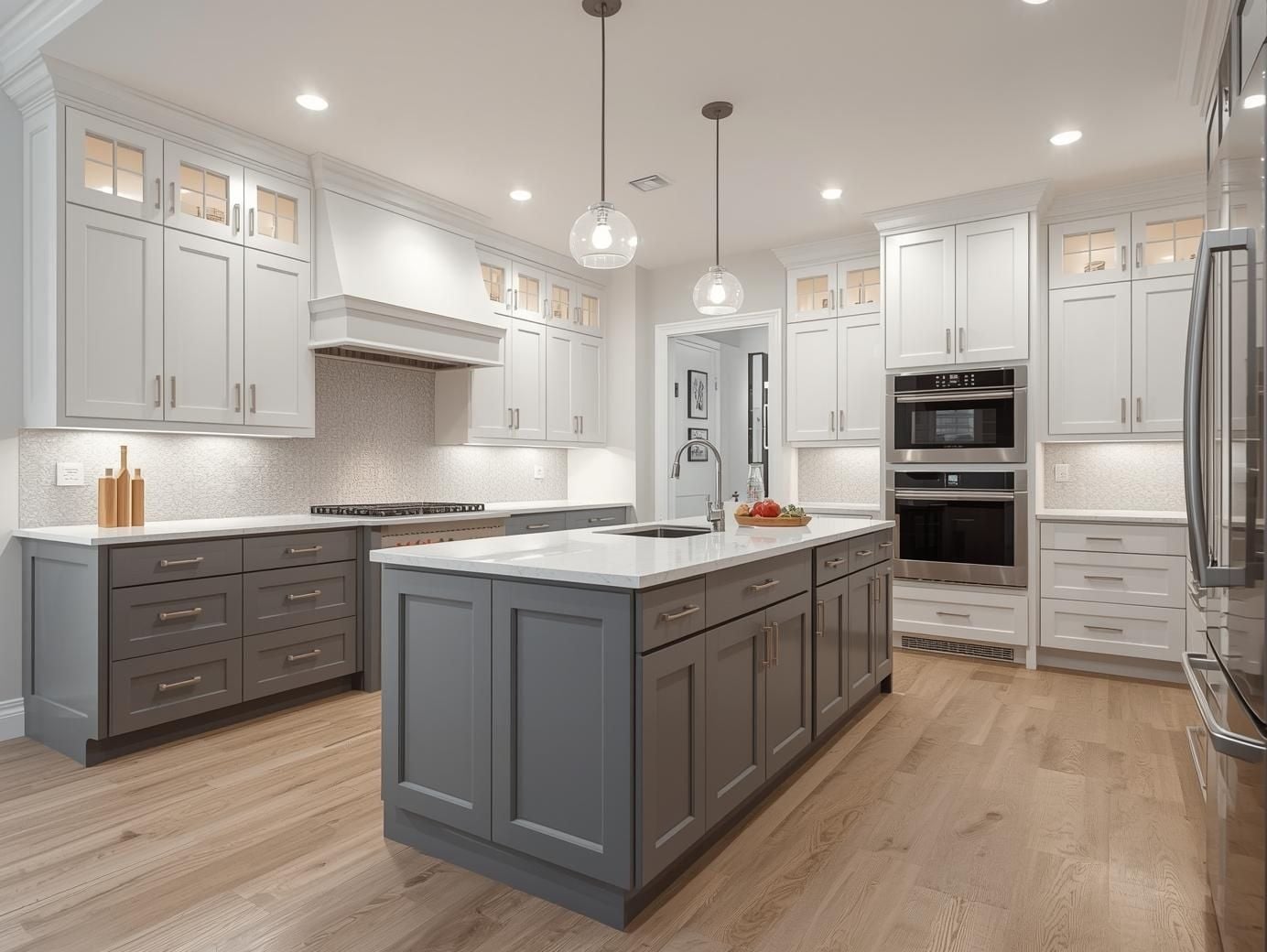
The commercial value of this cabinet format comes from three core advantages:
- Adds visual depth by creating clear contrast between finishes.
- Creates differentiation with cost control through finish selection rather than material changes.
- Supports multiple finish tiers, allowing one cabinet program to serve different specification levels.
As a result, this approach continues to be widely adopted in projects that require visual impact, consistency, and cost control.
For a broader look at how cabinet structure and detailing influence long-term usability, What Defines Traditional Cabinets and When They Make Sense provides useful context.
2. Two Tone Kitchen Cabinets Across Different Project Types
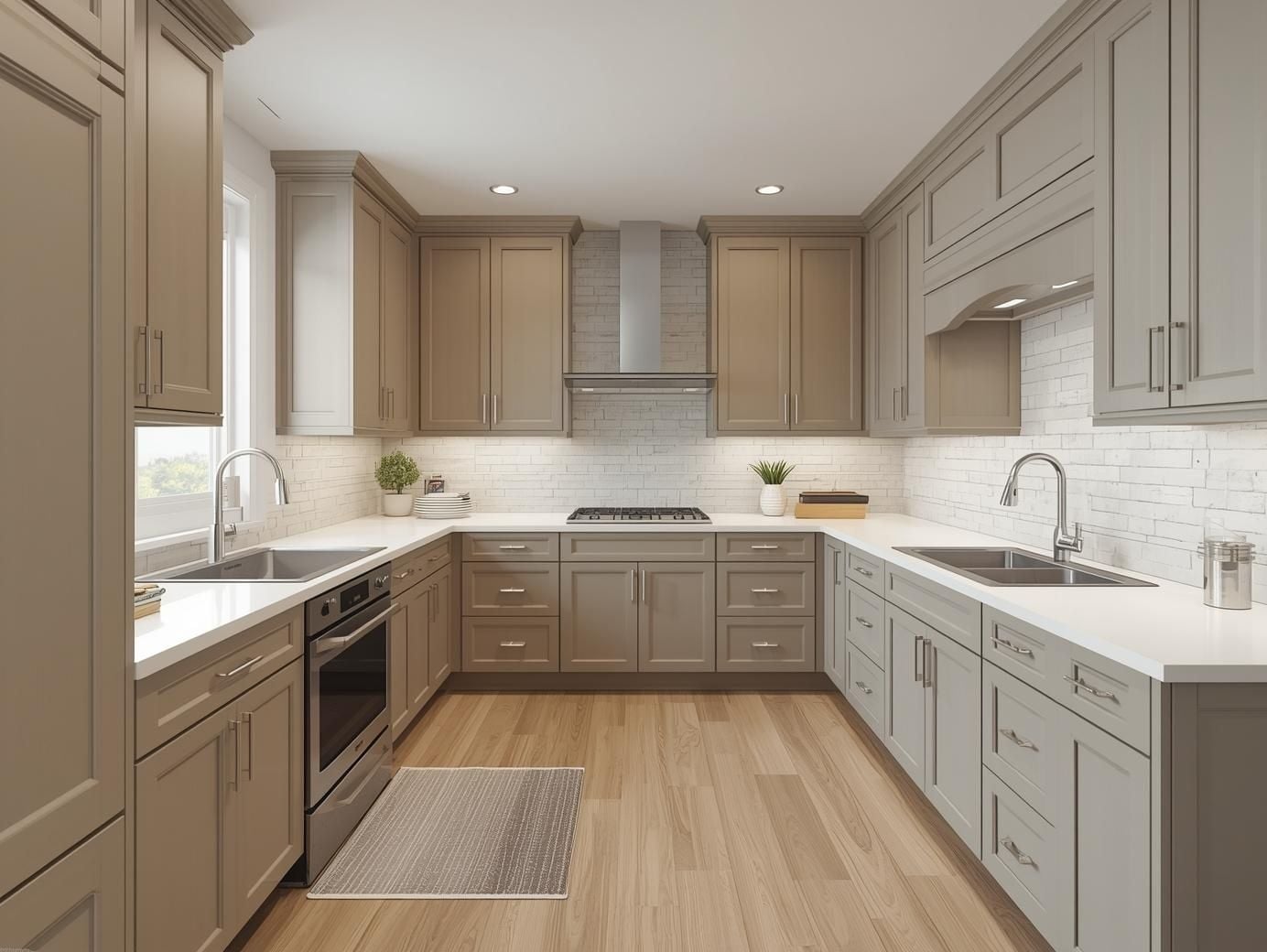
Two tone kitchen cabinets are applied across a wide range of kitchen projects because they offer flexibility without requiring changes to core cabinet construction. By keeping the cabinet system consistent and adjusting finishes only, this approach supports efficient planning and repeatable execution.
In practice, two tone kitchen cabinets work well across different use cases:
- Adaptable to varied layouts, including linear, L-shape, and island-based kitchens.
- Easy to integrate into design packages, as finish options can be standardized early.
- Scalable across multiple spaces, helping maintain visual consistency while allowing controlled variation.
This makes two tone kitchen cabinets a practical choice for projects that require both design differentiation and specification efficiency.
If you are comparing layout approaches and door applications, Inset Cabinets for Premium Kitchens: Cost, Style, and ROI.
3. Two Tone Cabinet Combinations That Perform Consistently
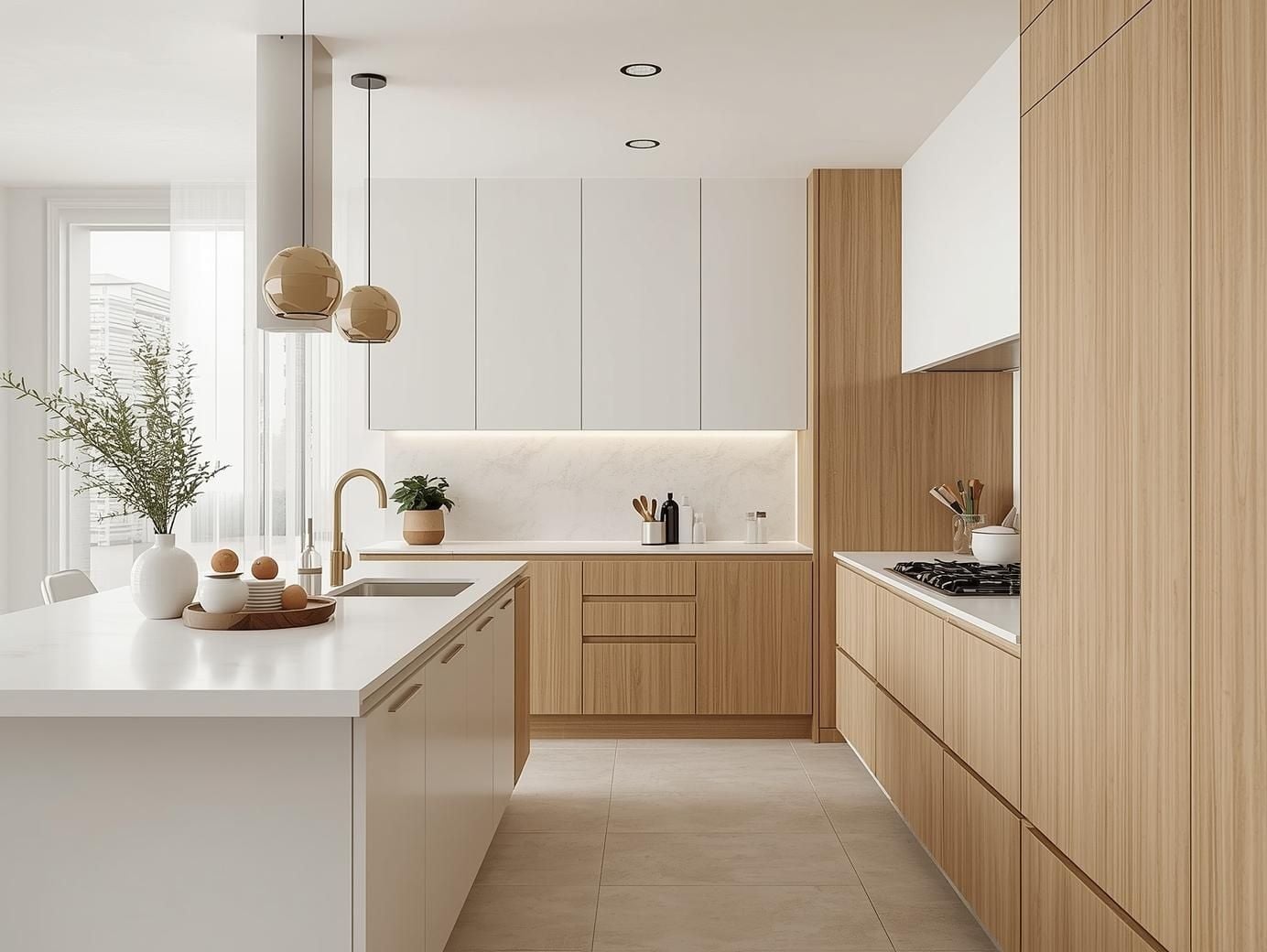
3.1 White and Wood Tone Cabinets
White and wood tone cabinets remain one of the most stable and widely used combinations. The contrast is subtle, easy to apply across different layouts, and works well with a broad range of finishes. This pairing integrates smoothly with various countertop materials and surface treatments without creating visual conflict.
3.2 White Upper Cabinets with Dark Base Cabinets
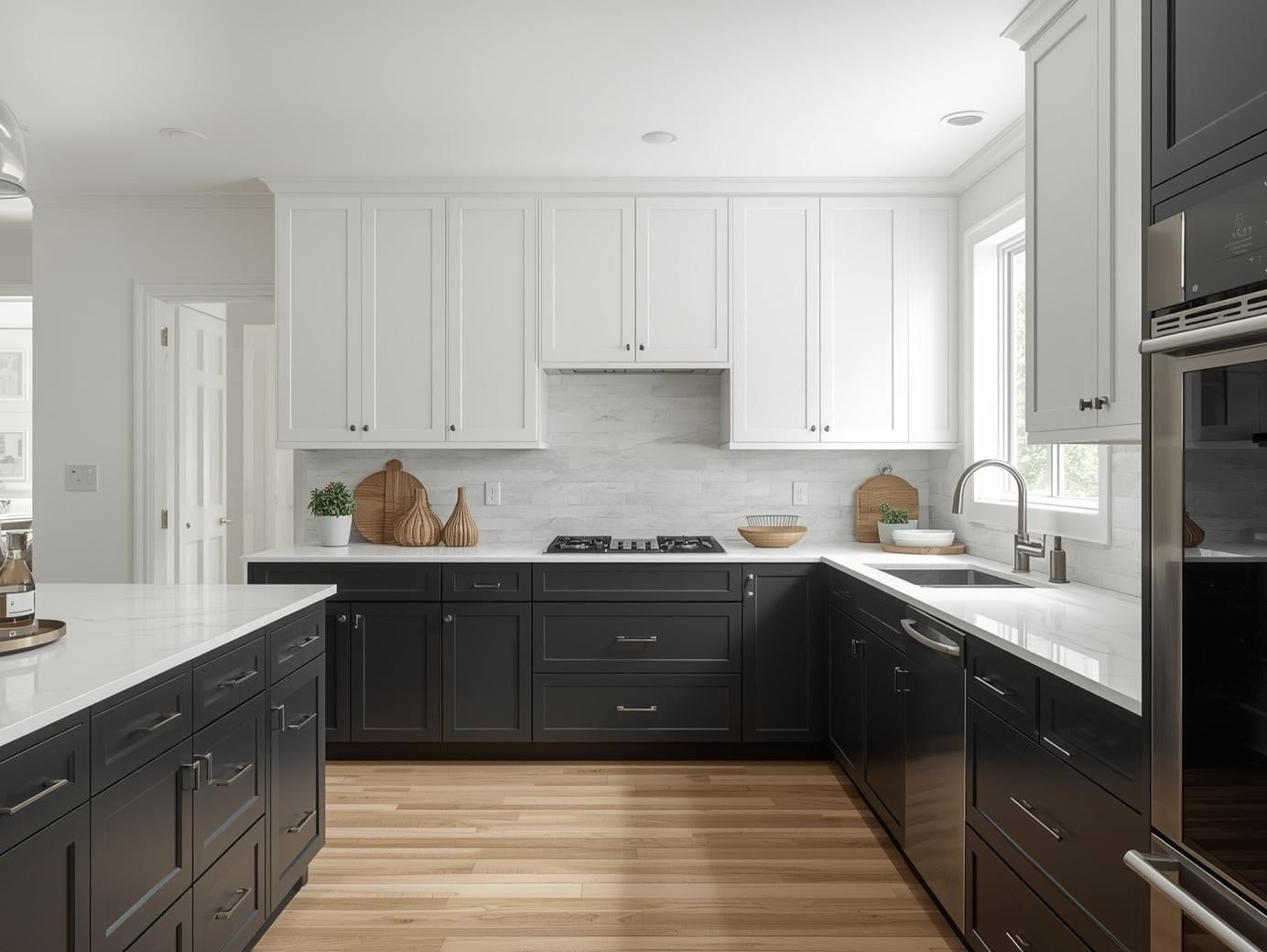
This layout keeps the upper zone visually light while grounding the space with darker base cabinets. The result is a balanced composition that maintains brightness while reducing visible wear in high-use areas, making it suitable for long-term application.
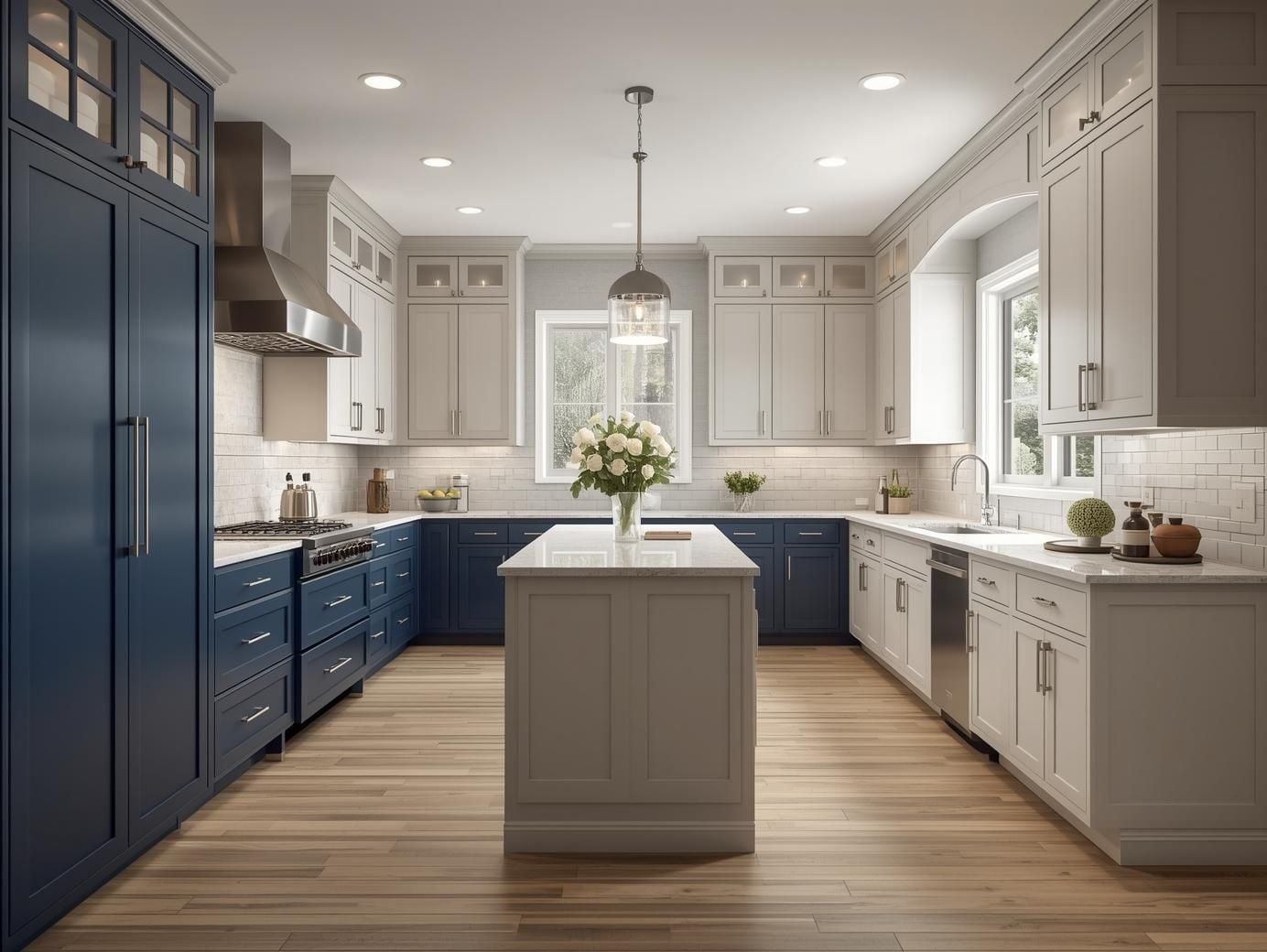
3.3 Two Tone Blue Cabinets
Two tone blue cabinets introduce controlled visual interest without overwhelming the overall layout. Blue is typically applied as an accent tone, making it effective in areas where differentiation is needed while preserving consistency across the rest of the cabinetry.
3.4 Two Tone Shaker Cabinets in Neutral Colors
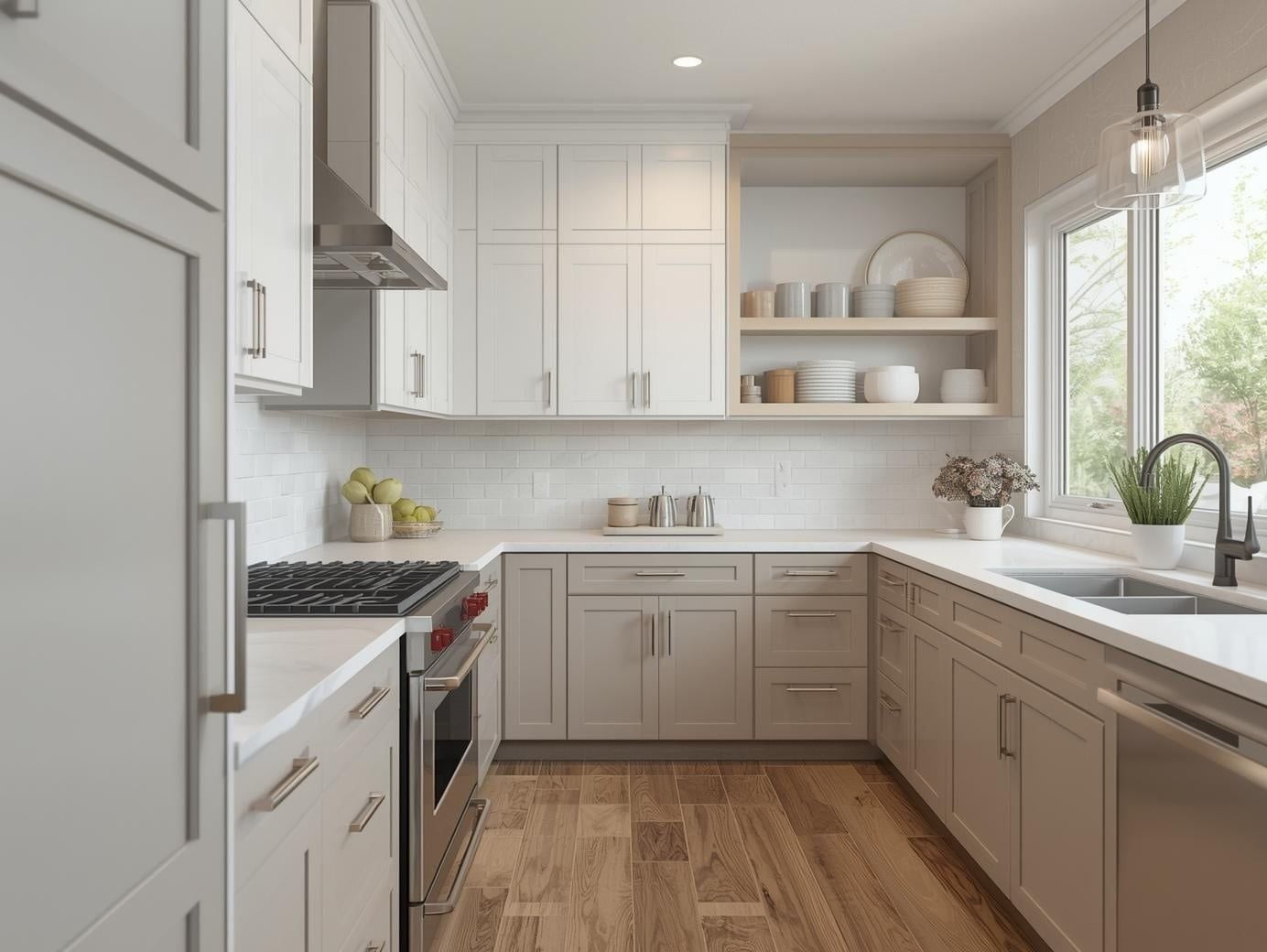
Two tone shaker cabinets combine a familiar door profile with subtle finish contrast. This approach is easy to implement and helps maintain a consistent appearance, especially when the same cabinet style is used across multiple spaces.
3.5 Island-Based Two Tone Cabinet Layouts
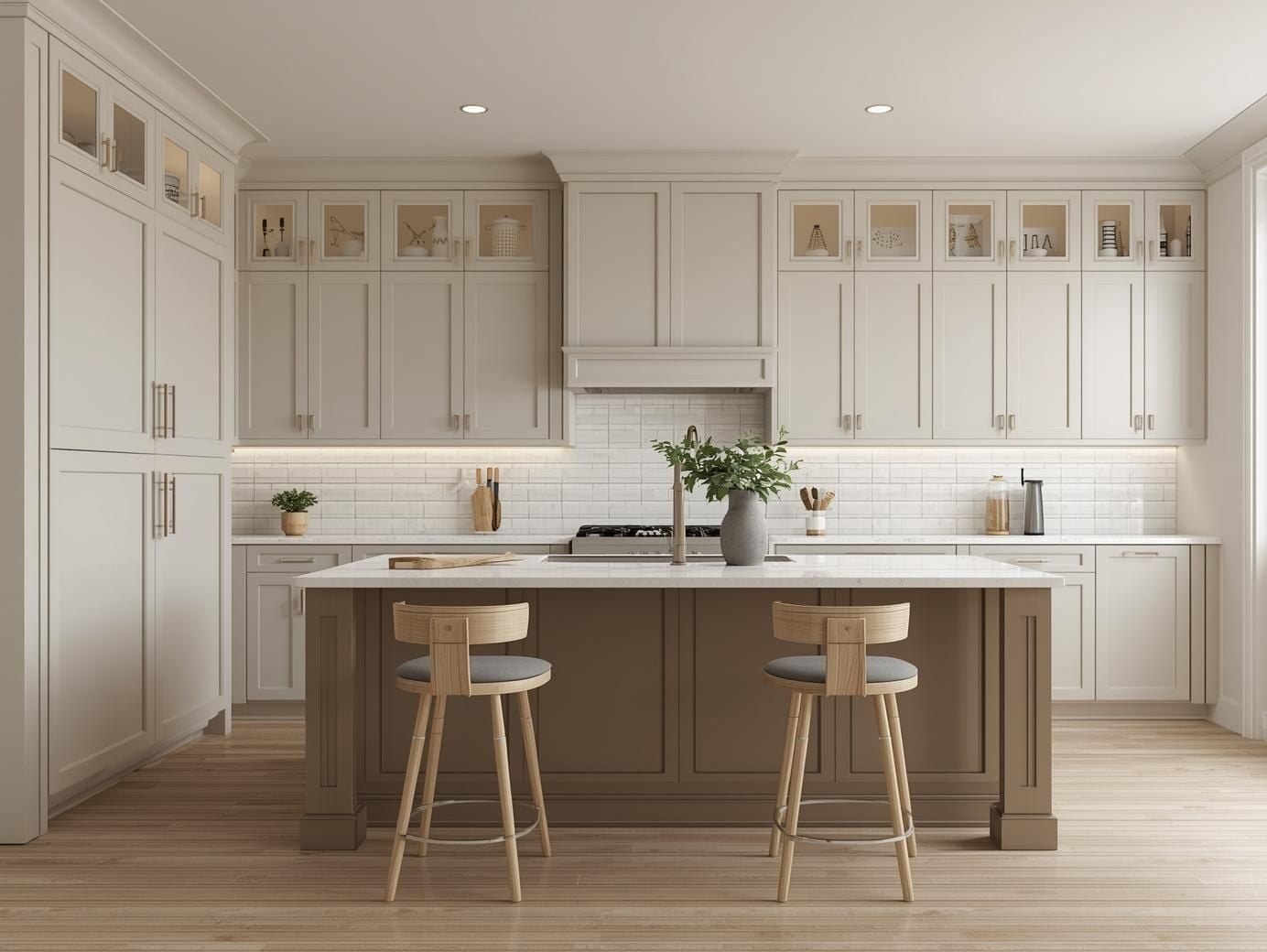
Using a secondary tone on kitchen islands allows projects to enhance layout hierarchy without altering the entire cabinet system. This method upgrades the overall composition while keeping the primary specification unchanged.
For finish-focused cabinet solutions, read Veneered Cabinets for Kitchen Projects: What You Need to Know.
4. Why Two Tone Shaker Cabinets Remain a Reliable Option
The shaker profile helps control color separation by clearly defining door edges and panel proportions. This structure prevents finish transitions from bleeding into each other, which is especially important when lighter uppers are paired with darker base cabinets. As a result, color contrast remains clean and predictable across long cabinet runs.
From a long-term perspective, two tone shaker cabinets carry lower trend risk than more decorative profiles. The simple frame-and-panel design avoids excessive detailing, allowing finishes to age more gracefully even as color preferences shift over time.
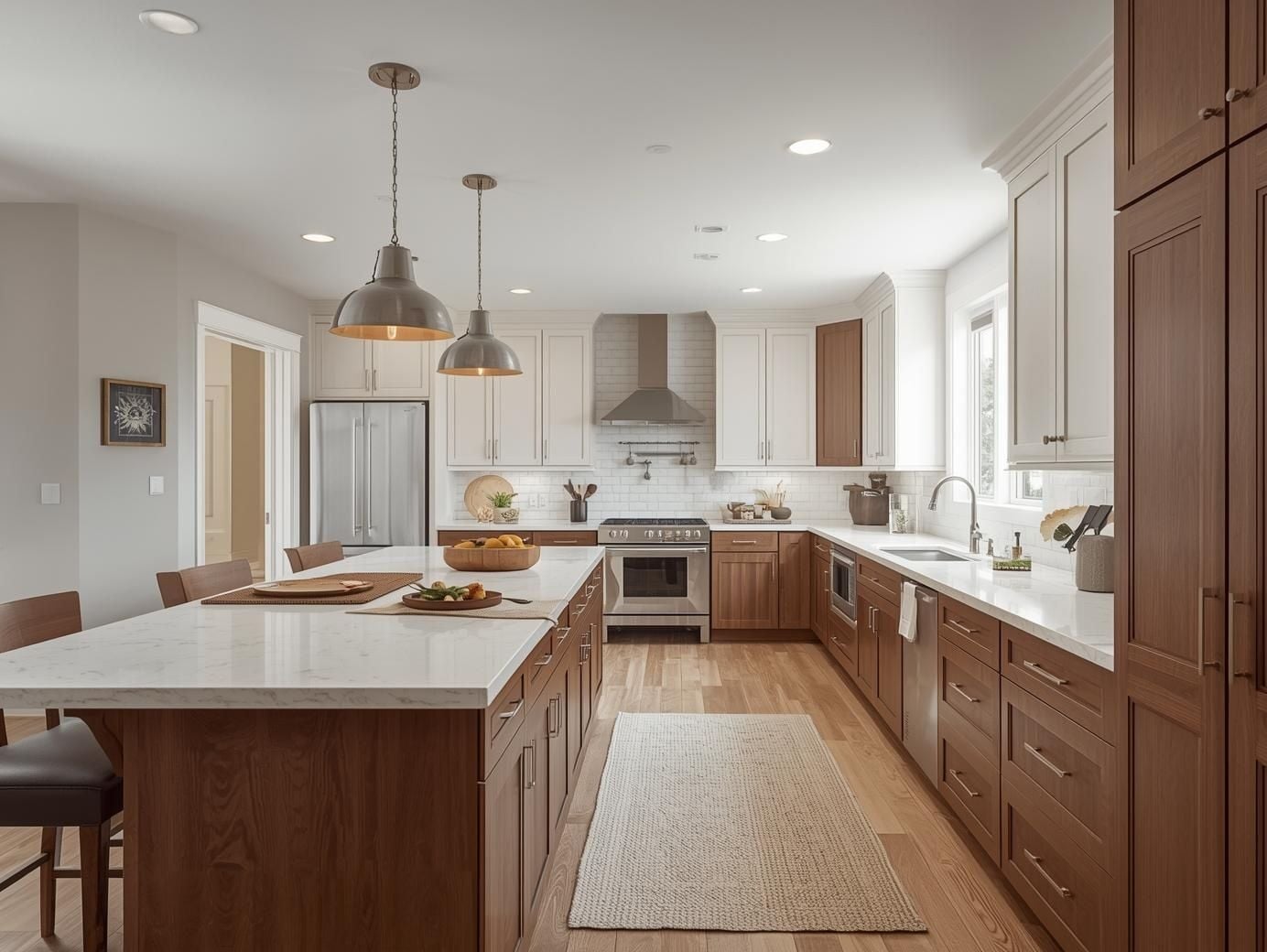
Shaker doors also make it easier to maintain visual consistency between spaces. Because the same door profile can be applied across kitchens, islands, and adjacent areas, finish changes can be introduced without disrupting overall alignment or proportion. This supports consistent appearance across multiple layouts while still allowing controlled variation.
For a broader view of current cabinet styles and materials, see Modern Kitchen Cabinets: Styles, Materials & Design Tips.
5. Key Considerations When Specifying Two Tone Cabinets
When specifying two tone cabinets, several factors should be reviewed early to avoid inconsistency later in execution:
- Finish balance: Contrast should be clear but controlled. One tone should lead visually while the other supports it.
- Consistency of construction: Keep the same cabinet structure and door profile while varying finishes to maintain alignment and simplify coordination.
- Placement logic: Lighter finishes typically perform better in upper zones, while darker tones handle high-use areas more effectively.
- Maintenance and wear: Finish selection should consider cleaning frequency and long-term appearance, especially in base cabinets and islands.
- Repeatability: Specifications should be easy to replicate across multiple spaces without increasing variation risk.
Addressing these points early helps ensure that two tone cabinets remain visually consistent, practical, and reliable over time.
At VIC Cabinet, we manufacture two tone cabinets as part of our standard cabinet programs, with over 20 years of experience supplying cabinetry for project-based applications. Our production focuses on finish consistency, color control, and repeatability across batches, ensuring two tone configurations remain stable across different layouts and specification levels.
If you are reviewing cabinet options for upcoming projects, we are available to support specification and finish coordination.
VIC CABINET – Vietnam cabinet manufacturer
Head Office: Tran Thu Do Street, Hoang Liet, Hoang Mai District, Hanoi, Vietnam
HCM Office: N8 Street, Phu Thuan, District 7, Ho Chi Minh City, Vietnam
Phone: +84 96 781 7316
Website: https://viccabinet.com
Email: info@viccorp.com.vn
