


Choosing the best wood cabinets depends entirely on your project goals, but maple and oak offer the best balance of durability and value for most homes. While oak kitchen cabinets provide classic grain texture, maple cabinets offer a smoother surface for paint. For high-end luxury, walnut cabinets and rich cherry wood cabinets remain the top choices for premium custom designs.
1. What to Look for When Choosing Wood Cabinets
Selecting the right cabinetry involves more than just picking a beautiful color. Real wood behaves differently based on its species, density, and grain structure. When evaluating wood cabinets for a residential or commercial project, three primary technical factors determine long-term performance.
First, consider the Janka hardness rating, which measures a wood species’ resistance to denting and wear. Kitchen environments experience constant impact from pots, pans, and daily foot traffic, making wood hardness a critical factor for face frames and door panels. Second, the grain pattern—whether it is open like oak or closed like maple—dictates how the material absorbs stains and paints. Finally, dimensional stability determines how well the timber resists warping when exposed to shifting kitchen humidity levels.
2. Oak Kitchen Cabinets: The Time-Tested Standard

Oak kitchen cabinets remain a staple in American home construction due to their exceptional structural strength and distinct, prominent grain lines. Traditionally associated with classic or rustic farmhouse designs, oak has undergone a modern revival through new finishing techniques, such as muted stains and rift-sawn cutting methods that straighten the grain.
| Pros | Cons |
| • High resistance to impacts | • Deep pores require grain filler to paint |
| • Budget-friendly natural wood | • Can look dated if finished poorly |
| • Excellent stain absorption | |
| • Distinctive, warm textures |
From a practical standpoint, oak is highly forgiving. Its deep, open-pore texture naturally hides minor scratches, dings, and fingerprints, making it an ideal choice for active households with children or pets. According to the National Kitchen & Bath Association (NKBA), durable materials that minimize visible wear continue to lead consumer preferences for long-term remodeling value.
3. Maple Cabinets: The Durable Choice for Modern Finishes

For projects requiring a clean, contemporary aesthetic, maple cabinets offer a highly stable and versatile alternative. Featuring a dense, closed-grain structure, maple possesses a higher Janka hardness rating than oak, making it incredibly resilient against structural dents and surface abrasions.
Because its surface is naturally smooth and uniform, maple is the industry-standard choice for painted cabinetry. Unlike open-pore woods, maple does not allow paint to sink into deep grain lines, resulting in a flawless, factory-grade finish. When stained, maple displays subtle, wavy grain variations that add quiet character without overwhelming a smaller kitchen space. It represents a reliable middle-ground option for home builders who want premium durability without paying custom luxury prices.
4. Walnut Cabinets: Premium Warmth and Modern Luxury
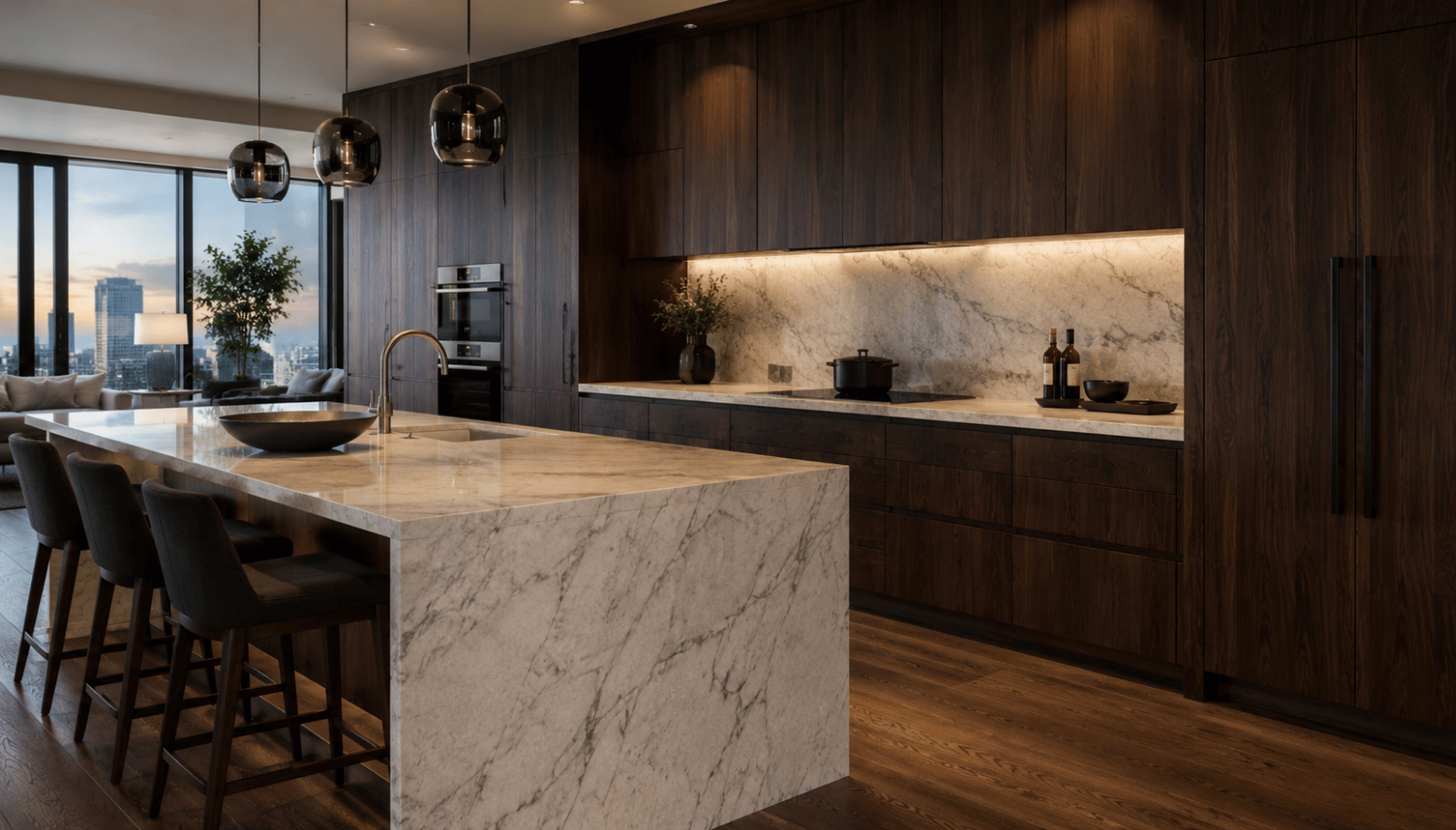
Walnut cabinets represent the pinnacle of high-end contemporary kitchen design. Characterized by its rich, dark brown color and swirling grain highlights, walnut provides an immediate sense of warmth and architectural luxury that synthetic materials cannot replicate.
Unlike other hardwood species, walnut is rarely painted; it is typically finished with a clear coat or a light protective stain to showcase its natural color variations. This wood is highly stable and lightweight compared to dense oaks, yet it offers excellent structural integrity. Because walnut trees grow more slowly and yield less usable lumber per harvest, these cabinets carry a higher price point, making them a favorite for custom architectural projects and luxury urban developments.
5. Cherry Wood Cabinets: Rich Tones That Warm with Age

Cherry wood cabinets are celebrated for their smooth, fine grain and unique aging process. Freshly milled cherry possesses a warm, pinkish-tan hue that naturally darkens into a rich, reddish-brown patina over time when exposed to natural sunlight.
This natural transformation is a key selling point for traditional and transitional interior styles. Cherry wood is moderately hard and highly resistant to warping or splitting, ensuring that cabinet doors maintain their alignment over decades of use. Design professionals often recommend pairing cherry cabinetry with lighter stone countertops and neutral backsplashes to balance the deep, warming tones that develop as the kitchen matures.
6. Side-by-Side Comparison: Which Wood Matches Your Project?
To help choose the right material for your kitchen layout, budget, and lifestyle, the following breakdown compares these four core hardwood options based on real performance metrics.
- Oak Kitchen Cabinets: Best for traditional, farmhouse, or heavy-use kitchens. High durability, distinct texture, and highly economical.
- Maple Cabinets: Best for painted finishes and modern transitional designs. Maximum hardness, smooth texture, and mid-range pricing.
- Walnut Cabinets: Best for modern, minimalist, or luxury estate designs. Moderate hardness, dark premium grain, and high-end pricing.
- Cherry Wood Cabinets: Best for classic, elegant, and timeless spaces. Moderate hardness, aging patina, and upper-mid pricing.
7. Sourcing Premium Cabinetry: The Production Perspective
Achieving a flawless finish on solid wood cabinets requires precise manufacturing controls. At VIC Cabinet’s manufacturing facility in Vietnam, we specialize in processing premium timber components to meet strict US quality standards. Wood panels undergo controlled kiln-drying processes to normalize moisture content, preventing the splitting, warping, or joint separation common in substandard imports.
Whether your project calls for classic oak kitchen cabinets, versatile maple cabinets, or luxury walnut cabinets, our container-level OEM production line delivers consistent box construction and finish uniformity. By utilizing advanced sanding machinery and multi-layer protective coatings, we ensure that every face frame, door panel, and vanity cabinet provides stable, long-term performance in American homes.
FAQ
1, Which wood cabinet material is the most durable for a family kitchen?
Maple cabinets are the most durable choice for a busy family kitchen. With a high Janka hardness rating, maple resists dents, scratches, and structural wear better than most hardwoods. Its closed-grain surface also makes it easy to clean and maintain over years of daily use.
2, Can you paint over oak kitchen cabinets successfully?
Yes, you can paint oak kitchen cabinets, but their open-pore grain structure will remain visible under the paint layer. To achieve a perfectly smooth, modern finish on oak, a professional cabinet manufacturer or painter must apply a specialized grain filler before priming and painting the wood panels.
3, Why do cherry wood cabinets change color over time?
Cherry wood cabinets contain natural compounds that react to ultraviolet light and ambient oxygen. This oxidation process causes the wood to darken from a light pinkish-gold to a deep, rich reddish-brown. This color shift usually occurs within the first year of installation.
4, Are walnut cabinets worth the higher investment compared to oak?
Walnut cabinets are worth the investment if your project demands a high-end, luxury aesthetic with natural dark tones. Walnut offers unique swirling grain patterns and a premium look that boosts home resale value, whereas oak provides a more budget-friendly, traditional alternative.
