


Choosing the right cabinet manufacturer directly impacts project cost, quality, and delivery timelines. From kitchen cabinet manufacturers to custom cabinet manufacturers, each option serves different business needs. This guide helps you compare sourcing strategies, including local suppliers and overseas manufacturers, so you can make informed decisions.
1, What Is a Cabinet Manufacturer
A cabinet manufacturer is a company that designs, produces, and finishes cabinets for residential and commercial use. Unlike retailers or distributors, manufacturers are directly involved in the production process, from material selection to final assembly. This allows better control over quality, consistency, and lead time, especially for large-scale projects.
In the market, it is important to distinguish between three roles. A manufacturer produces the cabinets in-house. A distributor purchases products in bulk and resells them within a region. A retailer sells directly to end users, often in smaller quantities. For B2B buyers such as developers or importers, working directly with a manufacturer usually provides more stable pricing and better production control.
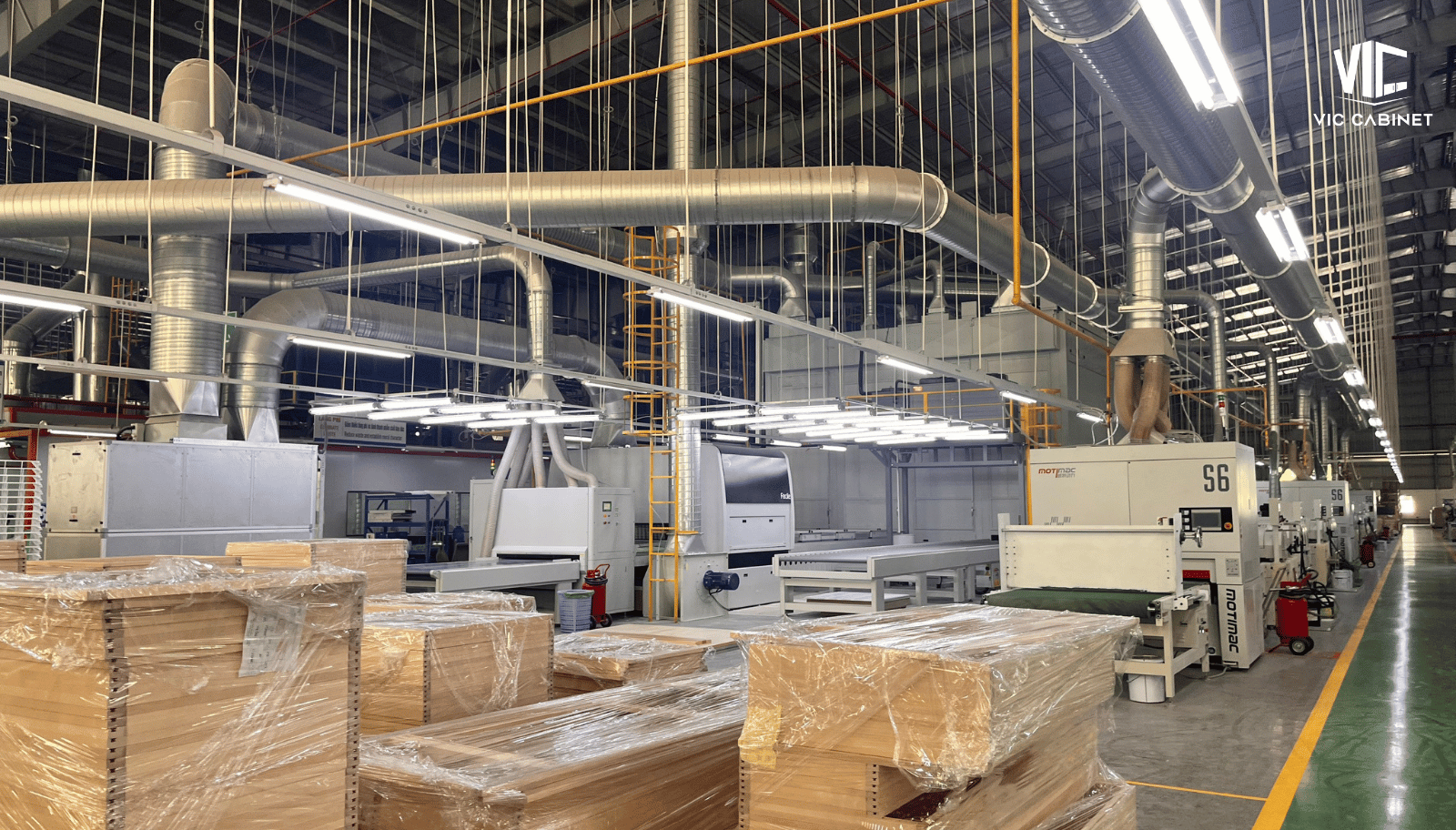
Cabinet manufacturers typically offer several main product categories. These include kitchen cabinets, which are the core product for most residential and multifamily projects, bathroom vanities designed for compact and moisture-resistant applications, and closet systems used for storage and interior organization. Each category may be produced in standard modular formats or customized based on project requirements.
Within the B2B supply chain, cabinet manufacturers play a central role. They are responsible for ensuring production capacity, maintaining consistent quality across batches, and meeting delivery timelines. For distributors and project developers, choosing the right manufacturing partner directly impacts not only product performance but also overall project efficiency and cost control.
2, Types of Cabinet Manufacturers You Should Know
Different cabinet manufacturers serve different needs depending on project scale, budget, and customization level. Understanding these differences helps you choose the right partner instead of selecting based on price alone.
- A kitchen cabinet manufacturer focuses on standardized production, typically using RTA or modular systems. This allows faster production, easier installation, and more consistent pricing. It is the most common choice for distributors and builders who need reliable supply at scale.
- A custom cabinet manufacturer produces cabinets based on specific design requirements. Each order is made to fit unique layouts, materials, and finishes. This option offers greater flexibility but usually comes with higher costs and longer lead times, making it more suitable for high-end or design-focused projects.
- Commercial cabinet manufacturers are built to handle large-scale projects such as multifamily housing, hotels, and developments. Their priority is maintaining consistency, meeting compliance standards, and delivering on strict timelines rather than offering high customization.
| Type | Key Strength | Best For | Limitation |
| Kitchen Cabinet Manufacturer | Cost & scalability | Distributors, builders | Limited customization |
| Custom Cabinet Manufacturer | Design flexibility | High-end, custom projects | Higher cost, longer lead time |
| Commercial Manufacturer | Large-scale production | Developers, multifamily projects | Less flexible design |
3, Cabinet Manufacturers Near Me vs Overseas Suppliers
When searching for a cabinet manufacturer, many buyers start with “cabinet manufacturers near me” for convenience. However, for B2B sourcing, especially at scale, it is important to compare local suppliers with overseas manufacturers to find the best long-term solution.
3.1, Local Manufacturers (Near Me)
Local manufacturers offer clear advantages in communication and speed. Working within the same region makes it easier to visit factories, resolve issues quickly, and manage smaller or urgent orders.
However, local suppliers often come with higher production costs and limited capacity. This can become a challenge for distributors or developers who need consistent supply across multiple projects.
3.2, Overseas Manufacturers (Vietnam, Asia)
Overseas manufacturers, particularly in regions like Vietnam and Asia, are increasingly chosen for their cost efficiency and production scale. They are better equipped to handle large-volume orders while maintaining competitive pricing.
The trade-off is longer lead time due to shipping and the need for clear communication. However, for importers and distributors, these challenges are often manageable with proper planning.
3.3, Which Option Is Better for Your Business
The right choice depends on your business model. Local manufacturers are suitable for small-scale or fast-turnaround needs, while overseas suppliers are more effective for large, repeat orders.
- Distributors often benefit from overseas sourcing due to better pricing and scalability
- Developers may choose based on project timeline and volume
- Importers typically rely on overseas manufacturers to maintain stable supply and margins
In most cases, the decision comes down to balancing cost, lead time, and supply stability.
4, Key Factors When Choosing a Cabinet Manufacturer
Choosing a cabinet manufacturer should be based on measurable criteria, not general impressions. For B2B buyers, the difference between a stable supplier and a risky one often comes down to capacity, consistency, and control over production.
4.1, Production Capacity and Lead Time
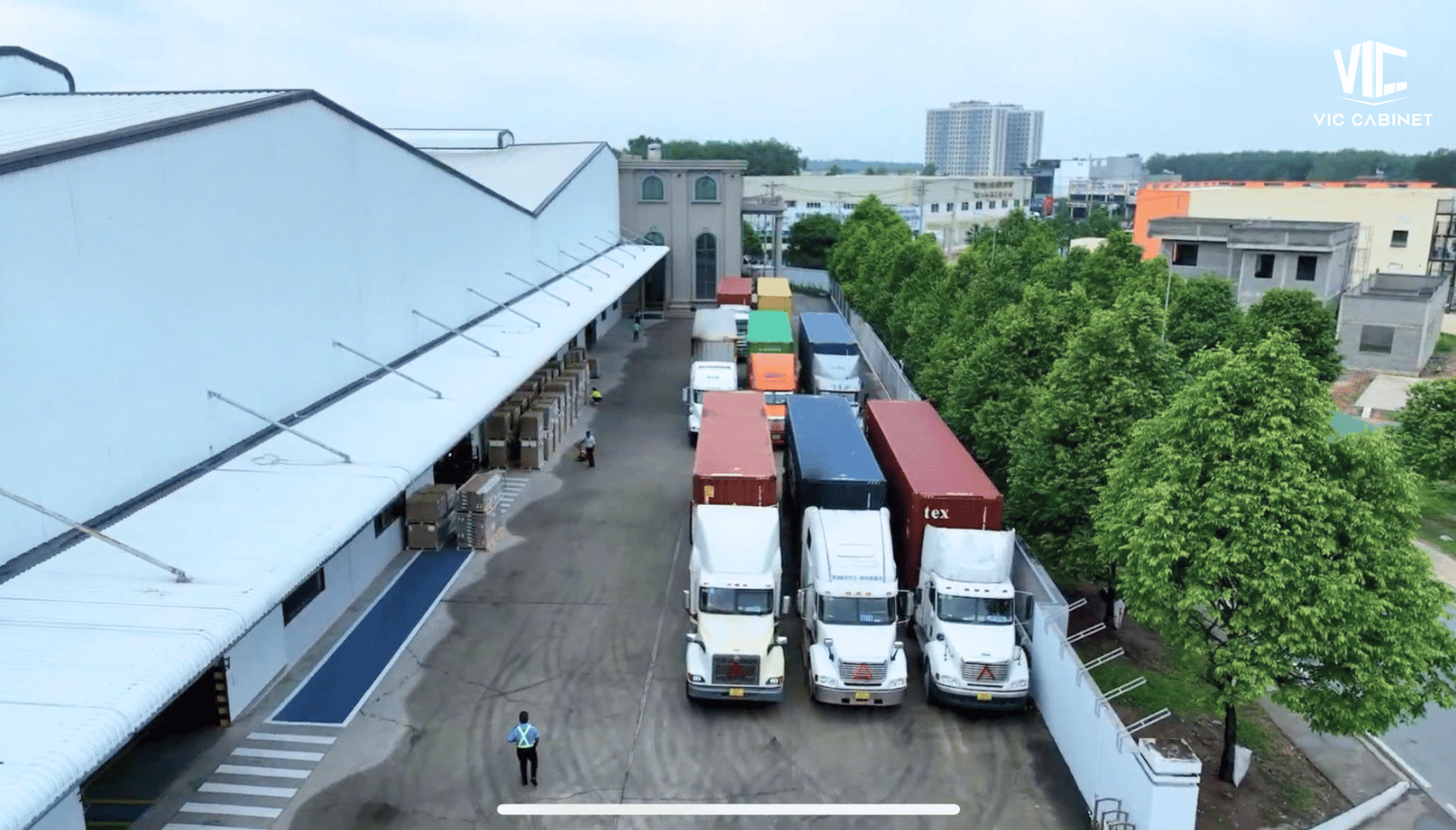
Production capacity is one of the first indicators of whether a manufacturer can support your business long term. For project-based or distribution models, a reliable supplier should be able to handle at least 20–50 containers per month or maintain stable output across repeat orders.
Lead time is equally important. In most cases, production takes around 25–35 days, followed by 30–50 days shipping to the US. If a manufacturer cannot commit to a clear timeline within this range, it often leads to delays in inventory planning or project execution.
4.2, Material and Compliance (TSCA, CARB)
For the US market, compliance is a baseline requirement rather than a competitive advantage. Manufacturers must meet standards such as TSCA Title VI or CARB P2, especially for plywood and MDF components.
Beyond certification, material consistency also matters. Cabinet boxes are typically built with 3/4” plywood, while painted doors often use moisture-resistant MDF. Inconsistent materials between batches can create visible differences in finished projects, which becomes a major issue at scale.
4.3, Finishing Quality and Hardware
Finishing quality should be evaluated using measurable standards, not just visual inspection. A typical cabinet finishing system includes at least 3 layers: primer, base coat, and topcoat. This structure helps improve adhesion, color consistency, and surface durability over time.
In terms of thickness, a stable coating system usually falls within 80–120 microns total thickness. Anything below this range may lead to faster wear, while inconsistent thickness often results in uneven color or surface defects.
Color consistency is another critical factor in large orders. Variation between batches should be controlled within a minimal range, as even slight differences can become noticeable when installed across hundreds of units in a single project.
For hardware, baseline standards now include soft-close hinges and drawer slides, with 4–6 way adjustable hinges to support easier installation and alignment. Lower-grade hardware may reduce upfront cost but often leads to higher maintenance or replacement rates after installation.
4.4, Pricing Structure and MOQ
Pricing should be evaluated in relation to volume and long-term stability. Most export manufacturers require a minimum order of one full container, often allowing mixed SKUs within that shipment.
Better pricing typically starts at 3–5 containers per order, where production becomes more efficient. Extremely low quotes are often a warning sign, as they may indicate compromises in material, finishing, or quality control.
4.5, Project Experience and Support
Manufacturers with real project experience can significantly reduce operational risk. This is especially important for developments involving 100 to 500+ units, where small errors in specification can multiply into large issues during installation.
An experienced manufacturer can support with order structuring, quantity planning, and production alignment. Without this level of support, buyers often face delays, rework, or inconsistent product delivery across different phases of a project.
5, Why More Buyers Are Working with Vietnam Cabinet Manufacturers
In 2026, sourcing decisions are heavily influenced by tariff structures rather than just base product cost. For buyers importing cabinets into the US, the difference in duties between countries can significantly impact total landed cost.
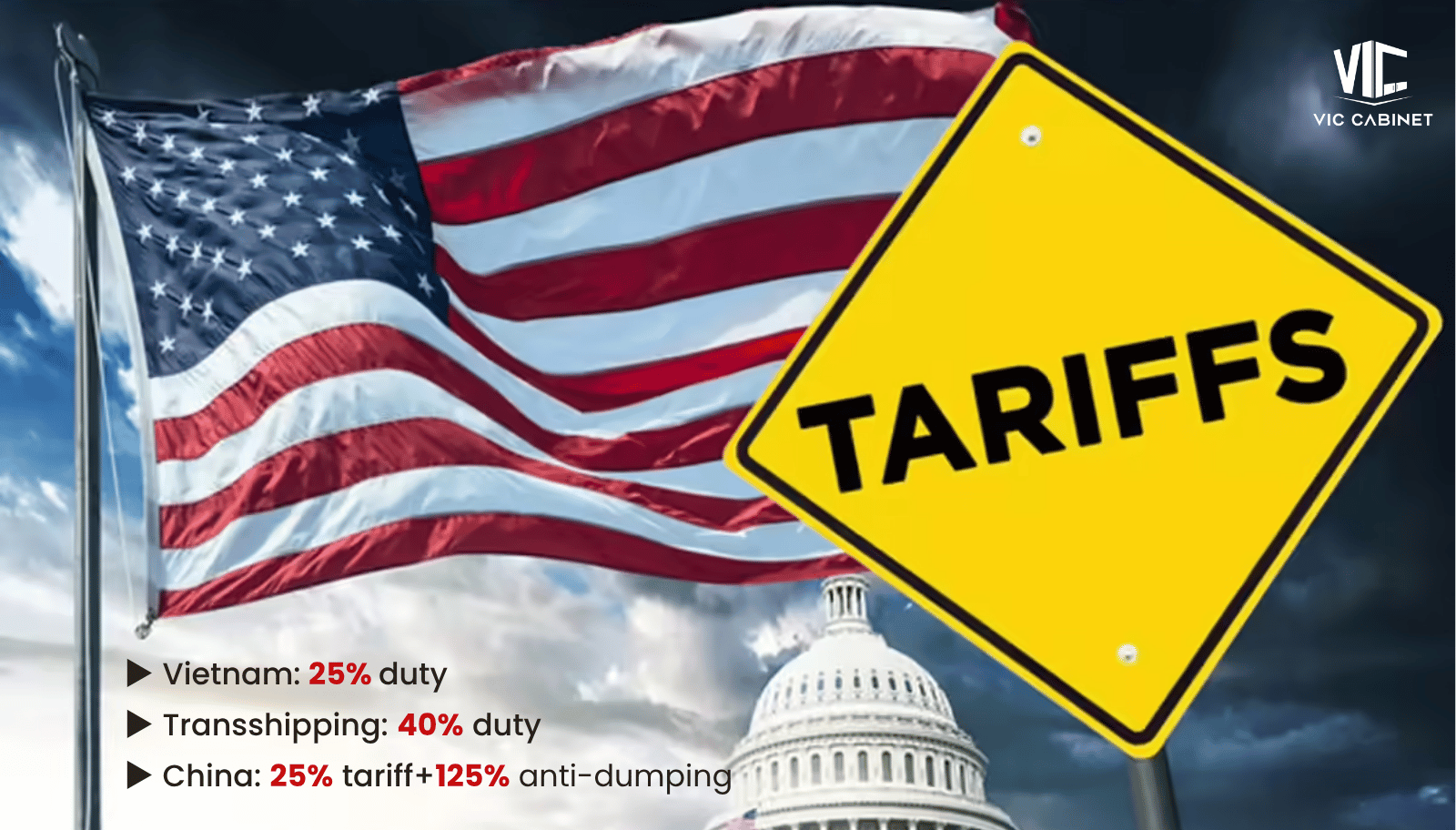
Currently, Vietnam faces an estimated ~25% import duty, which is higher than before but still more competitive compared to other sourcing options. In contrast, products identified as transshipped may be subject to duties of around ~40%, creating substantial risk for buyers without a transparent supply chain.
China remains the most heavily impacted source. Cabinet products from China can face a combined burden of ~25% tariff plus up to ~125% anti-dumping duty, resulting in total duties that can exceed 150%. At this level, the cost structure becomes difficult to sustain for most distributors and project buyers.
Even with a 25% duty, Vietnam maintains a cost advantage due to lower manufacturing costs. In many cases, the final landed cost from Vietnam is still 15–30% lower than China-origin products after tariffs, while offering more stable supply and clearer origin compliance.
For B2B buyers working with container-based imports, these differences are not marginal. A shift from a 150% duty structure to a 25% range can directly determine whether a sourcing model remains profitable.
As a result, Vietnam is increasingly positioned as a balanced option between cost, compliance, and tariff risk, rather than simply a low-cost alternative.
6, Common Mistakes When Sourcing Cabinet Manufacturers
Most sourcing issues come from wrong decisions early on, not from production itself. Focusing only on price is a common mistake, as a 5–10% cheaper quote can lead to higher costs later if quality is inconsistent. In large orders, even a 2–3% defect rate can affect hundreds of units and increase installation costs.
Another issue is ignoring quality control. Without a structured QC system, problems such as color variation or incorrect dimensions often appear between batches, especially in multi-unit projects. Lead time is also frequently misunderstood. A typical order includes 25–35 days for production and 30–50 days for shipping, and missing this timeline can delay the entire project.
Finally, skipping sample evaluation increases the risk of mismatch between approved design and bulk production. What looks acceptable in a small sample can become a major issue when scaled to container-level orders.
7, VIC Cabinet: A Reliable Cabinet Manufacturer for US Projects
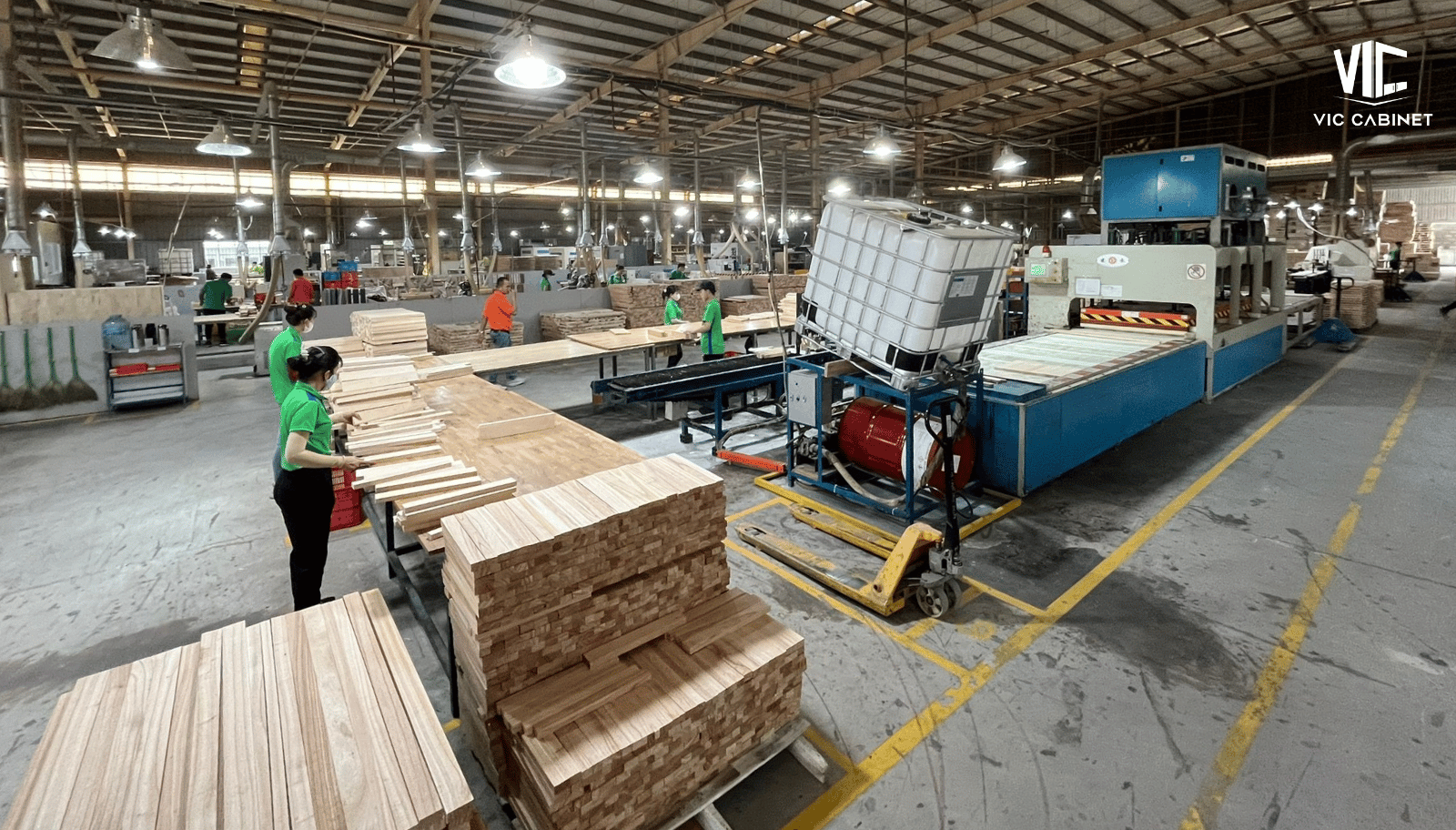
VIC Cabinet is a Vietnam-based cabinet manufacturer focused on supplying the US market. The company produces kitchen cabinets, bathroom vanities, and closet systems, serving both distributors and multifamily projects.
With a manufacturing setup designed for export, VIC Cabinet is able to support container-based orders while maintaining consistency across batches. This is especially important for projects that require uniform quality across multiple units or phases.
The production system emphasizes stable materials, controlled finishing, and repeatable processes, helping reduce variation between shipments. With 17+ years of manufacturing experience for export markets, VIC Cabinet has developed processes that support consistent quality and repeat orders.
𝐕𝐈𝐂 𝐂𝐚𝐛𝐢𝐧𝐞𝐭 𝐅𝐚𝐜𝐭𝐨𝐫𝐲
Head Office: Tran Thu Do Street, Hoang Liet, Hoang Mai District, Hanoi, Vietnam
HCM Office: N8 Street, Phu Thuan, District 7, Ho Chi Minh City, Vietnam
Phone: +(84) 986 119 249
Website: viccabinet.com
Email: info@viccorp.com.vn
