


Sage green kitchen cabinets are a practical choice for rustic and farmhouse kitchens because they bring warmth without feeling heavy. The key is choosing the right tone and style based on lighting and space. This guide explains how different sage variations work and how to select the one that fits your kitchen best.
1. What Are Sage Green Kitchen Cabinets and Why They Are Trending
Sage green kitchen cabinets are cabinets finished in a soft green tone mixed with gray undertones, creating a muted and balanced color. Unlike bold greens or deep navy, sage sits in a neutral zone. It adds color to the kitchen without overwhelming the space, which is why it is increasingly used in both modern and farmhouse designs.
From a practical perspective, sage green works because it adapts well to different lighting conditions. In natural daylight, it appears lighter and slightly warmer. Under artificial lighting, especially warm LED, it can shift toward a more earthy tone. This flexibility makes it easier to maintain a consistent look across different kitchen layouts, something we often observe in real installations at VIC Cabinet.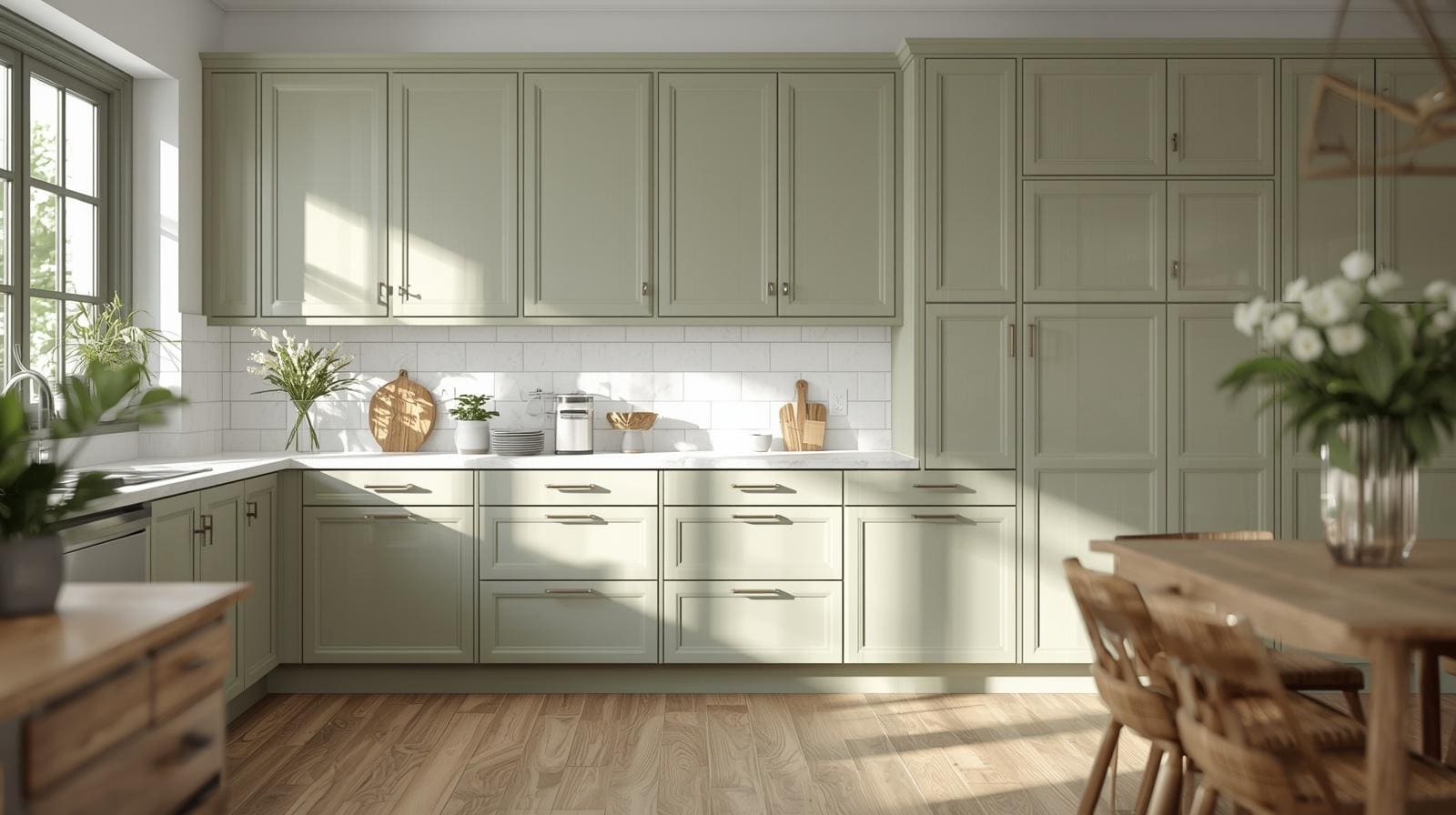
Another reason sage green kitchen cabinets are trending is the shift away from all-white kitchens. While white cabinets are still common, many homeowners and developers now look for a color that feels more “lived-in” but still safe for long-term use. Sage green fills that gap. It introduces visual depth without the risk of going out of style too quickly.
In terms of application, sage green kitchen cabinets are most suitable when the goal is to create a warm and calm atmosphere. They work particularly well in spaces that want to avoid the cold feeling of grey cabinets but are not ready to move into darker or more saturated colors. This balance is what makes sage a reliable choice across both residential homes and multi-unit projects.
For a safer and more traditional alternative, white remains a widely used option across many projects: A Practical Guide to White Kitchen Cabinets and Finishes
For a more neutral and cooler palette, grey cabinets offer flexibility across both modern and shaker styles: Grey Kitchen Cabinets for Modern and Shaker Styles
2. Rustic vs Farmhouse Sage Green Kitchen Cabinets
Rustic sage green kitchen cabinets and farmhouse sage green kitchen cabinets are often confused, but they create very different results in practice. Rustic leans toward a deeper, more natural look with visible texture, while farmhouse focuses on a cleaner and more controlled appearance. The difference is not just visual, it directly affects how heavy or light the kitchen feels.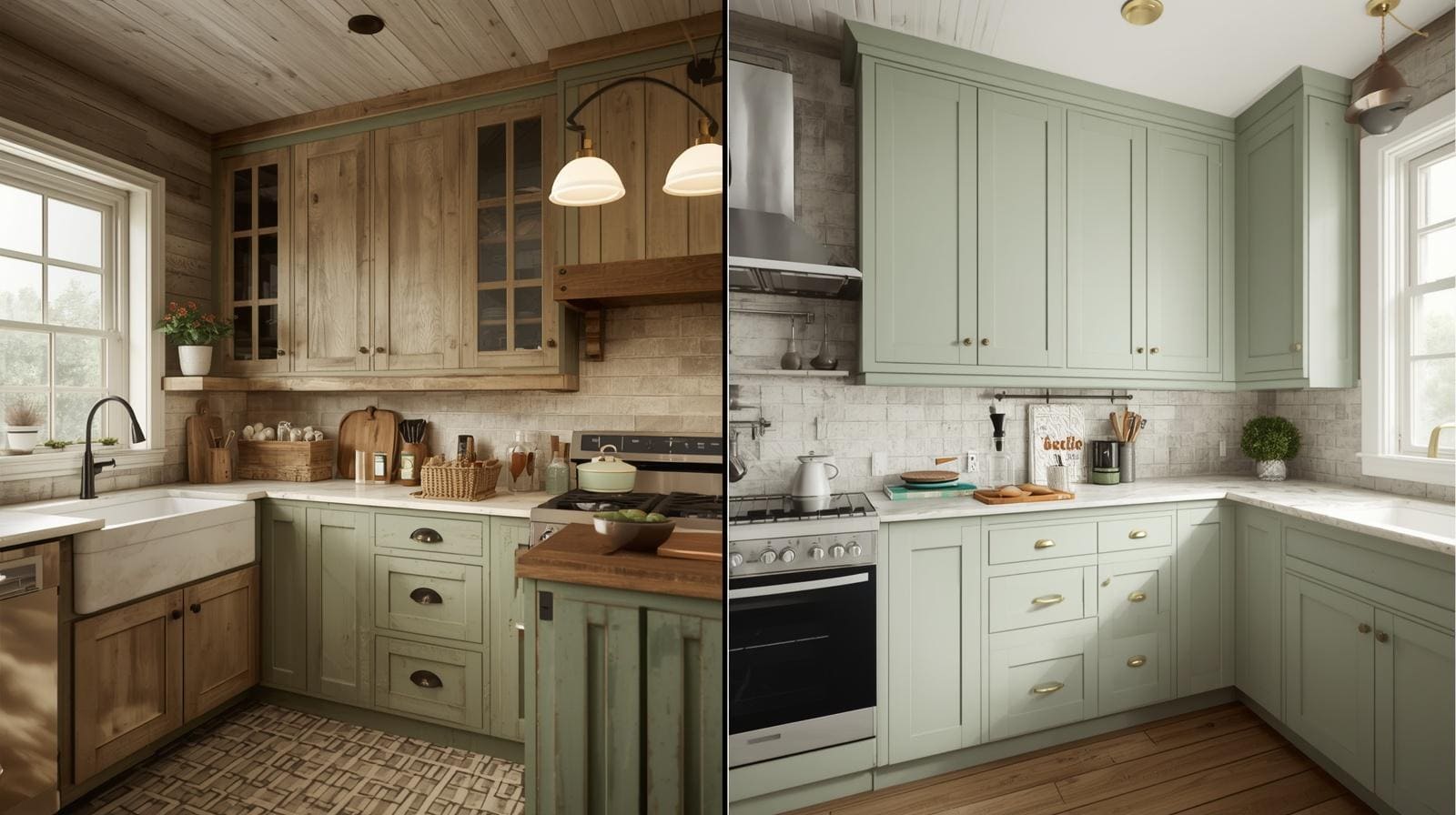
Rustic sage green kitchen cabinets typically use darker tones and pair well with wood grain, stone, and other natural materials. This creates a grounded and warm atmosphere, but it can feel heavy if used in smaller spaces. In contrast, farmhouse sage green kitchen cabinets use lighter tones and smoother finishes, often with shaker-style doors. This makes them easier to apply in modern homes and more adaptable across different layouts.
| Criteria | Rustic Sage | Farmhouse Sage |
| Tone | Darker, earthy | Lighter, balanced |
| Surface | Textured, wood grain | Smooth, painted |
| Feel | Warm, heavy | Clean, flexible |
| Best for | Large, natural spaces | Modern, everyday kitchens |
From a practical standpoint, farmhouse sage is the safer option for most kitchens because it offers more flexibility. Rustic works best when the overall space already supports a strong natural or country-style direction.
If you want a stronger visual contrast compared to sage tones, black cabinets can create a more defined and modern look: How Black Kitchen Cabinets Work in Modern Home Kitchens
3. Muted vs Soft Sage Kitchen Cabinets: Tone Selection Guide
Muted sage green kitchen cabinets and soft sage kitchen cabinets may look similar at first glance, but they behave very differently once installed. The difference mainly comes from how much gray is mixed into the color. Muted sage leans more toward gray, creating a deeper and slightly heavier tone, while soft sage is lighter and cleaner, making the space feel more open.
In real kitchen setups, muted sage green kitchen cabinets are often used in larger spaces where the goal is to create depth and contrast. They work well when paired with bright countertops or strong lighting, helping the cabinets stand out without becoming too dark. However, in kitchens with limited natural light, muted sage can sometimes feel flat or dull if not balanced properly.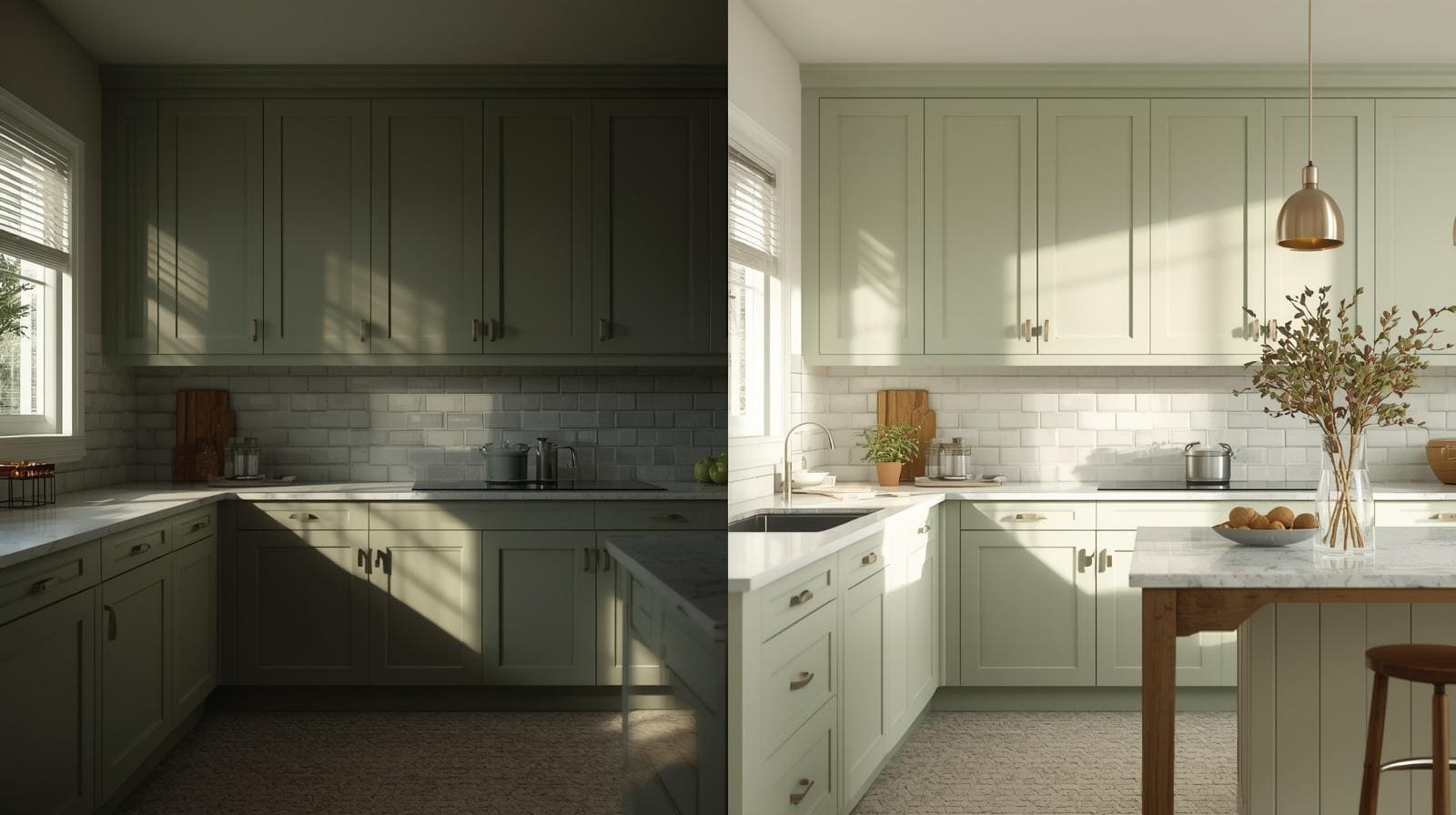
Soft sage kitchen cabinets are more flexible and easier to apply across different layouts. Because the color is lighter, it reflects light better and helps smaller kitchens feel less confined. This is why soft sage is commonly used in modern or transitional kitchens where simplicity and brightness are priorities. It also pairs more easily with neutral materials, reducing the risk of color conflict.
Quick selection checklist:
- Small kitchen → choose soft sage to keep the space open
- Large kitchen → muted sage adds depth and contrast
- Low natural light → avoid muted tones
- Modern style → soft sage is safer and easier to match
The key is not choosing the “better” tone, but choosing the tone that works with your space conditions. In most cases, mistakes happen when the color is selected based on samples alone, without considering how it reacts to real lighting and surrounding materials.
4. Country Style Farmhouse Sage Green Cabinets in Real Kitchens
Country style farmhouse sage green kitchen cabinets take the farmhouse concept further by adding more decorative details and a stronger vintage influence. While standard farmhouse focuses on simplicity, country style introduces elements like raised panels, crown molding, and more expressive hardware. When combined with sage green, the result is a kitchen that feels warmer and more traditional.
In real kitchen setups, this style is often built around a few key elements. Apron-front sinks, open shelving, and visible wood accents are commonly used to support the cabinet color. Sage green acts as the base tone, while these details create layers of visual interest. The goal is not to make the cabinets stand out alone, but to build a cohesive environment where color, material, and form work together.
However, a common mistake with country style farmhouse sage green kitchen cabinets is over-designing. Many people assume that adding more details will enhance the style, but in practice, too many elements can make the space feel cluttered. Sage green already provides enough character, so additional decorations should be controlled and intentional.
From a practical standpoint, this style works best in kitchens that have enough space to support visual layering. In smaller kitchens, reducing decorative elements and keeping the cabinet lines simpler will help maintain balance. The key is to treat sage green as the anchor, not the highlight, and let the surrounding elements support rather than compete with it.
5. How to Choose the Right Sage Green Kitchen Cabinets
Choosing the right sage green kitchen cabinets is less about finding the “best color” and more about matching the tone, style, and context of your space. In real projects, most mistakes do not come from picking the wrong shade, but from ignoring how that shade interacts with lighting, layout, and surrounding materials.
5.1. Start with Lighting, Not Color Sample
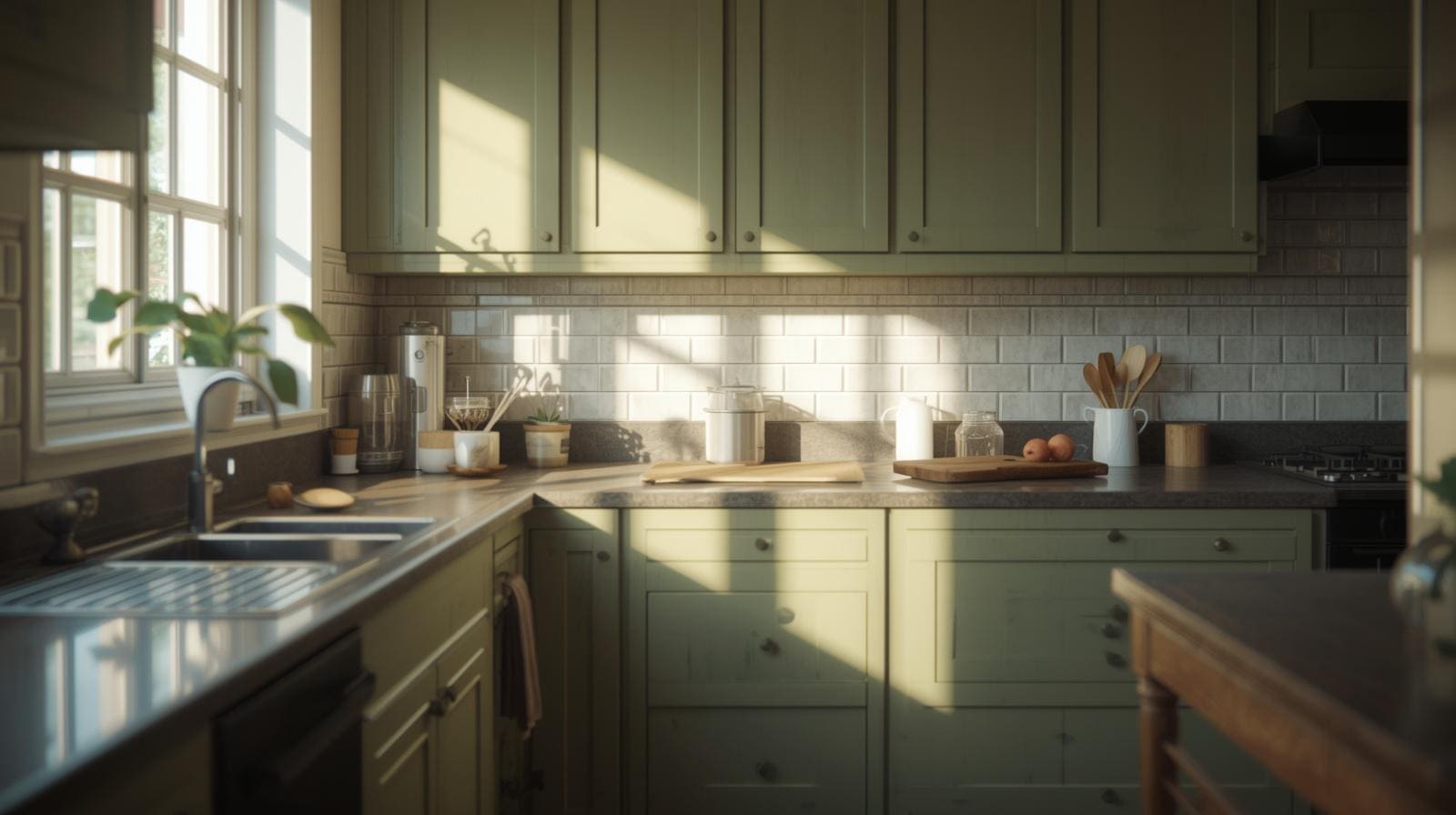 Lighting is the first factor to evaluate before selecting any sage tone. The same cabinet color can appear completely different depending on whether the space uses natural light, warm LED, or cool lighting.
In practice, relying only on a small color sample often leads to mismatch after installation. A tone that looks soft and balanced in a showroom can turn darker or flatter in a real kitchen. The more accurate approach is to test the color in the actual space, under real lighting conditions, before making a final decision.
5.2. Match the Cabinet Style to Your Home, Not the Trend
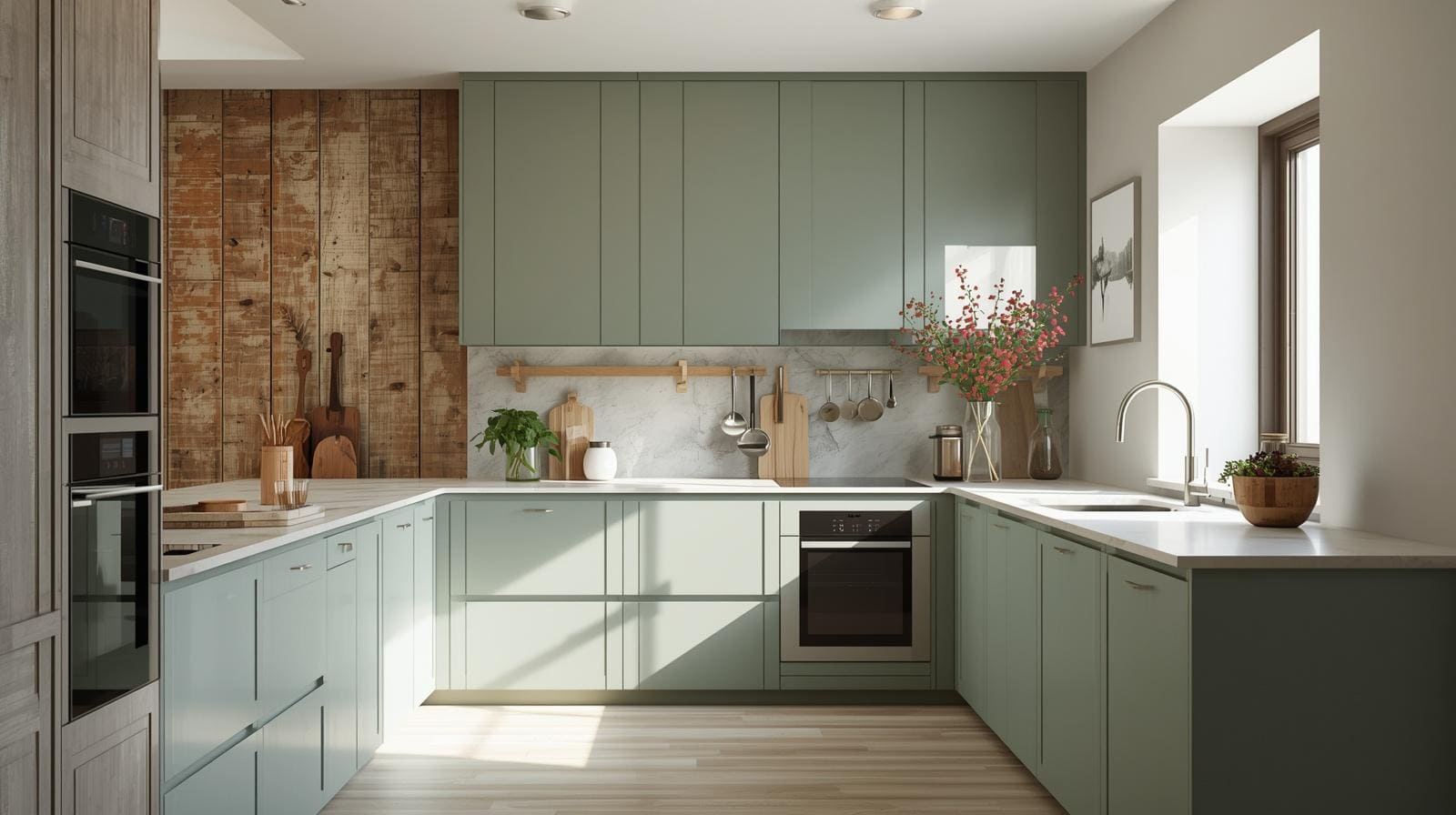
Not every sage green kitchen cabinet style works in every home. Rustic styles may look appealing in photos, but they require the right environment to work properly. Without natural materials or enough space, they can feel heavy and out of place.
In contrast, simpler styles like shaker are more adaptable and easier to integrate into modern layouts. This is why, in most real projects, cleaner cabinet profiles are chosen over more decorative or textured designs. The goal is to support the overall space, not compete with it.
5.3. Choose the Right Depth of Color
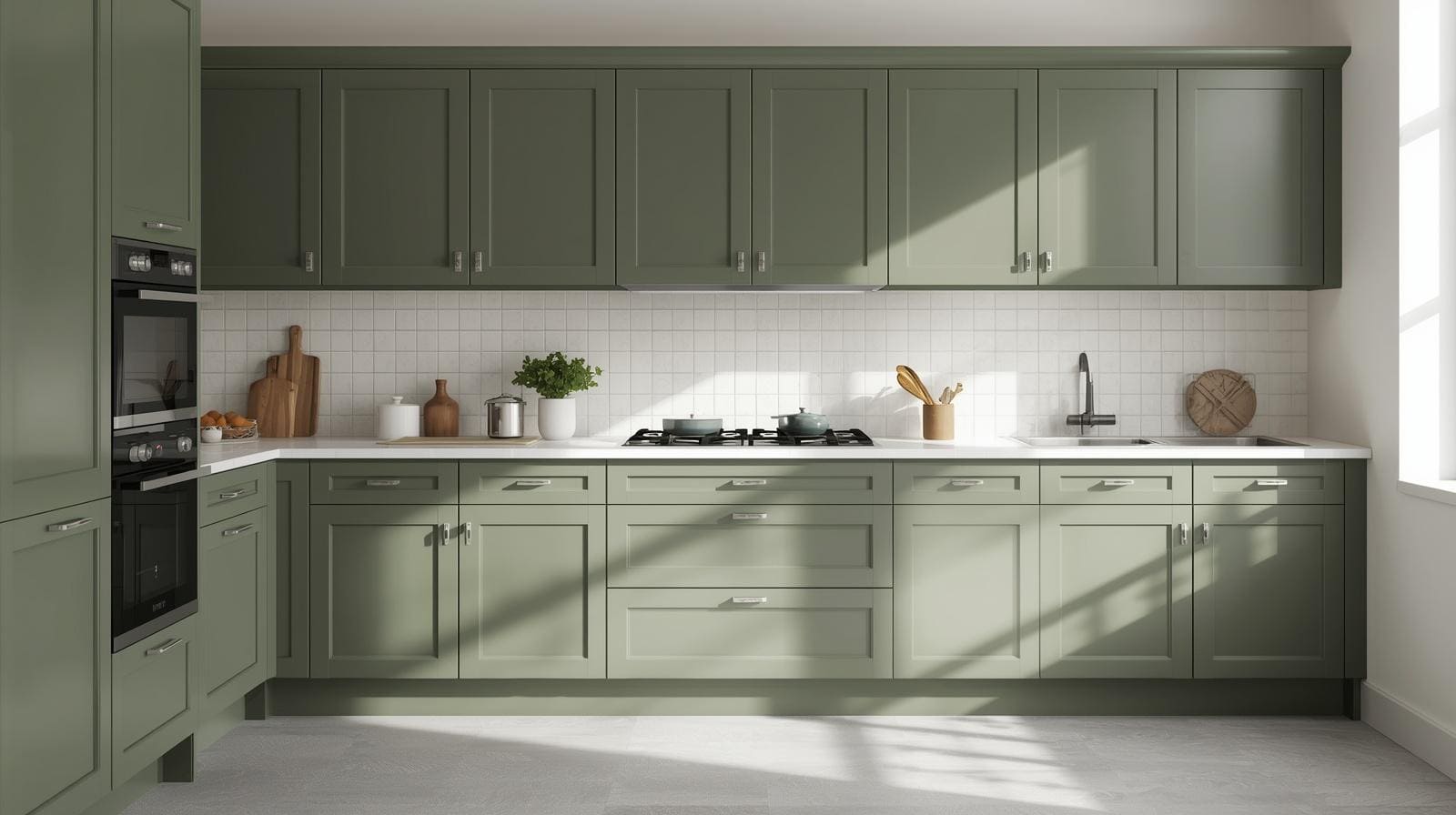 The depth of sage green directly affects how the kitchen feels. Darker sage tones create more contrast and can give a stronger visual identity, but they also reduce the sense of openness. Lighter sage tones are more forgiving and help maintain a bright and balanced look.
For smaller kitchens or spaces with limited light, lighter tones are usually the safer option. In larger kitchens, slightly deeper sage can be used to add dimension without overwhelming the space. The decision should always be based on how much visual weight the kitchen can handle.
5.4. Balance Sage Green with the Right Materials
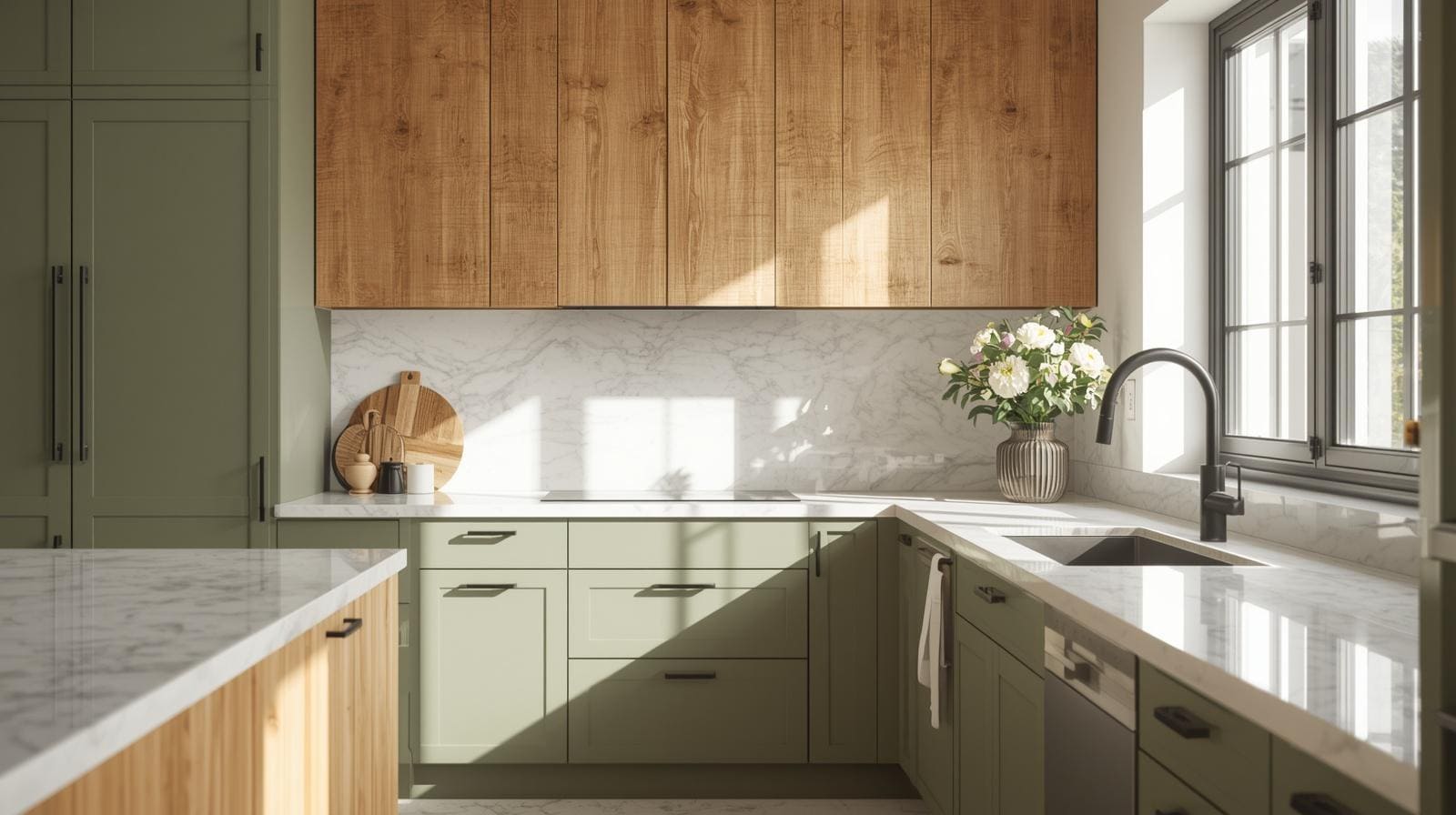 Sage green kitchen cabinets do not work in isolation. Their effectiveness depends heavily on how they are paired with other materials in the kitchen.
Common combinations include:
- White countertops to create contrast and keep the space clean
- Wood elements to enhance warmth and natural feeling
- Black accents to introduce a more modern edge
A common mistake is combining too many different tones or materials. This reduces the impact of the cabinet color and makes the overall design feel unfocused. Keeping the palette controlled is more effective than trying to add variety.
5.5. Think Long-Term, Not Just Trend
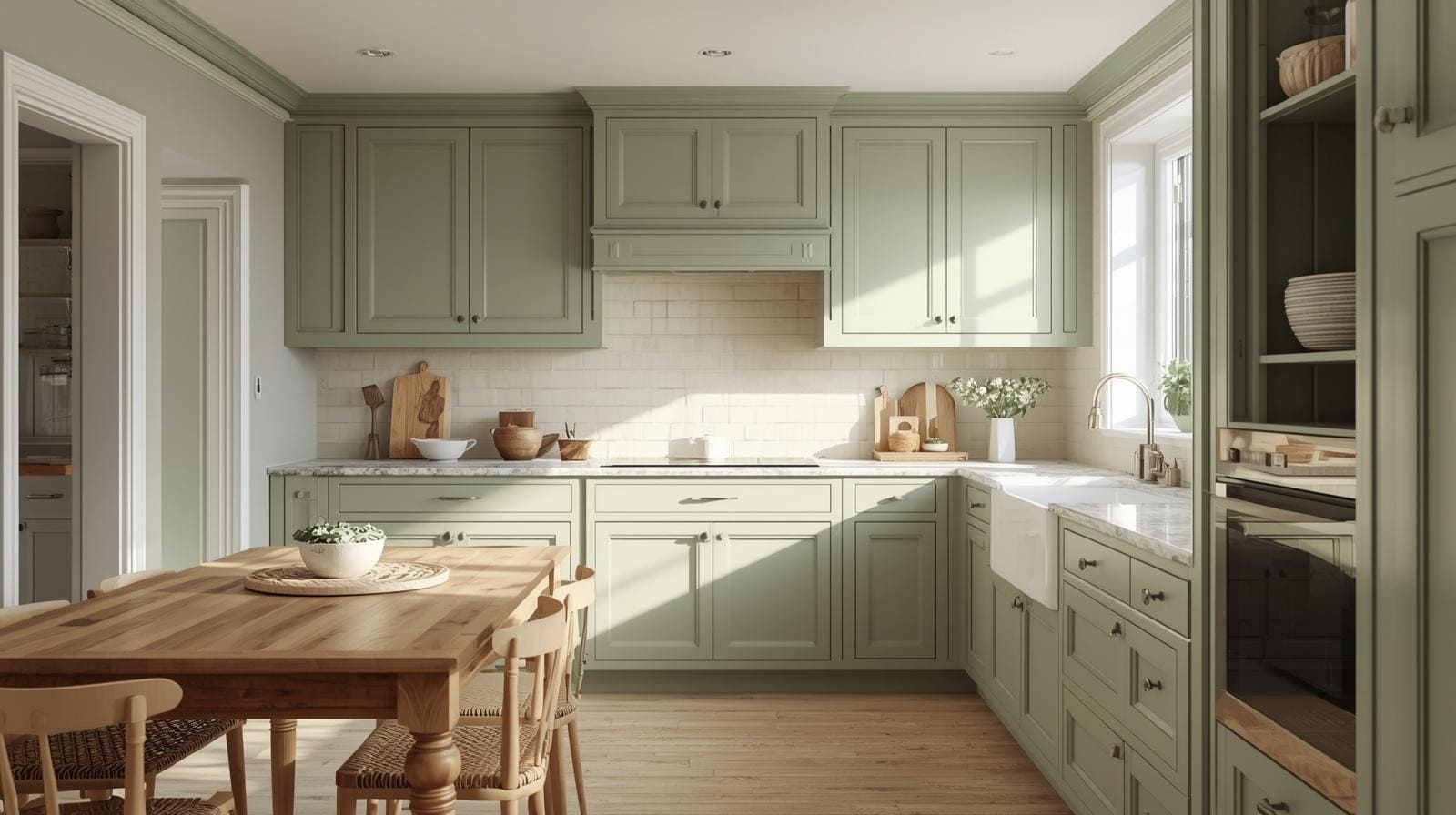 Sage green is currently popular, but its value comes from how it behaves as a neutral rather than a trend color. Compared to stronger tones like deep blue or dark green, sage is less likely to feel outdated over time.
For residential use, this makes it a safer long-term choice. For project-based applications, especially multi-unit developments, selecting a balanced sage tone can help maintain broader appeal and reduce the risk of design becoming too specific. The focus should always be on usability over visual impact alone.
If you are planning a kitchen for modern developments, understanding cabinet selection at scale is critical: Choosing the Right Kitchen Cabinets for Modern Developments
6. Antique and Distressed Sage Green Cabinets: When They Make Sense
Antique sage green kitchen cabinets and distressed sage green kitchen cabinets focus on creating a worn, aged appearance rather than a clean finish. Antique adds subtle color variation to mimic old paint, while distressed highlights edges and surfaces to create a used look. When applied to sage green, both styles push the design toward a more vintage and decorative direction.
In practice, these finishes only work well when the entire space follows a clear country or vintage concept. In standard kitchens, they can feel out of place and reduce long-term usability. If the goal is flexibility and resale value, a smooth sage green finish is usually a safer and more practical choice.
𝐕𝐈𝐂 𝐂𝐚𝐛𝐢𝐧𝐞𝐭 𝐅𝐚𝐜𝐭𝐨𝐫𝐲
Head Office: Tran Thu Do Street, Hoang Liet, Hoang Mai District, Hanoi, Vietnam
HCM Office: N8 Street, Phu Thuan, District 7, Ho Chi Minh City, Vietnam
Phone: +84 971 52 53 54
Website: viccabinet.com
Email: info@viccorp.com.vn
