


Are you looking to eliminate the awkward gap between your lower cabinetry and the floor? Choosing the right kitchen cabinet base molding is the fastest way to give your kitchen a custom, high-end look. The right bottom finish ties your entire space together while protecting your woodwork from daily foot traffic, stray vacuum cleaners, and moisture.
1. What Is Kitchen Cabinet Base Molding?
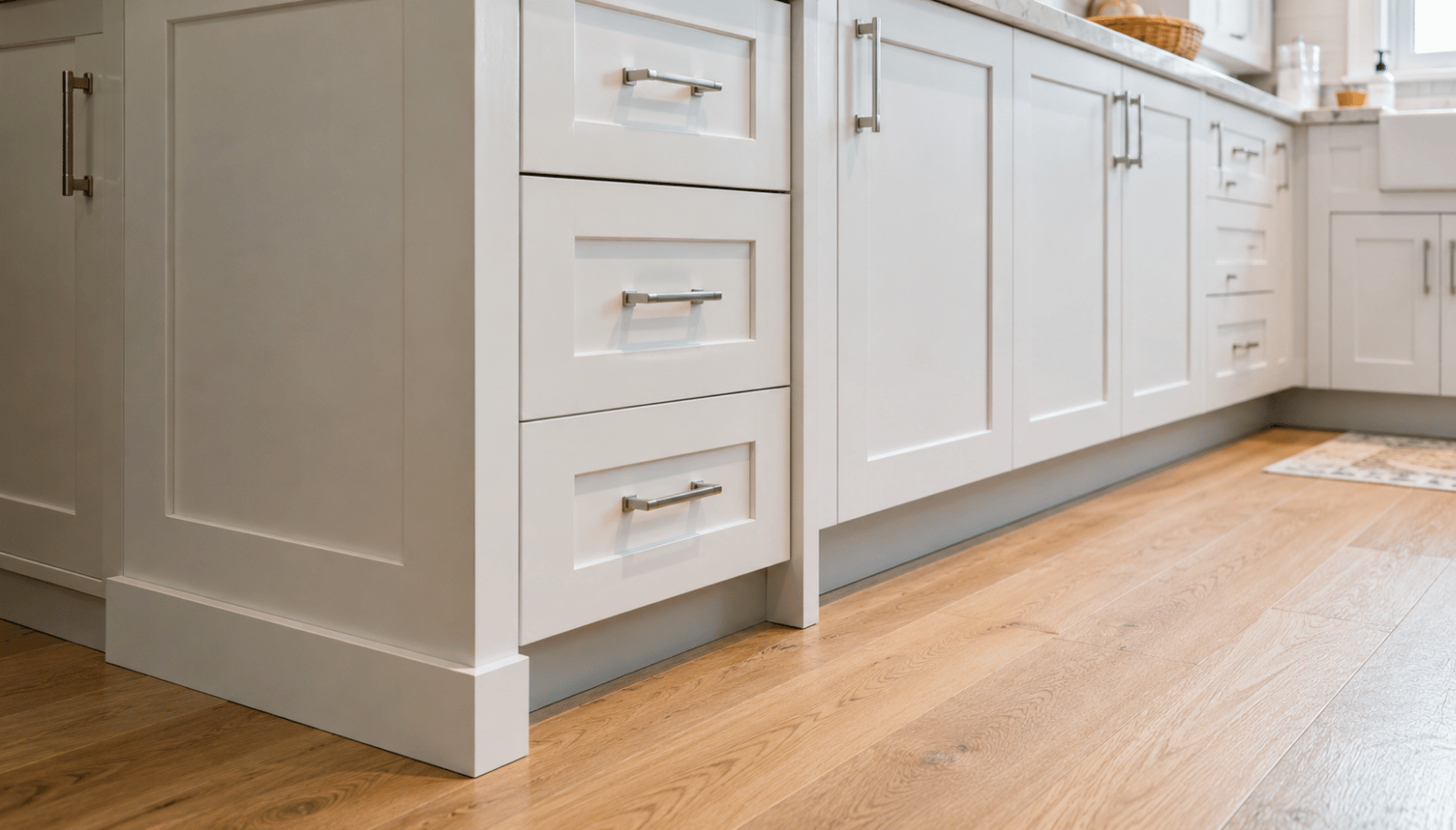
When planning a kitchen remodel or executing a multi-unit residential build, developers and homeowners often focus on eye-level aesthetics like slab doors or quartz countertops. However, the lowest structural point of your lower cabinetry demands equal attention. Kitchen cabinet base molding refers to the wooden, plywood, or composite trim profiles installed at the bottom boundary of base cabinets where the structural box meets the finished flooring.
In field installations, this component solves critical structural and aesthetic challenges:
- Concealing Subfloor Variances: Even in new construction, concrete subfloors or joists can vary up to 1/4 inch across a 10-foot span. A kitchen cabinet base trim covers these uneven horizontal gaps cleanly.
- Moisture and Impact Protection: Kitchen floors face frequent wet mopping, liquid spills, and high impact from feet or heavy vacuum cleaners. Raw cabinet box edges absorb standing water rapidly, causing telegraphing and core swelling. A properly sealed molding serves as a sacrificial, high-durability barrier.
2. Kitchen Cabinet Toe Kick Base vs. Baseboard for Kitchen Cabinets
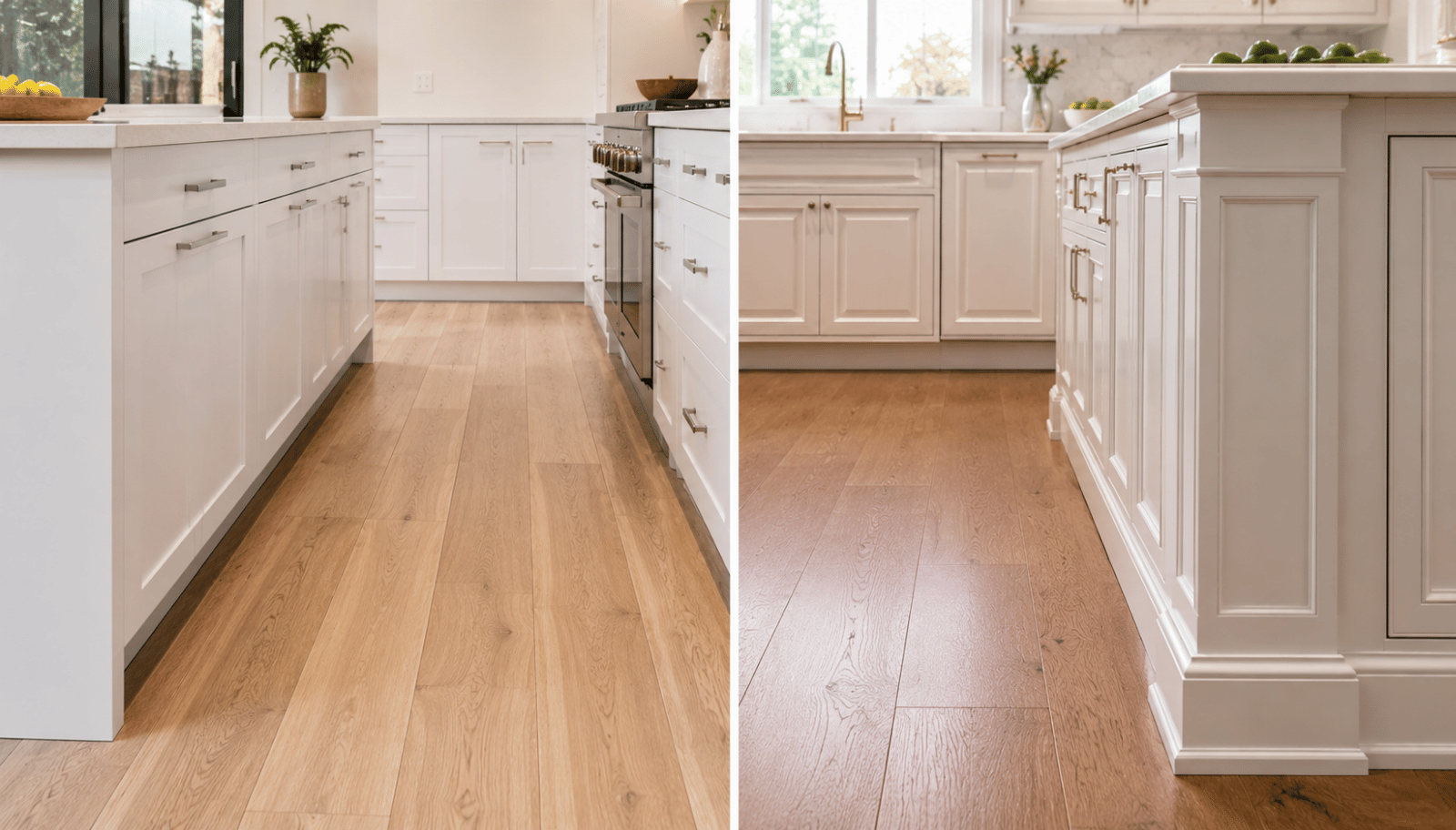
Selecting the correct lower cabinet profile depends on balancing structural ergonomics with the overarching architectural style of the property. Architects and interior designers typically specify one of two configurations for the cabinet bottom.
| Metric / Feature | Kitchen Cabinet Toe Kick Base | Baseboard for Kitchen Cabinets |
| Ergonomic Purpose | Provides recessed foot space for long prep work sessions | Decorative anchor; flush trim with the cabinet door face |
| Standard Depth | 3 inches (76.2 mm) recessed | 0 inches (Flush installation) |
| Standard Height | 4 inches (101.6 mm) vertical | 4.5 to 6 inches vertical |
| Best Suited For | High-traffic prep zones, sinks, and cooking perimeters | Kitchen islands, end panels, furniture-style hutches |
| Ideal Style Match | Modern, Minimalist, Transitional | Traditional, Farmhouse, Craftsman |
A standard kitchen cabinet toe kick base is an intentional recess built into the lower carcass of the cabinet. Machined at a standard 3-inch depth and 4-inch height, it allows the user to stand directly against the counter face without stubbing their shoes or leaning forward unnaturally.
Conversely, utilizing a continuous baseboard for kitchen cabinets eliminates the toe recess completely. The molding is fastened flush to the front plane of the cabinet stiles or door faces. While this restricts close-up standing ergonomics, it creates an architectural, built-in furniture appearance that anchors the cabinetry to the ground.
Before choosing a toe kick or flush baseboard style, it is important to understand standard kitchen base cabinet dimensions including cabinet heights, depths, and toe kick measurements used in modern kitchens.
3. Popular Styles of Decorative Base for Kitchen Cabinets
The geometry of the molding dictates the final visual grade of the kitchen. Depending on the millwork package specified for the project, several profiles are common in American residential construction.
3.1. Standard Shoe Molding and Quarter Round
This is the most functional combination for high-volume residential projects. Quarter round features a radius profile, while shoe molding provides a taller vertical reach with a narrower projection. Field installers nail these thin strips directly over the kitchen cabinet base trim to mask shifting gaps caused by the natural expansion and contraction of solid hardwood or luxury vinyl tile (LVT) flooring.
3.2. Furniture-Style Decorative Base for Kitchen Cabinets
For luxury kitchen installations, premium island builds, or standalone hutches, designers specify a decorative base for kitchen cabinets. This technique utilizes valance profiles, arched toe kicks, or scrolled furniture feet routed directly out of 3/4-inch solid stock. The functional recessed toe box remains hidden behind a decorative facade, giving heavy cabinet runs the appearance of standalone heirloom furniture.
3.3. Clean-Line Modern Baseboards
Modern and Scandinavian designs rely on a flat, square-edged baseboard profile. Typically ranging from 4 to 4.5 inches tall with a sharp 90-degree top edge, this molding runs completely continuous along the bottom boundary of slab-door cabinetry to mirror the clean lines of the home’s primary wall baseboards.
4. Material Selection and Manufacturing Standards for Base Moldings
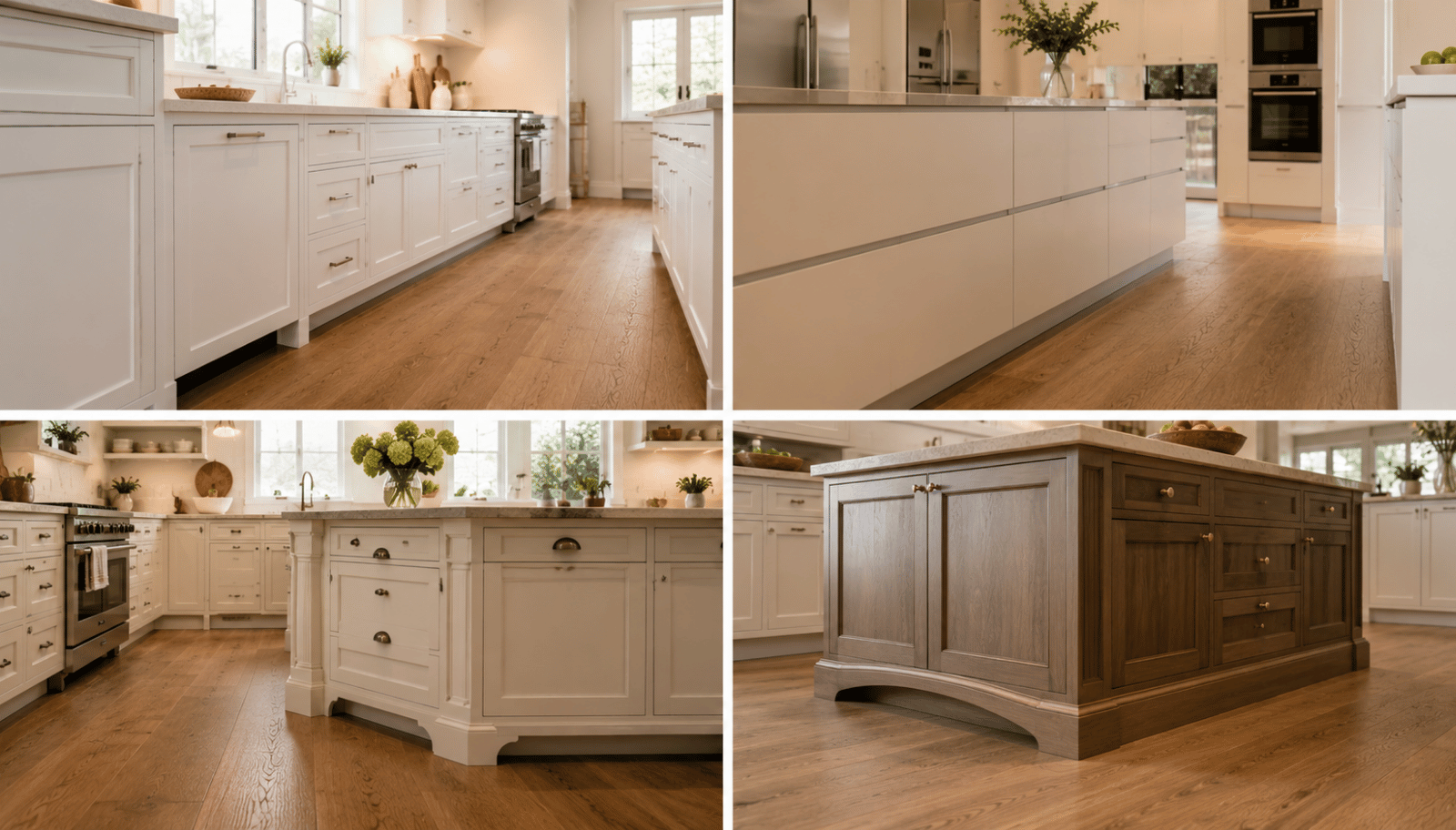
The lowest zone of a kitchen demands strict material specifications because it is highly susceptible to environmental stress. Industrial manufacturing lines produce these trims using three primary substrates, each carrying specific performance metrics.
- Plywood (Multi-layer Baltic Birch or Hardwood Core): The highest industry standard for moisture-heavy environments. Engineered with cross-banded veneers and exterior-grade phenolic glues, plywood base molding exhibits near-zero volumetric expansion when subjected to floor washing or high ambient humidity. It provides superior screw-holding capacity for fastening clips.
- Solid Wood (Hard Maple, Oak, or Walnut): Specified for stain-grade cabinetry packages. Solid wood allows the natural grain structure and pore density to match the upper door panels seamlessly. It offers exceptional impact resistance against shoe scuffs, though it requires precise kiln-drying to a strict 6% to 8% moisture content before milling to prevent linear warping.
- Medium-Density Fiberboard (MDF): A cost-efficient option engineered for paint-grade, high-volume multi-family developments. MDF presents a uniform, void-free core that eliminates grain telegraphing through the topcoat paint. However, to meet ANSI/KCMA A161.1 performance requirements, the back face and raw edges of MDF trim must be sealed entirely with a water-resistant primer to block ground-moisture absorption.
Decorative furniture-style base molding is especially popular for islands. Explore our kitchen island base cabinet guide for recommended sizing, seating clearance, and layout ideas.
5. Field Installation and Precision Joinery Tips
For large-scale commercial rollouts and precise residential renovations, installation speed and seam durability depend on strict adherence to millwork standards.
First, installers must determine the “high point” of the kitchen floor layout using a rotary laser level across the entire cabinet footprint. Base moldings must be scribed and planed along their bottom edges to track the structural slopes of the subfloor while maintaining a perfectly level top alignment line.
Second, all outside corners require true miter joints cut at exactly 45 degrees, reinforced with wood glue and micro-pinner nails to prevent joint separation over time. For inside corners where walls are rarely a perfect 90 degrees, a coped joint provides a tighter, more professional seam than a standard miter.
Third, ensure all base components are painted or stained using the exact color and sheen formulation as the face frames, rather than matching the floor planks. This visual continuity carries the eye upward, creating an architectural transition that makes the kitchen layout feel taller and more cohesive.
FAQ
1, What is the standard height for a kitchen cabinet toe kick base? The industry standard for a functional toe kick base is 4 inches high vertically and 3 inches deep horizontally. This specific dimension has been ergonomically proven to provide adequate clearance for the average human foot, allowing you to stand close to the countertop workspace comfortably without leaning forward or straining your back.
2, Can I use regular house baseboard for kitchen cabinets? Yes, you can use standard architectural wall baseboards for your cabinets, but it works best in specific design layouts. Standard house baseboards are usually installed flush against the front of the cabinet box, eliminating the recessed toe space. This application is perfect for kitchen islands, end panels, or low-use decorative hutches where close-up prep work is minimal.
3, How do you clean and maintain kitchen cabinet base trim? Because base trim sits directly on the floor, it accumulates dust, scuffs, and cleaning chemical residue. Clean it regularly by wiping it down with a damp microfiber cloth dampened with a mild mixture of water and gentle dish soap. Avoid using soaking wet mops near the base trim, and never use abrasive scrubbing pads, which can scratch the protective topcoat finish.
4, Should base molding match the cabinets or the floor? In almost all professional interior designs, the base molding should match the finish, color, and paint code of the kitchen cabinets. Treating the base molding as an organic extension of the cabinetry creates a uniform, built-in appearance. Matching the trim to the floor instead can make the lower section of your kitchen look disconnected and visually shortened.
