


The best pantry cabinet ideas focus on smart layout, accessibility, and space efficiency. From tall pantry cabinets to corner pantry cabinets, the right design can increase usable storage by up to 40 percent while keeping your kitchen organized and easy to use.
1. Why Pantry Cabinet Ideas Matter More Than Size
Most kitchens don’t lack storage. They lack structure.
From real usage, many pantry cabinets become inefficient after a few months because items are stacked too deep, hard to see, and rarely used. The issue is not size, it is accessibility.
A well-designed pantry cabinet can increase usable storage by up to 30 to 40% without making it bigger, simply by controlling:
- Shelf depth under 450 to 500 mm for easy reach
- Clear zoning based on usage frequency
- Front-facing visibility instead of stacking
Counter-intuitive insight:
Adding more shelves often makes a pantry cabinet worse. It creates clutter, limits flexibility, and reduces airflow.
The real goal of a kitchen pantry storage cabinet is simple: make everything visible, reachable, and usable in one move.
2. 15 Pantry Cabinet Ideas That Actually Work
Not all pantry cabinet ideas deliver real value. Each idea below solves a specific problem in kitchen storage, with clear guidance on when to use it and what to avoid.
2.1 Tall Pantry Cabinet with Adjustable Shelves
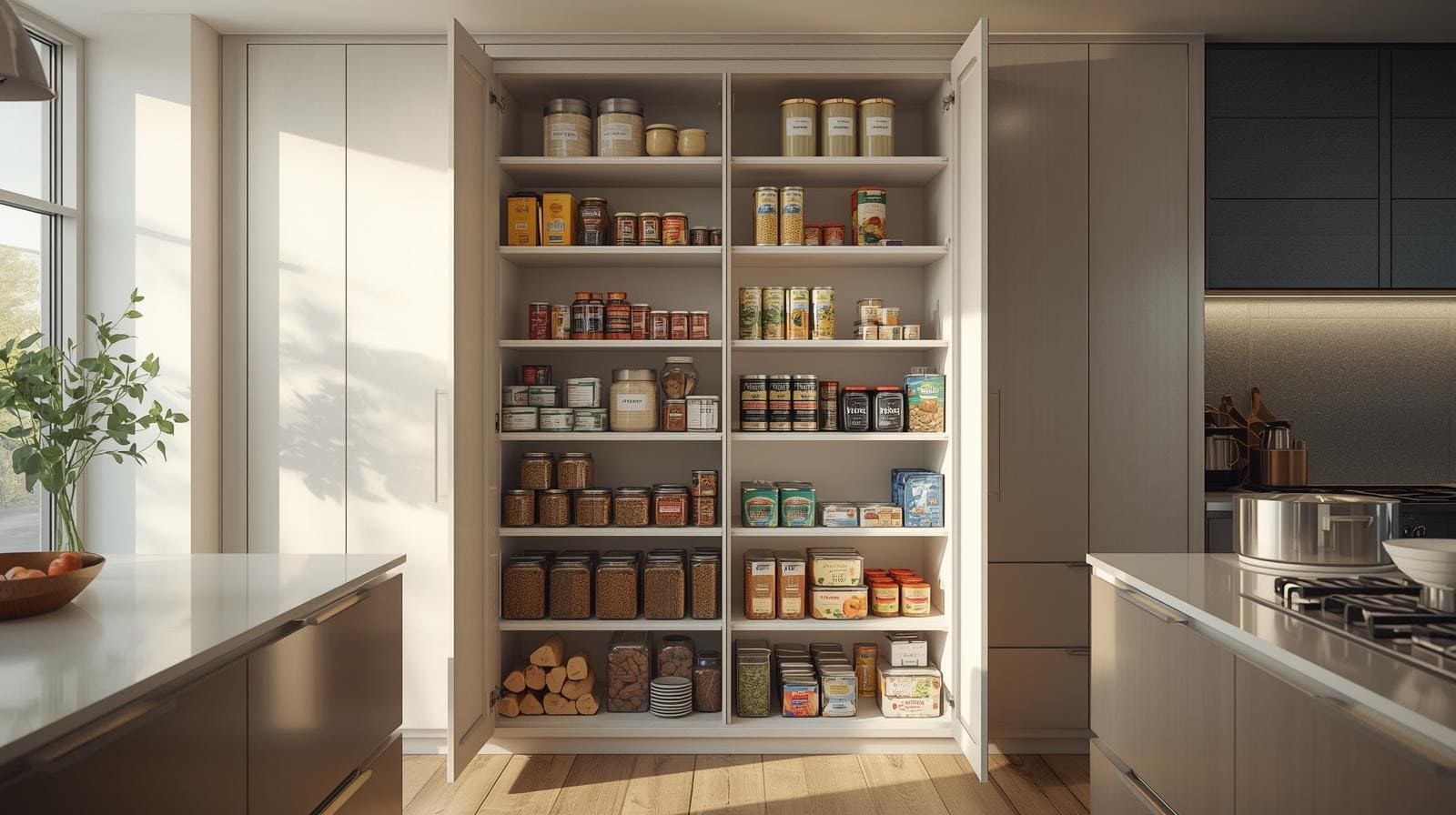 Best for: Maximizing vertical space
Adjustable shelves allow you to adapt storage as product sizes change over time.
Key insight: Fixed shelves reduce flexibility after a few months of use.
Avoid: Shelf spacing under 150 mm. It quickly becomes unusable.
2.2 Pull-Out Pantry Cabinet
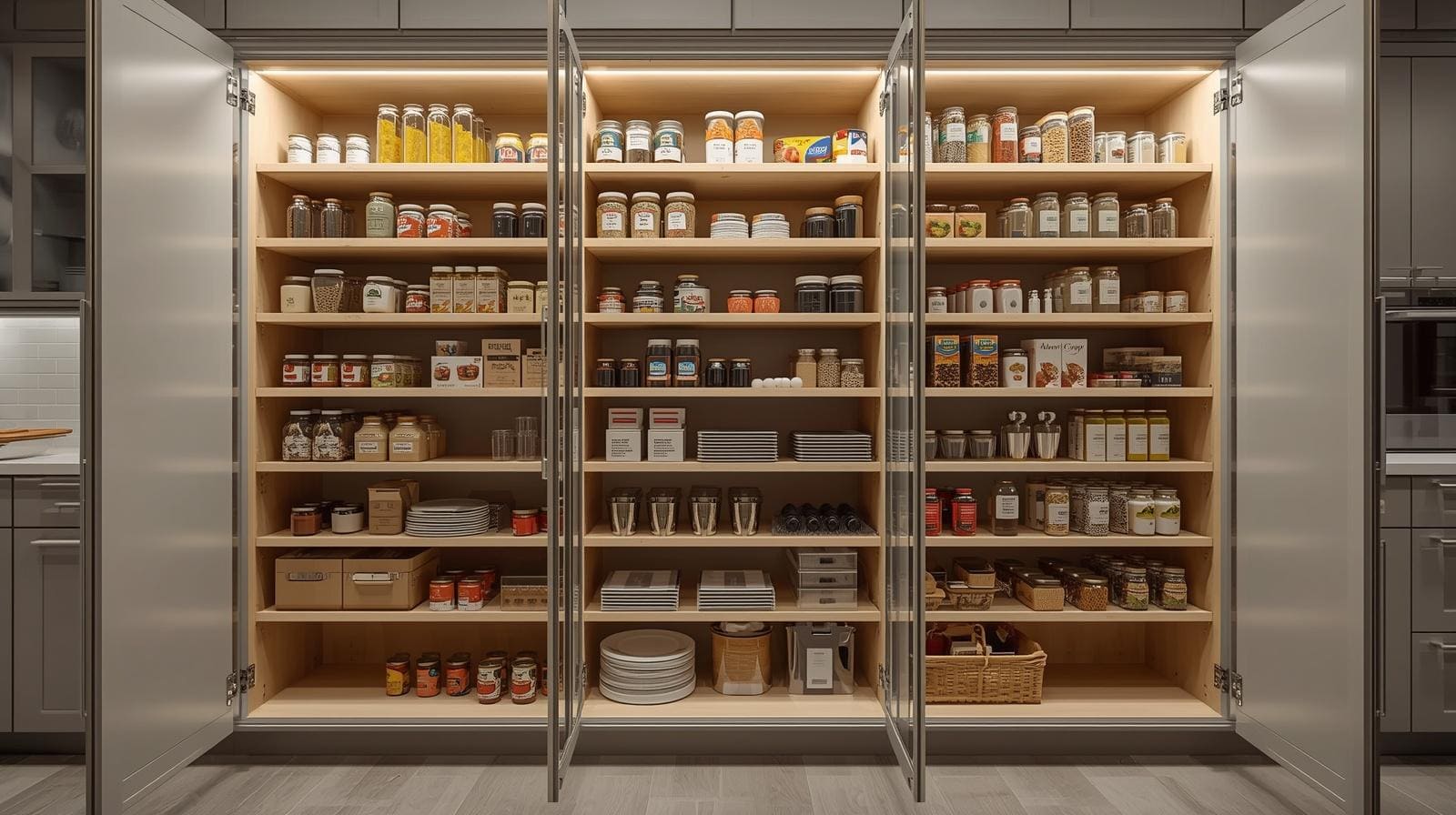 Best for: Eliminating hidden storage
Pull-out systems bring items forward, solving the “out of sight, out of use” problem.
Key insight: Depth is only useful if you can access it fully.
Avoid: Partial-extension slides. They still leave items hidden.
2.3 Corner Pantry Cabinet with Carousel
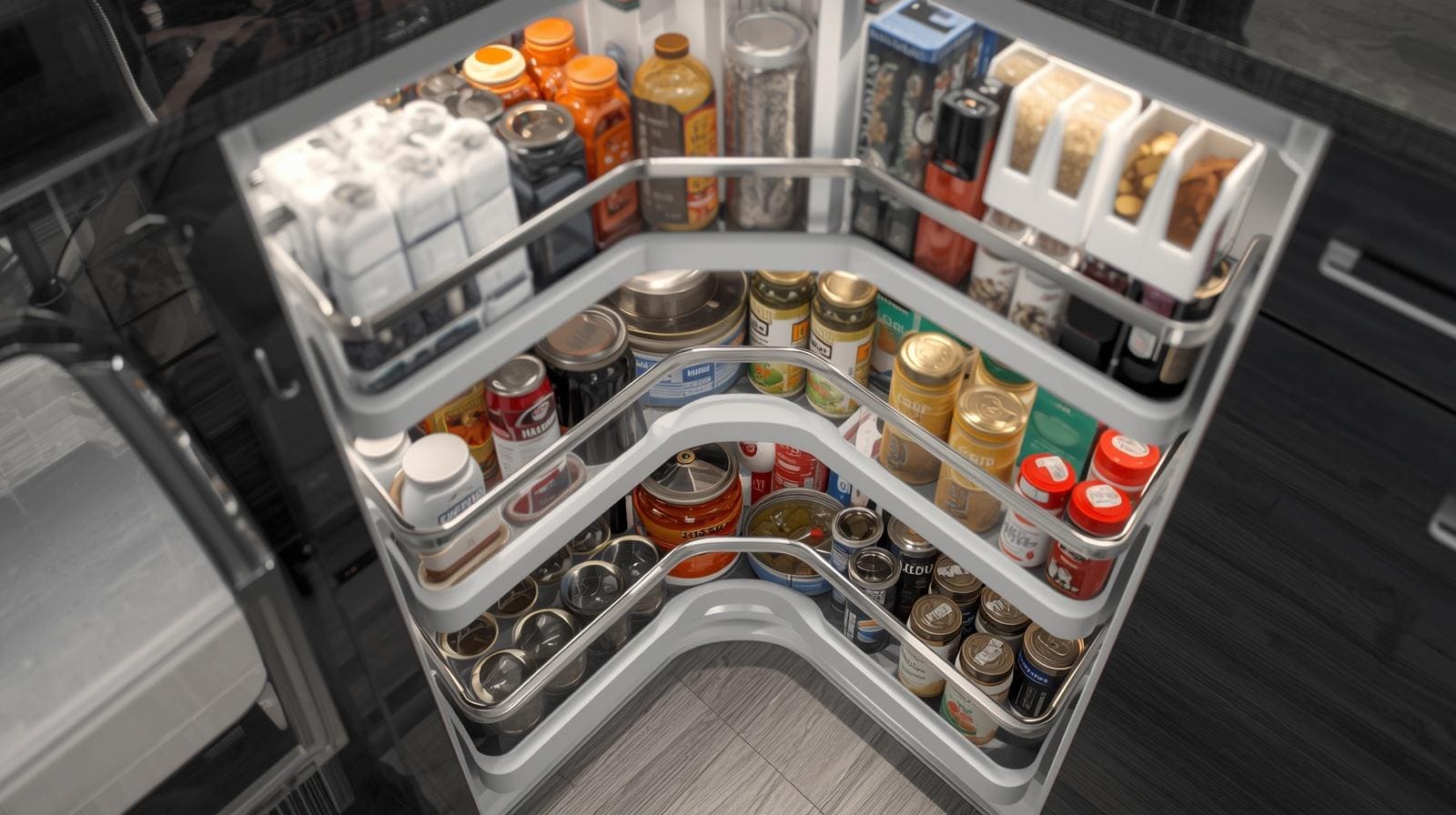 Best for: Making corner space usable
Rotating systems convert difficult angles into accessible storage.
Key insight: Corners waste space only when they do not move.
Avoid: Fixed corner shelves. Up to 40 percent becomes dead space.
2.4 Narrow Pantry Cabinet (300–400 mm)
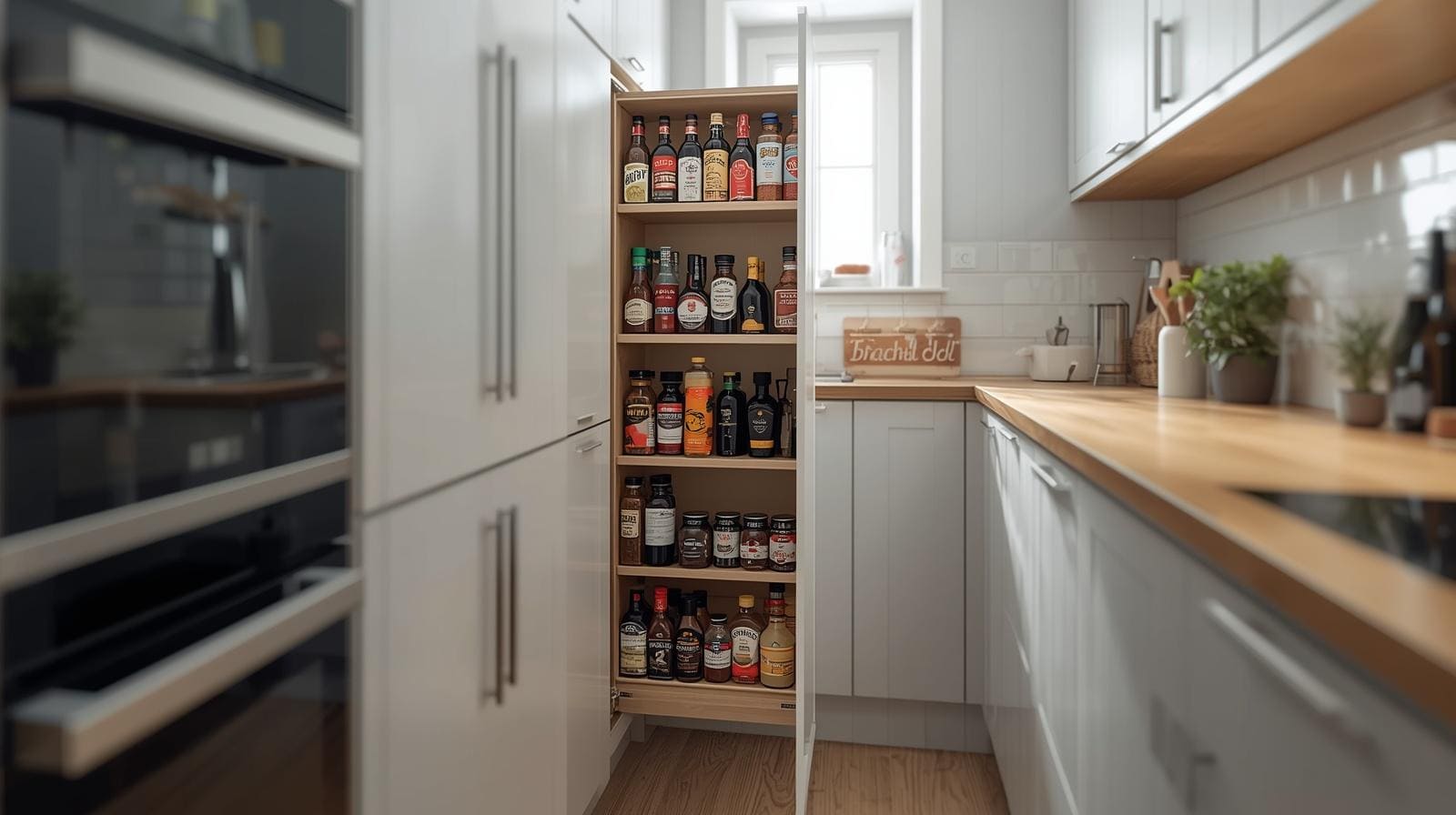 Best for: Small kitchens or tight gaps
Slim units often outperform large cabinets in usability.
Key insight: Narrow + accessible beats wide + deep.
Avoid: Overloading with bulky items. It breaks the purpose.
2.5 Built-In Pantry Cabinet with Hidden Doors
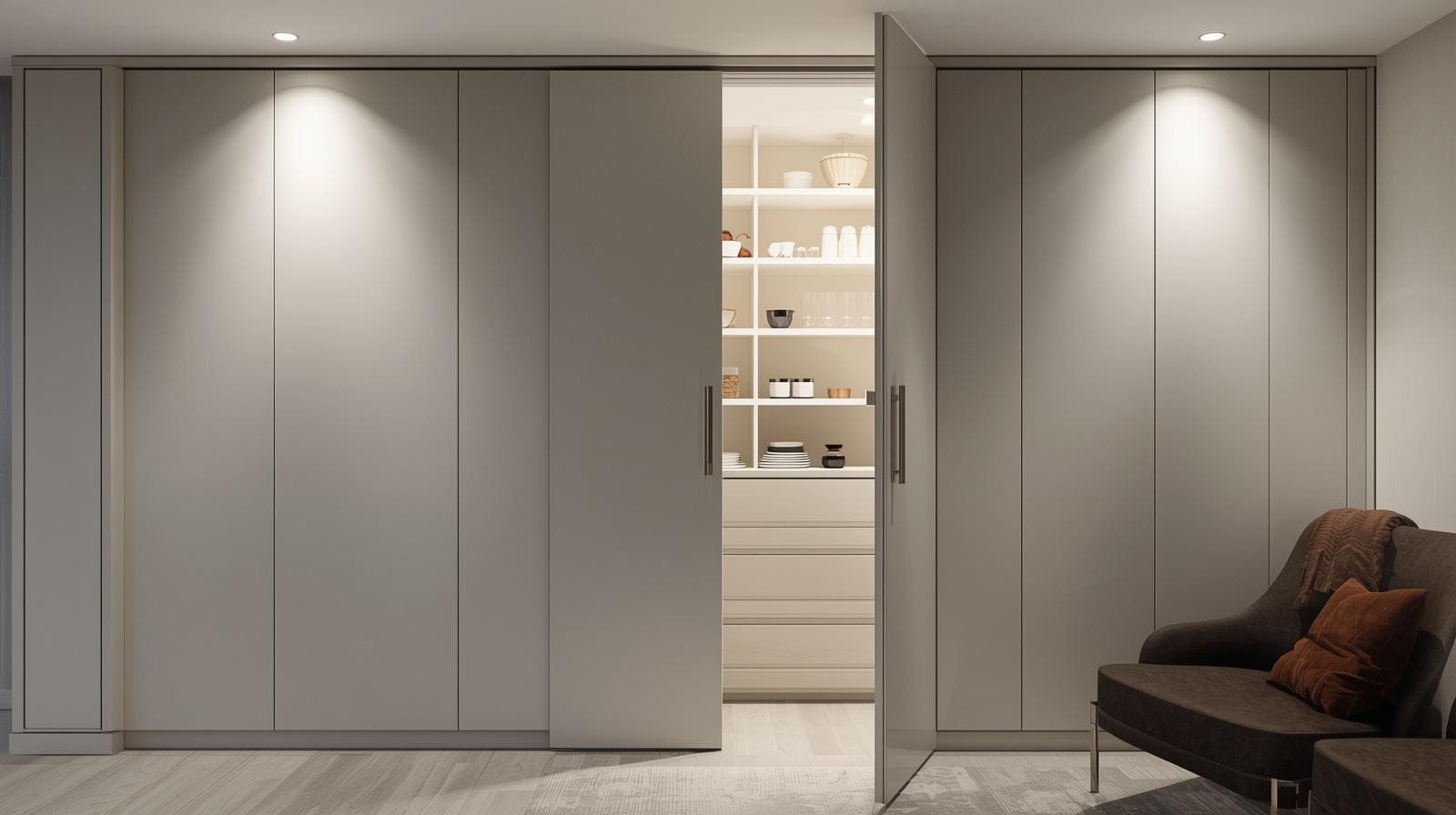 Best for: Clean, seamless kitchen design
Keeps visual clutter low while maintaining full storage capacity.
Key insight: Visual simplicity improves perceived space.
Avoid: No internal lighting. Hidden cabinets become hard to use.
2.6 Pantry Cabinet with Deep Drawers
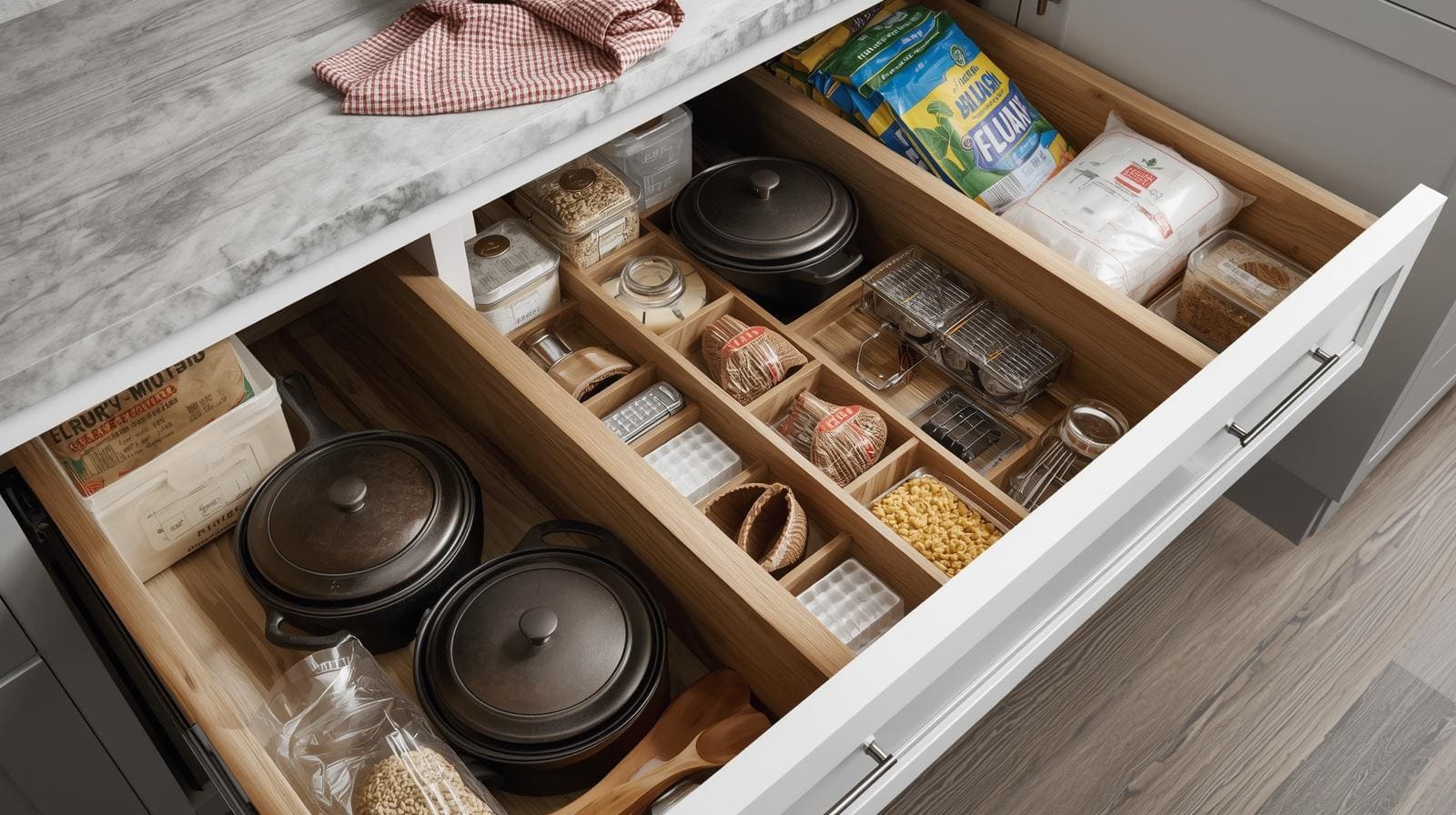 Best for: Heavy or bulky storage
Drawers allow you to pull items out instead of reaching in.
Key insight: Drawers reduce bending and improve ergonomics.
Avoid: Low load-capacity slides under 25 kg.
2.7 Glass Door Pantry Cabinet
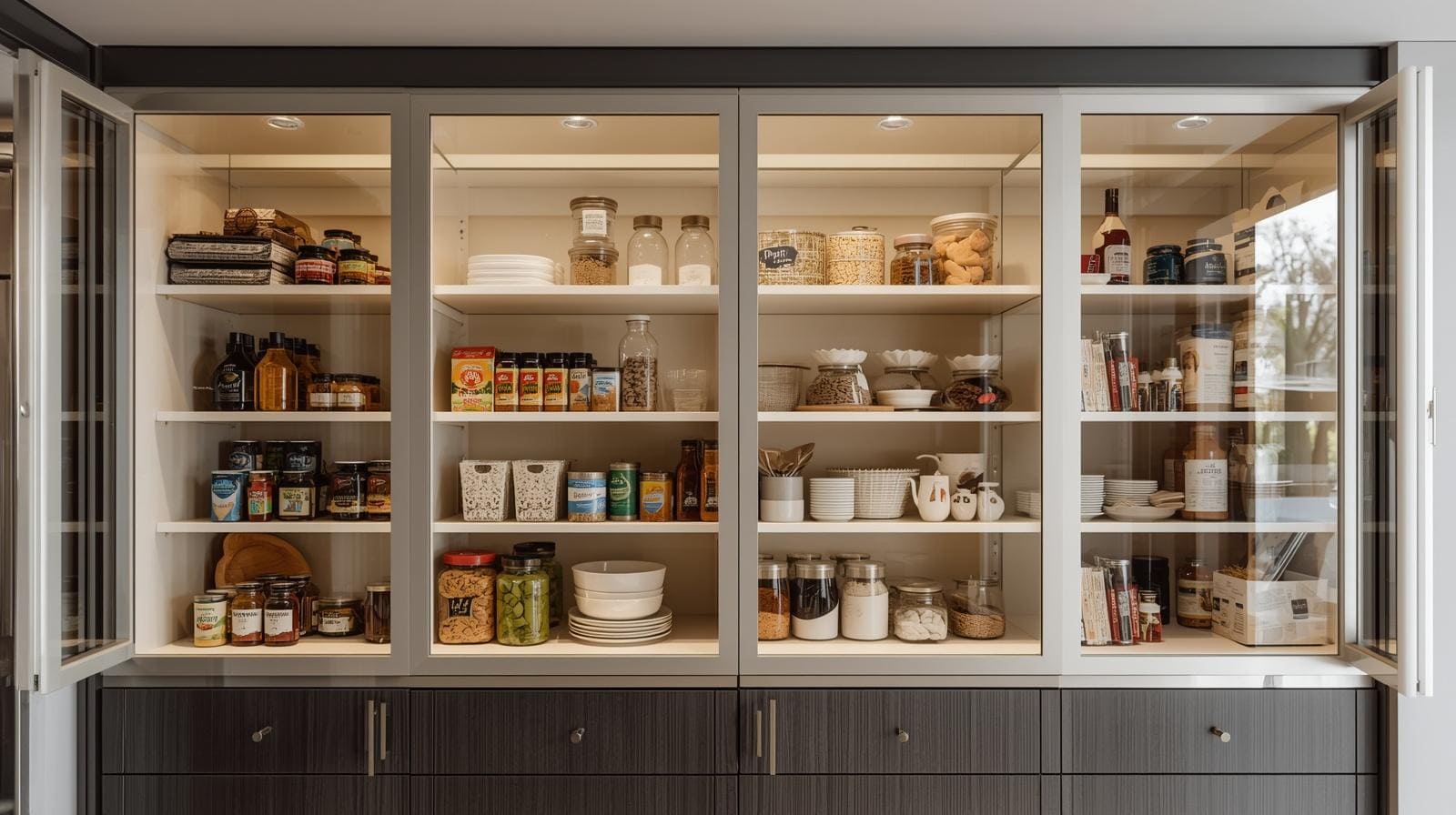 Best for: Quick inventory visibility
Helps you track what you have and avoid duplicate purchases.
Key insight: Visibility directly reduces food waste.
Avoid: Poor organization inside. Glass reveals clutter.
2.8 Pantry Cabinet with Internal Lighting
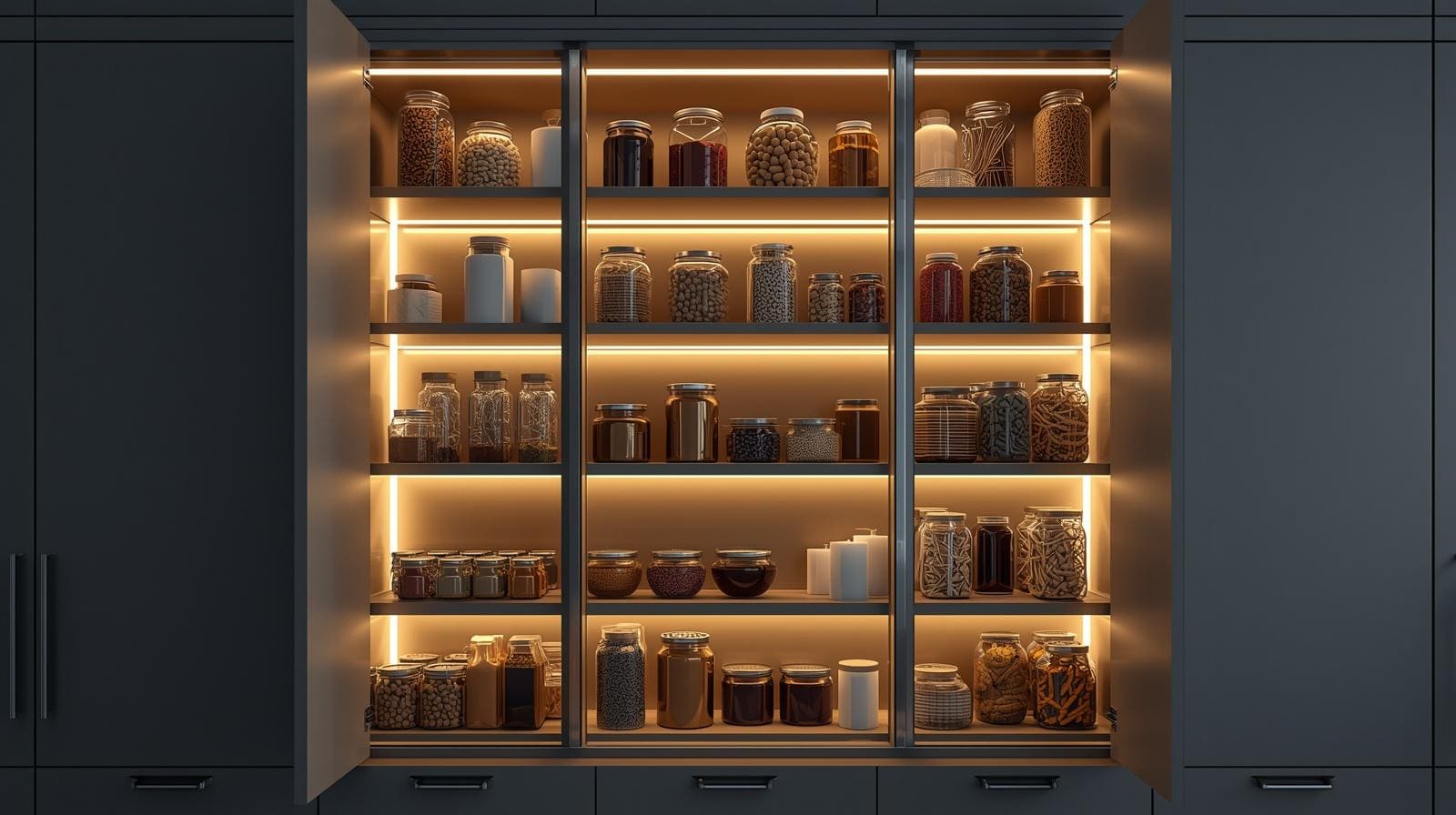 Best for: Tall or deep cabinets
Lighting eliminates dark zones and improves usability.
Key insight: Visibility increases usage frequency of stored items.
Avoid: Single top light only. It creates shadows.
2.9 Freestanding Kitchen Pantry Storage Cabinet
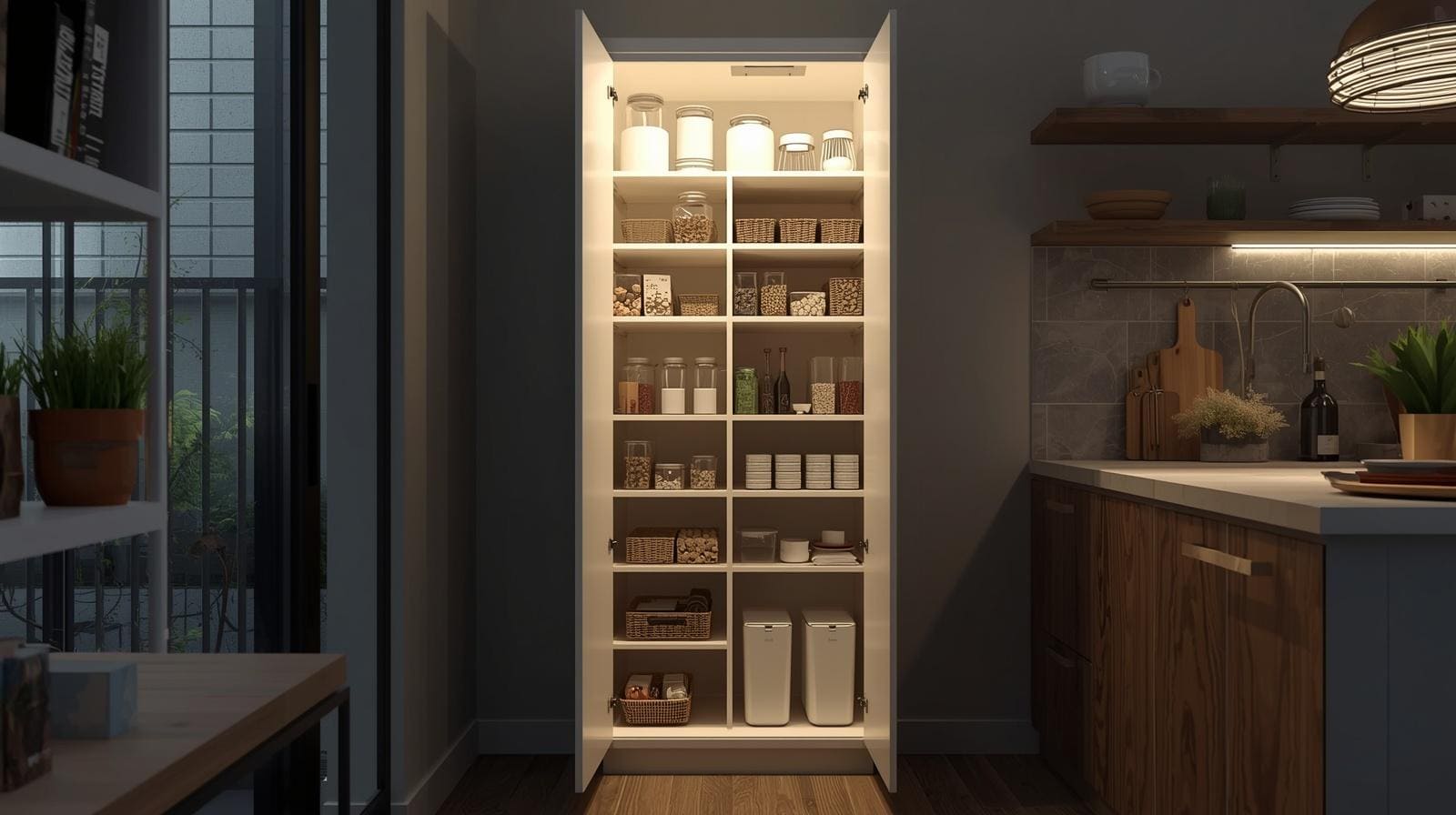 Best for: Flexible layouts or renters
No installation required, easy to move or replace.
Key insight: Flexibility matters more than customization in some homes.
Avoid: Lightweight structures that lack stability.
2.10 Double Door Tall Pantry Cabinet
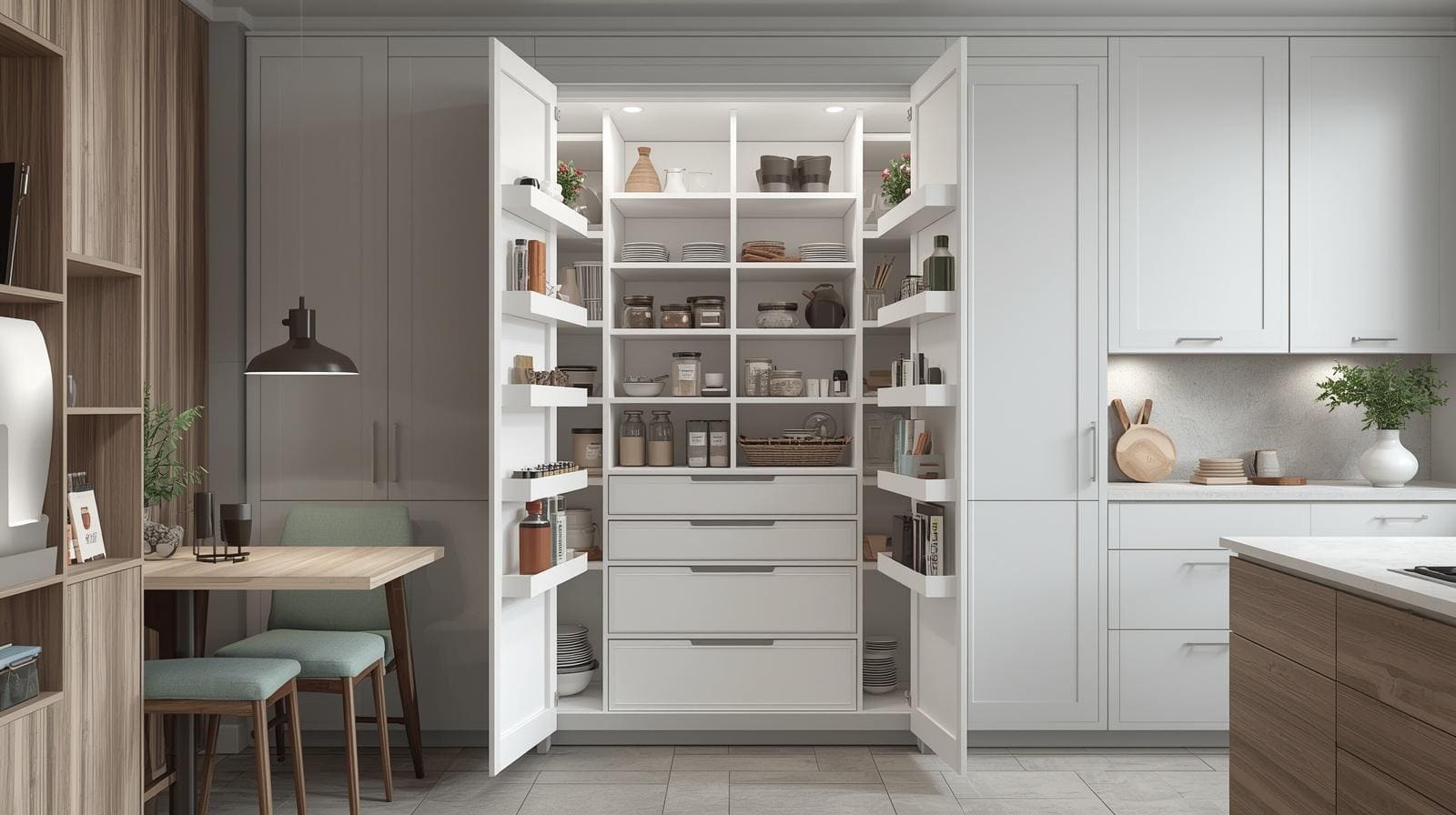 Best for: Wide storage zones
Provides better access and reduces overcrowding.
Key insight: Wider opening improves zoning efficiency.
Avoid: Single large shelves without dividers.
2.11 Pantry Cabinet with Mixed Shelf Depth
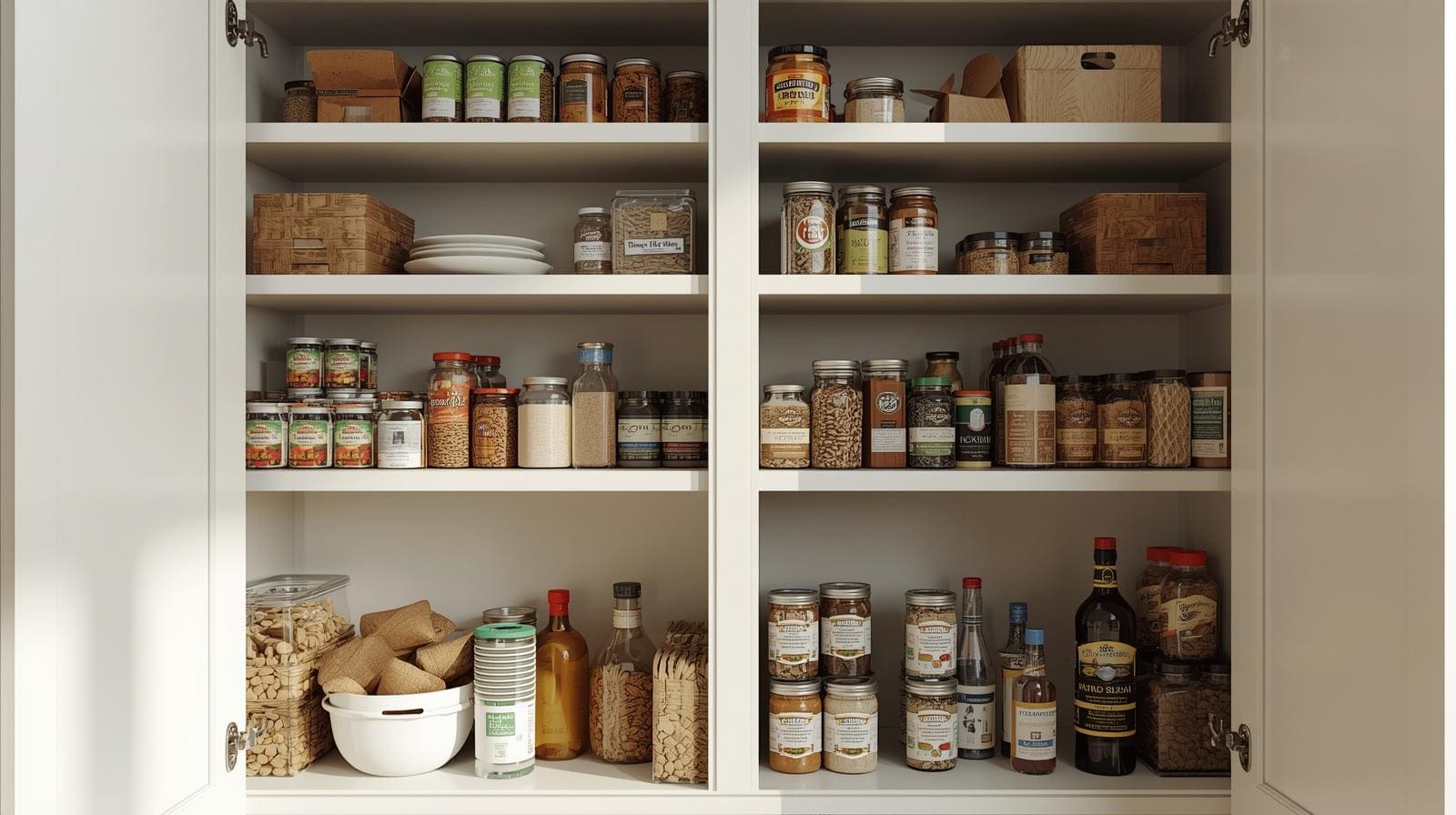 Best for: Balanced storage
Shallow shelves for daily use, deep shelves for bulk items.
Key insight: One depth does not fit all storage needs.
Avoid: Uniform deep shelves across the entire cabinet.
2.12 Corner Pantry Cabinet with Pull-Out Trays
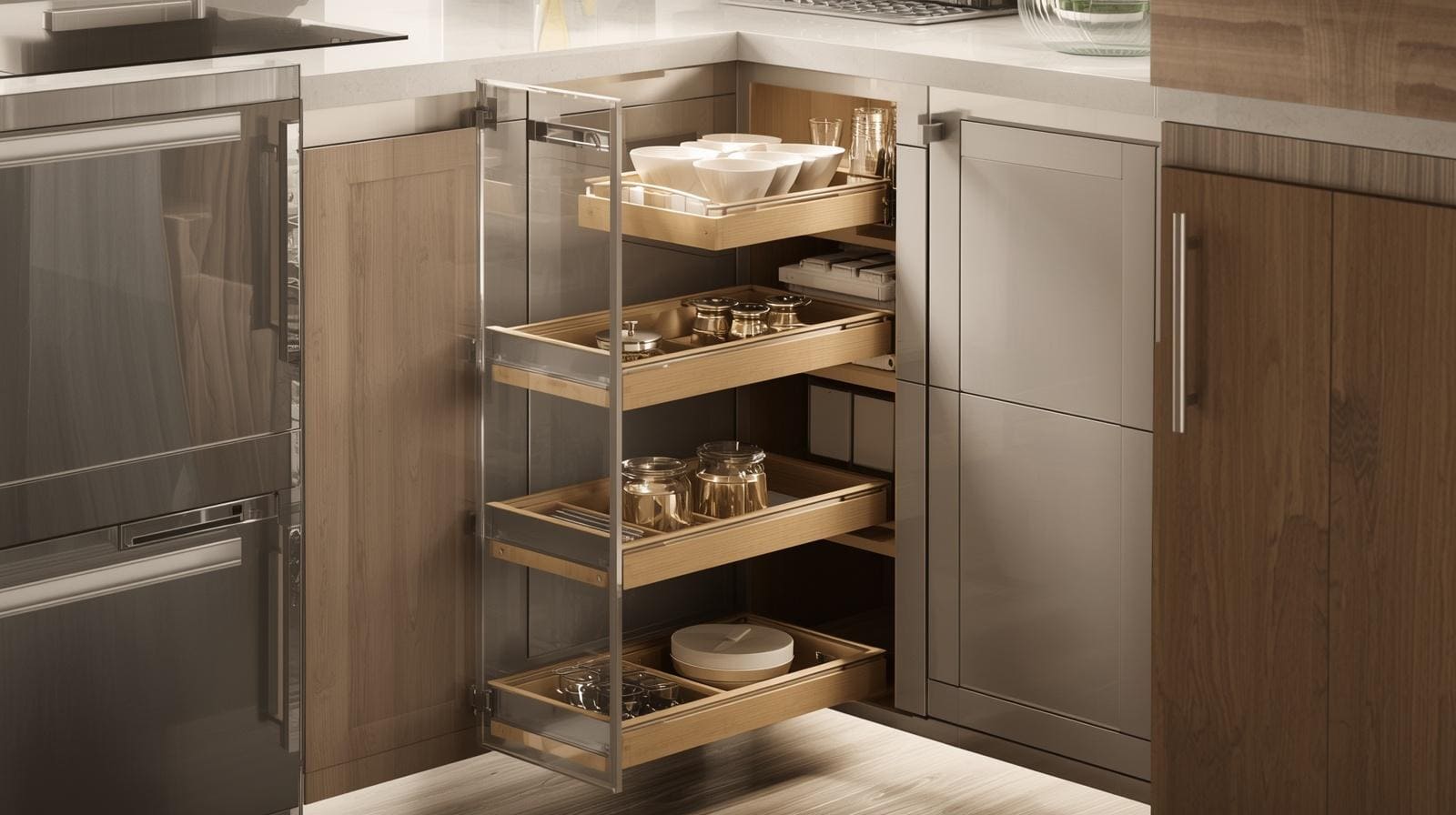 Best for: High-efficiency corner use
Pull-out trays outperform rotating systems in some layouts.
Key insight: Linear motion is often easier than rotation.
Avoid: Cheap rails that cannot handle
2.13 Pantry Cabinet with Appliance Zone
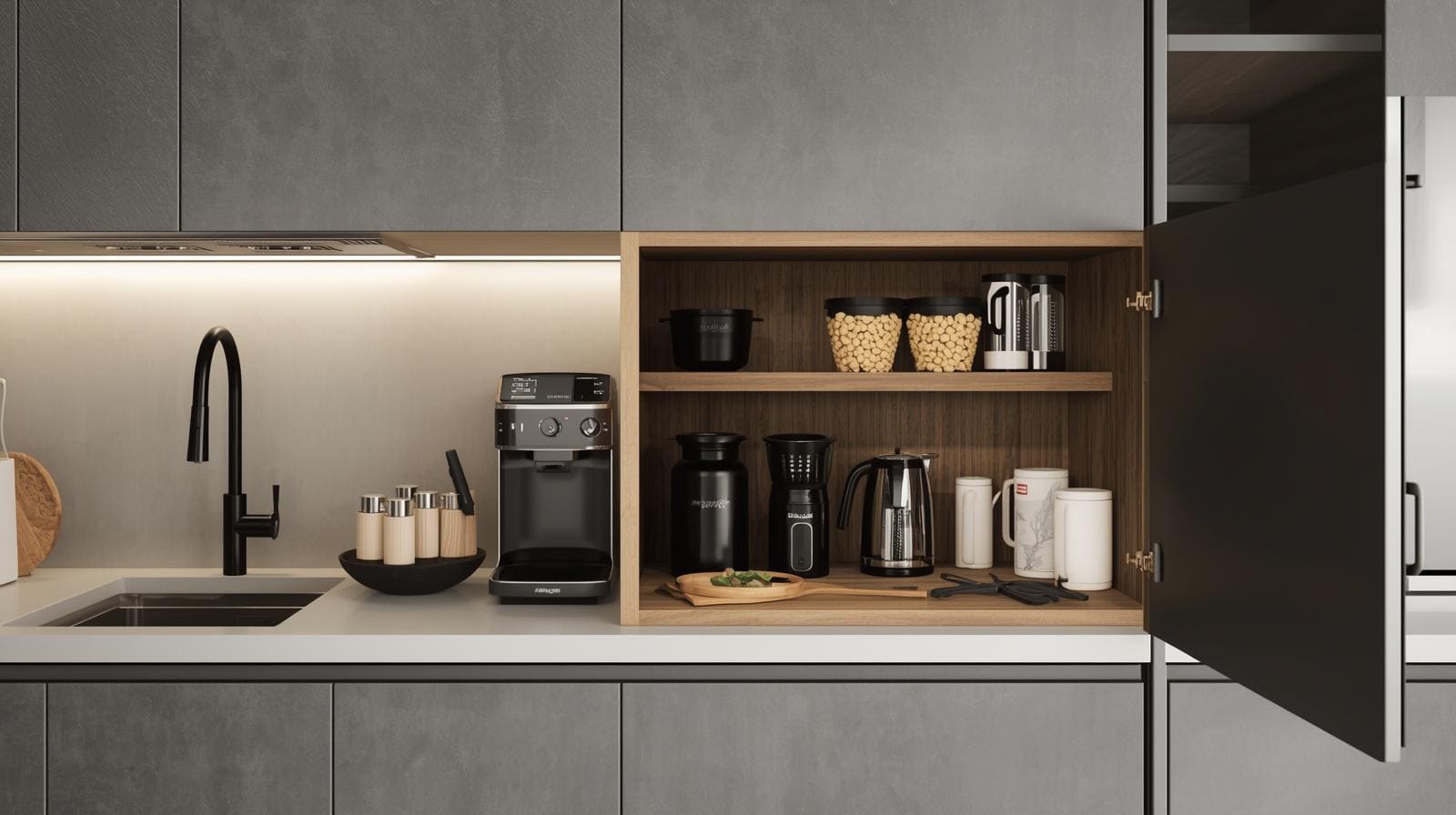 Best for: Decluttering countertops
Stores small appliances inside the cabinet.
Key insight: Hidden appliances free up visual and functional space.
Avoid: Poor ventilation. Heat buildup damages materials.
2.14 Open Pantry Cabinet with Basket System
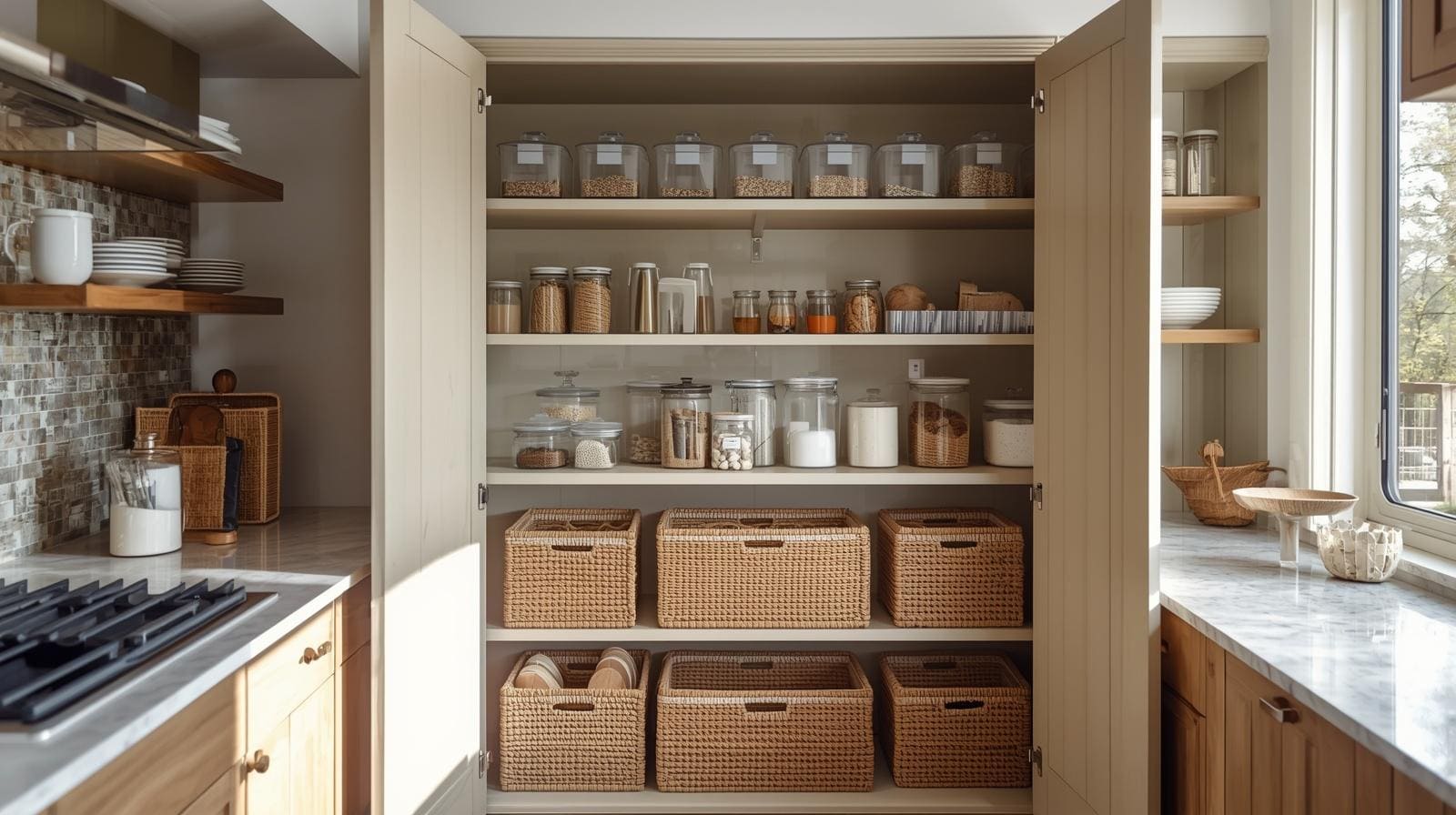 Best for: Flexible, dynamic storage
Baskets allow easy grouping and reorganization.
Key insight: Removable storage adapts faster than fixed systems.
Avoid: Overfilling baskets. It reduces visibility.
2.15 Pantry Cabinet with Soft-Close Hardware
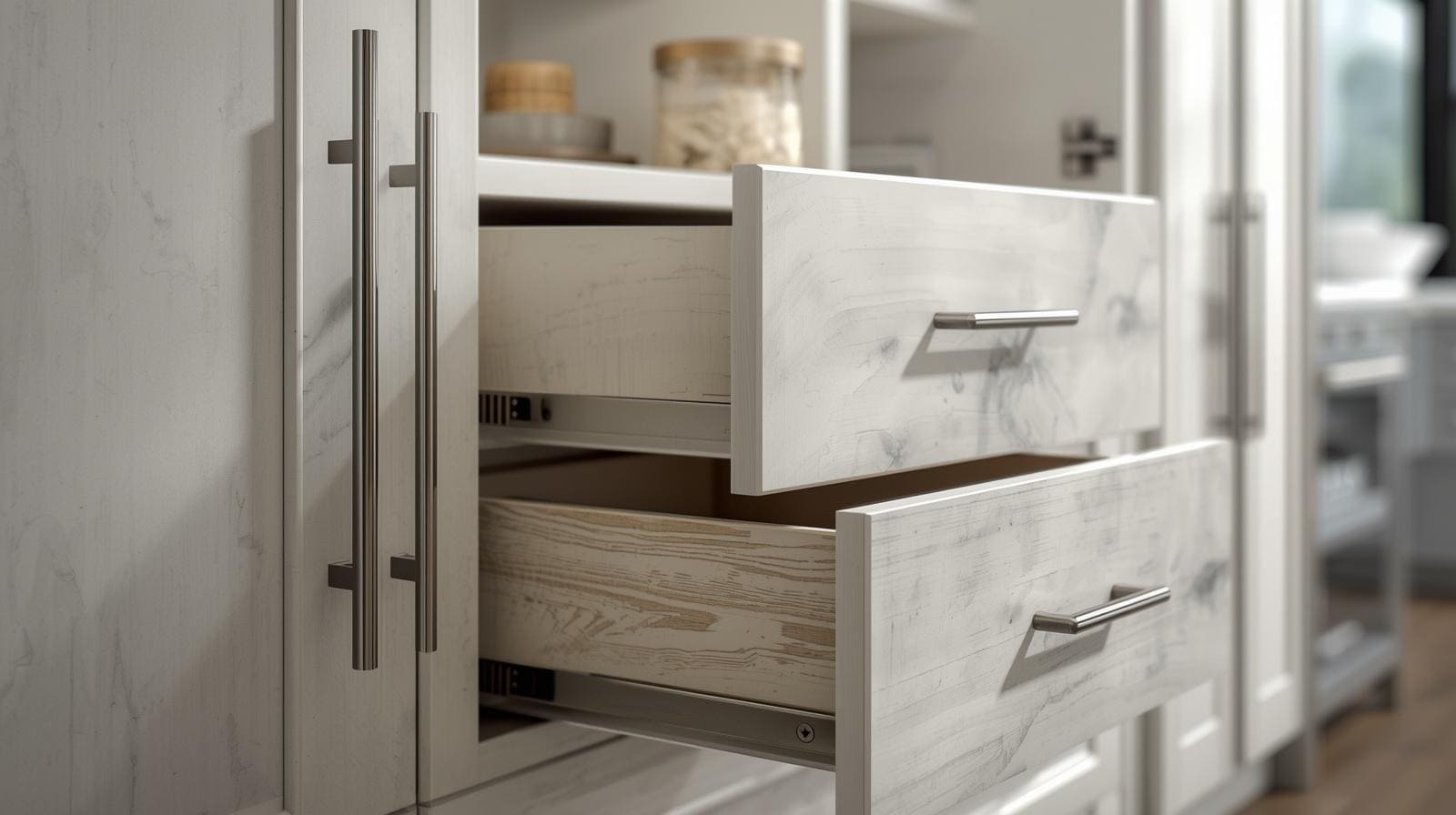 Best for: Long-term durability
Soft-close reduces impact and wear over time.
Key insight: Hardware lifespan defines cabinet lifespan.
Avoid: Low-cycle hinges under 50,000 uses.
Quick Selection Guide
| Problem | Best Idea |
| Hard to reach items | Pull-out pantry cabinet |
| Small kitchen | Narrow pantry cabinet |
| Wasted corner space | Corner pantry cabinet |
| Heavy storage | Drawer-based pantry cabinet |
3. How to Design a Pantry Cabinet That Actually Works
This is where most homeowners get it wrong. They focus on appearance instead of function.
3.1 Internal Layout Zoning Strategy
A high-performing pantry cabinet is divided into zones:
- Eye level: Frequently used items
- Waist level: Bulk storage and containers
- Lower level: Heavy appliances
- Upper level: Rarely used items
This layout reduces unnecessary movement and improves workflow.
3.2 Shelf Depth vs Accessibility
Deeper shelves seem better, but they often cause clutter.
| Shelf Depth | Pros | Cons | Best Use |
| 12 inch | Easy access | Less storage | Daily items |
| 18 inch | Balanced | Moderate reach | Mixed use |
| 24 inch | High capacity | Hard to reach back | Bulk storage |
Expert recommendation:
For a tall pantry cabinet, combine shallow upper shelves and deeper lower shelves for better usability.
3.3 Material Selection That Affects Longevity
Not all pantry cabinets perform the same over time.
| Material | Density | Moisture Resistance | Lifespan |
| Solid wood | Medium | Moderate | 10 to 15 years |
| Plywood | High | High | 15 to 20 years |
| MDF | Low | Low | 5 to 10 years |
Technical insight from real installations:
Plywood with a density of 600 to 700 kg per cubic meter offers the best balance between strength and stability. It resists warping better than solid wood in humid kitchens.
3.4 Hardware That Changes Daily Experience
Hardware is often ignored, but it defines how the cabinet feels in use.
Critical components:
- Hinges: Minimum 100,000 cycle durability
- Drawer slides: Load capacity above 30 kg
- Pull-out systems: Full extension for visibility
Soft-close systems are not just luxury. They reduce structural stress over time.
3.5 Ventilation and Moisture Control
This is rarely mentioned but extremely important.
Without proper ventilation:
- Dry food absorbs moisture
- Wood panels expand and degrade
- Odor builds up inside the cabinet
Solutions:
- Integrated ventilation slots
- Moisture-resistant coatings
- Silica or humidity control inserts
For a deeper understanding of cabinet formats, cost, and installation differences, you can refer to the following article: RTA Cabinets Cost Styles and Project Selection 2026.
5. Common Mistakes When Choosing a Pantry Cabinet
Many pantry cabinets look well-designed at first, but problems start to appear after a few months of use. The most common mistake is choosing depth over accessibility. Deep shelves seem practical, but anything placed too far back is often forgotten and rarely used.
Avoid these mistakes:
- Choosing fixed shelves instead of adjustable ones
- Ignoring internal lighting
- Overloading deep shelves without pull-outs
- Selecting low-density materials for humid environments
A clean, hidden pantry cabinet may look better visually, but without proper lighting or internal organization, it becomes inconvenient in daily use. A good pantry cabinet should always balance design and function.
6. Maintenance Tips to Keep Your Pantry Cabinet Lasting Longer
A pantry cabinet does not require complicated maintenance, but small habits make a big difference over time.
Checklist:
- Clean surfaces monthly to prevent grease buildup
- Check hinges and slides every 6 months
- Avoid overloading shelves beyond weight limits
In addition, humidity is often overlooked, but it directly affects material durability. Keeping the kitchen environment stable and allowing some airflow inside the cabinet can prevent swelling or surface damage, especially in enclosed pantry units.
Conclusion
A pantry cabinet is not just about storage. It shapes how your kitchen functions every day. Whether you choose a tall pantry cabinet, a corner pantry cabinet, or a flexible kitchen pantry storage cabinet, the key lies in structure, materials, and usability.
The smartest designs are not the biggest. They are the ones you can use effortlessly, every single day.
