


As U.S. retailers and renovation businesses prepare for year-end demand, cabinet importers must make Q4 inventory decisions months before the selling season begins. Retail data points to resilient consumer spending, while kitchen-design studies show a clear shift toward natural wood, warm neutrals, greens and deeper earthy tones. Here are 15 cabinet colors worth watching for Q4 2026.
1. Why Q4 Is an Important Selling Season in the United States
The fourth quarter covers October through December and includes several of the largest commercial events in the U.S. retail calendar, including early holiday promotions, Thanksgiving, Black Friday, Cyber Monday, Christmas and year-end clearance campaigns.
The National Retail Federation defines the winter holiday season as November 1 through December 31. Over the previous five years, sales during these two months accounted for approximately 19% of annual U.S. retail sales, with an even higher contribution for some retail categories.
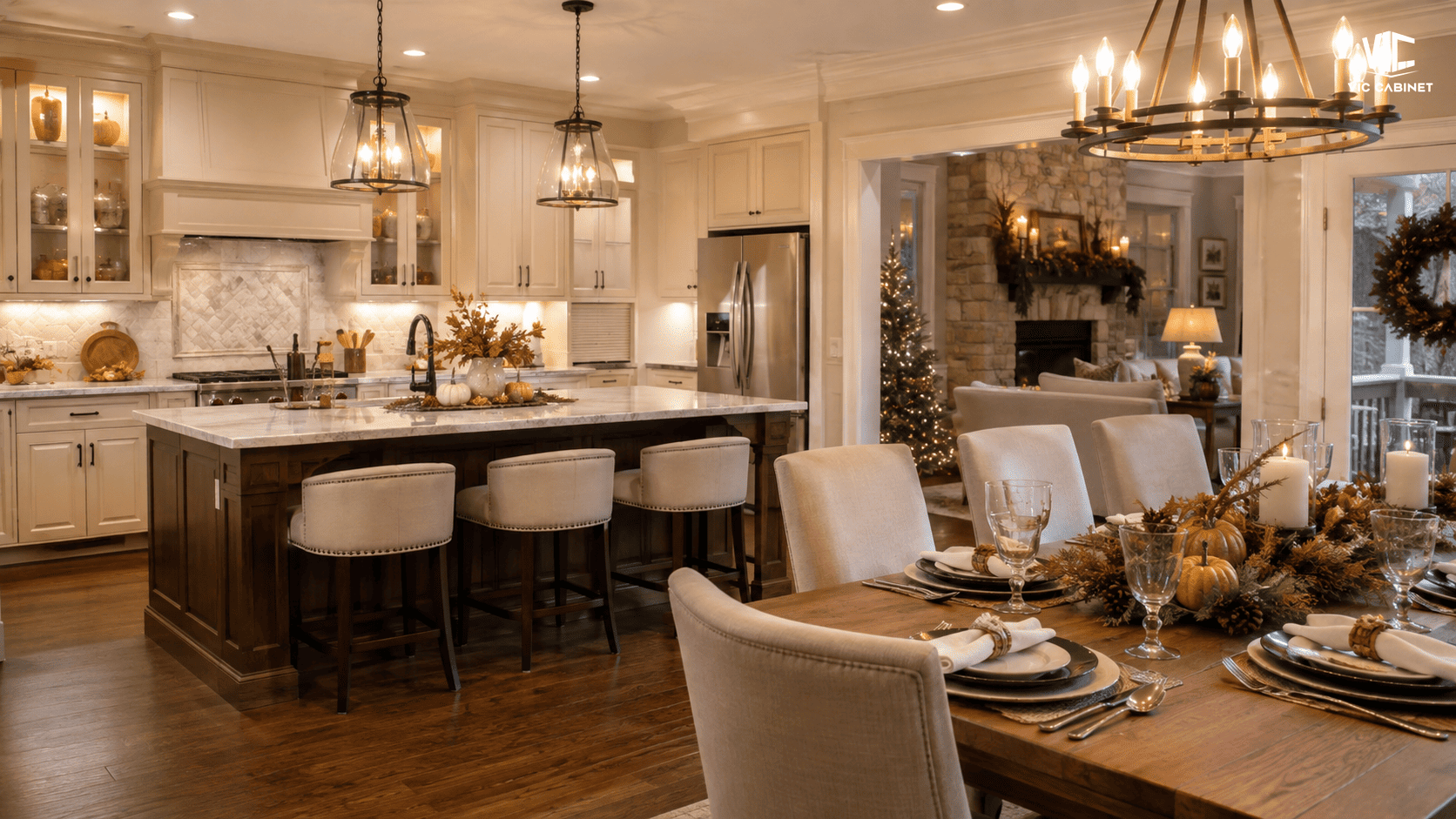
The latest completed holiday season also demonstrated the scale of year-end demand. U.S. holiday sales increased by approximately 4.1% in 2025 and surpassed $1 trillion. For the full year 2026, NRF forecasts U.S. retail sales to grow by 4.4% to approximately $5.6 trillion.
At the time of writing, a specific NRF holiday-sales forecast for Q4 2026 had not yet been published. Therefore, the market outlook in this article is based on the full-year 2026 retail forecast, the latest completed holiday season and current kitchen-design research.
For the cabinet industry, Q4 demand is not driven by gift shopping alone. Several additional factors make the final months of the year commercially important.
2. Why Importers Must Prepare Before the Q4 Selling Peak
The consumer selling season and the importer purchasing season do not occur at the same time.
Cabinet importers must account for several stages before products become available to the market:
- Product and color approval
- Shop drawing or specification confirmation
- Raw-material preparation
- Cabinet production
- Quality inspection
- Export packaging
- Ocean transportation
- Customs clearance
- Domestic warehousing and distribution

Any change in materials, packaging or finish approval can extend the ordering cycle.
For this reason, importers targeting October-to-December sales should normally evaluate their inventory plans well before Q4 begins. Waiting until consumer demand is already visible can create stock shortages during the most commercially active part of the season.
3. What Is Driving Cabinet Color Demand in 2026?
The main color trend for 2026 is not the complete disappearance of white or gray. Instead, the market is moving toward warmer, more natural and more layered versions of familiar colors.
The 2026 NKBA Kitchen Trends Report found that 96% of surveyed kitchen and bath professionals expected neutrals to remain popular. Green was identified by 86% of respondents, followed by blue at 78%.
Natural materials are gaining attention at the same time. According to NKBA, 59% of respondents expected wood-grain cabinets to grow in popularity, while white oak was identified as the leading wood species by 51%.
Houzz reported a similar shift among U.S. homeowners. Wood became the most selected cabinet finish in its 2026 study, chosen by 29% of renovating homeowners, compared with 28% for white.
The 2026 Colors of the Year selected by major paint manufacturers also point toward:
- Creamy whites
- Khaki and earthy neutrals
- Eucalyptus and jade greens
- Espresso browns
- Red-brown wood tones
- Muted and nature-inspired colors
NKBA’s review of the 2026 selections describes the overall direction as warm, earthy and sophisticated, with green taking a leading role and brown, creamy neutral and pale yellow acting as supporting families.
4. Top 15 Cabinet Colors to Watch for Q4 2026
The following list is an editorial market forecast rather than a guaranteed sales ranking. It combines homeowner renovation data, professional kitchen-industry research and the color directions introduced by major paint brands.
Actual performance will vary according to region, cabinet style, customer segment, project type and price position.
4.1. Warm White
Warm white is expected to remain one of the safest cabinet colors for importers.
Unlike cool white, which can have blue or gray undertones, warm white includes a small amount of cream, beige or ivory. It keeps the kitchen bright while creating a softer and more residential appearance.
White remains highly relevant despite the growth of wood finishes. Houzz found that 28% of renovating homeowners selected white cabinets in 2026, placing it only one percentage point behind wood.
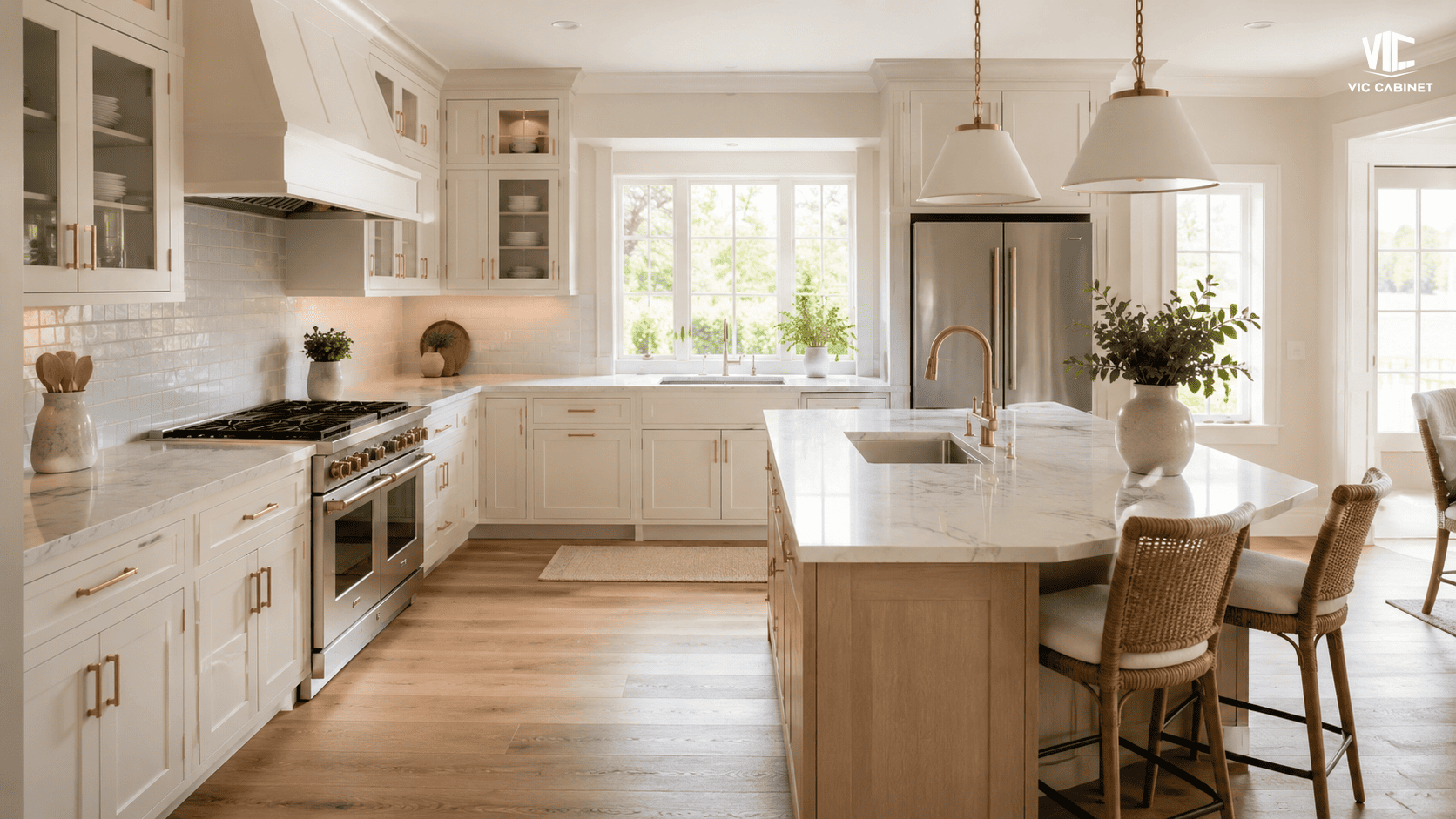
Market potential: High-volume core color.
Suitable applications: Shaker cabinets, inset kitchens, bathroom vanities and transitional residential projects.
4.2. Creamy Ivory
Creamy ivory provides more warmth than standard white and coordinates well with gold hardware, wood flooring and quartz countertops with beige or gold veining.
Dutch Boy’s 2026 Color of the Year, Melodious Ivory, reflects this movement toward deliberate creamy neutrals rather than stark white interiors.
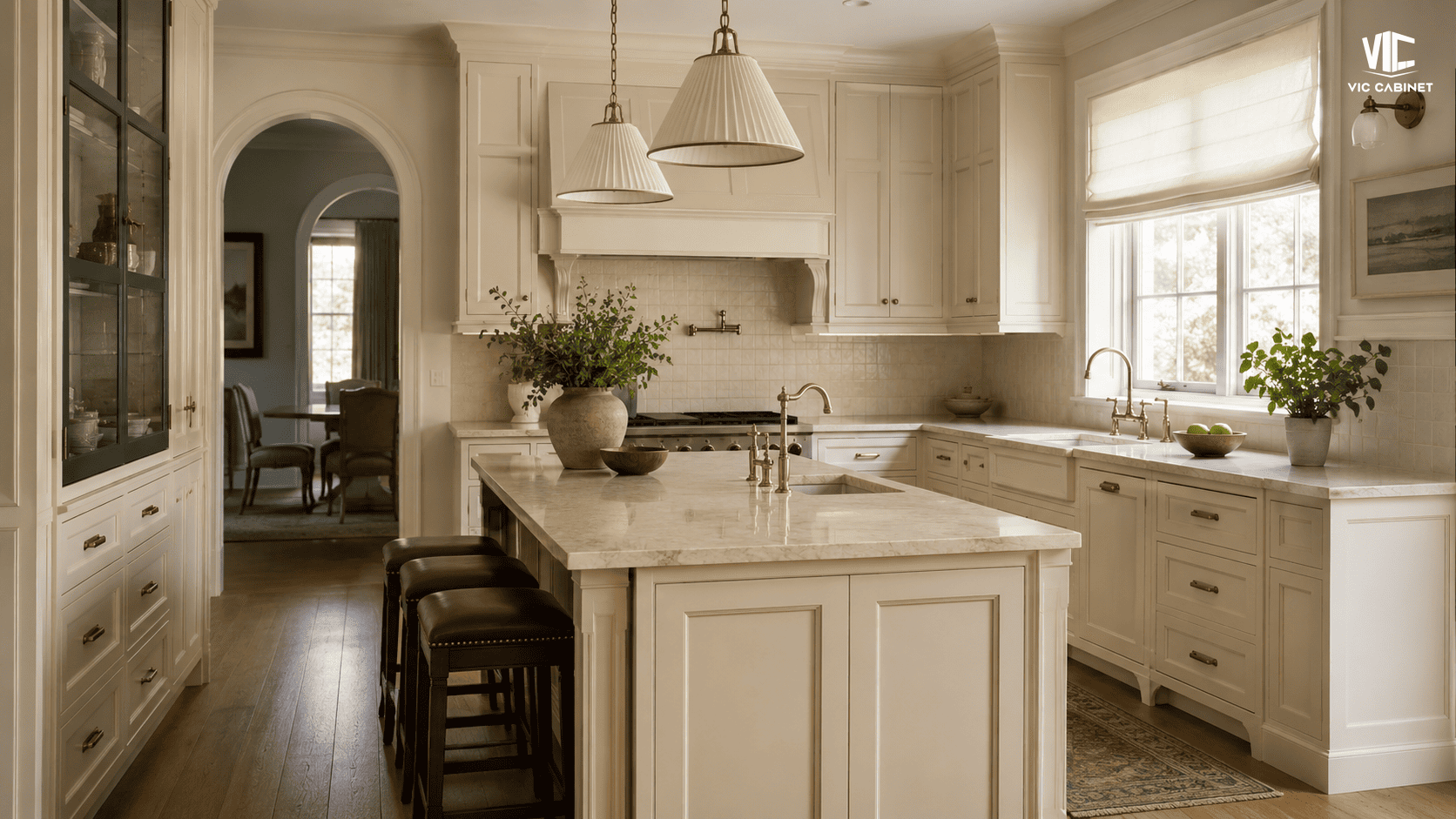
Market potential: Strong alternative to traditional white.
Suitable applications: Premium Shaker, traditional kitchens, vanities and two-tone collections.
4.3. Light White Oak
Light white oak is well positioned to benefit from the demand for natural texture and organic interiors.
Its visible grain adds character while keeping the kitchen visually open. It can also coordinate with both warm white and darker accent cabinets.
White oak was identified as the most popular wood type by 51% of respondents in the NKBA 2026 Kitchen Trends Report.
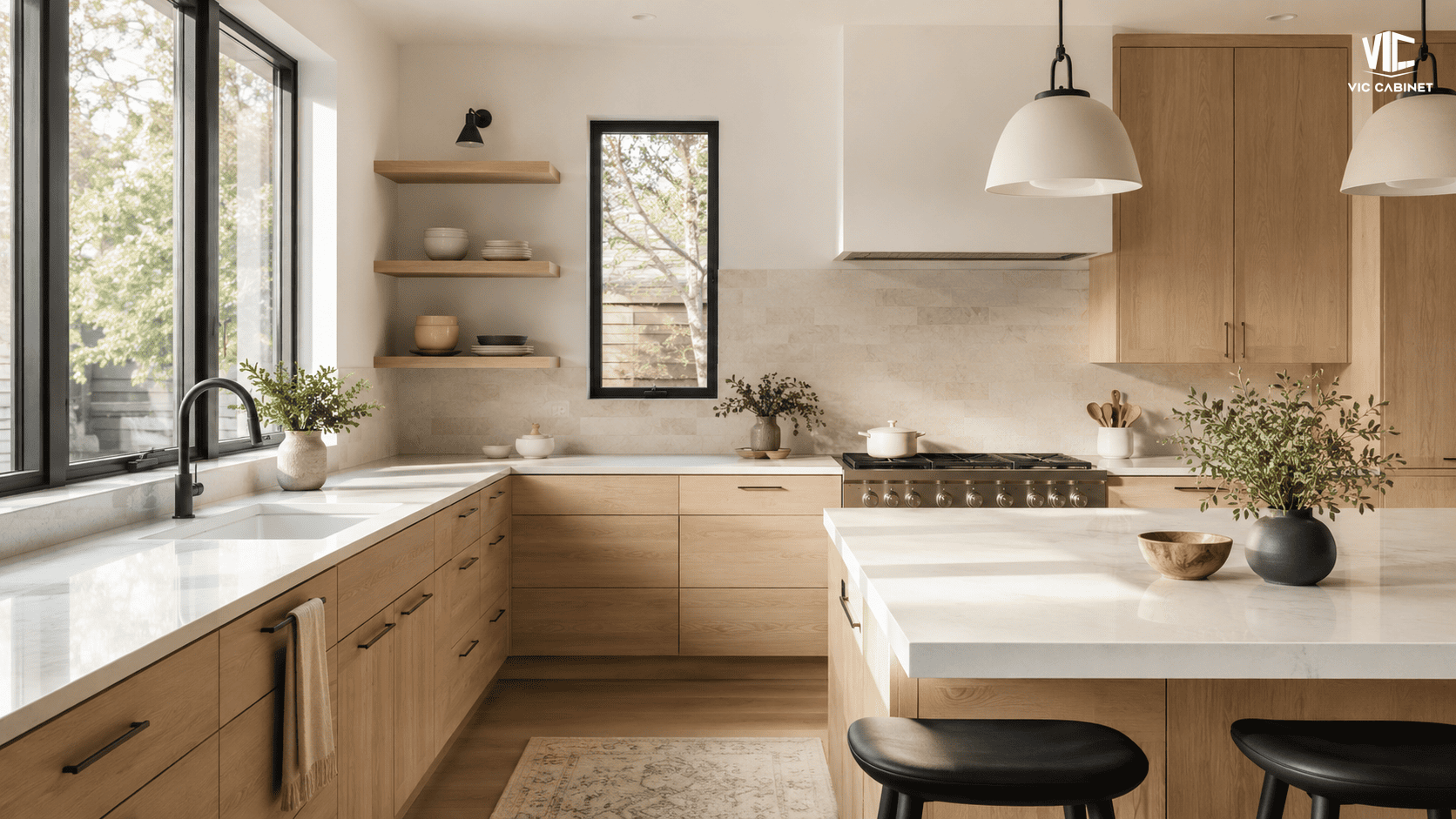
Market potential: Strong growth color.
Suitable applications: Slab doors, slim Shaker cabinets, frameless kitchens and Scandinavian-inspired interiors.
4.4. Medium Natural Oak
Medium natural oak offers more warmth than light oak without creating the visual weight associated with very dark wood.
This tone is suitable for customers who want a natural kitchen but consider pale wood too minimal or dark walnut too formal.
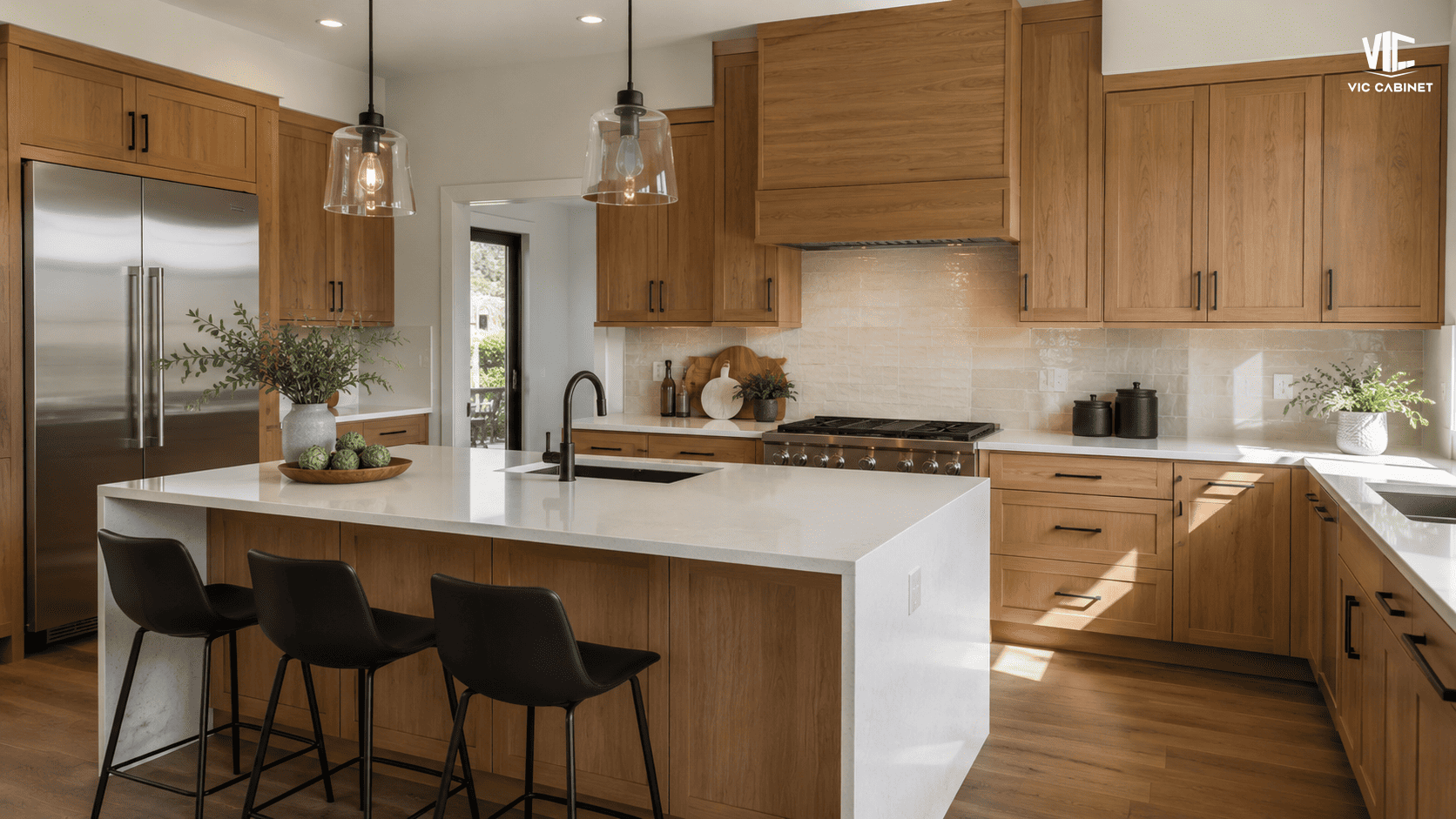
Market potential: Strong for broad-market wood collections.
Suitable applications: Contemporary kitchens, multifamily upgrades, flat-panel cabinets and mixed-material interiors.
4.5. Natural Walnut
Walnut brings deeper brown tones and a more premium appearance to cabinet collections.
Its grain works particularly well with cream countertops, warm lighting, bronze hardware and natural stone. Walnut may not achieve the same volume as white oak, but it can support higher-value positioning.
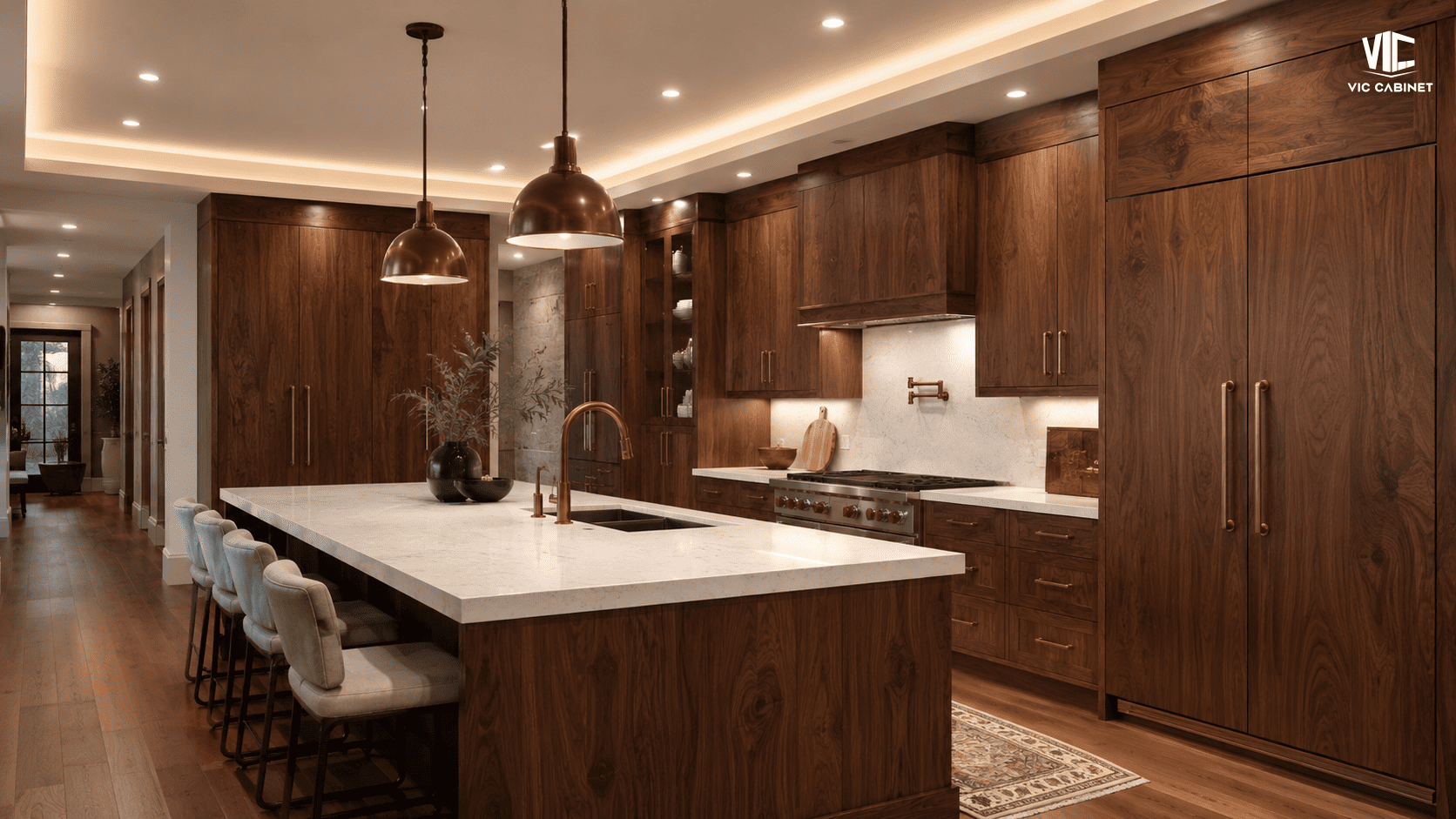
Market potential: Medium volume with premium margin potential.
Suitable applications: Kitchen islands, luxury vanities, bars and modern slab-door kitchens.
4.6. Warm Beige
Warm beige is returning as an updated neutral rather than the heavily yellow beige seen in older interiors.
It provides more personality than white while remaining flexible enough for a wide range of countertops, flooring and backsplash materials.
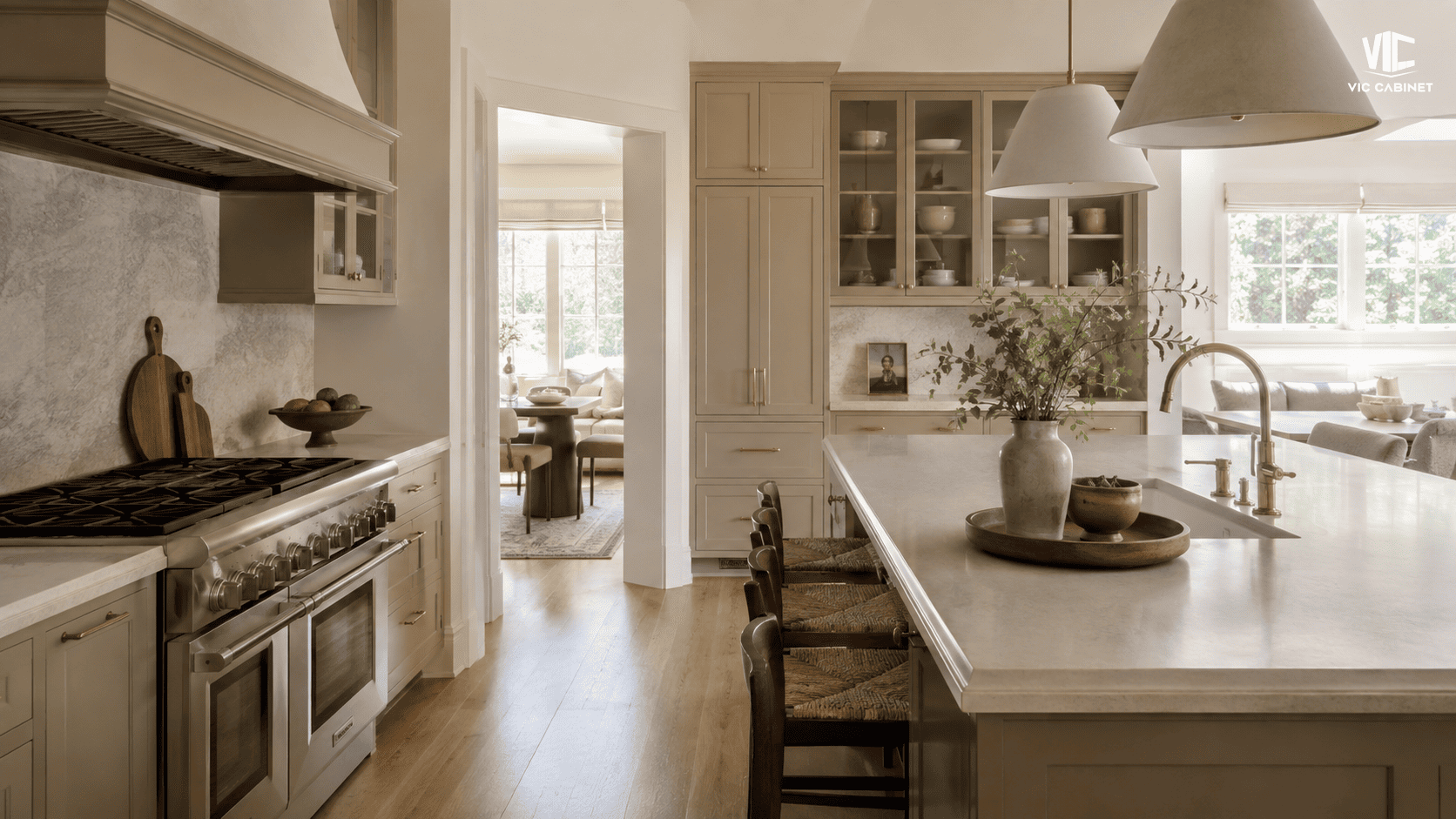
Market potential: Strong emerging neutral.
Suitable applications: Transitional kitchens, rental properties, whole-home cabinetry and builder collections.
4.7. Universal Khaki
Khaki sits between beige, tan and muted brown. It creates an earthy appearance while remaining neutral enough for everyday residential projects.
Sherwin-Williams selected Universal Khaki as its 2026 Color of the Year, reinforcing the broader interest in warm, adaptable midtone neutrals.
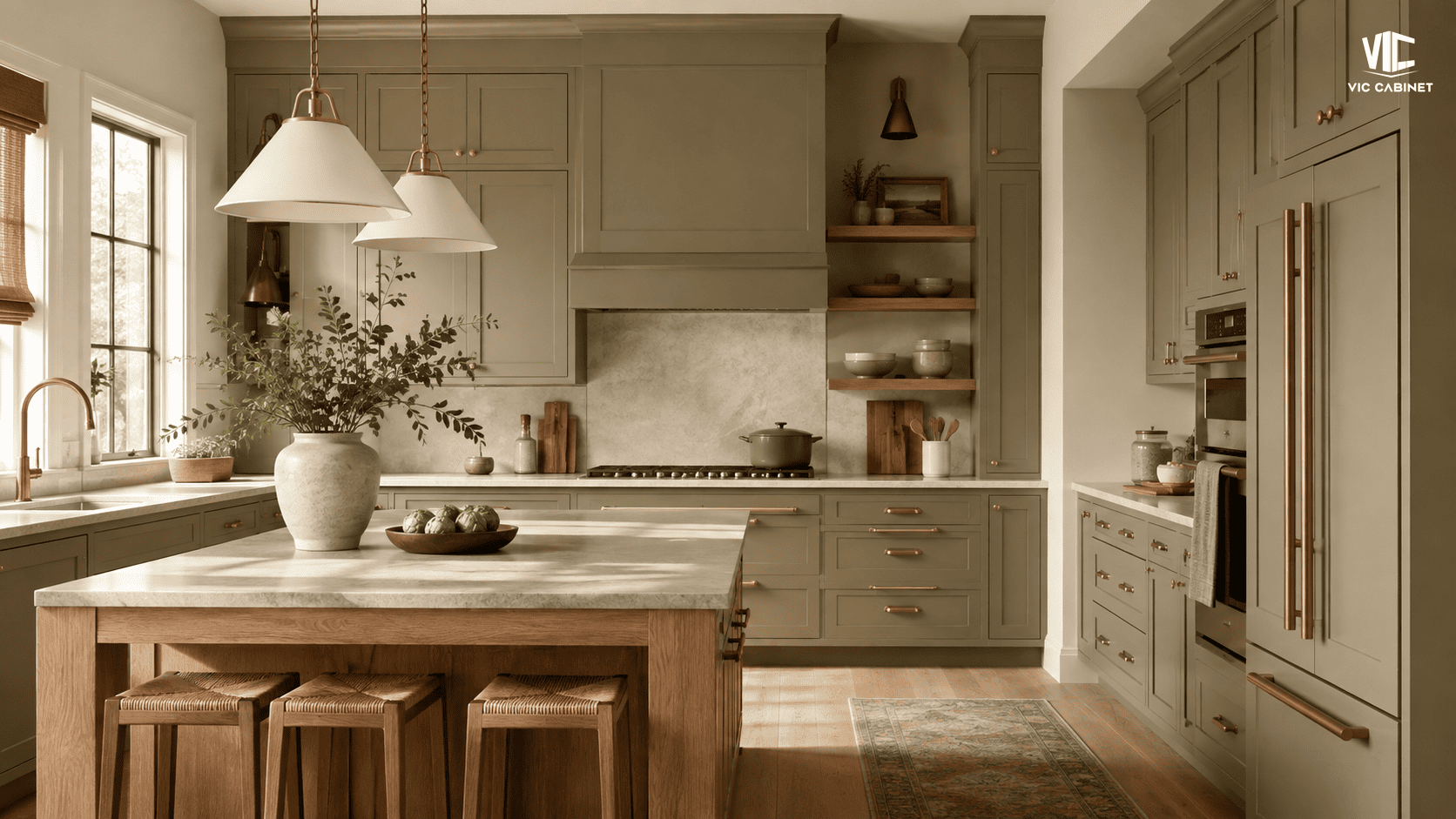
Market potential: Good opportunity for buyers expanding beyond white and gray.
Suitable applications: Shaker cabinets, slim Shaker doors, islands and mudroom cabinetry.
4.8. Mushroom
Mushroom combines beige, taupe and soft gray undertones. Its appearance changes subtly under warm and cool lighting, helping it coordinate with several material palettes.
It can serve as a neutral cabinet color while offering more visual identity than white or standard gray.
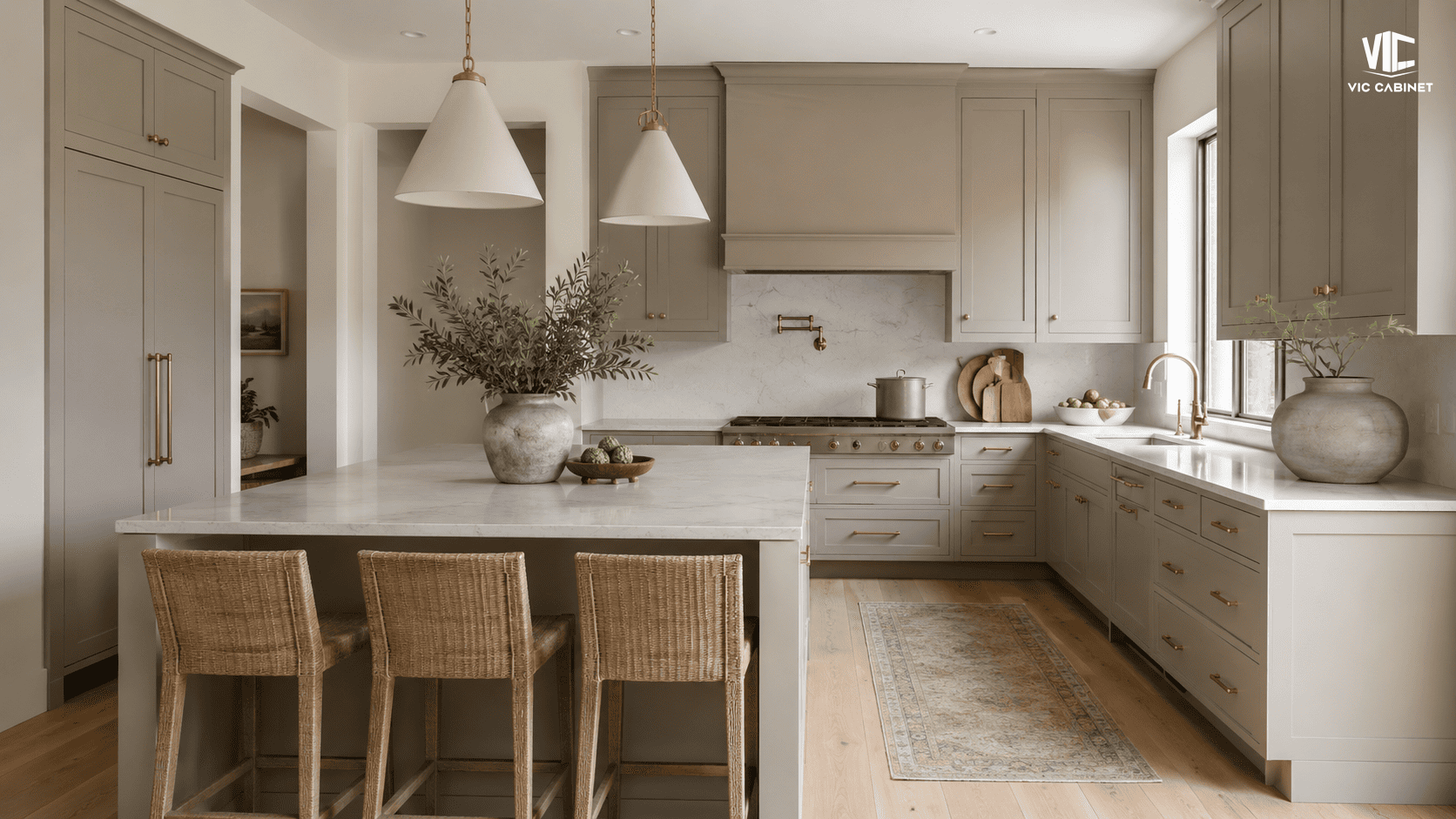
Market potential: Strong showroom differentiation.
Suitable applications: Transitional kitchens, inset cabinetry and premium vanities.
4.9. Warm Greige
Greige remains commercially relevant, but the most suitable version for 2026 is warmer and more beige-dominant than the cool gray finishes popular in previous years.
Warm greige allows dealers to retain a familiar neutral while adjusting to the market’s preference for softer and more natural interiors.
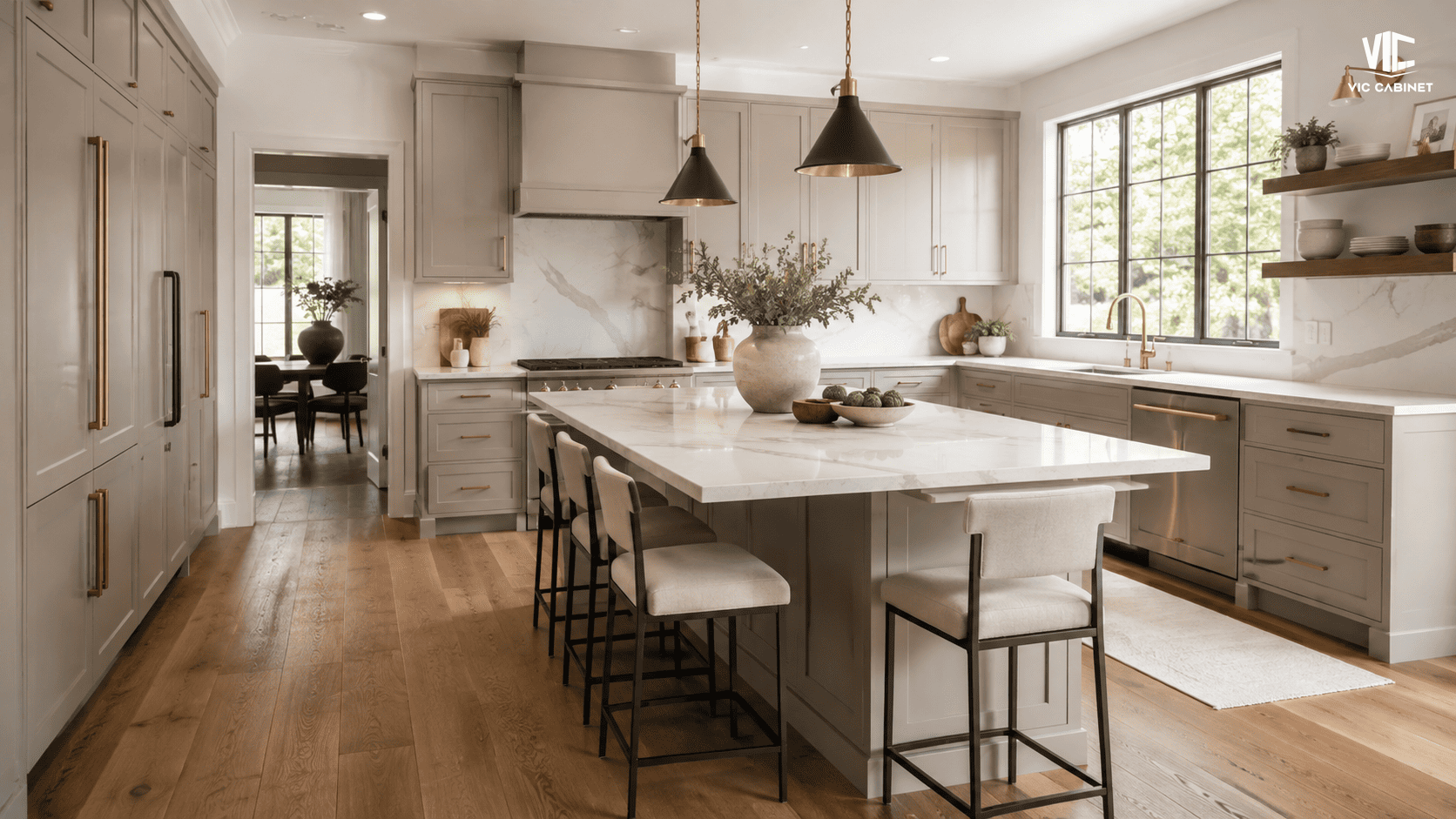
Market potential: Stable core-to-secondary color.
Suitable applications: Multifamily projects, transitional homes and dealer inventory programs.
4.10. Taupe
This color provides more depth than beige but remains less dramatic than brown or charcoal.|
It pairs naturally with walnut, bronze, cream and muted green, making it suitable for both full-kitchen applications and two-tone combinations.
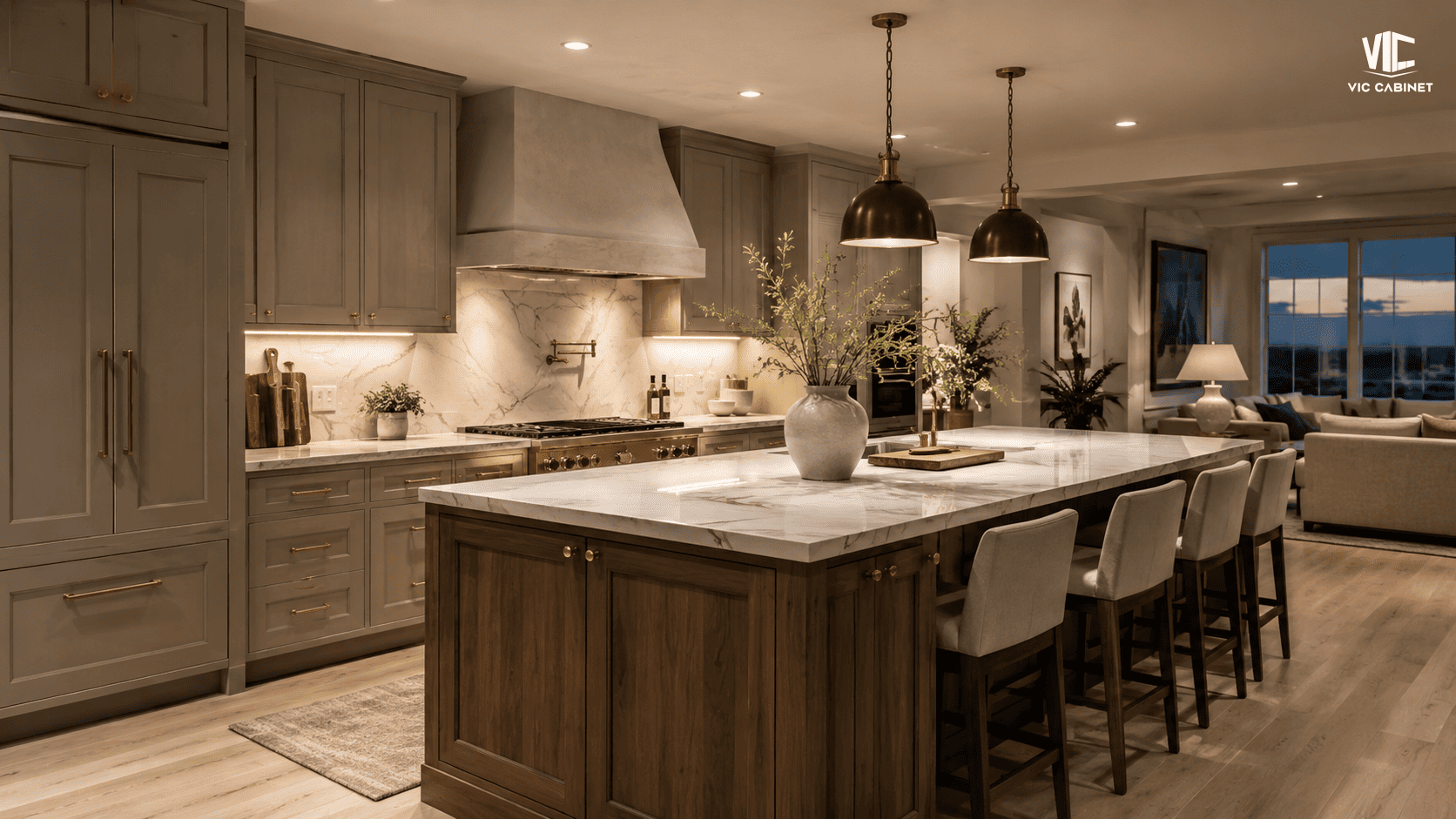
Market potential: Moderate volume with strong design flexibility.
Suitable applications: Painted kitchens, bathroom vanities, islands and built-in storage.
4.11. Sage Green
Sage green is one of the most commercially accessible ways to add color to kitchen cabinetry.
Its gray undertone makes it easier to coordinate than brighter green shades. It can function as a full-kitchen finish or as an accent color for the island and lower cabinets. For additional design inspiration, explore how sage green kitchen cabinets can be used in rustic, farmhouse and transitional interiors.
Green was supported by 86% of NKBA survey respondents, indicating broad professional confidence in the color family.
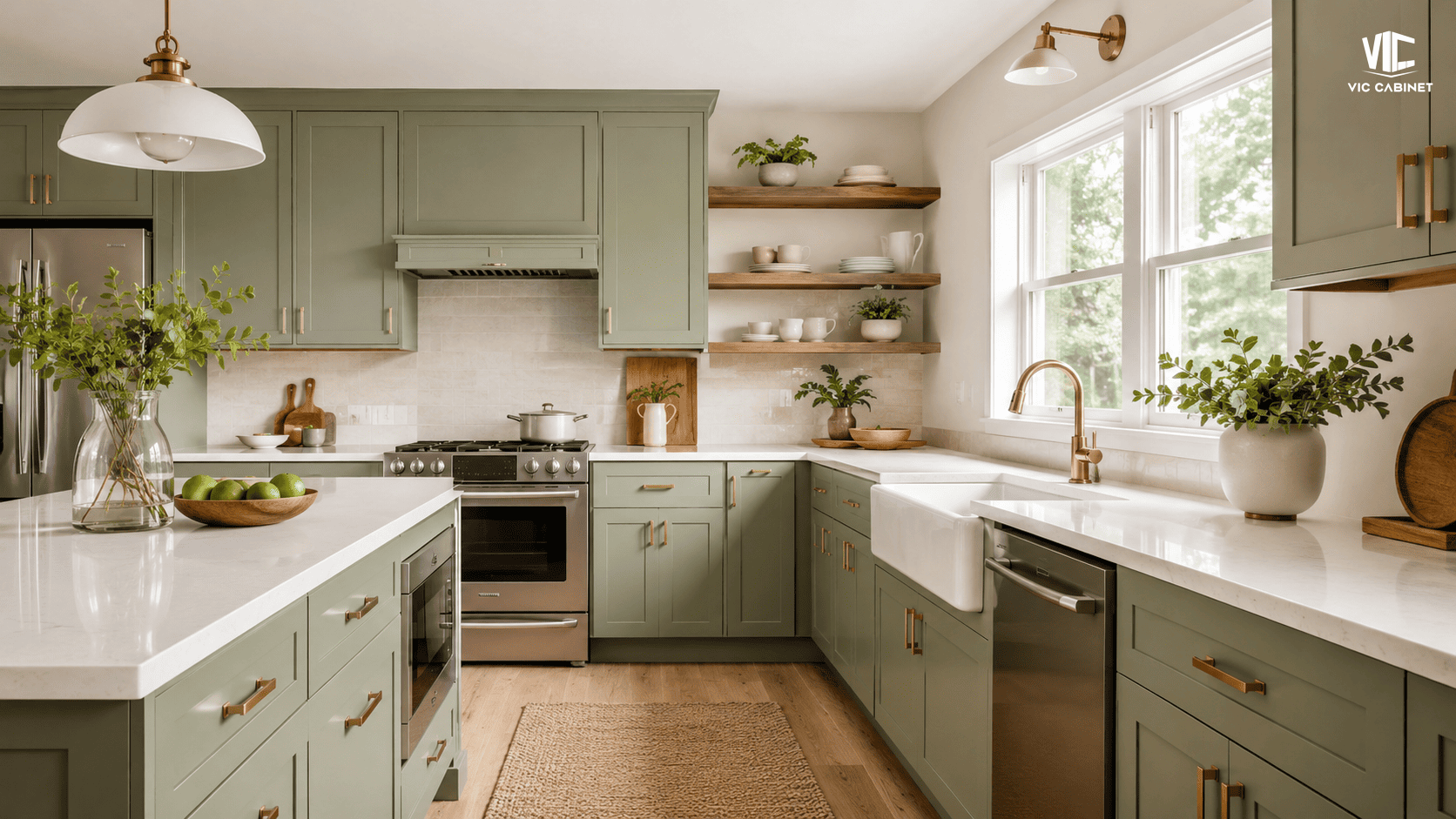
Market potential: High among colored cabinet finishes.
Suitable applications: Shaker kitchens, farmhouse interiors, islands and bathroom vanities.
4.12. Warm Eucalyptus
Warm eucalyptus is slightly deeper and more natural than conventional sage.
Valspar selected Warm Eucalyptus as its 2026 Color of the Year, describing a muted gray-green direction designed to create a restorative and tranquil environment.
The color can attract buyers who want something more distinctive than sage without moving into a highly saturated green.
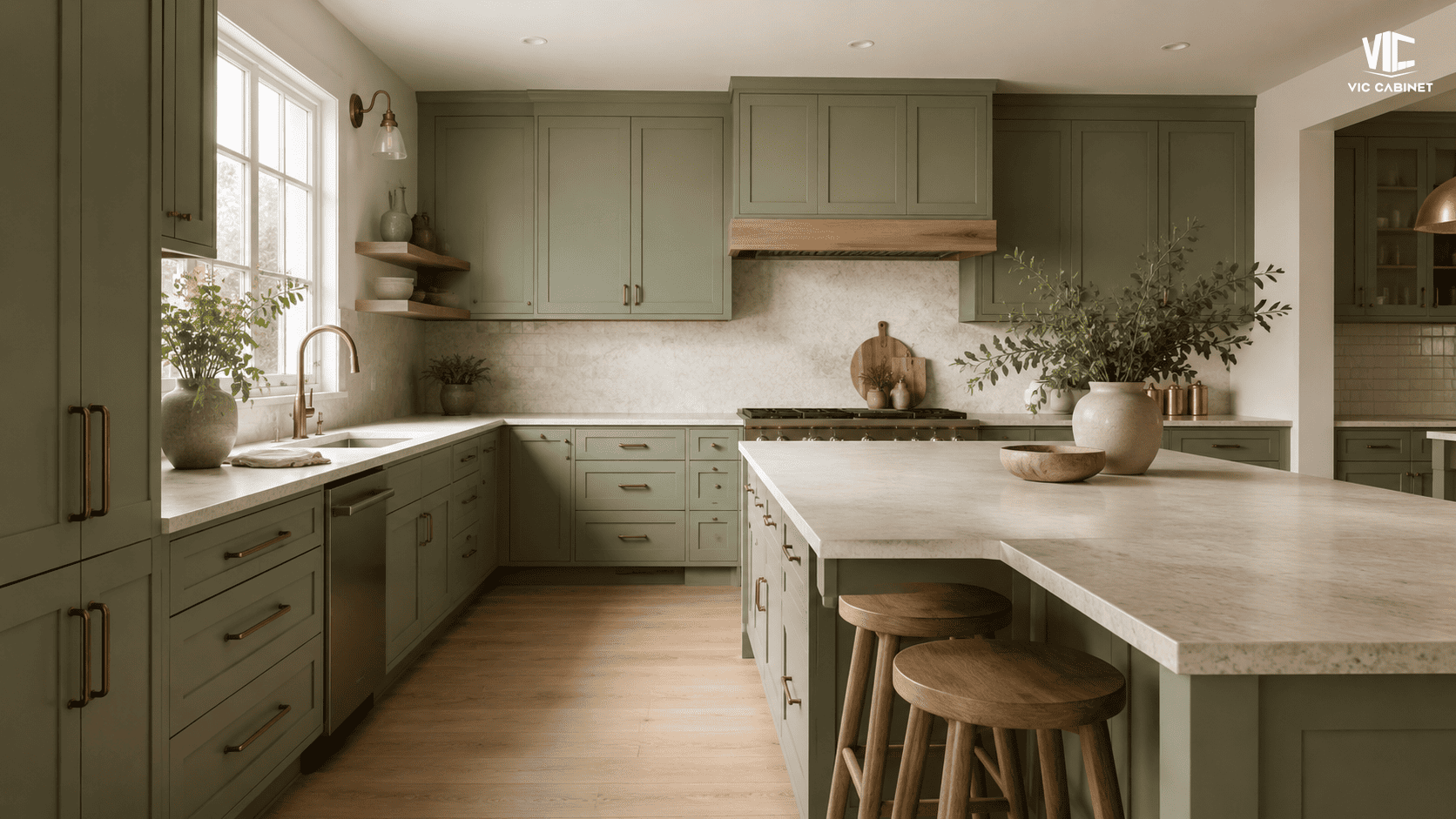
Market potential: Growing trend-led color.
Suitable applications: Islands, vanities, slim Shaker cabinets and nature-inspired collections.
4.13. Smoky Jade
Smoky jade combines green, blue and gray undertones to produce a richer and more sophisticated appearance.
Behr’s 2026 Color of the Year, Hidden Gem, represents this direction.
Compared with sage, smoky jade is more suitable for statement applications and design-led collections. It can coordinate with light countertops, white oak and brass hardware.
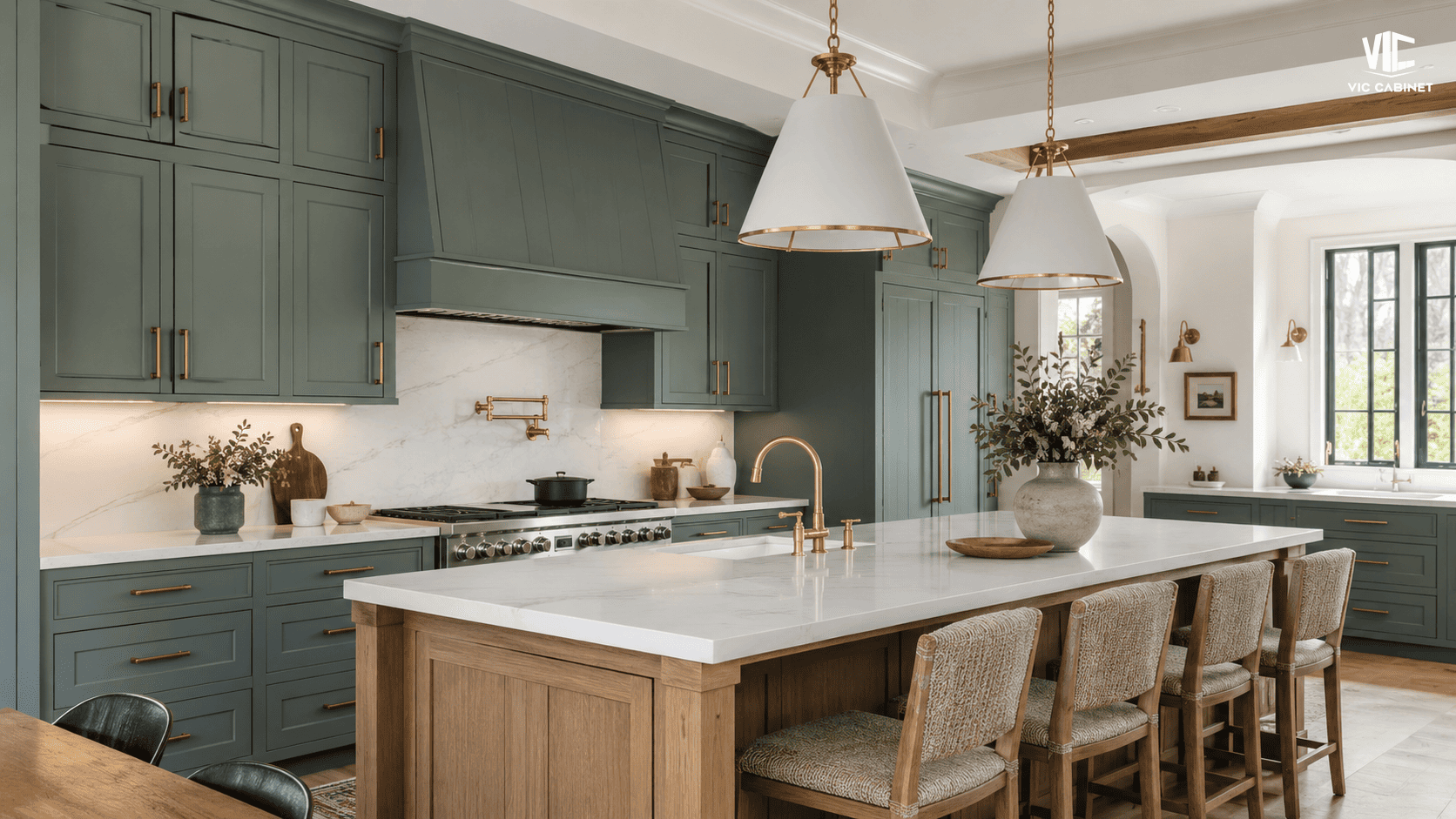
Market potential: Lower volume but strong marketing value.
Suitable applications: Statement islands, beverage stations, bars and boutique residential projects.
4.14. Deep Olive Green
Deep olive offers a warmer alternative to forest green or emerald.
Its brown and gray undertones allow it to coordinate with natural wood and cream surfaces. It can create a premium appearance without the sharp contrast of black cabinetry.
Dunn-Edwards’ Midnight Garden, a deep muted green with earthy undertones, is another signal supporting darker nature-inspired colors in 2026.
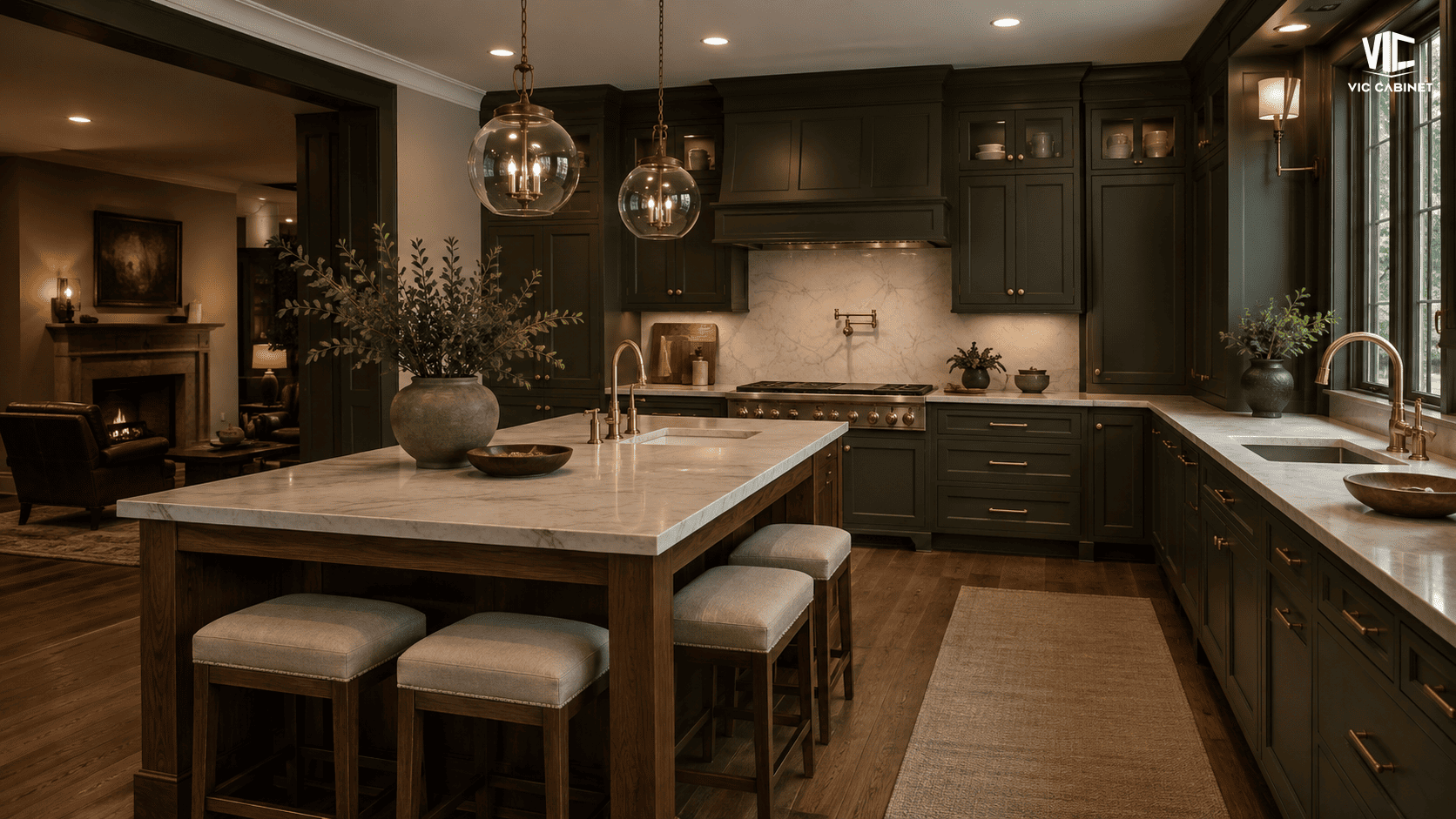
Market potential: Moderate and design-dependent.
Suitable applications: Lower cabinets, islands, luxury inset kitchens and statement vanities.
4.15. Espresso Charcoal
Espresso charcoal combines dark brown with softened black or charcoal undertones.
Benjamin Moore selected Silhouette as its 2026 Color of the Year, describing a combination of deep espresso and refined charcoal.
This type of finish offers the visual impact of a dark cabinet while feeling warmer than pure black.
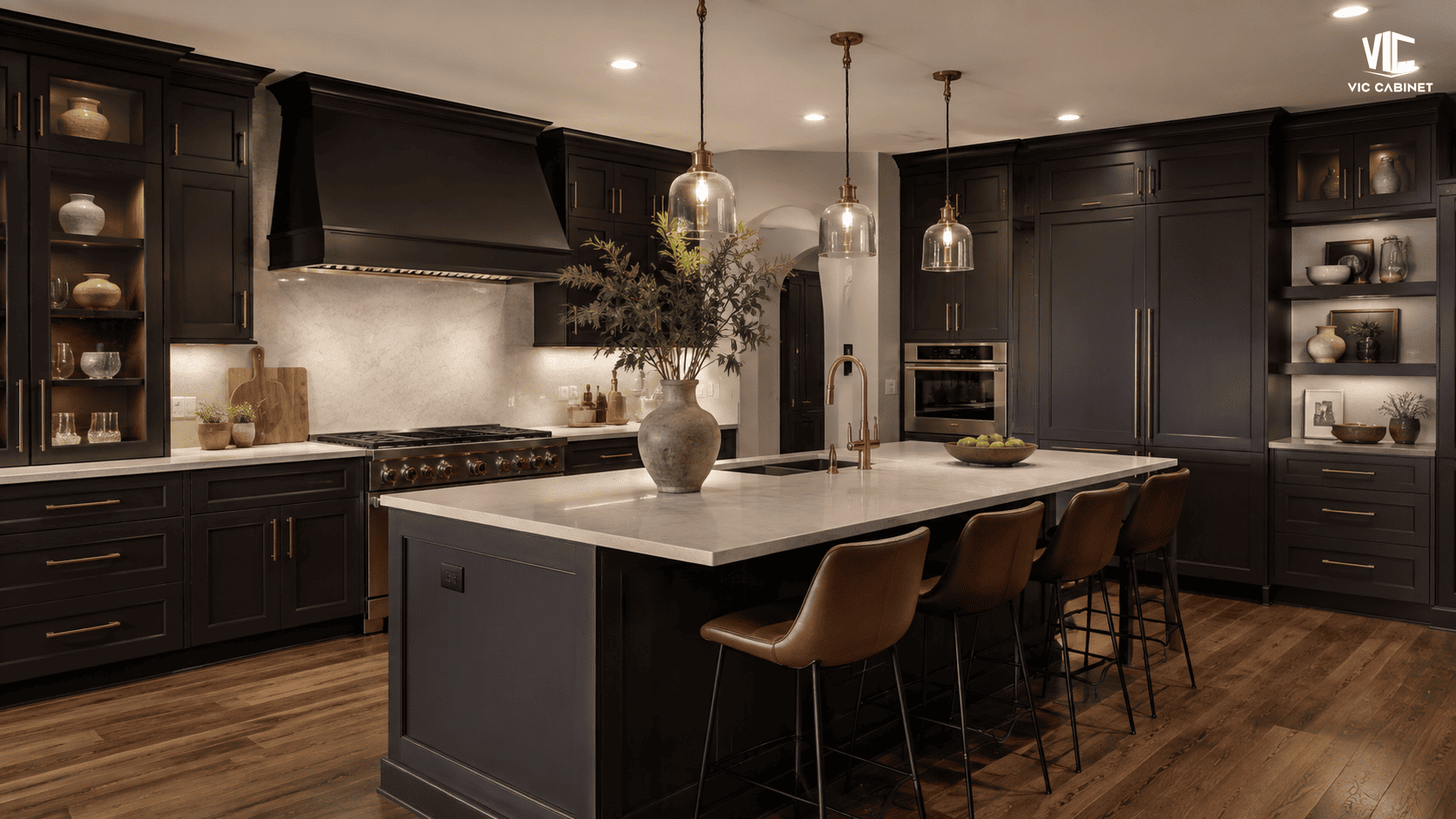
Market potential: Selective volume with premium positioning.
Suitable applications: Luxury islands, bars, inset kitchens, vanities and modern slab-door collections.
5. Recommended Q4 Color Portfolio for Cabinet Importers
Importers should not treat all 15 colors as equal inventory commitments. A practical strategy is to divide the collection into three groups.
5.1. Core inventory colors
These finishes are suitable for broader stock programs because they can serve multiple customer groups and project types:
- Warm white
- Creamy ivory
- Light white oak
- Medium natural oak
- Warm beige
- Warm greige
These colors should generally account for the largest share of standard cabinet SKUs.
5.2. Growth colors
These finishes reflect visible market movement but may require more controlled purchasing:
- Natural walnut
- Universal khaki
- Mushroom
- Taupe
- Sage green
- Warm eucalyptus
Importers can introduce these colors through selected door styles, island programs or regional dealer collections before expanding them across the complete SKU range. A two-tone cabinet program can also help importers introduce trend-led finishes on islands or lower cabinets while retaining a proven neutral color across the main collection.
5.3. Statement colors
These finishes can attract attention in catalogs, showrooms and digital marketing but should normally be stocked more selectively:
- Smoky jade
- Deep olive green
- Espresso charcoal
Their commercial value may be higher in premium residential, design-led and custom project segments than in price-sensitive multifamily programs.
6. How Importers Should Allocate Inventory
A color trend does not automatically justify large inventory.
Before placing Q4 orders, importers should review:
- Historical sales by finish
- Regional customer preferences
- Dealer and project pipelines
- Cabinet style compatibility
- Availability of matching panels and moldings
- Replacement-part requirements
- Warehouse capacity
- Minimum production quantity
Core neutrals and natural wood tones can support a larger inventory share. More expressive colors may be better introduced through islands, vanities or limited collections.
This approach allows importers to respond to market trends without creating excessive slow-moving stock.
7. Q4 2026 U.S. Cabinet Market Outlook
The available market data suggests that U.S. consumer spending will remain significant in 2026, although tariff policy, inflation and broader economic uncertainty may continue to influence purchasing behavior. NRF’s full-year forecast assumes retail sales growth of 4.4%, while also acknowledging that higher tariffs or greater trade-policy uncertainty could weaken consumer spending.
For cabinet colors, the clearest direction is toward warmer and more natural interiors:
- Wood grain is gaining share.
- White remains important but is becoming warmer.
- Cold gray is losing influence to beige, greige and taupe.
- Sage and eucalyptus are becoming more accessible.
- Olive, jade and espresso are supporting statement collections.
- Blue remains relevant, particularly in muted applications.
The market is therefore not moving away from neutrals. Instead, the definition of a neutral cabinet is expanding.
A neutral kitchen in Q4 2026 may use warm white, light oak, mushroom, taupe, sage or muted blue rather than relying exclusively on pure white and cool gray.
Cabinet Manufacturing Support from VIC CABINET
VIC CABINET is a Vietnam-based cabinet manufacturer supporting importers, distributors and project buyers with RTA and project-based cabinet solutions. Its product capabilities include Shaker, Slim Shaker, frameless, inset and veneer cabinet collections, with painted, wood-grain and customized finish options. For buyers evaluating production capacity, quality control and export support, this Vietnam cabinet manufacturer guide provides a closer look at VIC CABINET’s factory capabilities and manufacturing process.
The factory also supports OEM and ODM programs, color sampling, product specifications, packaging development and repeat-order management. This allows buyers to develop cabinet collections that respond to current market trends while maintaining consistent specifications across future orders.
For importers preparing for Q4 and early 2027 projects, VIC CABINET can support both core inventory colors and controlled development of new finishes based on the target market, cabinet style and required SKU range.
Conclusion
Q4 remains an important commercial period in the United States because holiday spending, year-end project deadlines, promotional activity and early preparation for Q1 concentrate demand during the final months of the year.
For cabinet importers, however, Q4 planning must begin earlier. Production, inspection, shipping, customs clearance and domestic distribution all take place before the product reaches dealers or project sites.
Based on current Houzz, NKBA and paint-industry signals, the strongest cabinet color opportunities for Q4 2026 are expected to come from three main groups: warm neutrals, natural wood tones and grounded nature-inspired colors.
Warm white, ivory, white oak and medium oak should remain important core options. Beige, khaki, mushroom, sage and eucalyptus offer growth potential. Smoky jade, olive and espresso charcoal can provide differentiation for premium or design-led collections.
The most effective Q4 strategy is not to stock every trending color. It is to create a balanced portfolio in which every finish has a defined customer segment, cabinet style, price position and reorder plan.
Frequently Asked Questions
What cabinet colors are expected to be popular in Q4 2026?
Warm white, creamy ivory, light oak, medium natural oak, walnut, beige, khaki, mushroom, warm greige, taupe, sage, eucalyptus, smoky jade, olive and espresso charcoal are among the colors worth watching.
Is white cabinetry still popular in 2026?
Yes. White remains one of the largest cabinet categories. Houzz reported that white was selected by 28% of renovating homeowners, only slightly behind wood at 29%.
Are wood cabinets replacing painted cabinets?
Wood is gaining share, but it is not eliminating painted cabinetry. The market is becoming more diversified, with natural wood, warm whites, earthy neutrals and muted colors all competing for demand.
Which wood cabinet color has the strongest potential?
Light white oak currently has one of the clearest market signals. NKBA identified white oak as the most popular wood type among its surveyed industry professionals.
When should importers order cabinets for Q4 sales?
The exact timing depends on production lead time, shipping route and inventory location. Importers should work backward from their required warehouse or installation date and include additional time for inspection, customs clearance and replacement parts.
